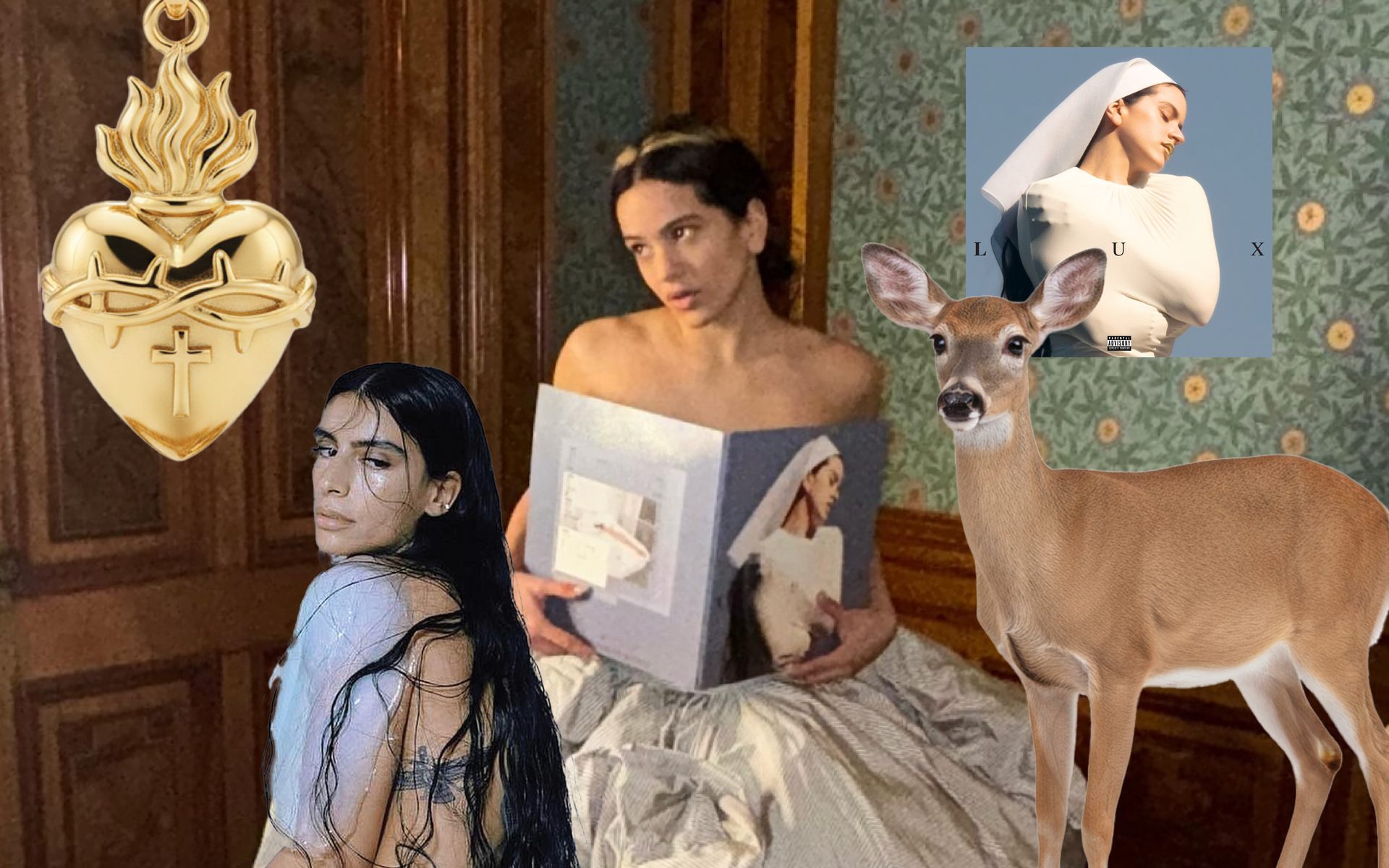
Pop has always gotten a bit of a bad rap; “commercial, unserious, uninteresting” and most certainly – “unintellectual”. It has, in fact, always had features to it that beckon a much more serious genre than we give it credit for. Of course, there is the ultra-manufactured; those created boy bands and glossy superstars whose entire personas are assembled as if by committees, carried forward to success by artistic debasement as banal as catchy hooks and creative choices that equate cheques for greedy execs.
An unfortunate fragmentation of pop music in recent years has also been the way it has buckled beneath capitalism’s relentless machinery of consumption, turning inward until it became almost entirely self-referential. Far flung from being a pretty democratic artistic space it has the potential to be — capacious enough to hold myth, futurism, eroticism, political critique, and spiritual inquiry (yes, 90s, I’m looking at you) — we have, instead, been dosed on bodies of work that exist as franchised, merchandising opportunities; replete with music arriving as if engineered to purely feed the surrounding gossip-industrial complex of weird stan theories, and parasocial commentary; sorry Swifities.
So, imagine my utter surprise when it appeared we were shifted — by holy anointing — into another direction entirely in the last month.
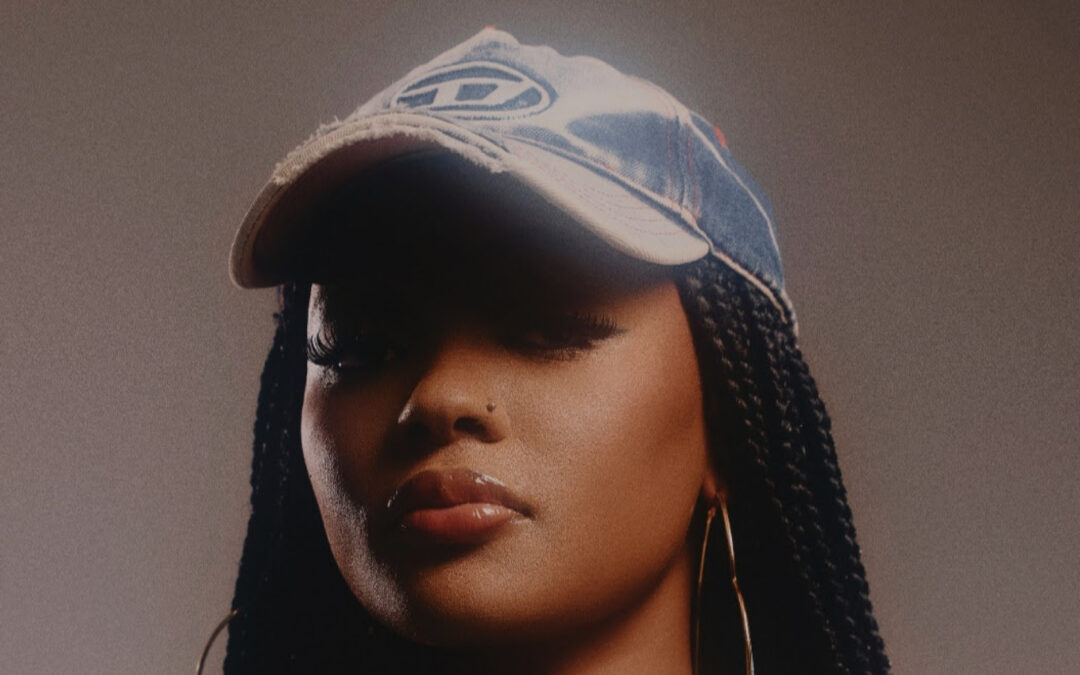
The first time I watched Berghain, Rosalía’s now-infamous music video that caused an operatic rupture across the internet, I experienced an almost involuntary sense of shock; the intensity of revelation tempered by the sudden shock that slices through the track when the strobe cuts and her voice emerges alone?! Insane. We know that Rosalía is experimental — she is the same artist who fused thirteenth-century literature with flamenco on El Mal Querer; but the abrupt movement from classical vocalisation was a leap. This is something else entirely.
Rosalía gave this shift its clearest articulation when she shared in her conversation with Laura Snapes that, “I’m tired of seeing people referencing celebrities, and celebrities referencing other celebrities. I’m really much more excited about saints.” In one crystalline line, she captured her seeming read of culture; in desperation and despair, our all-too human hunger for the symbolic, the sacred and the mythic might just overcome. Those of us so esoterically inclined might have unknowingly been standing at the altar of art that remembers its own sacred function, and I find myself wondering, ‘yeah, remember when we used art to speak to God?”
LUX is Rosalía’s most ambitious and mystically charged work to date, and nothing like it exists; it is what Ray of Light is to Madonna, in its expression of a deep, fearless and searching spiritual quest on the part of Rosalía. LUX is a polyphonic, multilingual, spiritually inflected odyssey that splices together classical orchestration, liturgical harmony, medievalism, and a lyricalism that calls forth saints, mystics and ritual lineages. So, no big deal. Rosalía sings in thirteen languages — Spanish, Catalan, Arabic, Sicilian, French, Italian, German, Japanese, Ukrainian, Hebrew, Latin, Mandarin, Portuguese — as a devotional gesture, which by all reported accounts, are all done pretty accurately.
Rosalía draws across a widespread canon of feminine expressions of ecstasy, sacrifice, and supernatural endurance, and to understand why this moment matters, we need to look directly at what Rosalía represents within the commercial landscape. Her success is neither cult nor fringe; she is one of the most visible, decorated, and streamed artists in the world. MOTOMAMI topped global charts, El Mal Querer earned her a Grammy, and her collaborations range from reggaeton heavyweights to hyper-pop auteurs. Rosalía sells out stadiums, and performs at the VMAs. She exists at the centre of pop’s commercial machinery — and LUX is being received as a mainstream release.
Rosalía proves that the mainstream itself has widened, or at least, it has the wherewithal to do so. We do not have to rely on the projected commercial success as means for forsaking the art itself; at a time where it couldn’t be any less prudent to take artistic risks, Rosalía reminds us otherwise. The fact that an album steeped in medieval mysticism, polyglot choral work, and art-historical references can still command the attention of global pop audiences is mind-bending. It is an expanded definition of what the centre can hold. LUX makes visible a change that has been years in the making; a dispelling of the myth that mainstream culture only rewards the easily digestible and dumb.
This may be thrilling, but it’s nothing new, and the lineage of intellectually-enriched pop is long, even if the zeitgeist sometimes forgets it exists. Pop’s avant-mothers laid the groundwork decades ago. Madonna’s work in the 1990s was seminal and as Derick Koen has echoed to me, “everything interesting in pop is built on the back of Madonna,” and it’s very difficult to disagree. Like a Prayer transformed Catholic symbolism into a semiotic battleground, staging desire, faith, shame, and liberation as intertwined forces, while the aforementioned Ray of Light marked Madge’s most profound spiritual turn; a techno-mystical journey steeped in Kabbalistic imagery, Eastern philosophy, and her metaphysical rebirth — proving that pop could channel genuine transcendence without forfeiting mass appeal.
Björk, meanwhile, has always viewed pop as something far bigger than hooks and choruses — for her, it has always been a method of inquiry and a means to test the boundaries of reality. Her appearance on Berghain, alongside Yves Tumor, singing “the only way I will be saved is through divine intervention”, is almost inevitable in hindsight; this is the same artist who used her works Homogenic to stage the collision between nature and technology, and Biophilia to link music with geology, cellular biology, and even the motion of the stars.

Image by Shauna Summers, via Death to Stock
Image by Shauna Summers, via Death to Stock
FKA twigs builds her worlds through the body, as another art-pop mother. Her work has used choreography, and ritual-like performance in a way that evokes entering a spiritual scene. I still consider MAGDALENE as one of the most technically and emotionally transcendent pop albums of the last decade (notwithstanding that I was at a very Mary Magdalene stage in my life), with the record showing twigs’ body as the story: whether on a pole or being trained in blade work and martial choreography, the album is a meditation for womanhood, bodily autonomy and spiritual crisis.
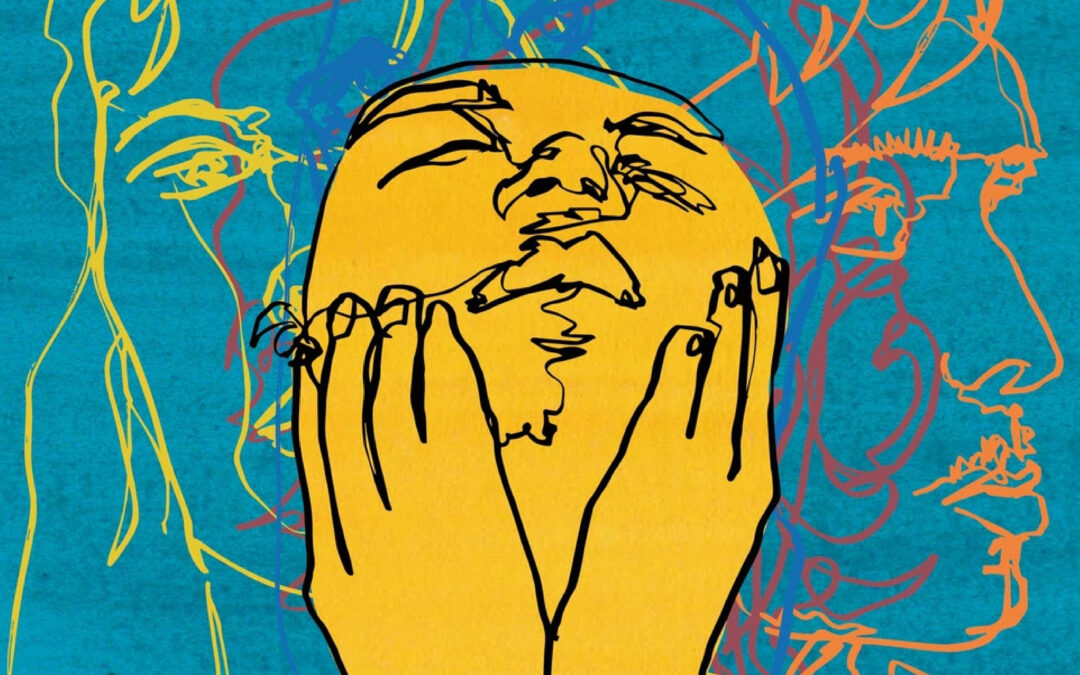
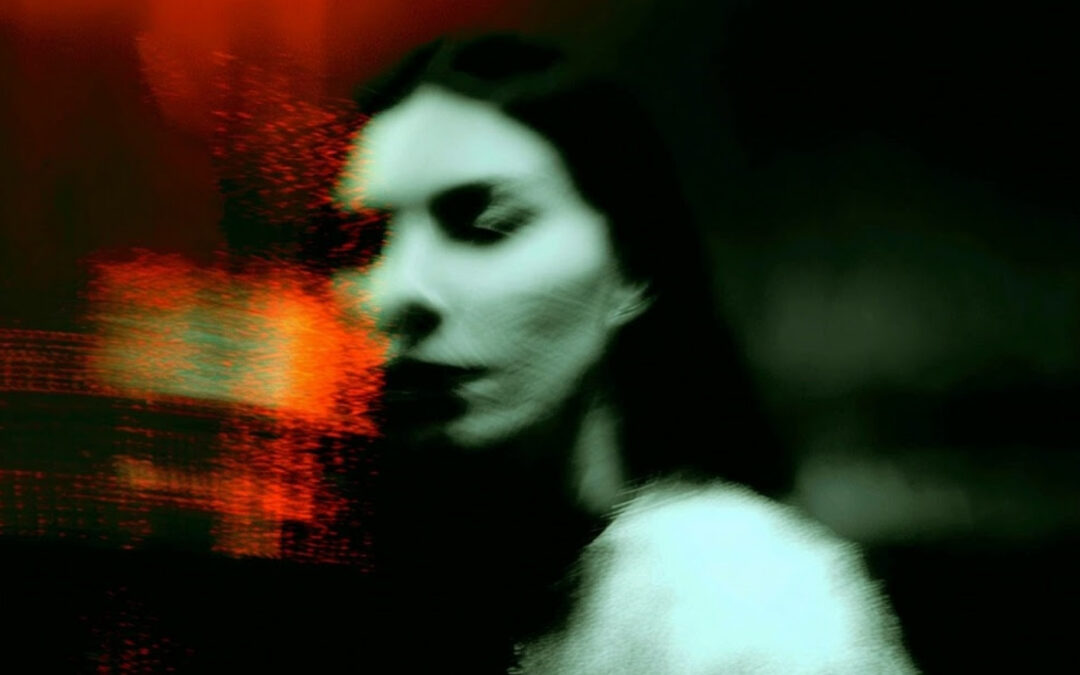
Sevdaliza, meanwhile, tends to build her worlds through the voice. Where twigs’ body becomes an instrument of ritual, Sevdaliza’s voice is a shape-shifting medium — previously drawing on the Iranian traditions of lamentation and ritual mourning she bends her vocality and performance art in stunning ways. This is the kind of deep craft that alt-pop requires, the kind of independent thinking and commitment to process that treats pop as an artistic discipline rather than any paparazzi-laden, personality spectacle.
Lastly, I simply couldn’t close this conversation without a nod to Solange; personally, my favourite Knowles sister. Both her music and her creative platform Saint Heron are cultural engines advancing Black literature, experimental writing, design and preservation. Through Saint Heron’s work, library, salon-style conversations, short films, and limited-edition design collections, Solange builds and preserves the expanded canon of Black intellectual, artistic, and cultural work that we owe so much of contemporary culture’s imagination to.
Now, Rosalía builds her world through language. LUX is polyphonic, linguistic triumph; multi-cultural, and spiritually charged, an album that ultimately disavows any notion that pop must be linguistically simple or sonically predictable, and she’s doing it in the mainstream. This brings us to the essential truth; if this is indeed an alt-pop renaissance in the mainstream, it thus reveals a profound cultural appetite for work that is complex, symbolic, emotionally layered, spiritually literate, intellectually articulate, and aesthetically ambitious. We are all seeking meaning, and as someone who believes in the ability of art to expand collective consciousness, the intensity of this energy channelled into a body of work by Rosalía reminds us that the creative process is a devotional act; and everyone of us can devote ourselves in whichever ways we’re called to.
I am so here for it, if you can’t tell. This is the age of the feminine — with our saints, cyborgs, rituals, ancestral cosmologies, and conceptual precision. We are that complex, and there is that much depth to uncover; even in the ‘mainstream’. I am reminded that pop can think, should think, that pop can feel, and that pop can inquire into the deepest symbolic structures of human life while still being pleasurable and viscerally just, vibes.
It’s cool to be smart again — and to have a spiritual awakening or two while you’re at it.
Written by Holly Beaton
For more news, visit the Connect Everything Collective homepage www.ceconline.co.za