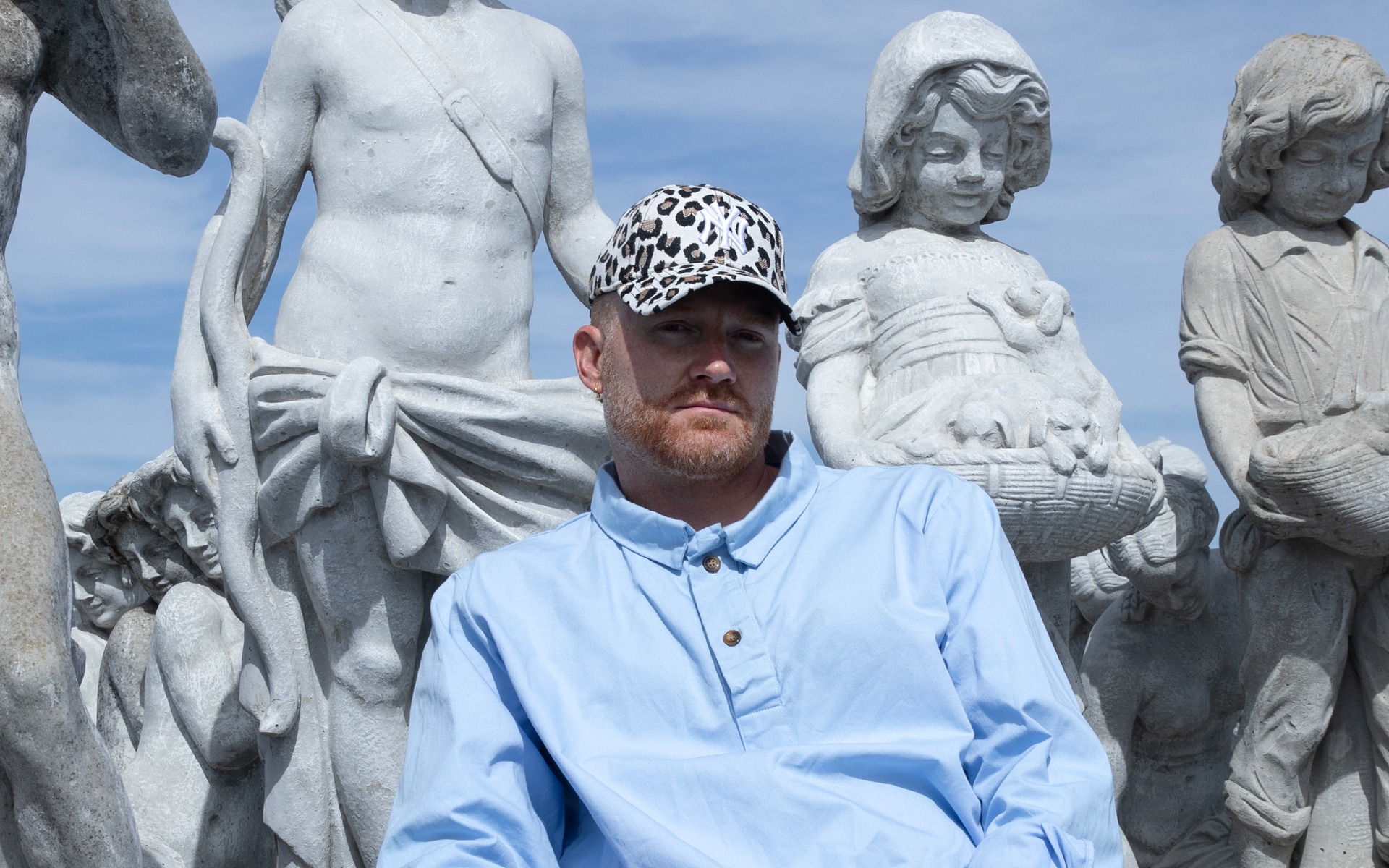
YOUR PATH IS NON-LINEAR.
DO WHAT YOU WANT.
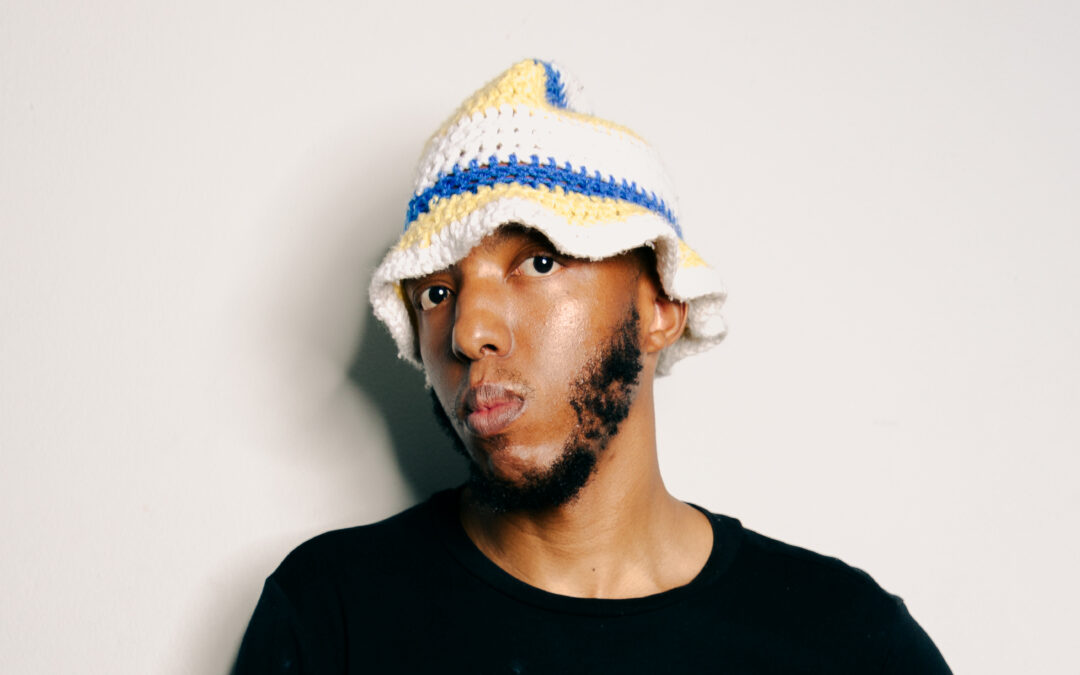
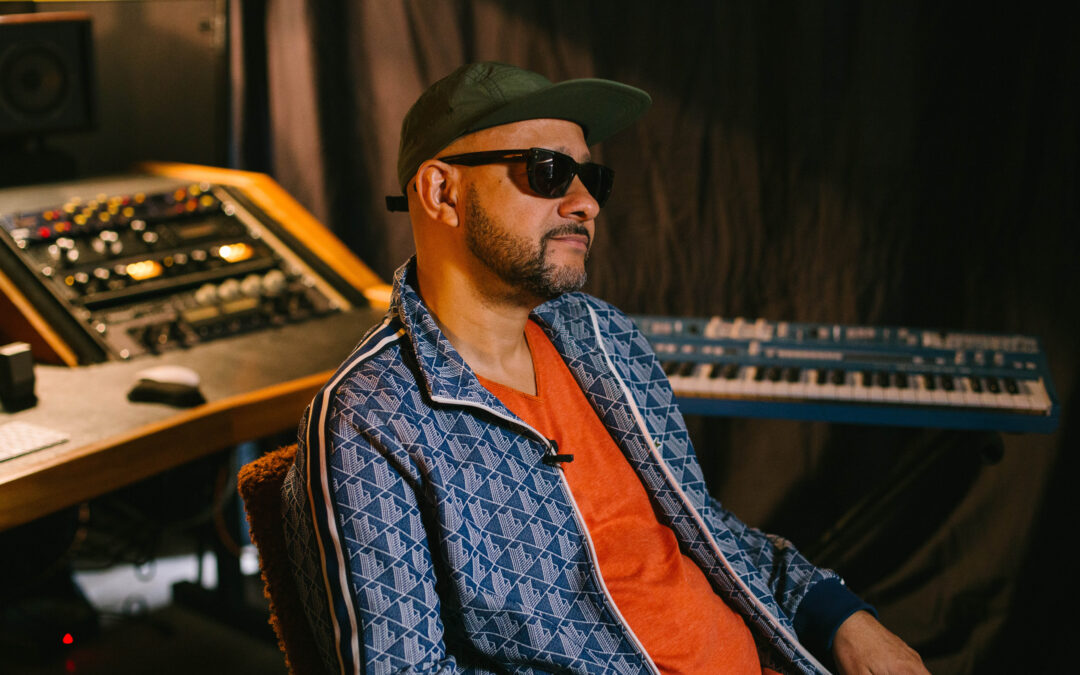
These are the three mantras etched into my brain as I sit down to pick apart and reflect on my conversation with Koos Groenewald, AKA Koooooos (the latter — six ‘o’s — enunciate the artist’s moniker that is becoming more and more central to his expression). Mantras are best said in three, and with Koos; this is his triptych-gift of guiding principles to nourish a creative life.
If you’re South African (though certainly not limited to it) and even mildly in tune with our creative landscape, chances are that some aspect of your instinctive understanding and nostalgic relationship to the visual language of our last fifteen or so years, has somehow been shaped by Koos’ cross-pollination between Cape Town and Joburg — internationally too — alongside his creative half, Jana Hamman, of award-winning design studio Jana+Koos. This is a duo for whom the very deft and ever-elusive task of articulating brands, spaces, systems, and stories across an almost ludicrous variety of services has become second nature; it’s the world through which Koos has cut his teeth, sharpened his instincts, and built his visual mastery.
Then there is the artistic aspect of Koooooos — the six Os — which is all of this, but stripped of any commodified pretence; and it is this inextricability of designer and artist, of instinct and articulation, that makes Koos’ work so paradoxically free and exacting.
Koos has an eye — duh, he’s a designer — but it is one of those rare, generative eyes that truly perceives. It tracks texture, proportion, humour, tension and negative space all at once; absurdity, beauty, and the psychic charge that lives between those two polarising energies of reality.
Much of Koos’ work can be traced back to this ability to notice the offbeat thing in the corner of the frame, the detail that shouldn’t work but somehow does, the mistake that announces a new direction or, the gesture that comes to define an entire visual world. Multiply this by an immense amount of talent across a variety of mediums, couple it with an instinct for skilful means, and one can begin to understand how Koos manages to hack away at emergent things long before they reach cultural legibility.
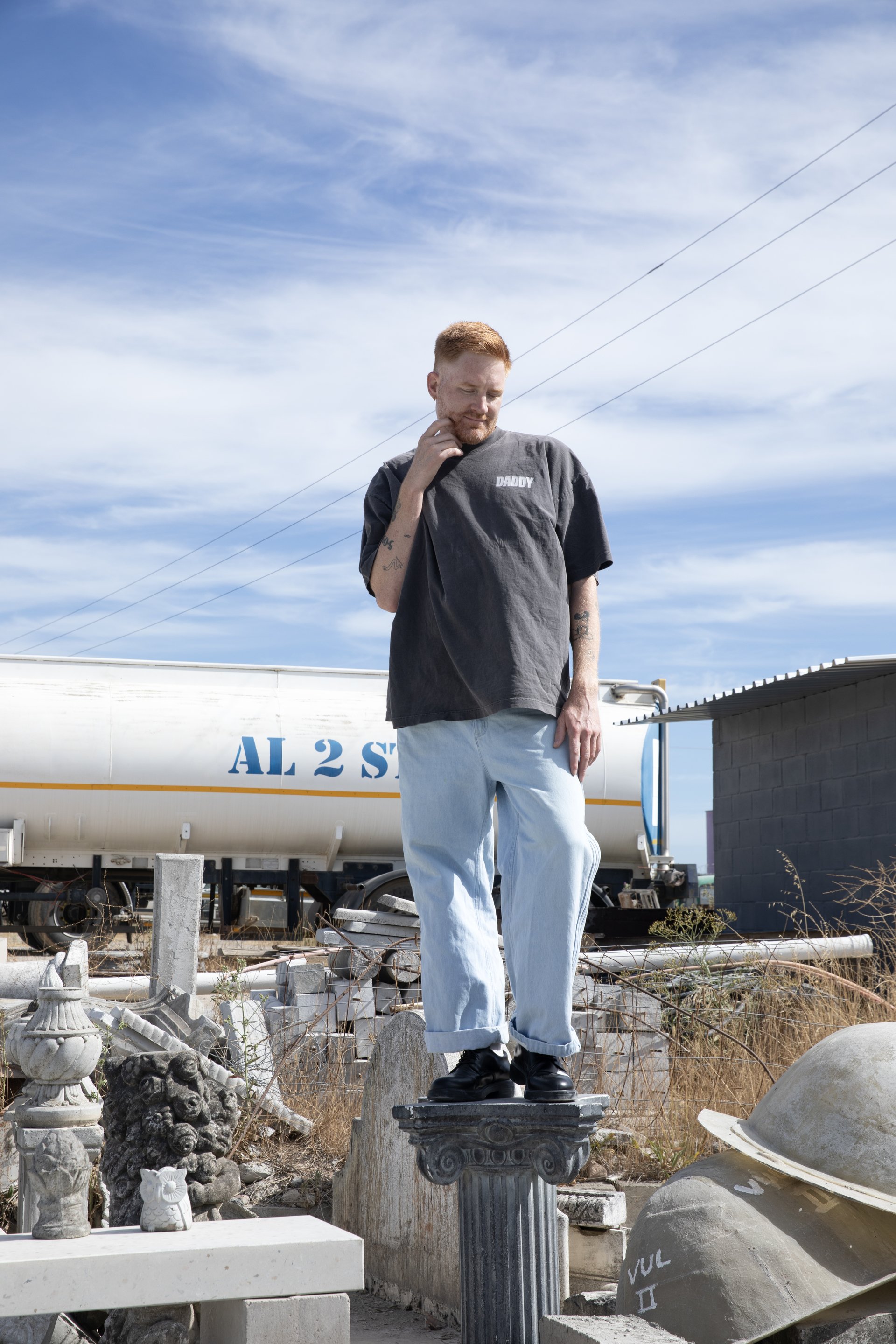
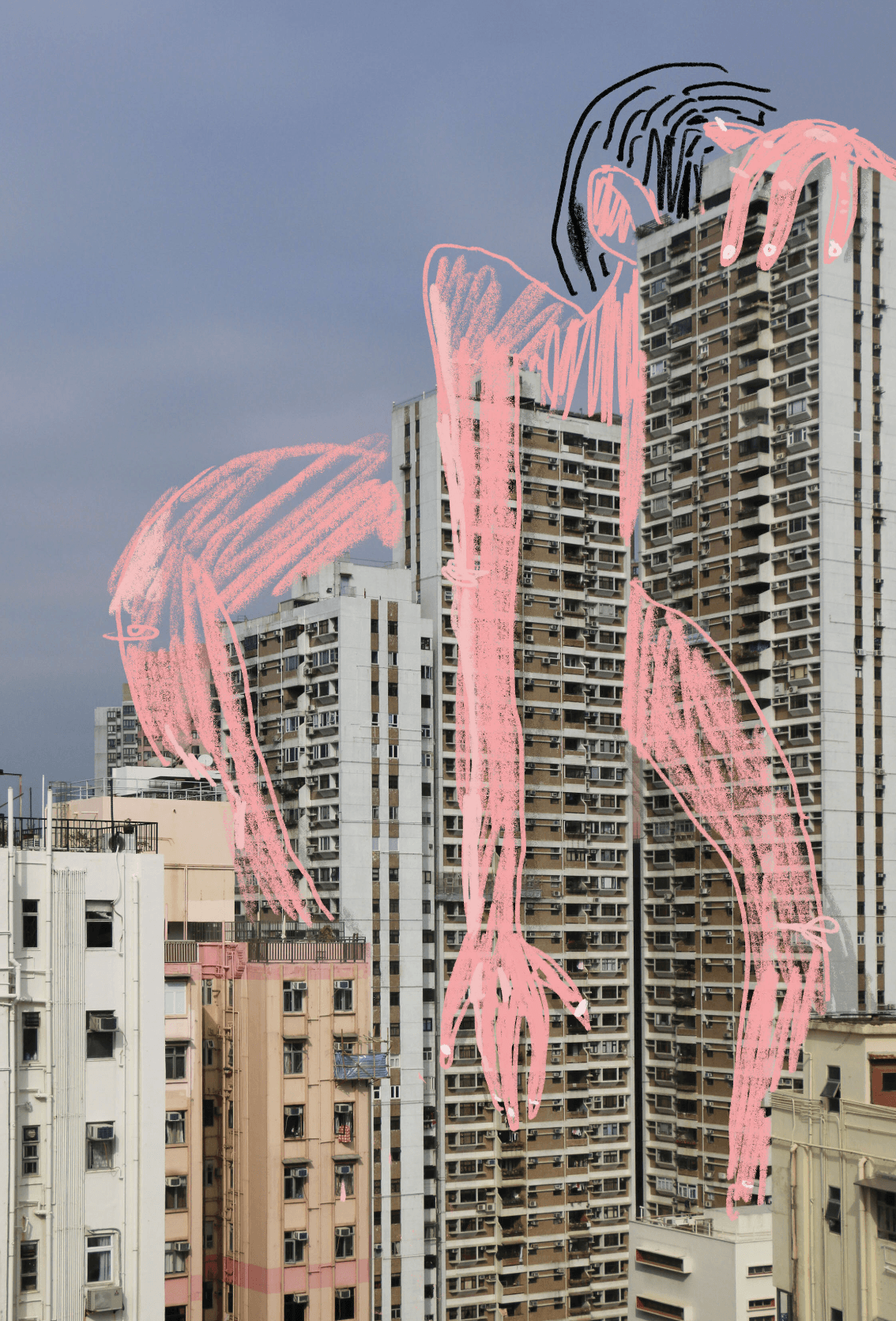
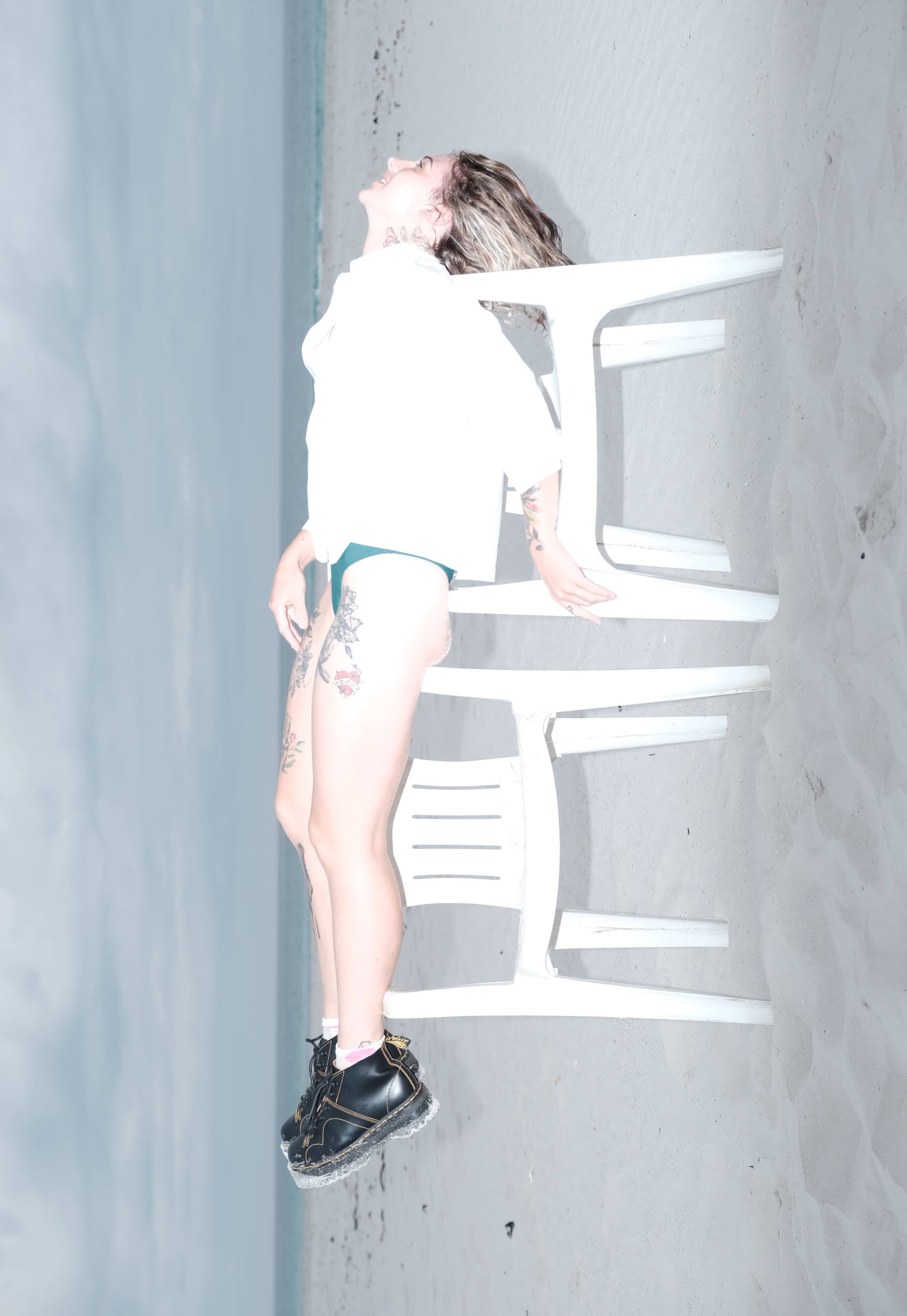
Portrait of Maggie (@carvel_tattoo) by Koooooos
“I don’t really remember ever ‘becoming’ creative,” Koos tells me frankly. “I don’t think there was a point where I suddenly ‘became’ anything. It was just always there. I’m lucky that I come from a family where my dad is an architect and my mom is a textile design lecturer, so it was constantly around me. My gran was also very creative. It felt like I was destined to do this– like it was in the air of the house.”
Creativity as an environmental factor, rather than aspirational fantasy, is the birthright of someone like Koos who grew up surrounded by creativity as a normalised, everyday occurrence. It’s in this regard that the notion of a career in the arts was necessarily something Koos coveted; noting that “Because of that, I never really thought of myself as becoming a creative person. It was just part of the environment. Design – and any version of art, really – was actually my backup plan.”
This explains something essential about Koos; that there was no mythology he needed to build to take himself seriously, no precocious self-declaration of genius. Instead, a creative life — and career — was already set in motion, waiting to be inherited and kindled; largely unburdened by performance. “What I really wanted to be was a professional cyclist. That was all I wanted. I was like, cool, that’s the plan. And then I completely burnt out from over training and racing too much at the ripe old age of 23 and had to retire from that dream. After that, I went into design.”
If cycling was the first calling, art is Koos’ first language. “My earliest creative memories are of this amazing art teacher I had called Pam. Being a young boy with a lot of energy, she was fantastic for me because she created this structure: you’re allowed to go play on the trampoline once you finish your artwork. Every time I went to my after-school art lesson, I had to finish one piece of art before I could go jump.”
“I’ve always thought she was an incredible influence because she made me work fast,” Koos reflects, “That has fed me so well in both design and illustration. There’s a speed I work at now, and I think that speed is part of the work itself. As soon as I try to work slower, or labour it more, it just feels different and less like me, I guess.”
As someone with a similar approach to speed in my own work, I’ve often wrestled with the fear that slowness contains a sort of deliberateness I may lack, and that ‘fast’ work is somehow suspicious or unserious. Koos’ conviction pushes against that anxiety; a reminder that there is a clarity in trusting the first gesture, in letting the immediate impulse guide the hand, and in following the action before the endless chattering of thought has a chance to purify or sanitise it.
Much of Koos’ work — across design, illustration, and the increasingly central world of Koooooos — is marked by the bizarre, human underbelly beneath the looseness of his visual language, though he is the first to admit that this signature has sometimes been a source of insecurity. “For me, I often feel quite insecure about the work I do because it can seem so unfinished and so crude. I look at it and think: clearly this can’t be right; surely it’s not allowed to exist at this level of not being ‘properly crafted’ or laboured over.” What Koos has learned, though, is a lesson that anyone nurturing a creative life must learn; and that’s to place all of our process, pain points and all, in its correct context. This is the practice, above all else. “Over time, you learn to trust it. You repeat the same pattern enough times where you realise: cool, the first photo you took was actually the best one, or the first sketch you did was the best one. The more you think about it, the worse you make it. The more you go into that overthinking space, trying to add layers of perfection, the more it loses something. I try to follow my first impulse, always, because it’s often what actually wants to come out.”
Design and art, “are completely inextricable for me,” Koos notes, “they’re not separate lanes.” Much of that fused identity emerges from his long-standing creative partnership with Jana, and Koos explains that, “Of course, I’m Koos, and I’m one half of Jana & Koos, which is the design studio I run with Jana. We met at varsity and studied together, and there was immediately a way of working that just made sense. We have very, very different skill sets and approaches, but we share a foundational need to make things look or feel a certain way – visually, conceptually, or emotionally.”
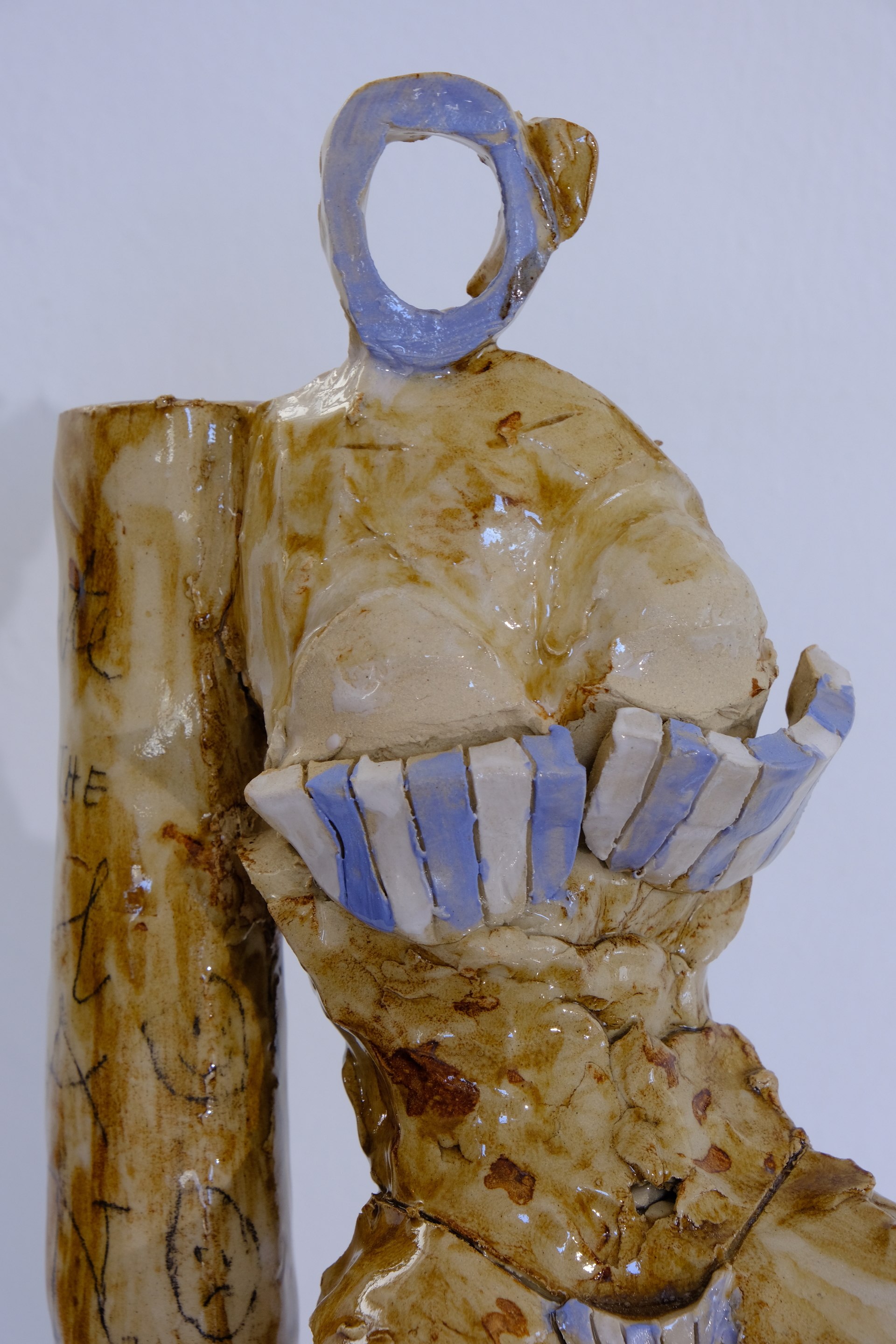
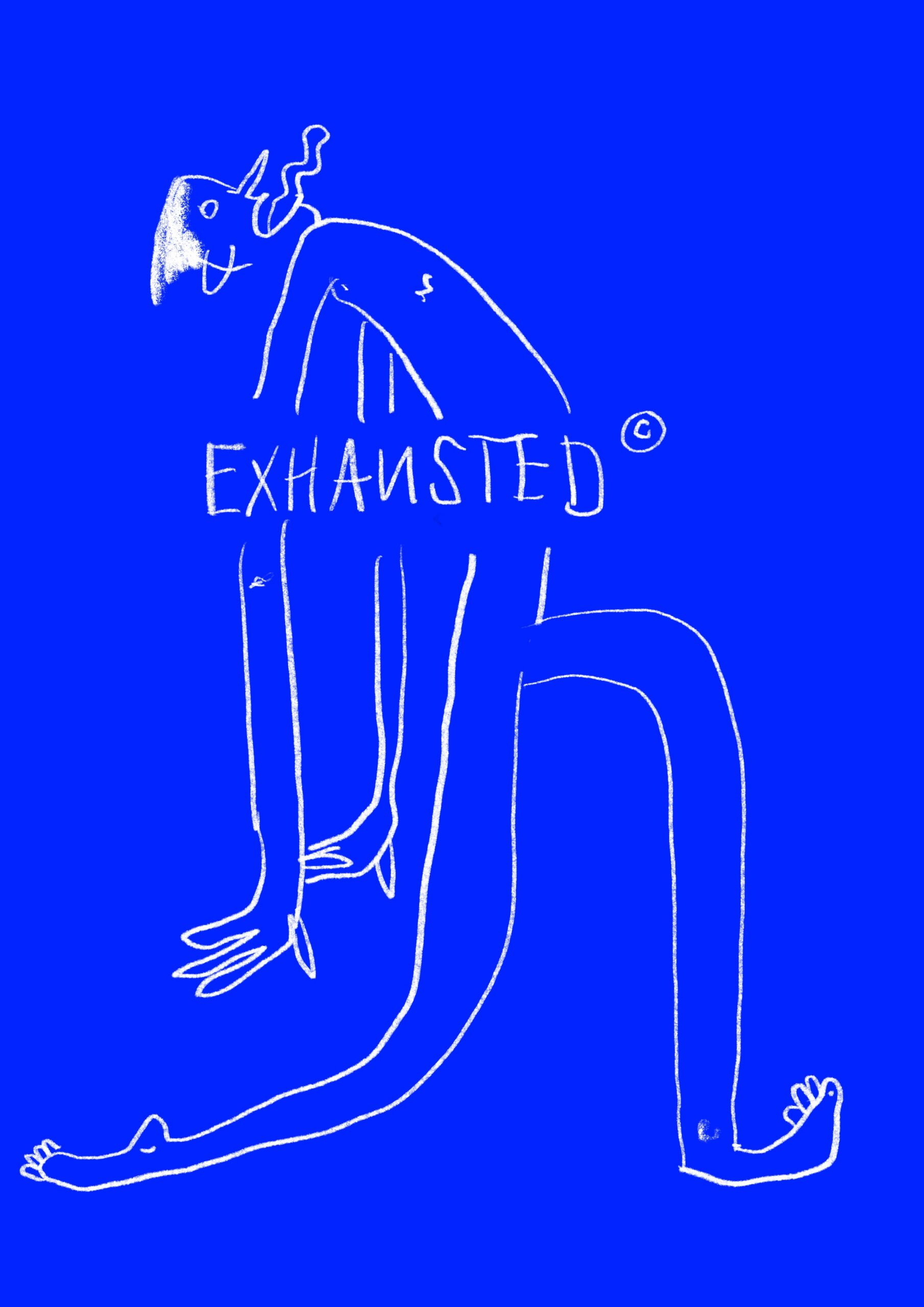
Together they’ve created a visual language that appears carefree, but is built on sharp analysis; deeply human, and always imbued with a sense of care. “People say: ‘We love your work. It’s so unfinished. You look like you don’t care.’ Which is absolutely not true. We work really hard to get to that feeling.”
When one’s creative expression is used in service of others — as has defined Koos’ career — a resistance to labels, especially the self-mythologising kind, is naturally inevitable; “I still find it hard to call myself an artist. If someone asks me what I do, I usually say: I’m a designer. Then I’ll add that ‘I draw, and I make other things around that’. As a designer, you constantly have to represent something that isn’t you. You don’t always get to say: this is my taste, this is my preference. Often your preferences have to step aside, because they’re not what’s needed.”
For Koos, the most satisfying work is the kind that makes others feel seen; the ones that begin with a client who felt unseen or misrepresented and end with someone recognising themselves, finally, in their own visual identity
This sensitivity to others — their stories, their desires — bleeds into Koos’ artistic process, one most readily understood through portraiture, though not limited to it. Illustration is Koos’ most elemental medium, and he is entering a moment of deeper commitment to it, guided by another deeply important creative partnership (Koos, self-admittedly, both loves to be flanked by powerful, attuned women, owing his creative life to the boundless presence of feminine energy and wisdom that surrounds him) with Sam Whittaker of Curatorial Edge. Koooooos would not exist today without Sam’s support and guidance, whom he exclaims is “always down for a weird idea, and to really push the work forward together.” Together, they will be exhibiting at RMB Latitudes Art Fair in 2026; a notable milestone for this next iteration of Koooooos to step into clearer view; “the show I’m working on is called Body of Work. My girlfriend Jelena came up with the name. She said it would be funny because my work is so centred on bodies, always with a bit of humour in it. I’m really focused on awkwardness. I love the awkwardness. The bits in between – the moments that feel universally understandable to people but are not the ones you usually see represented.”
Koos has somewhat of a photographic memory for observation, making mental images throughout his everyday life to revisit later; “For example, that moment where you’re putting on a sock and you lose your balance – to me, that’s a drawing. We all know that feeling, but we don’t see it in pictures or visual culture very often. We usually see the polished, staged versions: people in love, or people at their best.”
This fascination is rooted in the surreal strangeness of ordinary bodies, a principle source of inspiration that feeds Koos’ work; “our bodies and the way we use them are so strange and interesting. It’s actually quite abstract, if you think about it. We live in these absurd, abstract physical forms, bumping into each other and into objects, and then we also try to act normal. It’s odd. I’ve always loved that oddity.”
Illustration captures that oddity with stark efficiency, Koos explains, noting how “illustration is incredibly powerful because with a few lines you can capture a feeling that is so true and so universal. Sometimes I’ll look at a drawing and think: if this had to be photographed properly, it would take a three-day shoot, with pre-production, lighting, casting – everything. And instead, you just manage to catch it in a few lines.”
Koos is learning to accept where he is, and where he isn’t, and right now, he is figuring out what kind of artist he wants to be and what kind of work he wants to make. Earlier this year, Koos tells me, he felt the pinch of expectation — the “big next step” narrative that trails so many artistic careers. “At the beginning of the year, I felt a lot of pressure, like: you’ve got to do this, you’ve got to do it full-time, what’s the big next step? Then I decided to take the pressure off. We put these weird milestones on ourselves – by this age I should have done that, and by that age I should have done this.”
Letting go of those timelines has, thankfully, returned him to something more durable and reminiscent of his childhood; that a creative life, without prescription, just is. It is a way of existing in the world that needs neither beginning nor end, and is marked only by what captures one presently with focus and attention. “As soon as it feels like I’m chasing those things, the work shifts in a way I don’t like. I want to keep it about making things. I want to keep it at a pace where I can still be doing it when I’m very old and still enjoy it. It was a nice realisation to say to myself: you don’t have to make every idea you have this year. You can leave some for when you’re 60. That’s okay.”
The studio — his long-standing partnership with Jana — remains the grounding force in his professional life, and neither he nor Jana has ever subscribed to the traditional growth arc. “Historically, in both design and art, there’s this assumed growth trajectory: you start here, and every year you must grow and double and scale. Jana and I have always pushed back on that. We don’t want to become this huge, mammoth thing. We don’t want success to only be measured by how big we get, how much we can charge, or how fashionable we are. The success metric, for us, should be the work itself – what we do and how we do it.”
In the end, and mantras aside, there seems to be one truth of Koos’s world that I am struck by. His work lives because the people do, and his art is not an escape from life (as much of art can be) instead, it is a distillation of it — the utterly comedic quality of being alive, replete with all its discomforts and shared strangeness. As Koos steps into whatever shape this next iteration of himself takes, he does so without urgency or grandeur, trusting that the instinct that has carried him this far will carry him still.
Does it get more human than this?
Follow Koos on Instagram here
Visit Koos’ website here
Follow Jana+Koos here
Visit Jana+Koos’ website here
For more news, visit the Connect Everything Collective homepage www.ceconline.co.za