
Getting older means bowing to the burdens of responsibility – putting down the cigarettes you once clung to, and monitoring your lifestyle and its risks more closely. It means confronting what constitutes a ‘good’ and ‘healthy’ life, minimising mistakes in the process. Our wider society, having also matured alongside advancements in science, technology and economics, has followed the same path. Discourse surrounding protein-rich diets, polyphasic sleep schedules (derived from the German Übermensch theory), or reified corporate pursuits seem to define our era, overwhelming my feed while preaching productivity and restraint as a sort of status symbol. Over the last few years, we’ve become obsessed with tracking and analysing every last data-driven detail of our lives in order to mitigate the threats that compounded the more that modernity advanced. Objectively, this is a good thing. After all, it’s difficult to rationalise hedonism when your career or your credit card bills are being called into question. So we optimised. But recently, something has shifted.
As the goal posts of perfection became more difficult to reach, the act got tougher to pull off.
And now, as seasons turn and the year comes to a close, effort quotas are reaching their limits and people are starting to pick up their bad habits once more. Slowly but surely, our obsession with risk seems to be dwarfed by more existential realities, more bad moods. As a result, a countershift seems to be budding in the collective consciousness. After a long period of hyper-healthy, hyper-productive obsessions with regiment and routine, the public health pendulum seems to be swinging the other way. With it, is the resurgence of smoking, the uptick in house parties and red lipstick sales, the embrace of singledom, and a final dismissal of the lingering COVID isolationism. A new era of loud luxury, messy girls, and epicurean enjoyment enters the chat.

All imagery courtesy of Pexels

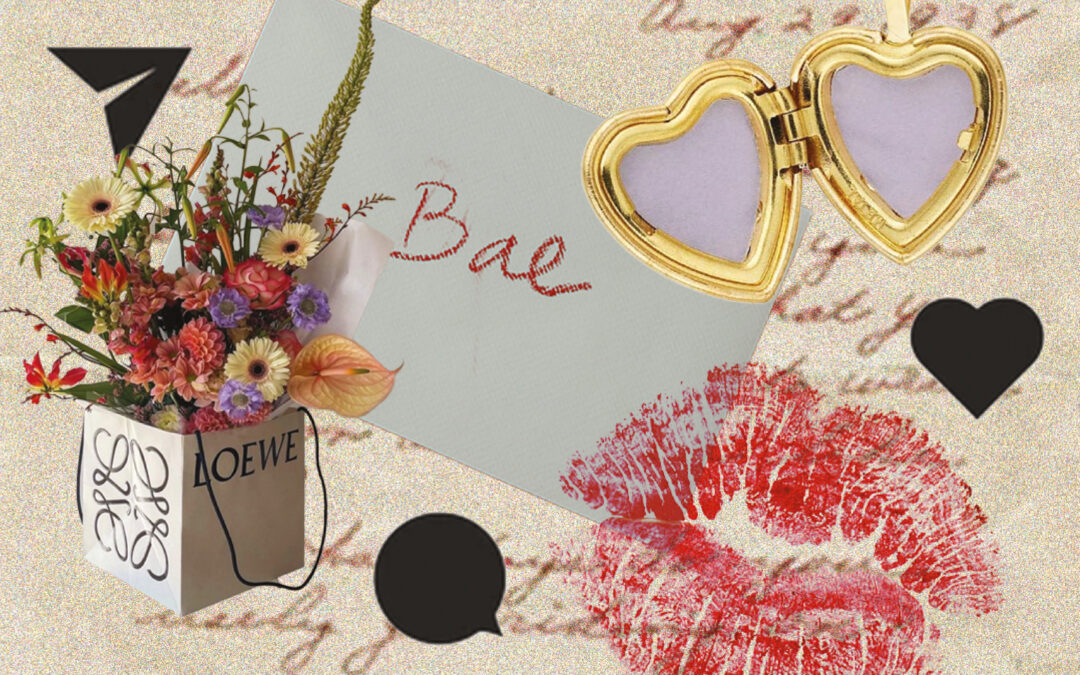
So, don’t be surprised if, at your local small plates bar, you see the girlies wielding slender rollups, drinking filthy martinis, clocked off of work two hours too early. Chances are, they’re discussing a night out, saying that ‘the price of community is inconvenience’. Their feeds are likely full of Skins screengrabs reminiscent of Tumblr mischief, and their renewed obsession with Sex and the City – TV’s most self-destructive, smokey daytime drama – is embodied in their lightly toxic, somewhat delusional, attitude to life and love. Some will say that this naughty new mood is influenced by the likes of Charli XCX and her posse, who light up in Y2K-inspired outfits, clubbing and drinking as though the Surgeon General never pronounced that smoking causes cancer. Others will blame Addison Rae, who, clutching a cigarettes between her toes, reimagines an ‘it-girl’ aesthetic beyond the bounds of a 1000 step skincare routine and a clean-girl slick back.
Even in fashion, we’re seeing a shift towards decadent maximalism. Designers like Dilara Findikoglu skyrocket in success with medieval-inspired fashion, romanticising our own version of corporate aristocracy offset by plague, pox and paternalism. Even Marie Antoinette makes a comeback, reified in a new Manolo Blahnik range and a cover shoot with Miley Cyrus. Antoinette’s famous line ‘let them eat cake,’ resonates now too: centuries later, here we find ourselves in fashion and in life, embracing recklessness while the world spins off of its axis. But more than celebrity influence, what really motivates this nostalgia for hedonism?
In a socio-political climate where the bad news seems never-ending, you can’t really blame people for succumbing to temptation now and then, throwing out their meal-prep and early bed time in exchange for something sweeter. Frankly, life is confusing, and the pressure to optimise weighs heavy. Sometimes the best we can do is embrace our vices, hoping to ease the stressors of a difficult life. As the saying goes, everything in moderation – even moderation. Moreover, according to certain sociological theories, this return to hedonism was always a predictable outcome.

All imagery courtesy of Pexels

Public sociologist, Ulrich Beck, uses ‘Risk Society’ to describe our collective preoccupation with controlling risk in the Anthropocene era. Unlike previous societies which assumed that death and wealth were brought on by the gods, a Risk Society does everything it can to prolong life. In contemporary times, that looks a lot like infrared saunas, blue zoning, Apple Watches, and pastel pilates hubs popping up everywhere. However, Beck imagined that, eventually, “reflexive modernity” would kick in – risk society’s second phase of awareness. In this phase we discover that, regardless of our personal improvements, we’re still implicated in the wider risk caused by forces like climate crisis, political conflict or economic downfall. Consequently, we shift focus from risk mitigation to moderate apathy, slowly losing interest in conforming to what institutions recommend for health, wealth and progress.
In other words, we fucked around, found out, and finally decided to throw caution to the gale force winds. We’re realising that our solutions are also our downfall. Remember when we thought that replacing cigarettes with vapes would save us from cancer? Cut to 2025 and the lingering presence of nicotine and heavy metals (in the form of oral USBs) proves that our calculations are often misguided. Or take the rise of social media, for example: humanity solve for networked connection, also characterised by addiction, AI slop and monocultural brainrot. No matter what we choose, it seems we’re mortal anyway – so you might as well have a good time.
In a moment where nothing (not even basic human rights) feels guaranteed, perhaps it isn’t so surprising that, for better or worse, we’re starting to let go. To be fair, it’s been a year. Personally, I’m ready to loosen the reins. Collectively, it seems like everybody could use a rest too. Now, I’m not saying that we should all collectively pick up some marlboros and clear out our bank accounts at the club, but I am definitely thinking that a bit of indulgence is not such a bad thing. Because no matter how much we define and analyse risk, using the latest tech to aggregate our state of wellbeing, the reality is that control is – mostly – an illusion, and maximum restraint won’t necessarily save us from whatever else might kill us. So then, got a light?
Written by Drew Haller
For more news, visit the Connect Everything Collective homepage www.ceconline.co.za