Recreating art history through an African lens with Zandile Tshabalala

“I tend to think that having that extreme colour, that kind of black, is amazingly beautiful… and powerful. What I was thinking to do with my image was to reclaim the image of blackness as an emblem of power.”

– Kerry James Marshall

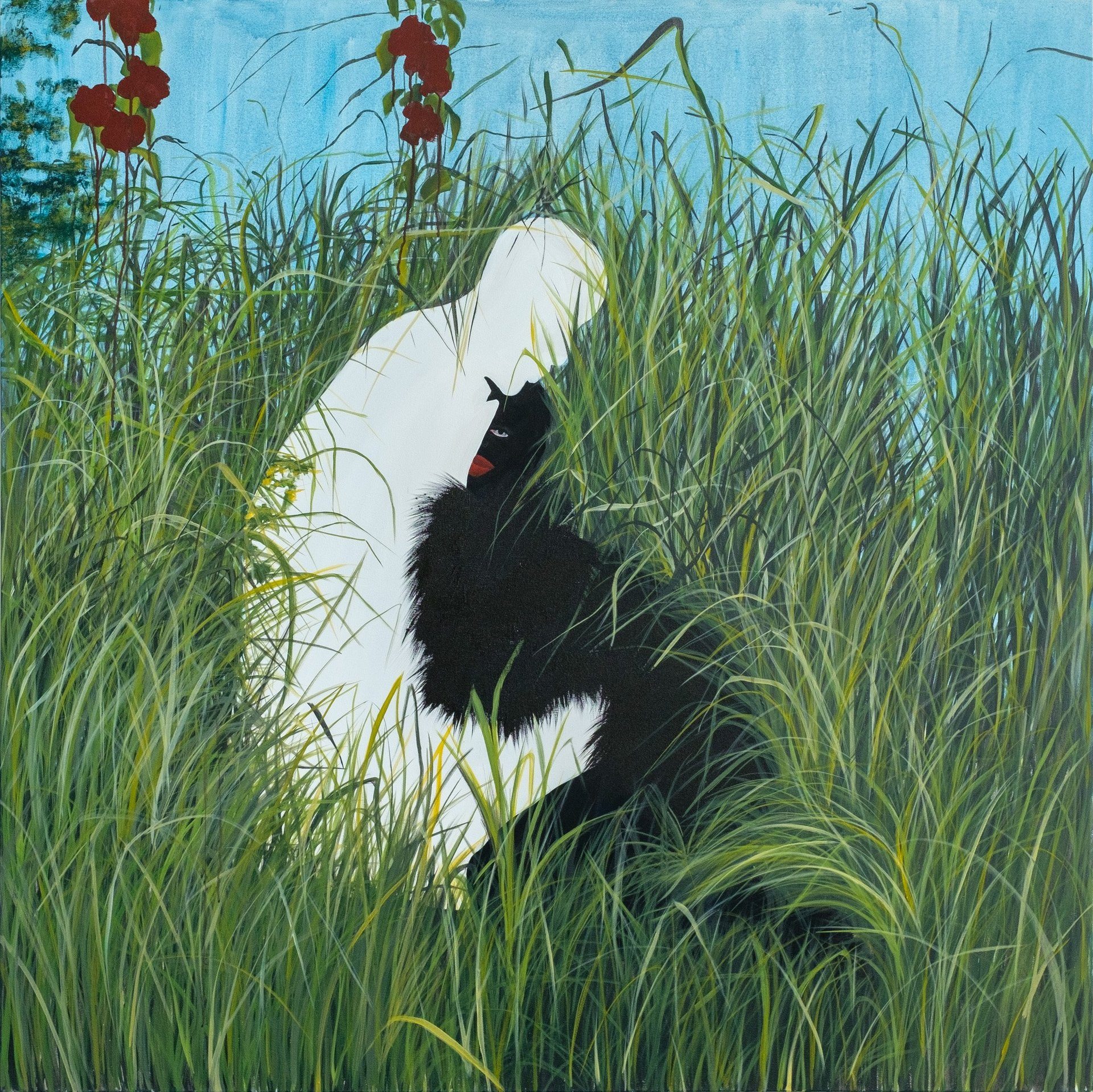
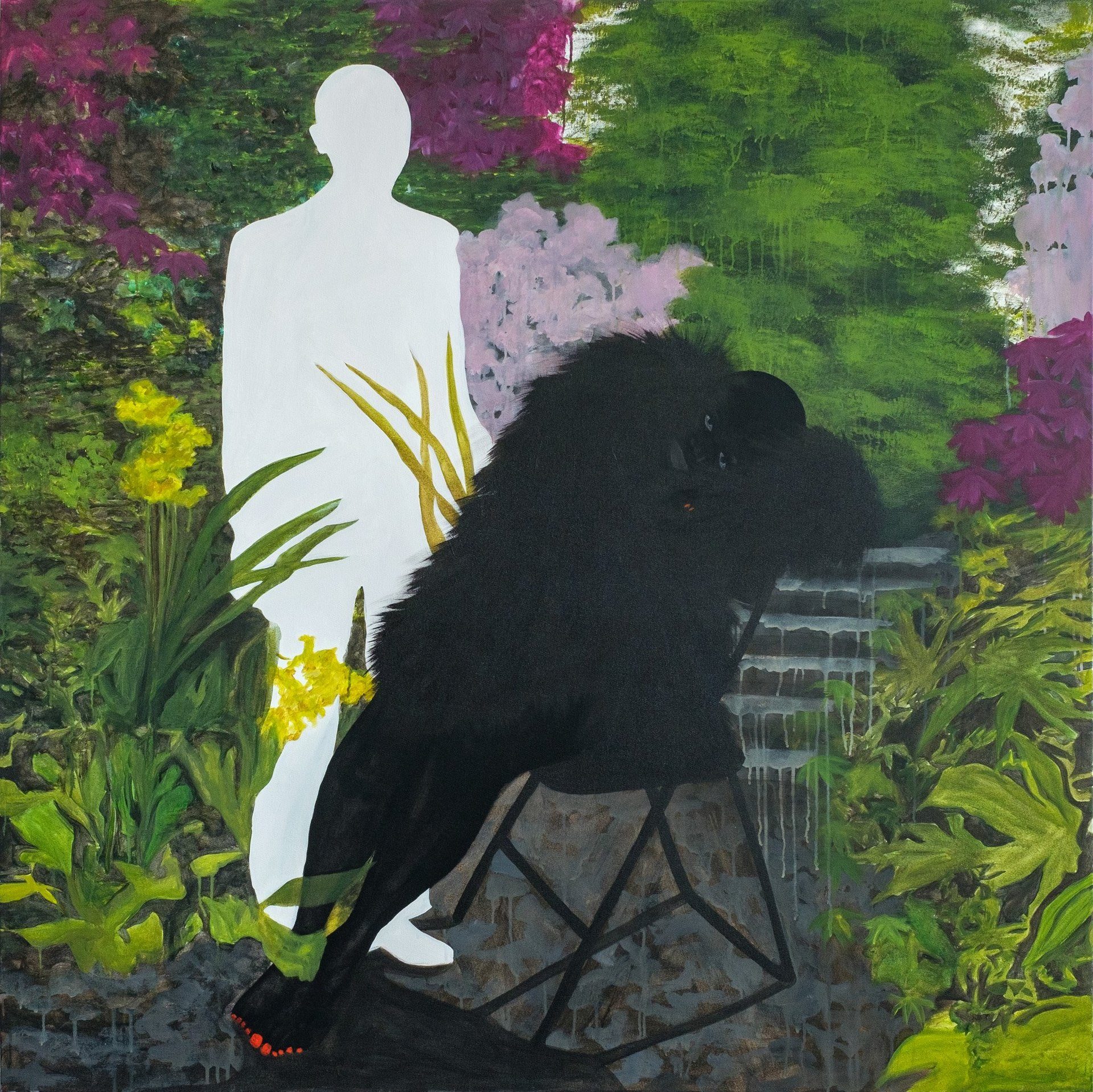
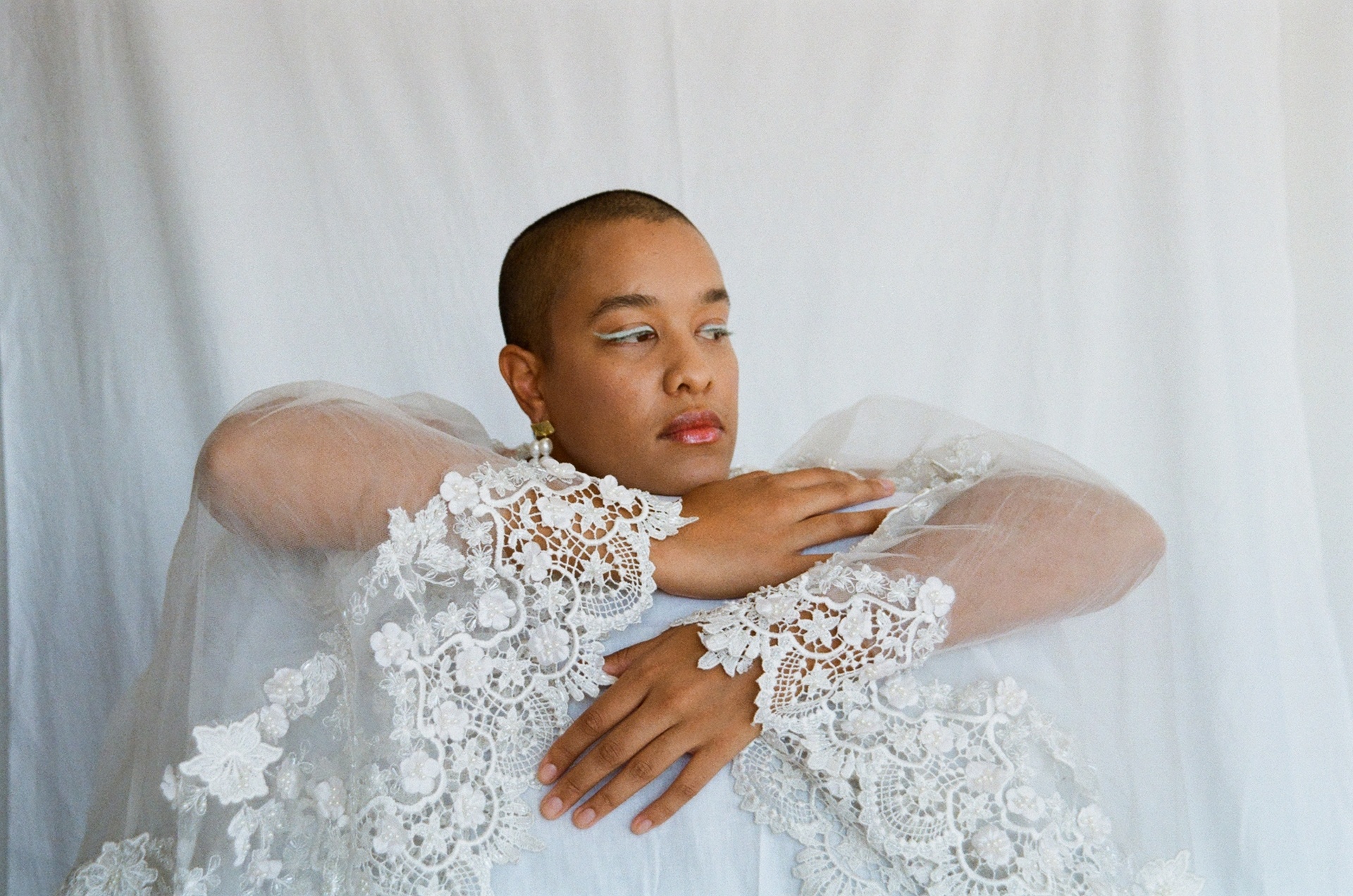
Opening on 2 July 2022 at the enigmatic Johannesburg-based BKhz Gallery nestled on Keyes Avenue in Rosebank, Zandile Tshabalala presented her first solo exhibition on South African soil, titled ‘Lovers in a secret place’.
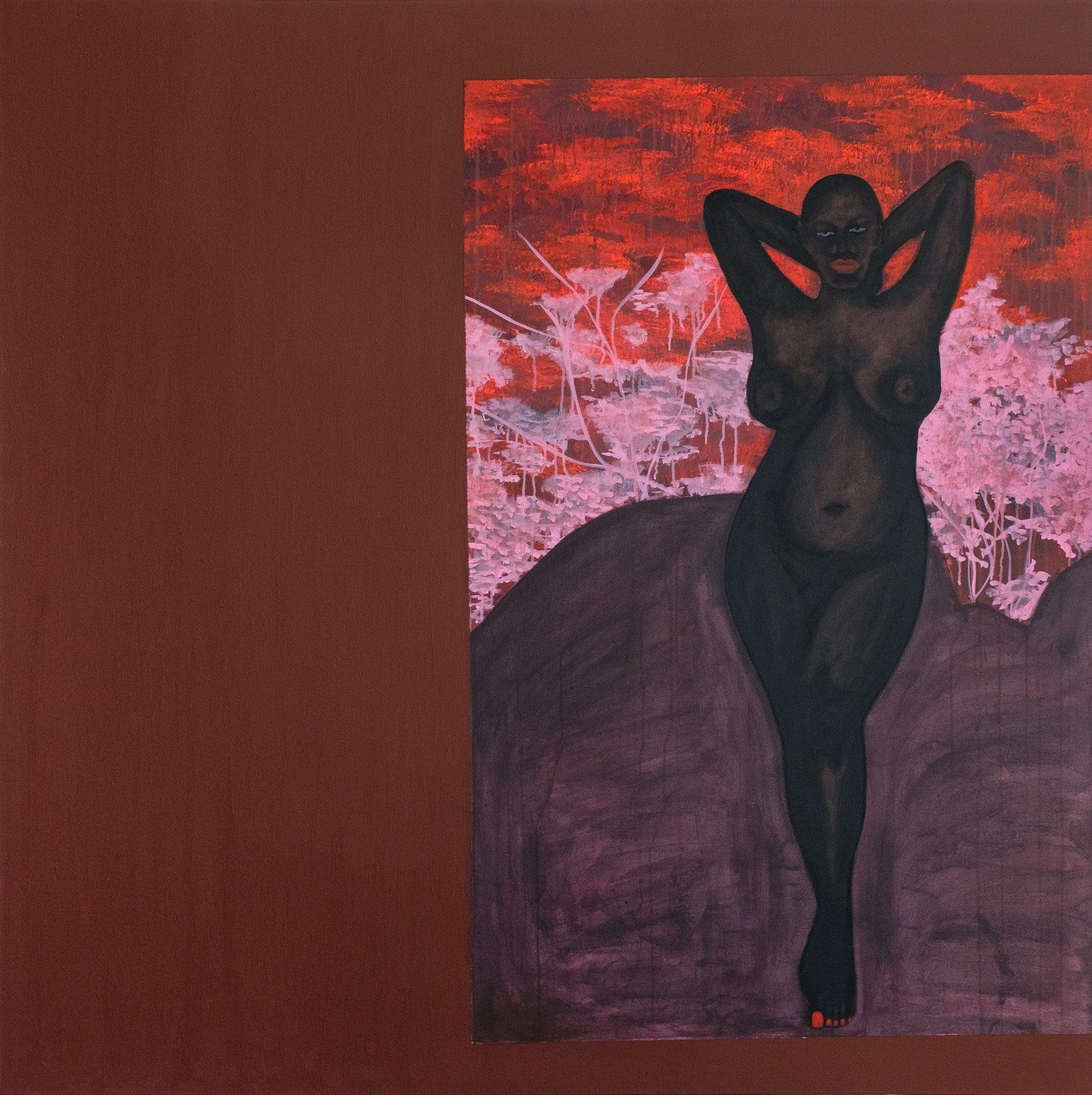
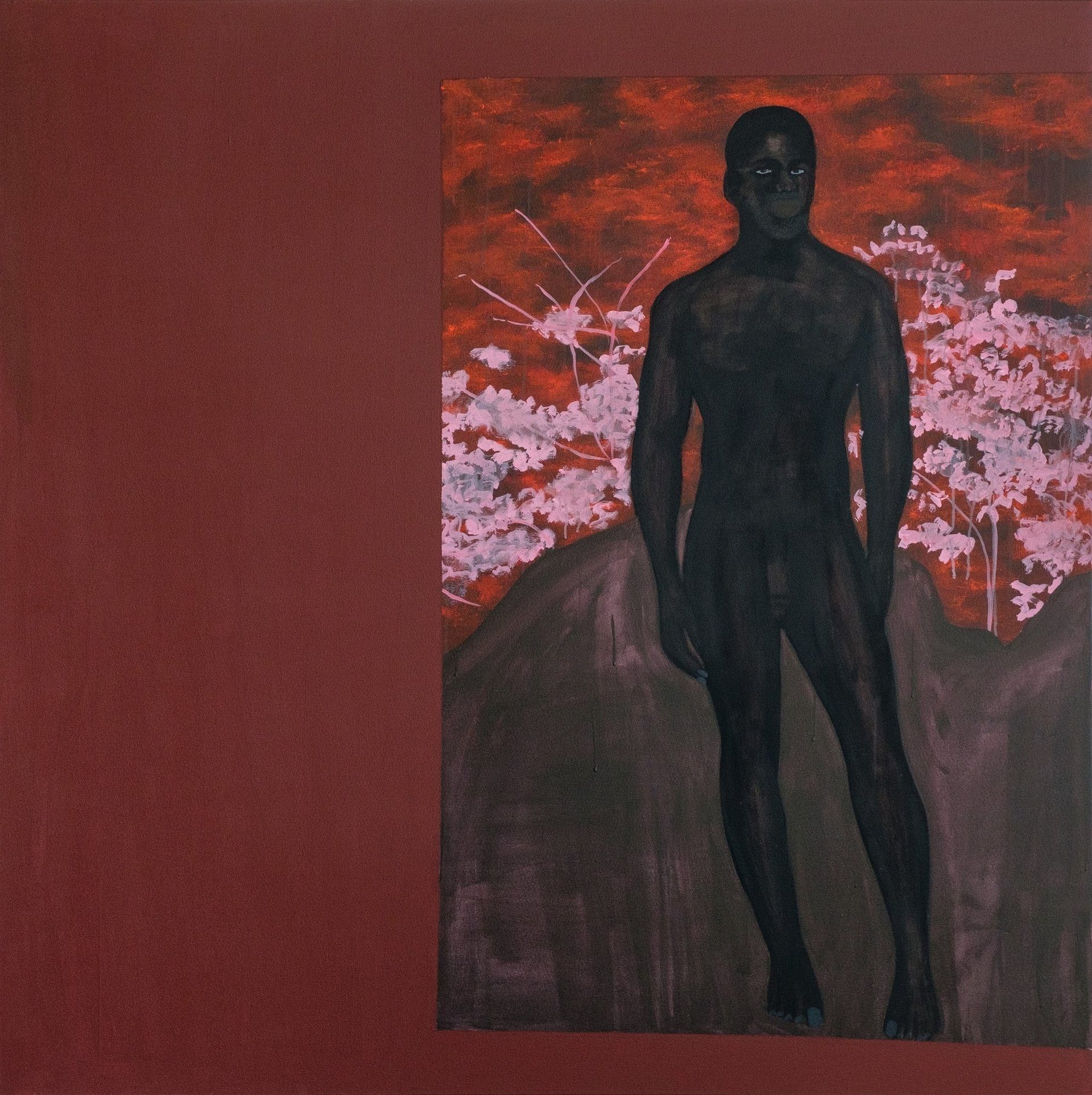
For those of you who may now know her (yet), Zandile Tshabalala is a Soweto-born fine artist and a recent graduate from the University of the Witwatersrand. Her work speaks to contextualising art history through a Black narrative – Our narrative – and is laced with her reinterpretation of culture through an African lens. I’ve been quietly-yet-ardently following Tshabalala’s art career – from nascent global exhibitions right through to collaborations with global luxury fashion houses such as Bottega Veneta, and more. I found her artist bio, posted on the BKhz Instagram, in the lead up to her first local solo exhibition to be an apt description of what her work resembles:

“Born in Soweto, South Africa, Tshabalala’s work expresses her interests in topics of representation particularly the representation of the Black women in historical paintings. The artist noticed a pattern whereby the Black woman in paintings was usually placed at the background and starts to disappear almost as if she is not present or is placed in compromising situations that reinforce the idea that the black woman is inferior and should be marginalised. 

The artist felt a strong need to challenge these ideas and give back the Black woman’s voice in her paintings by placing the Black female figure in a powerful position that allows her to be in control of her own body and the gaze that is exchanged between her and the viewer. The artist then starts to tap into topics of beauty, sensuality and the relationship between the Black female body and the landscape.”
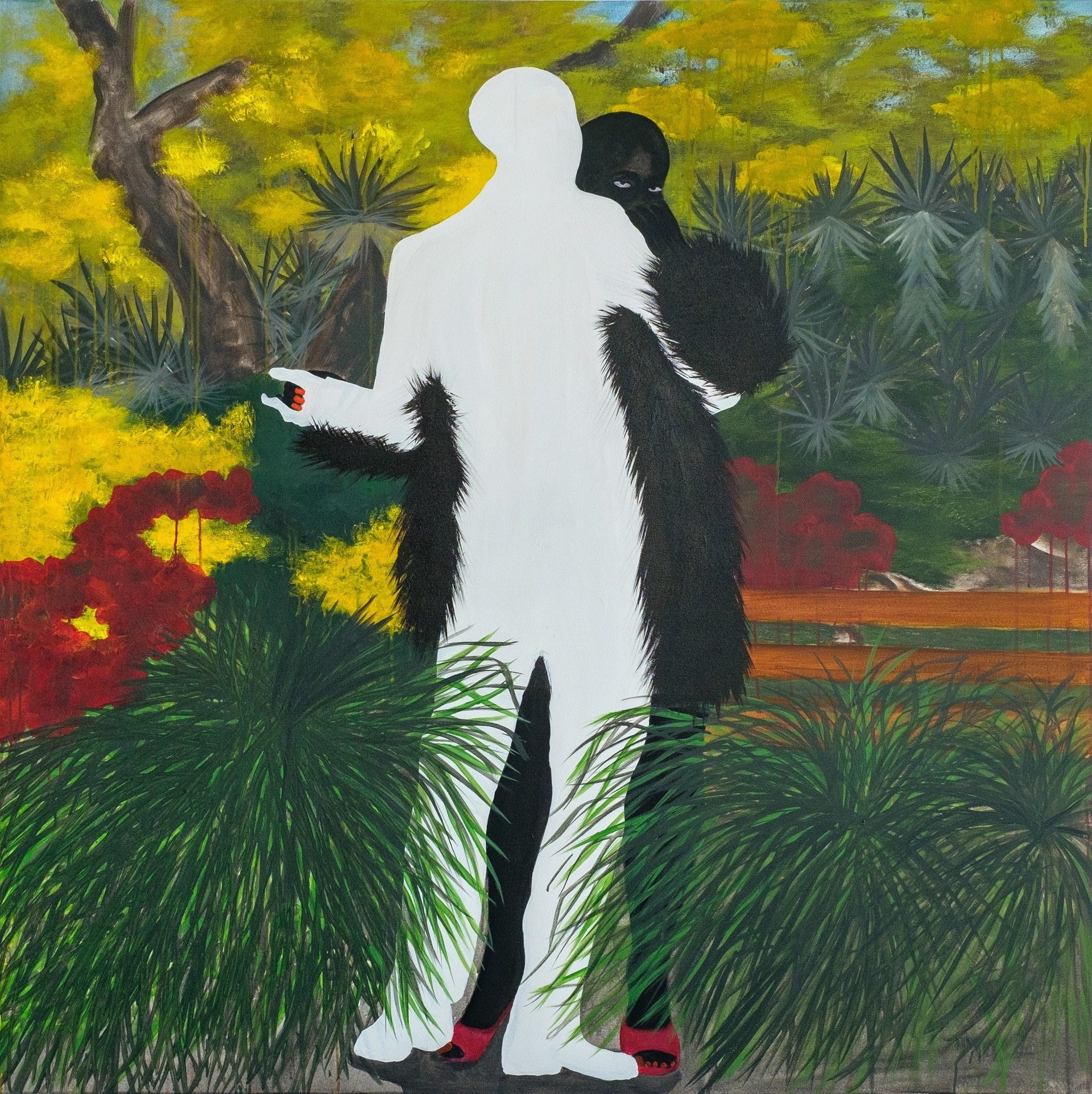
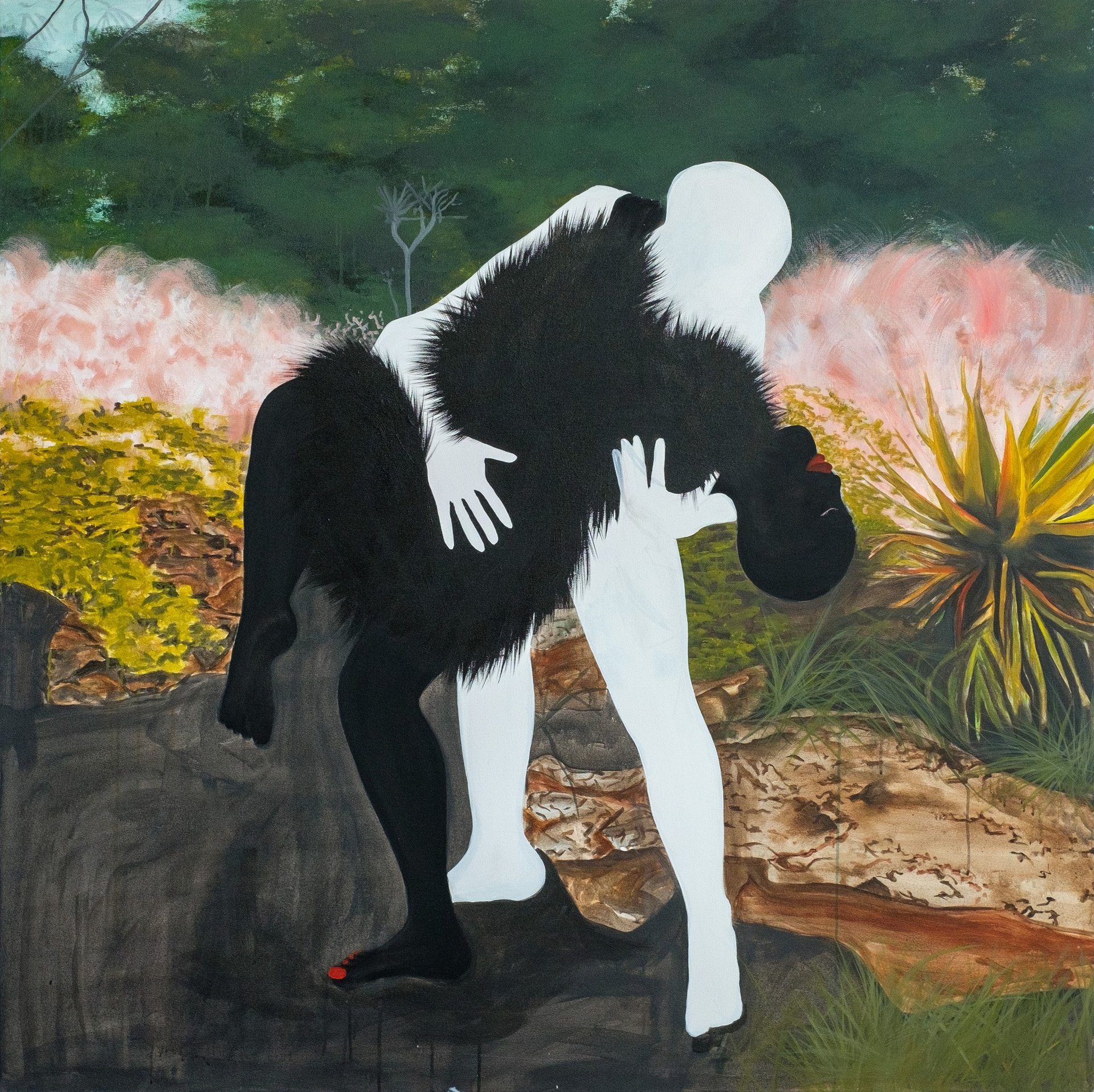
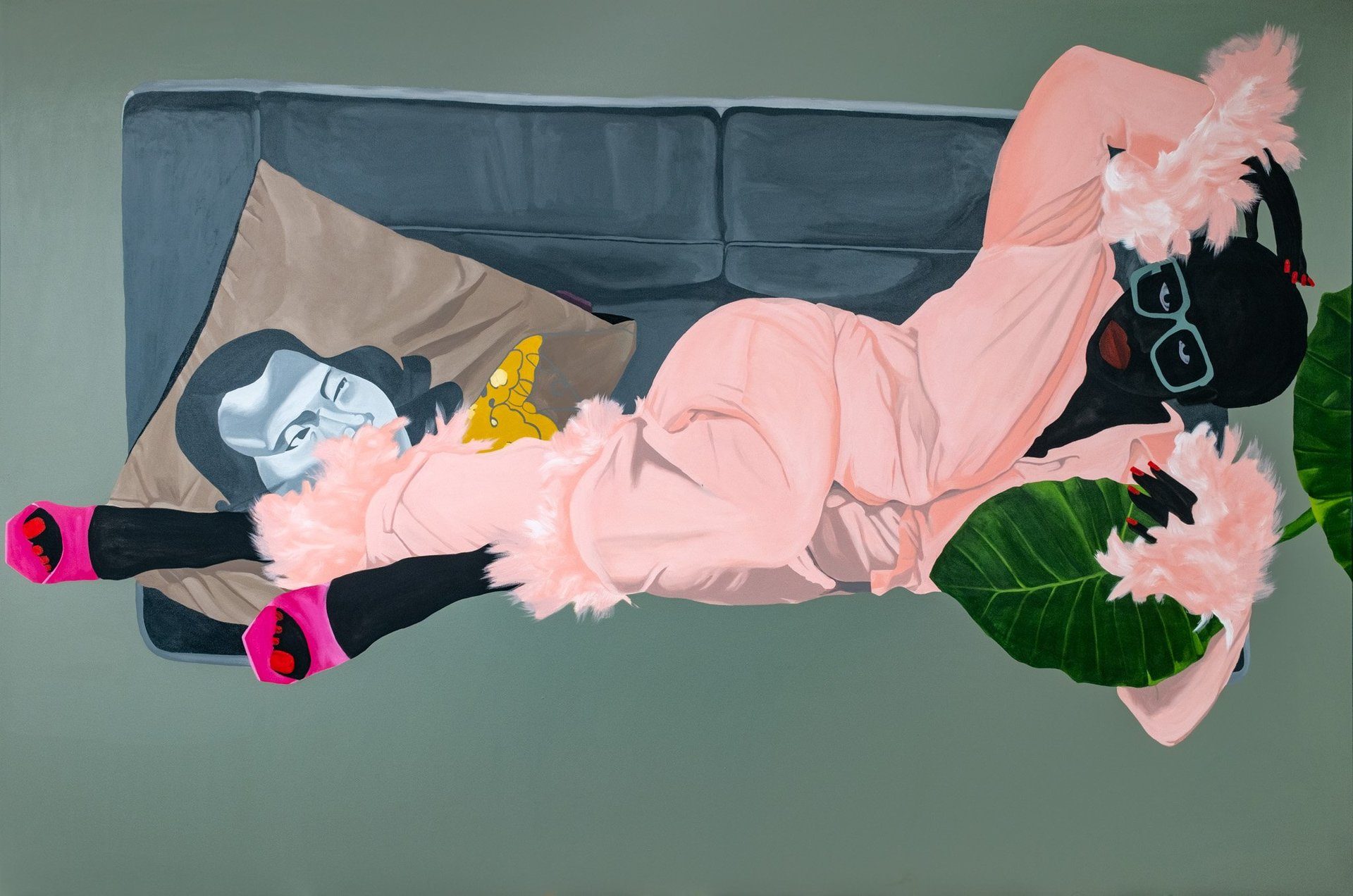
This relationship to recreating culture according to the Black woman’s perspective is evident within stand-alone works such as ‘Lady in Pink Stilettos’ (2021) and ‘Sweetest love’ (2022), which formed part of the ethereal exhibition recently held at BKhz. The latter even introduced a collaboration with FF Rooftop Farm for the work planting the indoor garden to accommodate the opening.

There’s a new vanguard of young Black fine artists taking control of their personal narratives, and translating their work globally. Tshabalala is right at the forefront of it and ‘Lovers in a secret place’ was an enchanting experience, eloquently and expertly curated by the BKhz team. This team included the owner of the gallery himself, Banele Khoza, and his team of Papi Konopi, Kwanele Kunene, Mankebe Seakgoe and Francesco Mbele. And aside from the art pieces being displayed by Tshabalala, the main highlight from the entire exhibition is how her work invites all audiences to come engage, and enjoy, the artistic experience.

On the night of the opening, you could see the room filled with just as many Gen Z’ers and Millennials as parents and grandparents. That’s the magic of Tshabalala’s work – she has the inherent ability to earnestly relay her human experience, and source genuine inspiration from her culture and ancestry. Engaging with her art feels so honest and integral; I liken it to the feeling of finally remembering. The feeling of celebrating an extremely joyous occasion at home with your people can be attached to the same palpable feeling of excitement rotating through BKhz on that opening nigh, in which the team had create an indoor forest of living, breathing plant life to accompany – an immersive experience, situating the viewer in the garden itself. 

To speak a bit more on Tshabala’s artistry and technique – her work primarily consists of using acrylic and oil paints in order to create her signature dreamlike dark-figures. Immediately once I saw a Tshabalala artwork for the first time, it reminded me of the work of the American legendary Black fine artist, Kerry James Marshall. So, when researching Tshabalala’s discography for this article, it was reaffirming to come across the following on her artist bio on Artsy:

“Zandile Tshabalala’s arresting figurative works write new narratives around the roles that Black women play in art history. Inspired by artists like Kerry James Marshall, Henri Rousseau, and Njideka Akunyili-Crosby, as well as personal experiences, Tshabalala says her portraits are meant to “to re-represent the Black woman in a more confident, sensual, beautiful manner.”

Using acrylic and oil paints, her dark-skinned figures recline on taupe chaise lounges and cloudlike cream duvets, or are situated within teeming, dreamlike landscapes reminiscent of Rousseau’s Post-Impressionist paintings. By situating her figures within settings that were painted over and over again throughout the history of art—landscapes, sensual boudoirs, the artist’s studio—Tshabalala deliberately inserts Black women into the canon that had previously excluded, marginalised, and disrespected them.”
And the artist continues to infiltrate the global art diaspora and spread her wings, showing no signs of slowing down the creative momentum which she has managed to amass over the past few years. Not too long ago, she formed part of a group exhibition at the prestigious Art Basel exhibition in Switzerland, and is now concurrently running another exhibition, ‘In search of my mother’s garden’, at Kunstmuseum Magdeburg, a prestigious art museum in Germany.

Tshabalala is the embodiment of what it means to be an emerging global talent – a young artist who valiantly promotes her African heritage, and empowers where she comes from.

Lovers in a secret place’ is on until 20 August at BKhz Gallery in Johannesburg.
/// View the show virtually

Written by: Odwa Zamane

The Amazing World of Broke Boys

“This one is dedicated to every individual who has supported us, relates with us, engaged with us and more importantly; it’s for those who believe in the power community.” – BROKE 

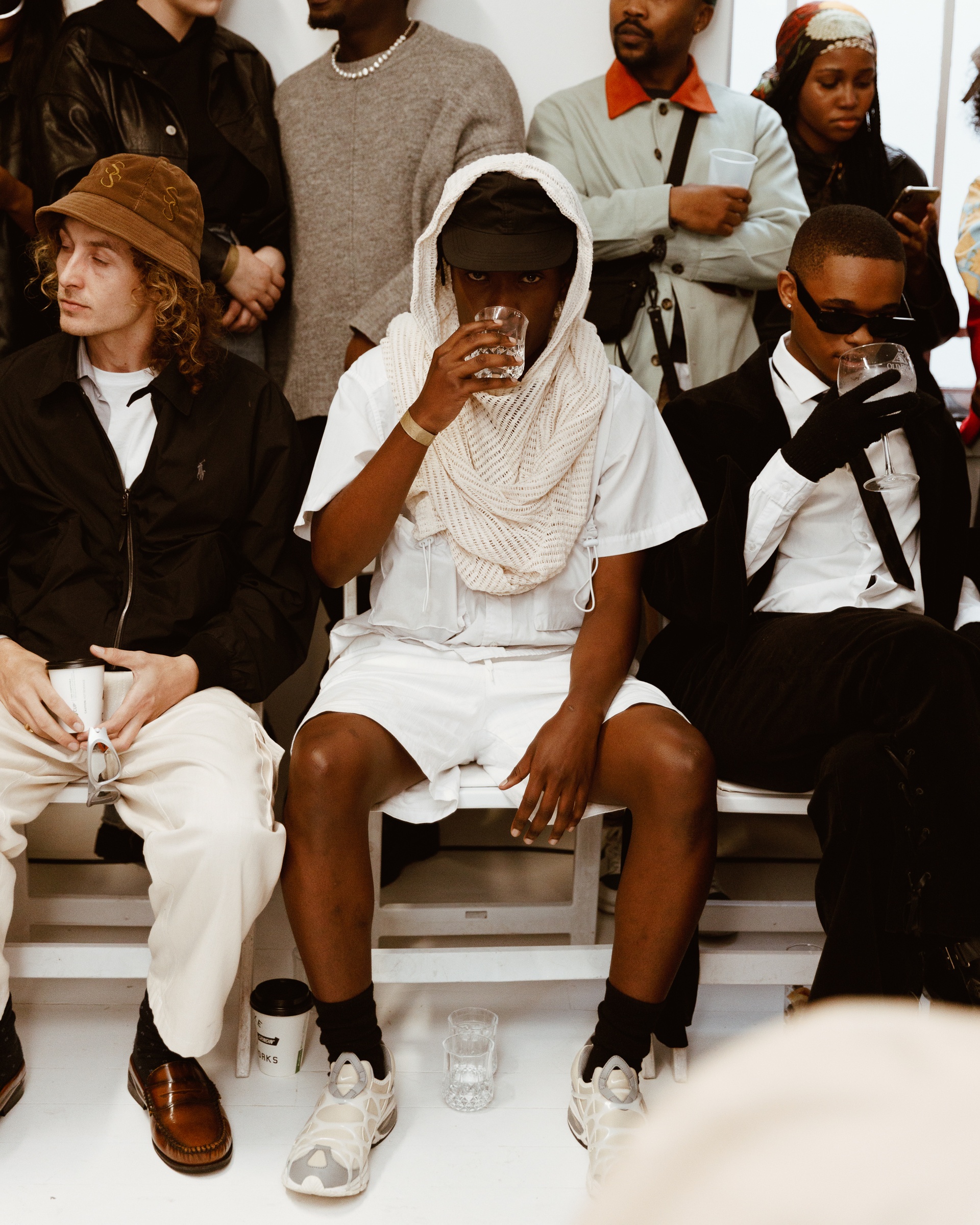
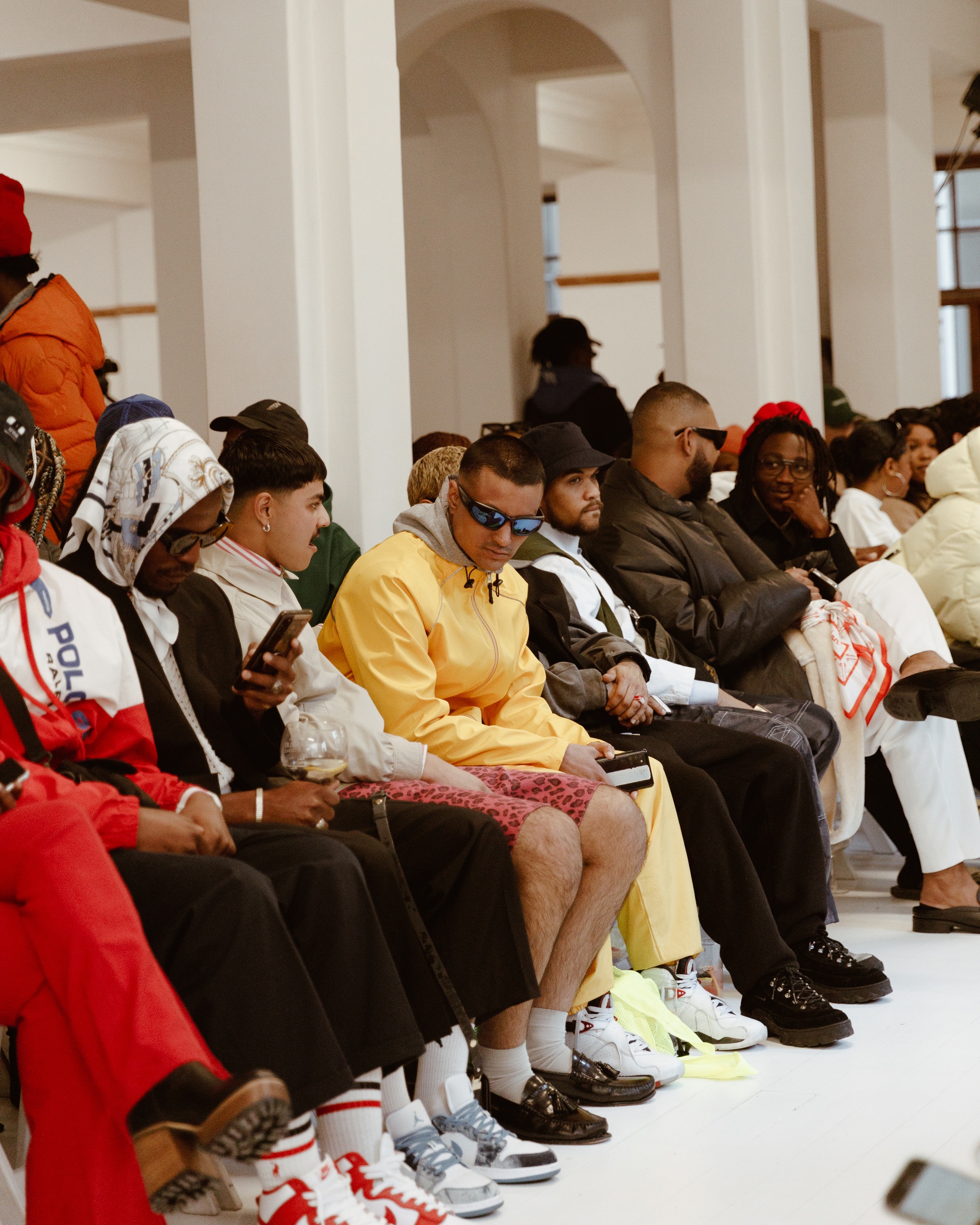
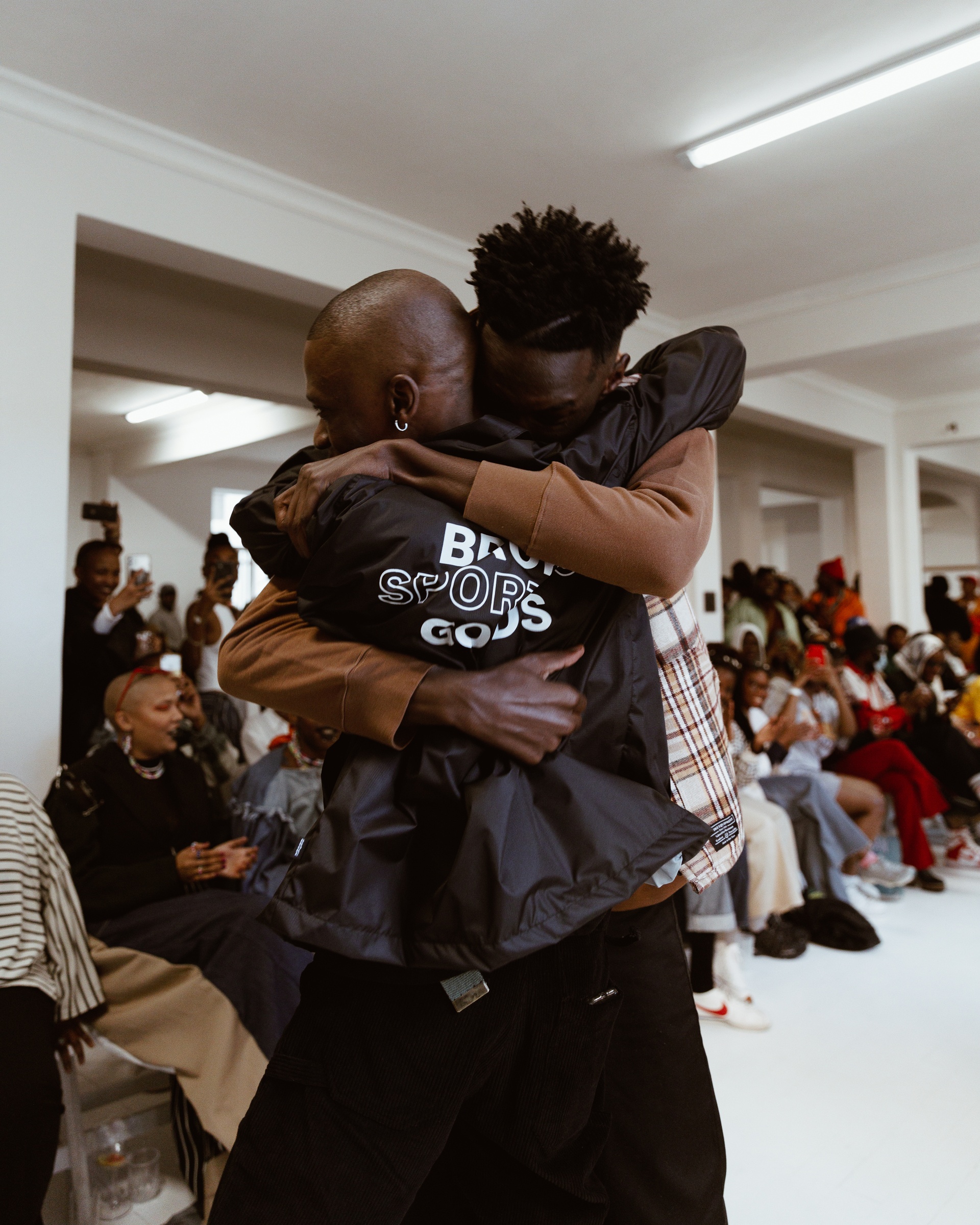
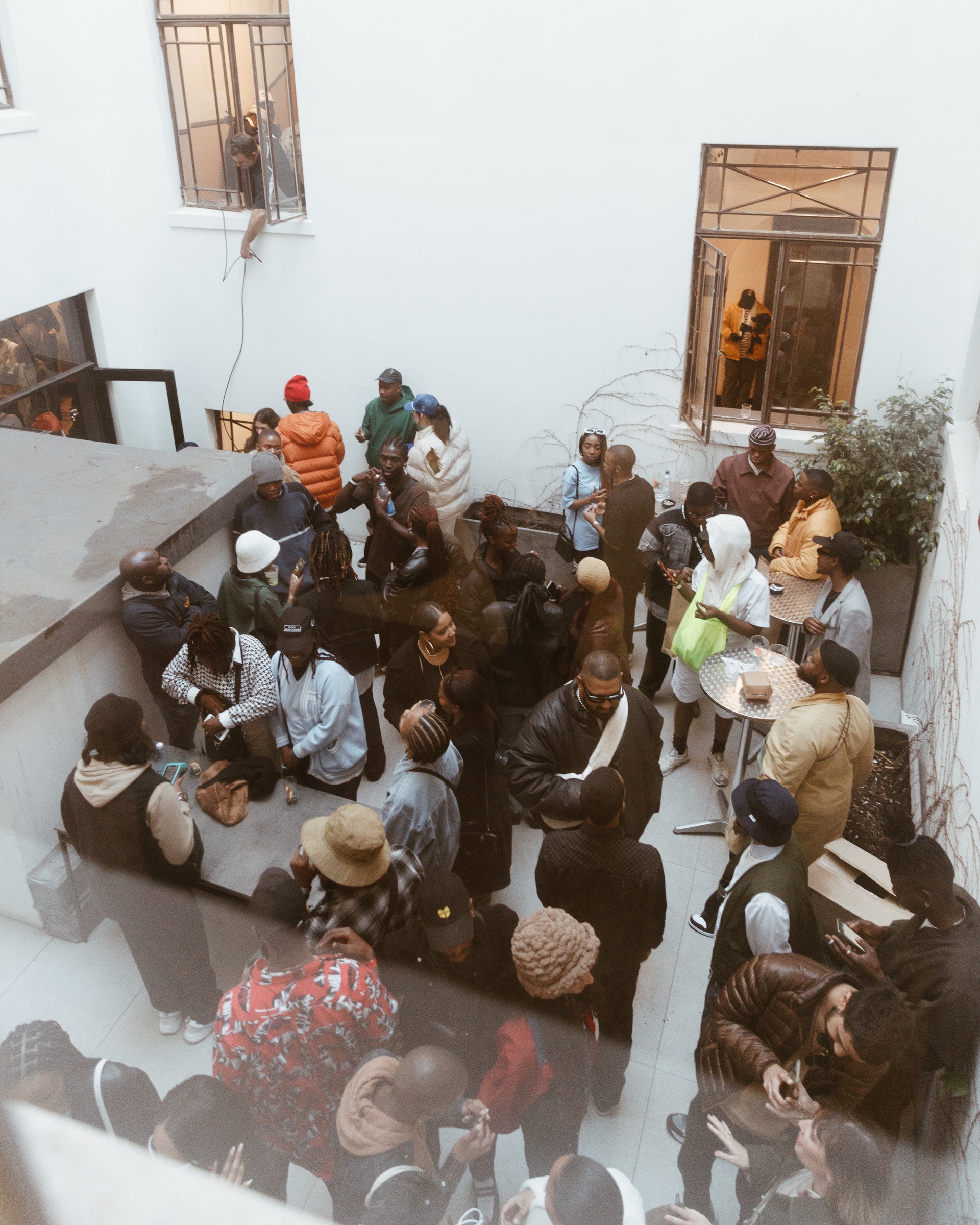
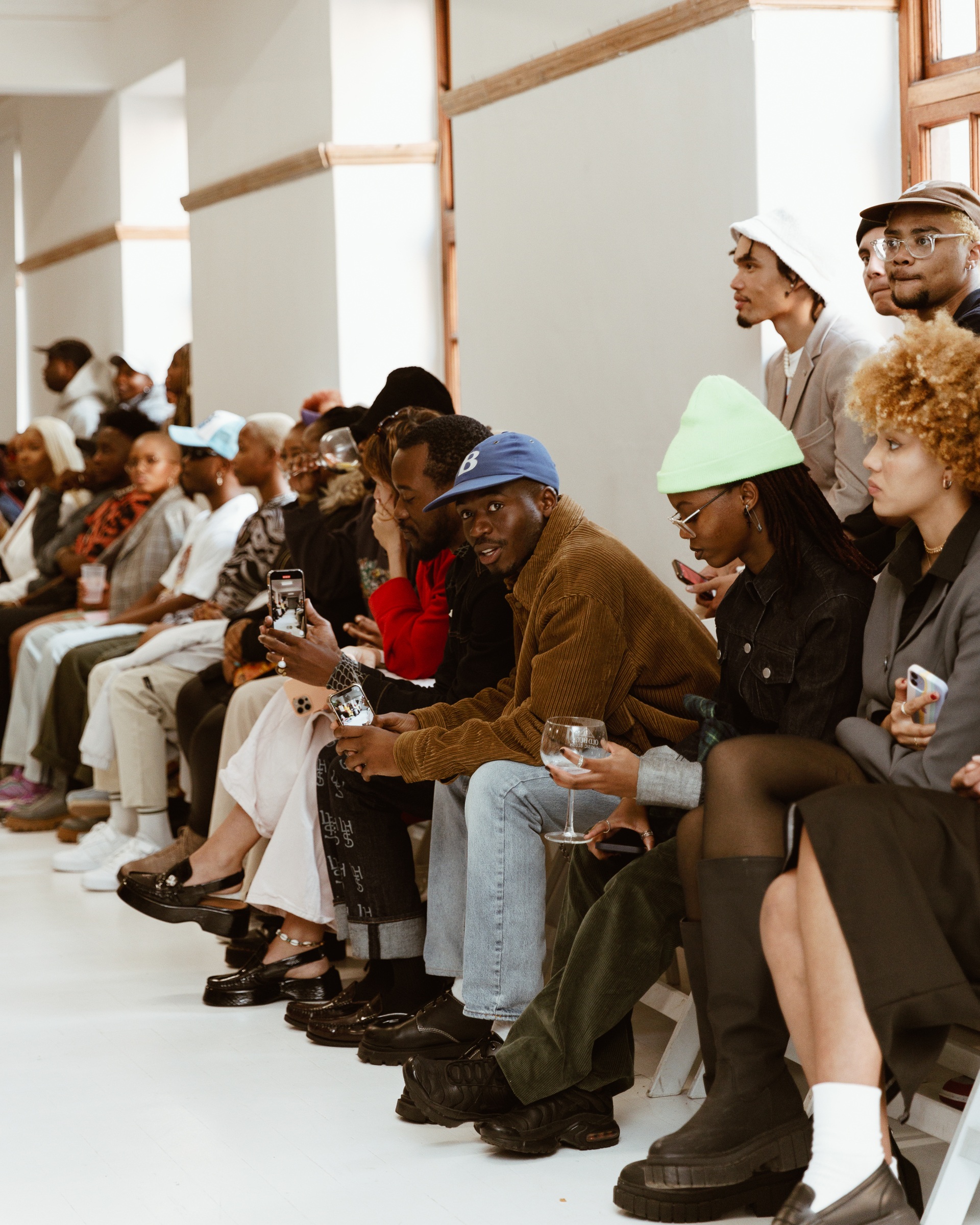
With tickets selling out in under five minutes for the Broke Runway Showcase, it was almost certain that last Saturday, 30 July, would be a whirlwind. Powered by Lemkus and hosted on the 3rd Floor of their Exchange Building (the venue for Cape Town’s summer community staple, The Stockroom Show) – when Ace and the homies said fashion show, they meant it. Arriving on site was itself a heightened experience – the setup, laid out white chairs snaking around the space, giving way to an intimate runway akin to what we might see of exclusive shows in Paris held in historic buildings – were filling up with the city’s creative community, dressed head to toe in the finest looks we’ve seen all gathered in one space in Cape Town. Moments like that, make one realise how hungry the city is for events and spaces that unite all of us under the banner of sartorial expression and community; a rare occasion, indeed, outside of the nightlife scene. The room gave way to seating that felt welcoming, and with anticipation, the room filled up – with conversation and excitement brewing stronger with every second.

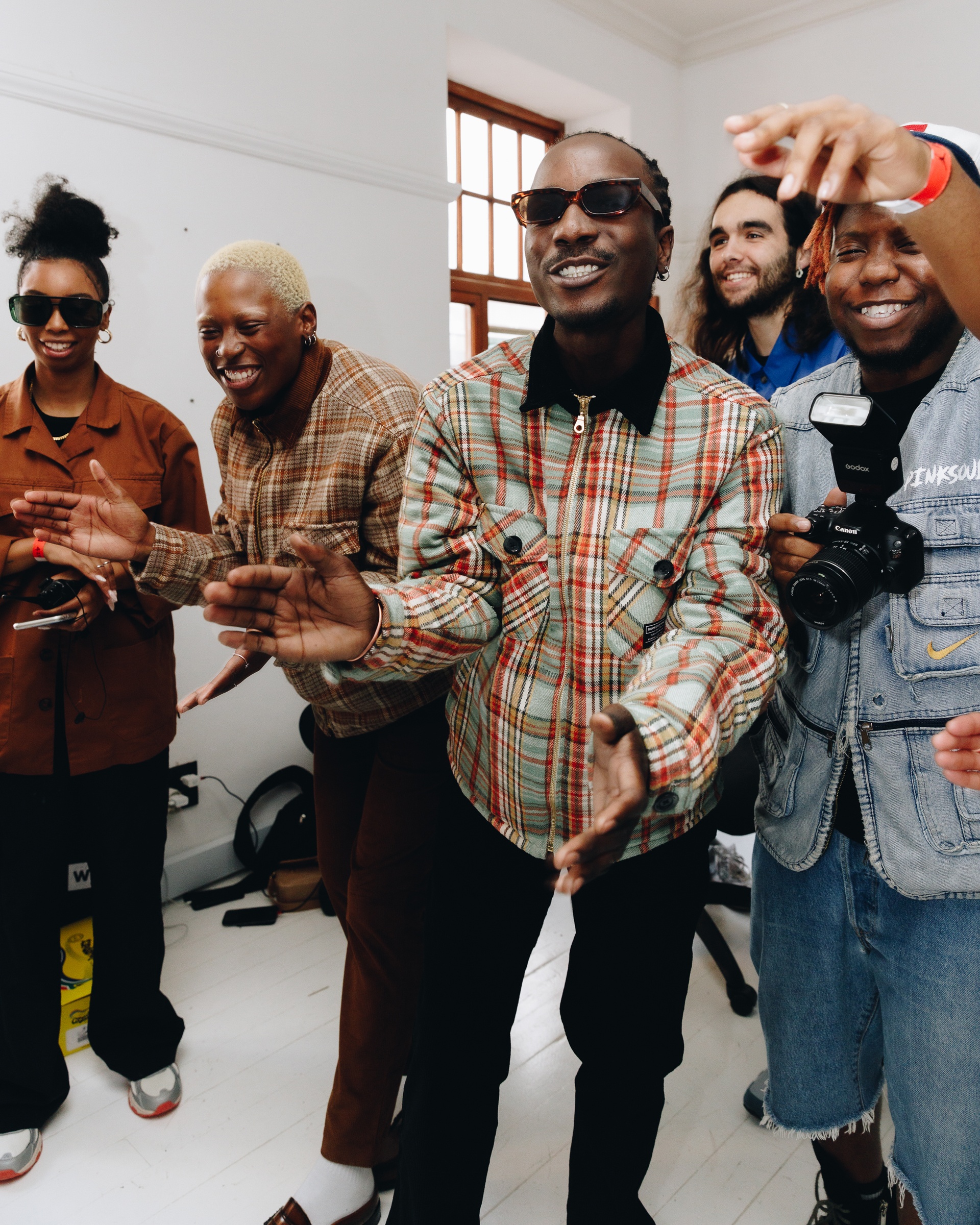
A slight delay in the schedule meant only that everyone could ready themselves – friends of Broke arrived, greetings and hugs occurred – with welcome drinks in hand, served by Brooks Hard Seltzer. Then, our attention was called; the show was about to begin.

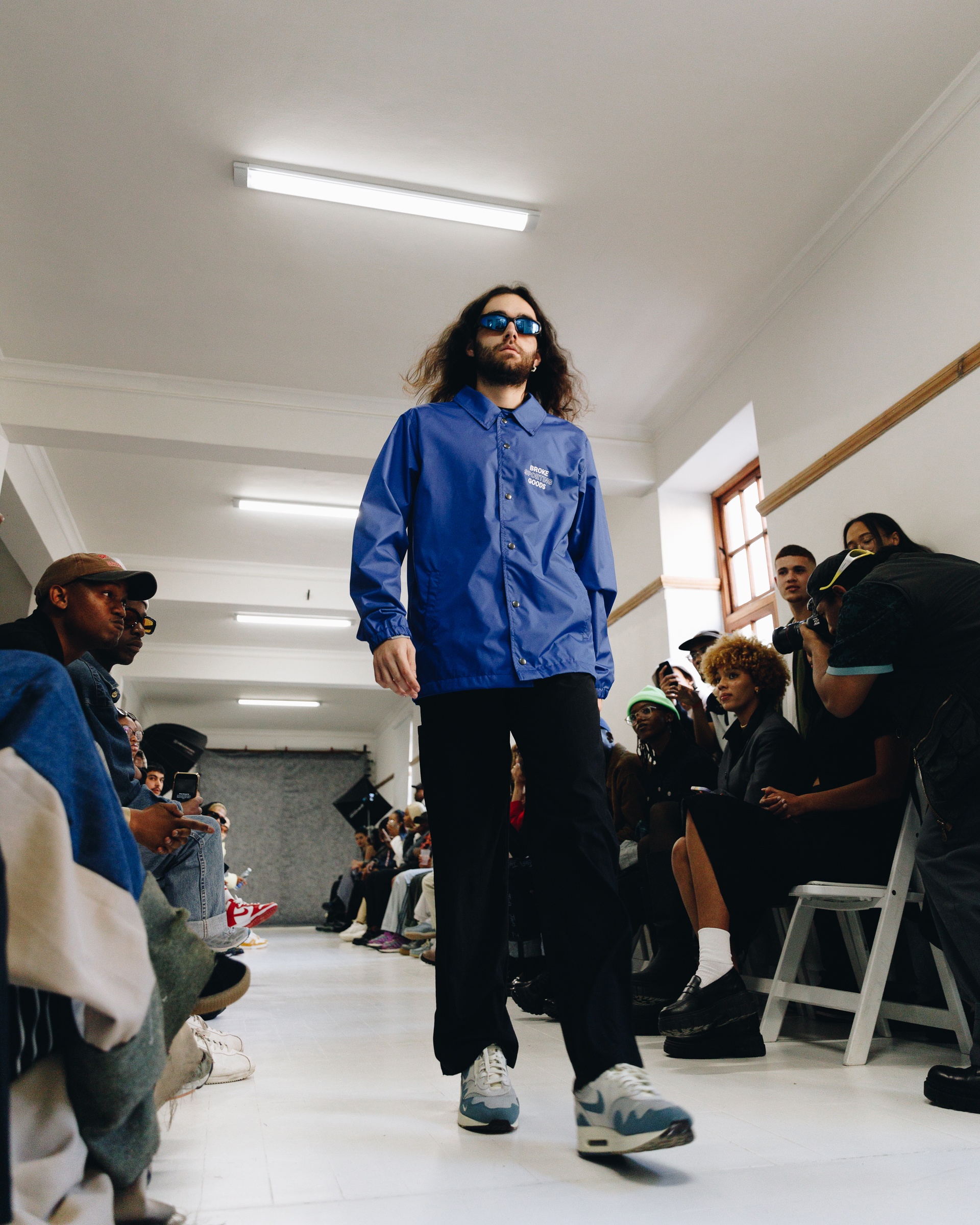
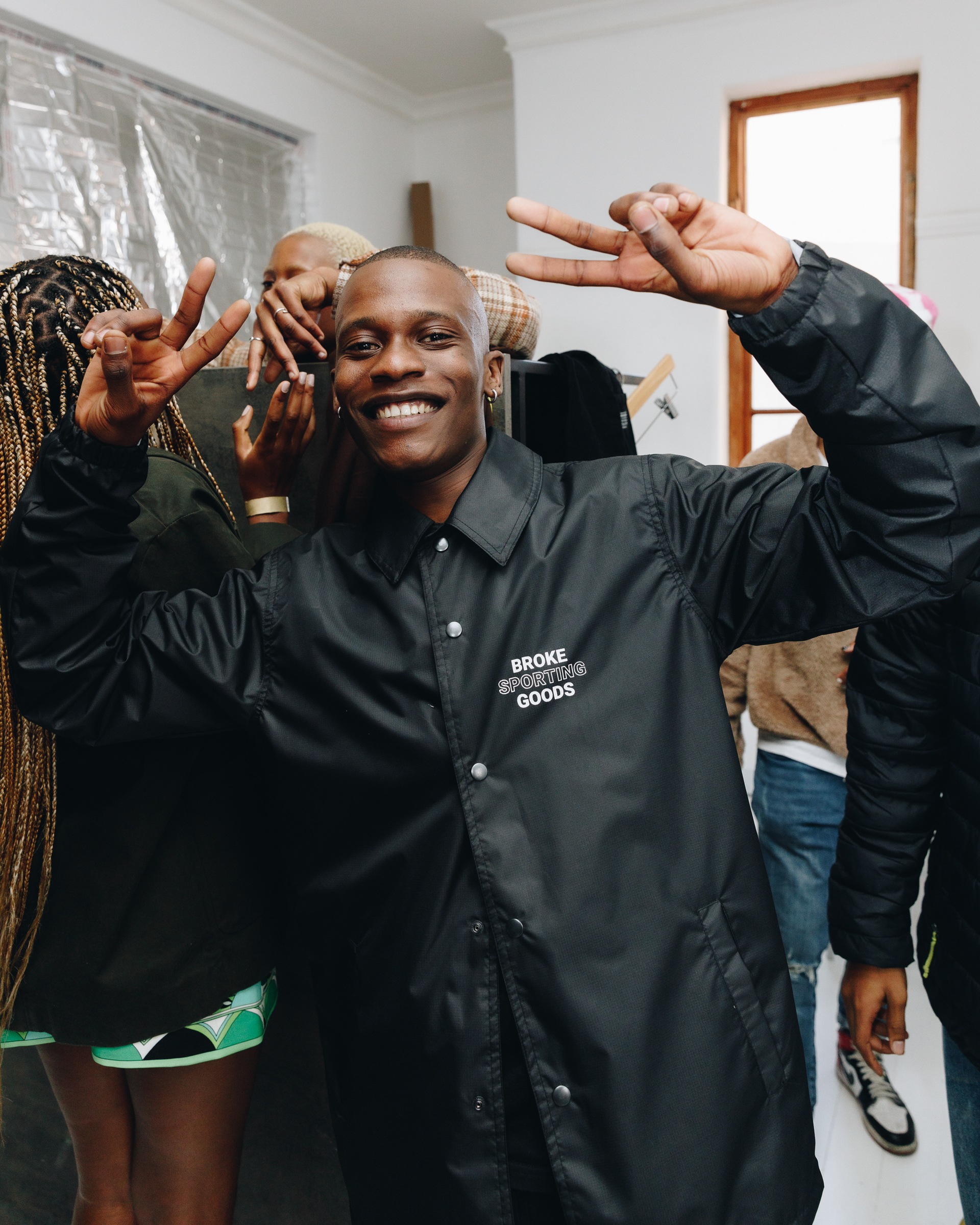
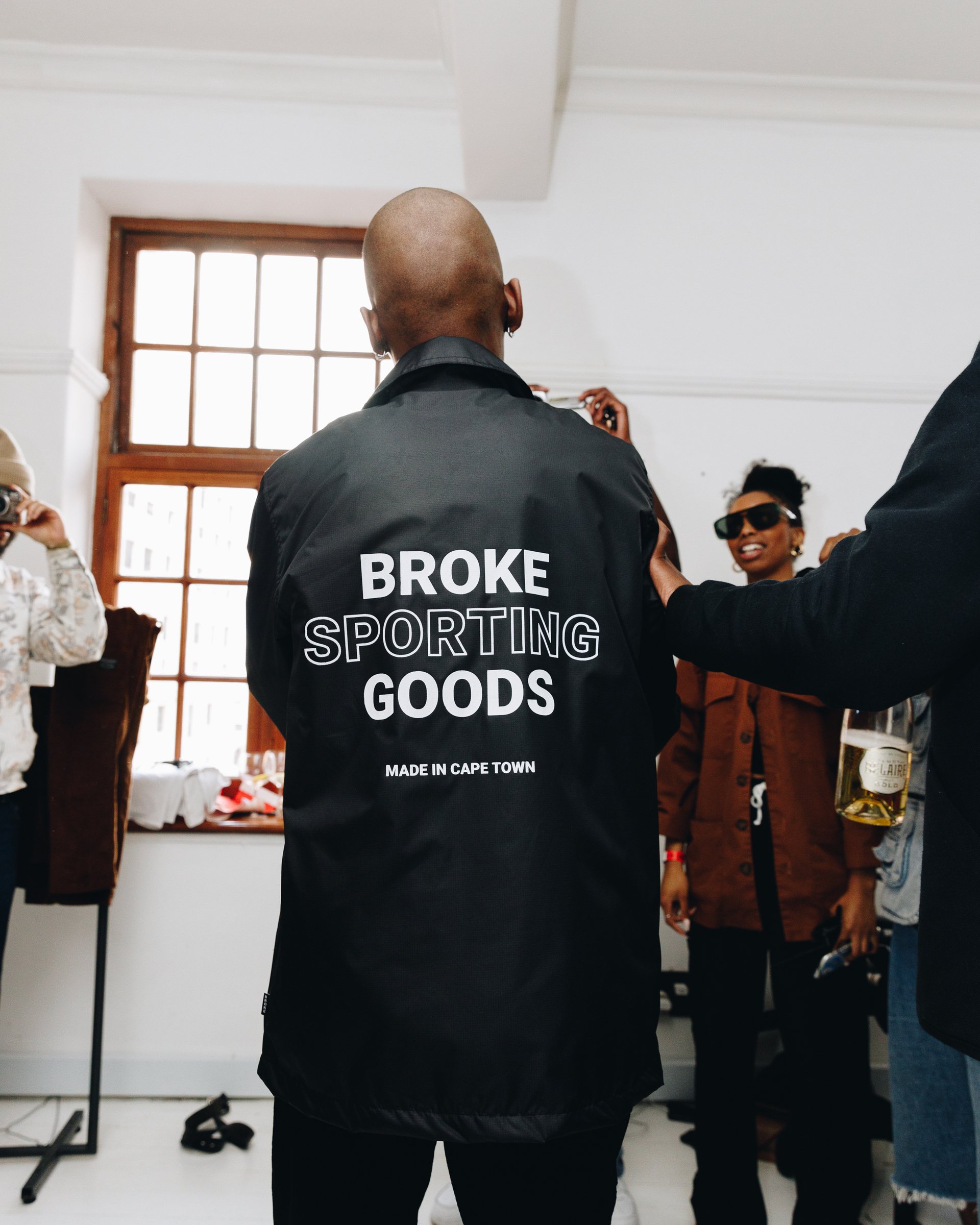
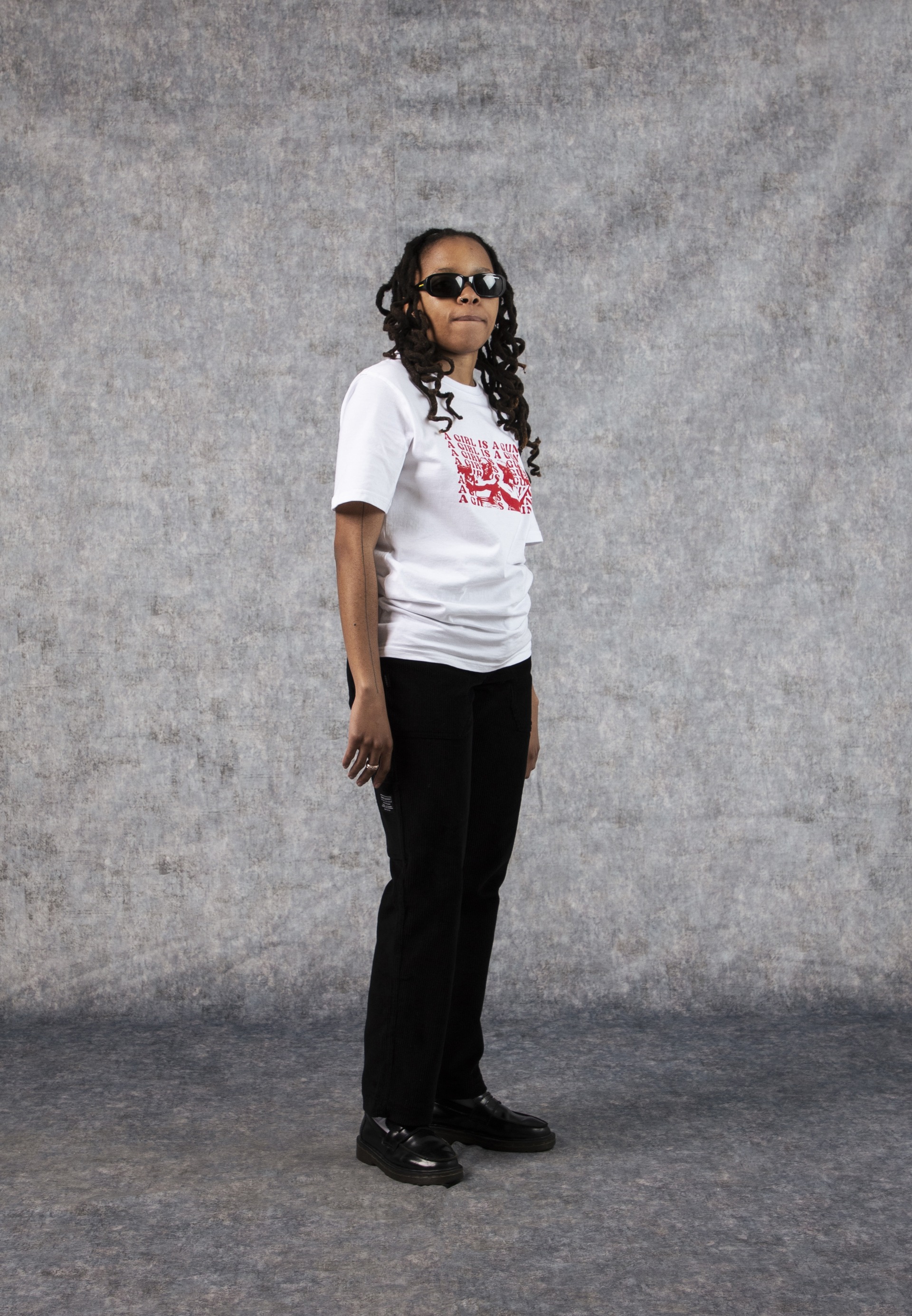
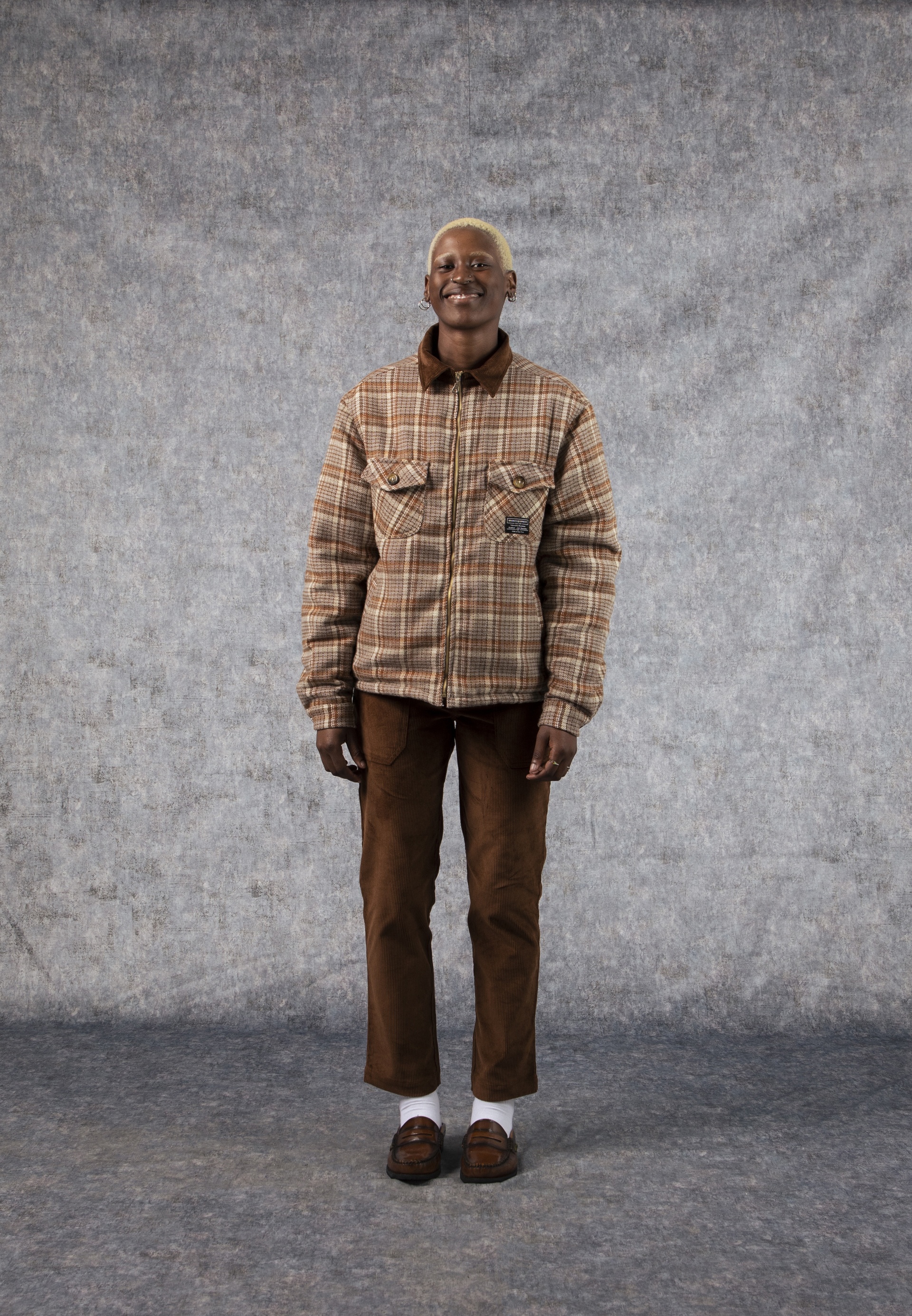
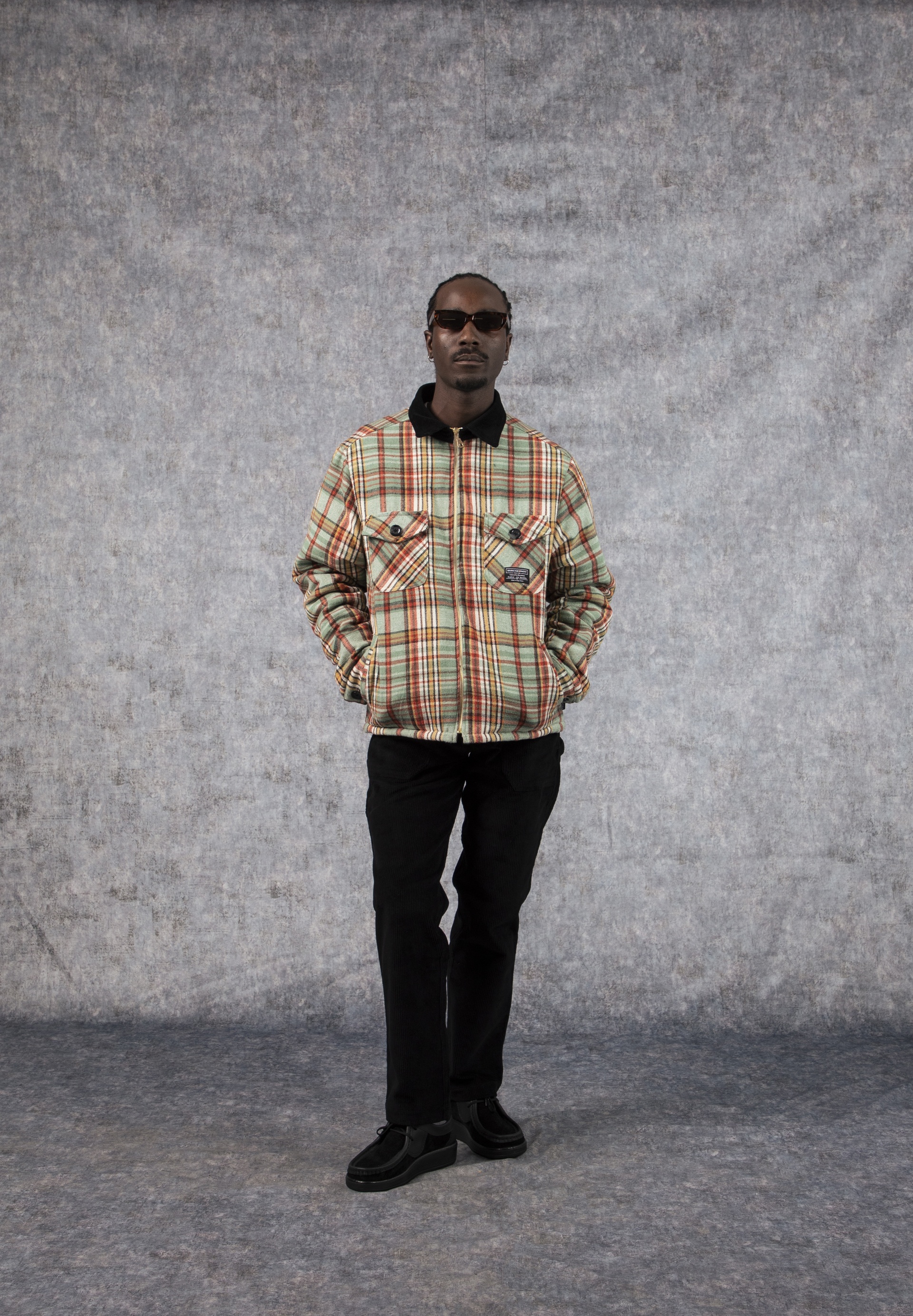
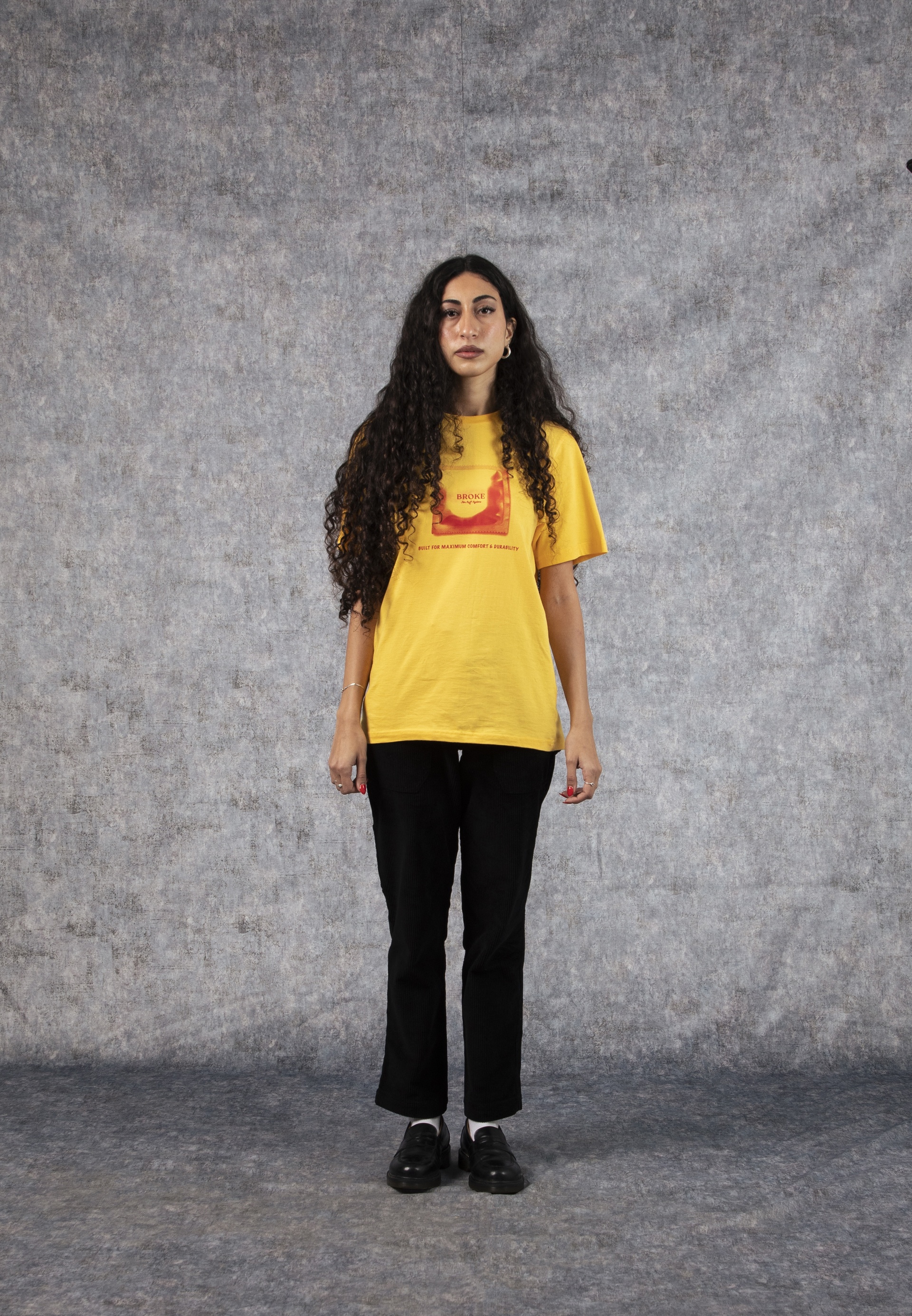
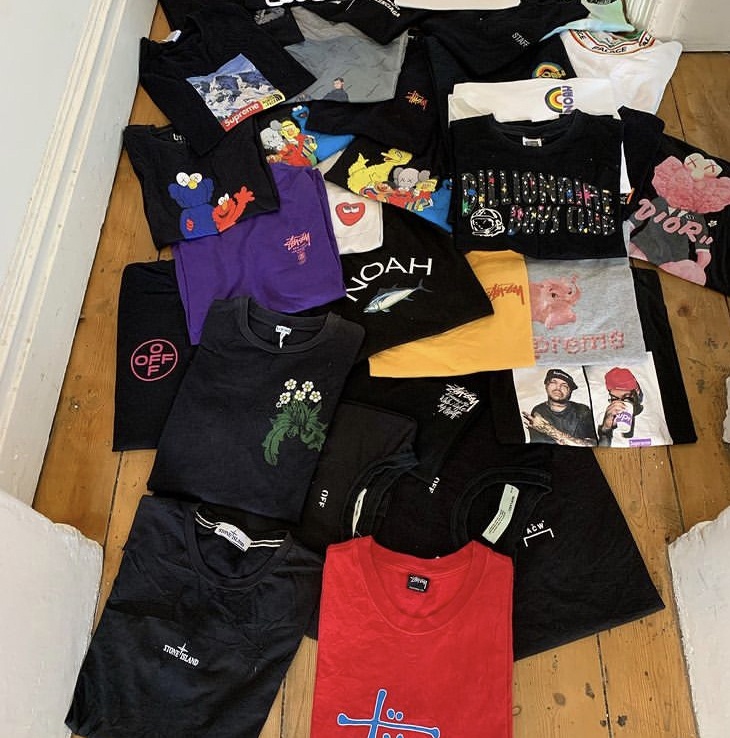
Beaming into the room over the speakers, we hear the voices of the Broke Boys – one by one, recounting what Broke means to them. Gratitude for the family behind this collective (of which their apparel brand forms one aspect, albeit a central one) – saying how Broke is family, it is community, it’s getting out of the hood and towards your dreams alongside your brothers. The feeling of love was rising; and then, then the first model walked out, making their way around the room. The initial offerings of T-Shirts is a Broke staple – and a strong reminder of their streetwear roots, as profound to be on a runway simply for what the Tee means to access our favourite brands like Palace or Stüssy. Then, the outerwear – a power moment of note – and something we haven’t seen before from creative director, Andile Dlamini. Inspired by workwear and athletic apparel, jackets with phrases like “BROKE SPORTING GOODS” and “BROKE EQUIPMENT – SINCE 2016” added a new reservoir of signatures to the brand’s future, and indicates a full entry for Broke into streetwear design.

The exchange of energy between the crowd and the looks we were receiving was incredible – from the quiet, observant moments to the shouts of joy – that by the time Andile did his designer’s walkthrough and bow, everyone was going wild. The collection was immediately shown on the 2nd Floor, ready to be purchased.

Once again, Lemkus’ support for local streetwear, forged through community and collaboration, makes the possibilities of the Exchange Building unimaginable and exciting – and as for Broke? Given everything they’ve done so far, and for it still to feel like just the beginning of their worldwide domination, is poignant.

Broke’s latest collection is available to shop online at lemkus.com / every Saturday from 10am to 2pm at The Stockroom Show.

Written by: Holly Bell Beaton

/// Studio images by Lemkus’ Creative Head, Calhoun Matthews

/// Show images by Gidion Felix 

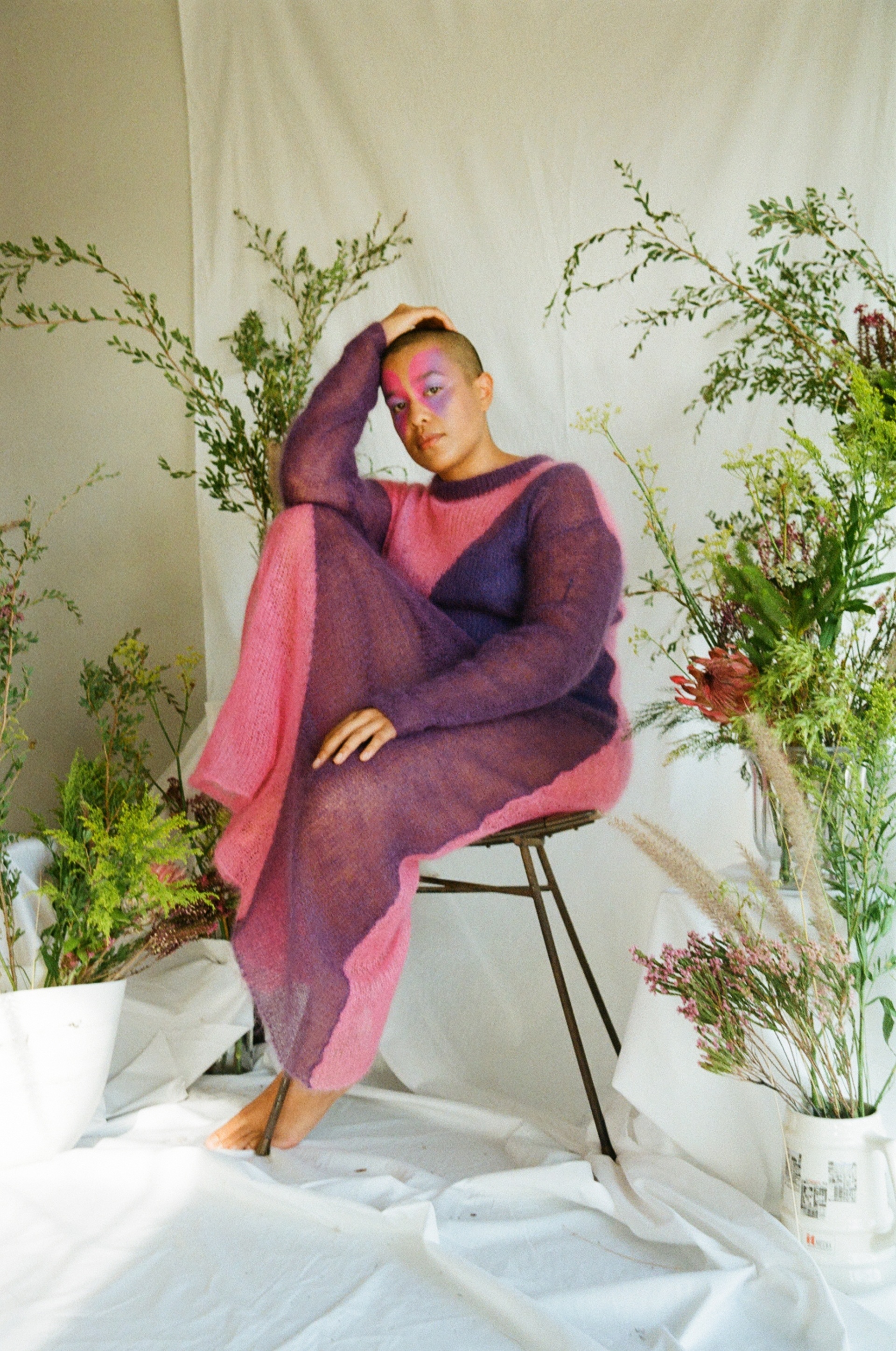
South Africa’s Patron Saint of Pink, Phuti Styles

Visions of bubblegum pink in cohesive, regular doses has been a rarity in recent memory – as if a hangover from the 90s and Y2K pop cultural eras of magenta and rose as essential design features (Von Dutch and Juicy Couture, anyone?) – the 2010s saw minimalism and monochromatism as the antidote to these kaleidoscopic altars of our aesthetic tastes. Imbued with a deep sense of feminine quality – whether socially ascribed or energetically felt – pink is bold and brave, and Mmaphuti Movundlela is its patron saint in South Africa. Having only just graduated from Durban University of Technology from their Fashion & Textiles course, Phuti is already a polymath and namesake in South African fashion. Between running two businesses – P EXOTIC and and Closet Chipi – and styling iconic figures for Cottonfest, or playing photographer, model and muse – Phuti is a chameleon and shapeshifter when it comes to gaining experience in every role that the fashion industry has to offer. Infused with her curiosity and willingness to adapt, Phuti is also beaming with light, complexity and grit; a symphony of exceptional factors for a sartorial-star-in-the-making.
“I was born in Tembisa, Joburg, but I grew up in the North West in Rustenburg – so I speak Tswana, even though I’m not actually Tswana. Olebongeng Morapedi founded Ogorgeous Model Master Classes, and I saw a poster in a taxi for a casting – and coming from Rustenburg, there was nothing there in the way of fashion. She was teaching young girls how to model, alongside her designer friends who were dressing the shows. It was a beautiful entry into the space, but I realised I actually liked making the clothes and dressing up – and people responded to my style. I actually had a black phase, it was the only colour I wore; so I’ve done a 360 in my style.” Phuti reflects in our conversation, making the case that often we are born into a love for fashion and expression; no matter where we are situated, or how far such a career and reality may feel outside of major fashion cities like Johannesburg represents in South Africa. “On weekends, friends and I would have photoshoots and play around with clothing – it has always been my way of sharing who I am, or what mood I’m in. Thrifting was the way I could constantly reshape my style, and add the kind of flair I wanted to my outfits. It grew organically from there, when people showed interest in my clothing and so I started selling pieces to them. I used to make chokers, and caps with fur lining. A few years later, the modelling school reopened and I was asked to be the in-house photographer, as I had a camera and had been documenting my style and world for a while. I’ve been able to be very familiar with many aspects of fashion, and while design is probably my central role – I think having flexibility as a creative is really important, and to learn every part of what makes up the work we do in this industry.”
Inspired by the emphasis on fashion in early 2000s films like Princess Diaries and Mean Girls, Phuti’s sartorial spirit is her devotion to the joy of dressing. In a country where “civvies” is the exception rather than rule in the schooling system, fashion is a refuge from the rigid projections we are taught regarding our identities.  After school, Phuti began attending SA Fashion Week – purely out of curiosity – taking her camera with her, to document and bask in the work of local designers, and to peer behind the veil of how it all works in the industry. Phuti has a tenacious ability to reinterpret cultural inspirations from US-centric music and films through a decidedly South African lens; drawing on the local ingenuity of expression she grew up around, in a way that feels even cooler than whatever TV may have shown us. On these fashion show days, “I would buy a ticket for a show I really wanted to see at fashion week, and go by myself, walking around with my camera – and I’d meet people I knew from social media, and once I was even asked to sit in the front row because of my outfit; so I think all those moments, of just arriving in this spaces and knowing I belonged there, were build-blocks to my career now. This one time at a show, I saw DUT (Durban University of Technology) students showcasing, and at that time I had been accepted by LISOF; but my mom had expressed the financial challenge in going to a private design school. Those fees are no joke. So, after researching DUT – I knew this was the school I wanted to go to, with alumni like Katekani Moreku – so it seemed like a great fit. One of my lecturers was Kiara Gounder, who is a prominent 3D accessories designer locally and internationally – so DUT gave me the best nurturing and guidance I could have asked for.” Phuti touches on a poignant sentiment regarding the state of fashion education in South Africa; with an immense focus on expensive, privatised institutions – a career in fashion can seem even more inaccessible. Yet, in my humble opinion, a school like CPUT also has one of the best fashion departments in the country; and is Lukhanyo Mdingi’s former school.

Speaking on her label, Phuti says, “My business partner for P EXOTIC, Aphiwe Gxawu, is a fellow student at DUT, and we met in Durban. We started doing our own thing, and it was actually born out of not having anything to wear for a night out – so we’d make cute outfits like two hours before heading to the club. That’s one of the coolest moments from learning design and how to sew; when we realised we could make exactly what we needed, that’s the core of what we do. P EXOTIC is the story of us as girls getting ready, and sharing that with our customers. We are both in Joburg now, but P EXOTIC is inspired by the sexiness and style of people in KZN.” The emphasis on fashion in South Africa tends to be central to Joburg and Cape Town, yet Durban is an unsung city and influence; home to Mr Price’s headquarters, with a laidback, coastal spirit – Phuti reflects, ‘’A lot of people in Durban make their own clothes. Normal, regular households will have a sewing machine, and there’s so much fabric and textile history in Durban which I think has been overlooked. And the general style is not mainstream, either – which is really interesting – because I think fashion is really about individual people expressing themselves. I think there’s a lot of recognition that needs to be paid to Durban, and for the rest of the country to bring them closer into the fold of the fashion industry. I loved my time there, there’s so many different cultures and just a different way of life than I’ve experienced elsewhere in the country.” Phuti has since moved to Joburg, a natural progression towards being in the central hub for brand-building, design and creative direction. Here, she plans to continue growing P Exotic and Closet Chipi  – with the latter being a thrifting store that she runs with Maipelo Kaledi, carefully curated to reference looks of films from the past. One thing about Phuti and her friends? Their taste and touch will be on everything they do, uniquely and exceptionally so.

Phuti’s expression of pink is perhaps her most key signature – never failing to show a thousand ways and shades that this hue can be adorned. “Pink is a lighter shade of red, and it’s significant because we think it’s really girly, but I read that it was once worn by men in war. It has a really influential history in colour theory. I love the way it makes me feel, and the contrast of the colour on my skin. It’s also my mom’s favourite colour – and it represents such strong feminine energy. I think there’s a lot of narratives attached to the colour, and I like to challenge those perceptions – it’s my base colour from which I build every other colour I wear, but also, it’s just my favourite colour, and on black skin? That’s strawberries and chocolate, is there a more delicious combination?” Phuti states, ending our conversation with a definitively beautiful arc.

Written by: Holly Bell Beaton

Anita Hlazo’s Custodianship of Grunge in Africa

Preceding the definition of “grunge” as an alternative rock sound and subculture ascended to cult-like heights, emanating from Seattle and outward into the sonic lexicon of the world – and before its heavy associations with thrifted clothing slapped together and white men with long, unkempt hair – there was Tina Bell. Now considered the “Godmother of Grunge” – it has taken a few decades for dues to be paid toward this ineffable black, female lead singer of Bam Bam, to whom the very origins of the grunge phenomena is owed; as it was Tina’s who began blending the shrills of heavy rock with moody, melodic vocals all within in the same song; alongside her enigmatic stage-persona and unbridled embodiment of the true punk spirit. It’s with Tina in mind, that I approach my conversation Anita Hlazo – both of us cognisant of what grunge meant to us as teenagers, many years after the subculture had all but peaked and faded into the obscurity of archived Tumblr archives. Anita is the founder and designer of Afrogrunge: a fashion brand (and community space) that seeks to diverge from the stereotypical tropes projected onto black people, and for Anita; a celebration of her experience as a black woman deeply influenced and raised by punk sentiments, grunge aesthetics and alternative music. The brand is officially four years old – but in fact, the Afrogrunge spirit is much older than that; and Anita feels she is mostly a custodian for the fusion of “afro” and “grunge” : and that the brand is her way of giving her younger self total permission to engage fully in the lineage of rock subcultures that is in fact, the birthright of all black people.

Grunge as a concept has always been with me, since the end of grade 11. It came about as a form of identity for myself, because it spoke to my own experience. I was living with my grandparents in Gugulethu, and I didn’t feel too connected to the cultural norms around me – so I discovered a lot online. Grunge described, visually and emotionally, how I felt at the time. I started to see myself in this space – but I also wanted to honour being afro, African – and being a black girl drawn to this space. After using key phrases like “grunge” and “black girl”  to search online, I used the term “afrogrunge”, there was one editorial that I found, but nothing else. So nobody had claimed it yet, and there was no representation of black people specifically with grunge. I wanted to create the image that I wanted to see online.” Anita found herself drawn to being a designer, and presented this strength of concept to one of her lecturers; who felt she was onto something big. On this, she says, ‘’I learned design in university, so the brand itself started in 2018 – because that’s when I could sew and construct, and channel my aesthetic into a more specific offering- but it’s drawn on all my experiences and passion from before then. My first collection at school was encouraged by my lecturer at the time, who had no reference point for what I wanted to do; but I remember explaining it to him, and he was writing down every point I was making – and told me to go for it. He wanted to see what it was. The funny thing is, the collection ended up being mostly pink – which is not very grunge – but I think that’s where my own interpretation comes in, because there are no rules to the subcultures because the essence of grunge is to not care. I like that I’ve been able to build my own design language the way I have with Afrogrunge.”

Anita is obsessive with construction, and Afrogrunge’s quality and sewing is her homage to everything she learned at school – that detail is critical. Regarding the linear process from moodboard to sketch to mock-up, and then a final look, Anita comments “Things always turn out differently at the end, and that’s just the nature of designing. Design is problem-solving, so the challenges you meet along the way can influence change in ways you might never have expected, and that’s really exciting to me. I’m learning how to navigate the fusion between blackness and grunge; I don’t want to put too much of either as a fixed idea into what I make, because I don’t want it to feel forced. I always have to go back to my own aesthetic.” The total co-opting of punk and grunge toward a white-centric narrative is very far from its origin; and as such, makes Anita’s task an exceptionally important reassertion of grunge as wholly inclusive and plural. “I think the way rock has been represented hasn’t always told the full story. I also think that many people across these subcultures – whatever colour or culture you are – can be considered the outcasts, or fringe members of society. To know that blackness is within these spaces, in its origin, makes me realise that I am not actually bringing two opposing ideas together; but that I’m actually just remembering the full scope.” As Anita grows up alongside Afrogrunge, it has become more evident that the spirit of grunge is inextricable to her own spirit. Anita has created a space for other black kids growing up to see themselves in alternative ways,  “When I was imagining Afrogrunge in high school, I had an idea for a shop and a hang out place for grunge black people and people of colour. That’s still part of the dream, because all of this has taken place online; but I want to have a physical space where Afrogrunge can be a home for kids like me. It’s hard to measure how much of an impact Afrogrunge has had yet – but I think people are starting to see what I said for, and what story I’m wanting to tell.”

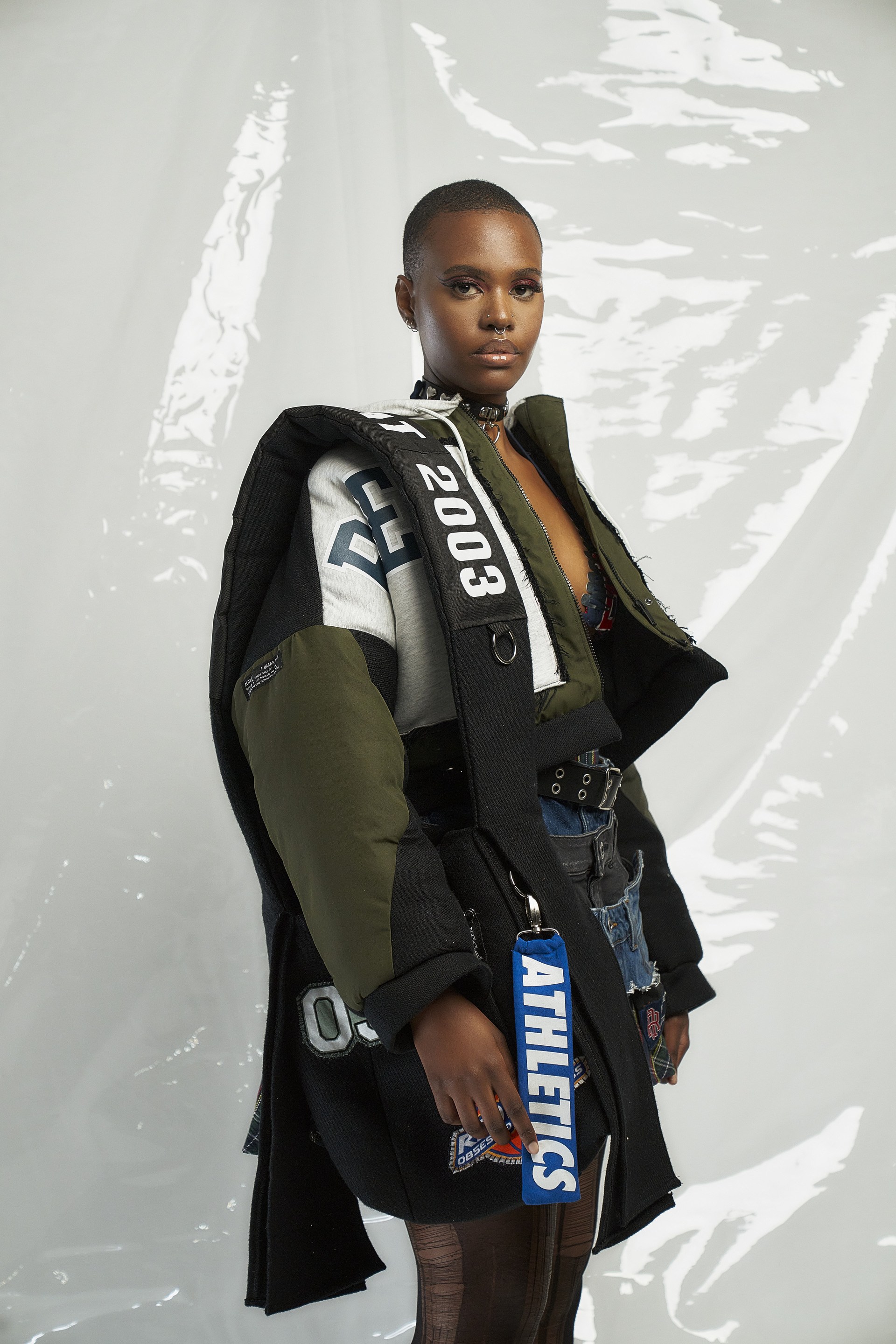
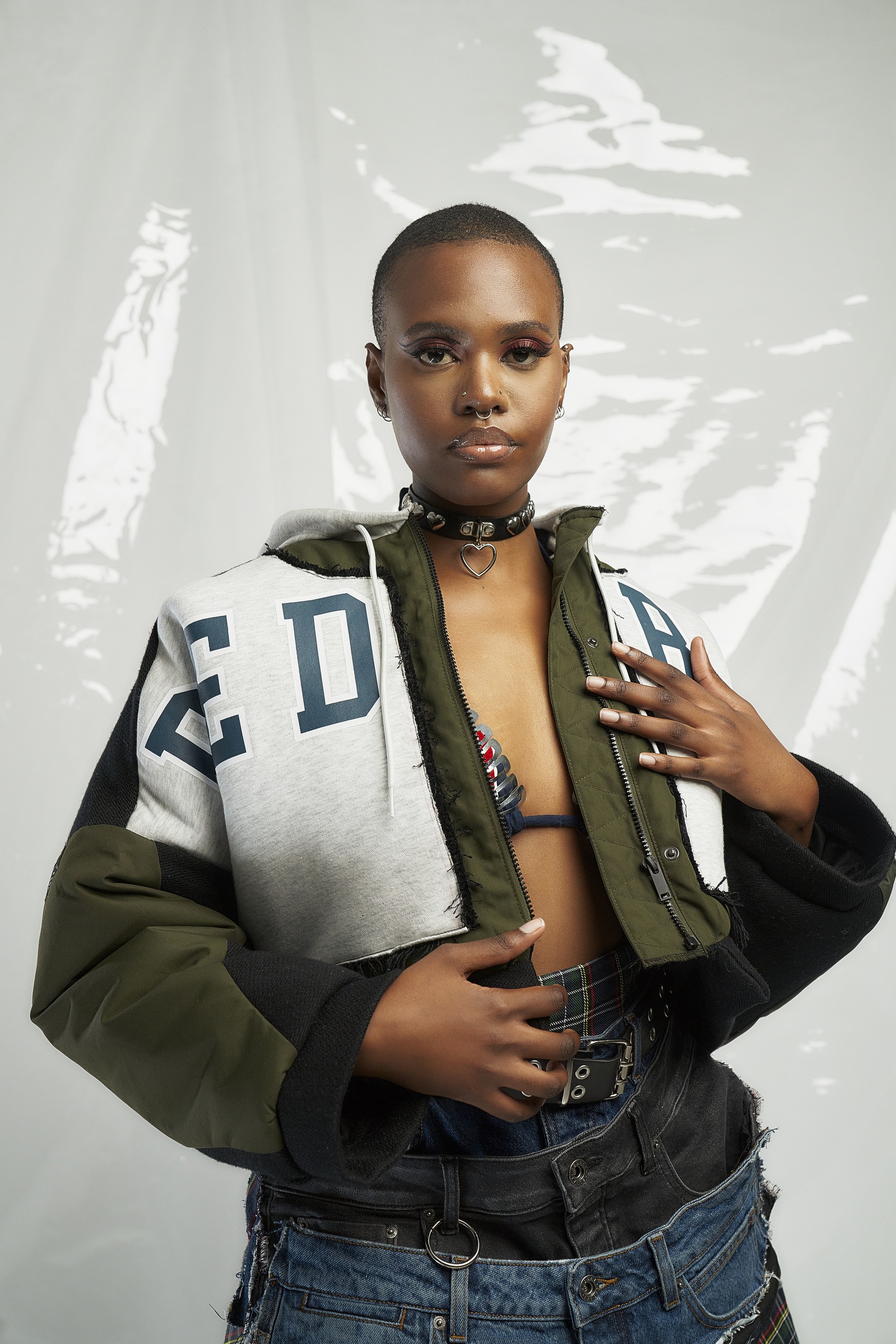
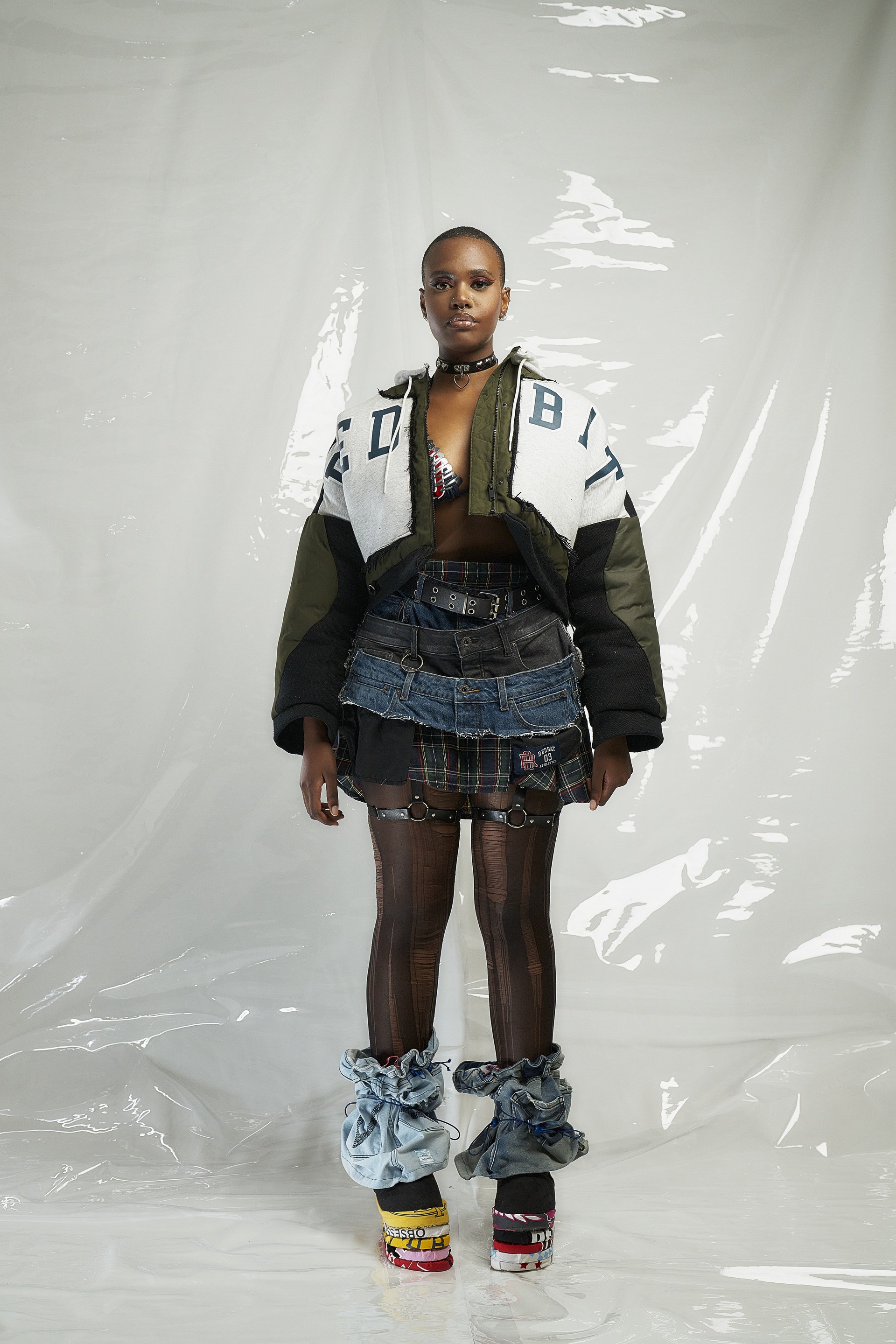
Anita has recently caught the attention of Sportscene, particularly their Redbat POSSE initiative: a range centred around activism in Gender-Based Violence, in which the 100% of the proceeds are donated to important work being done in South Africa to challenge the patriarchy and create safe spaces for women. “This thing is so big. It’s been a huge teaching moment – for myself as a designer, but also in terms of industry experience. I’ve always worked for myself and on my own, so to have the kind of guidance and mentorship that Redbat has provided is invaluable. Three designers were chosen to redesign and re-interpret the new Redbat POSSE collection for a campaign, in order to market a competition; showcasing what the entrants will be doing in the competition. I was able to challenge myself creatively, and to use the Redbat samples to offer an Afrogrunge expression as the final look. On the 5th of August, we will be attending the final showcase and competition. Our looks will be auctioned off, and It has such a strong sense of giving back, and to highlight Gender-Based Violence. It’s encouraged me to see how powerful fashion can be in the right hands, and with the right intentions.” Anita’s year has been one of the most successful in the journey so far; with 2022 showing her that there is money and value to what she has always been doing for her younger self and self-expression. The future’s looking bright, and perhaps with a lot less apathy than associated with grunge – but certainly that anything is possible with the attitude of rebellion.

Written by: Holly Bell Beaton

Interlude Chapter 07 | The Case for Luxury Resale

Our awareness around sustainability increases every day as we face impending questions about our collective consumption. Fashion is interesting, in that exists at the juncture between artistic expression – and some of the most harrowing malpractices in production; costing the planet, and people, greatly. Fast fashion refers to the manner in which cheap clothing is made through extractive processes in factories with limited resources, and underpaid garment workers – as a response to our insatiable desire for keeping up with the latest trends. So, how do we solve this crisis and shift the narrative around the longevity of our wardrobes? Thrifting is a clear solution; in which garments have their life cycles extended – and furthermore, turning one’s attention to investing in luxury pieces creates an avenue in which consumers can curate garments that hold true meaning in their craftsmanship.

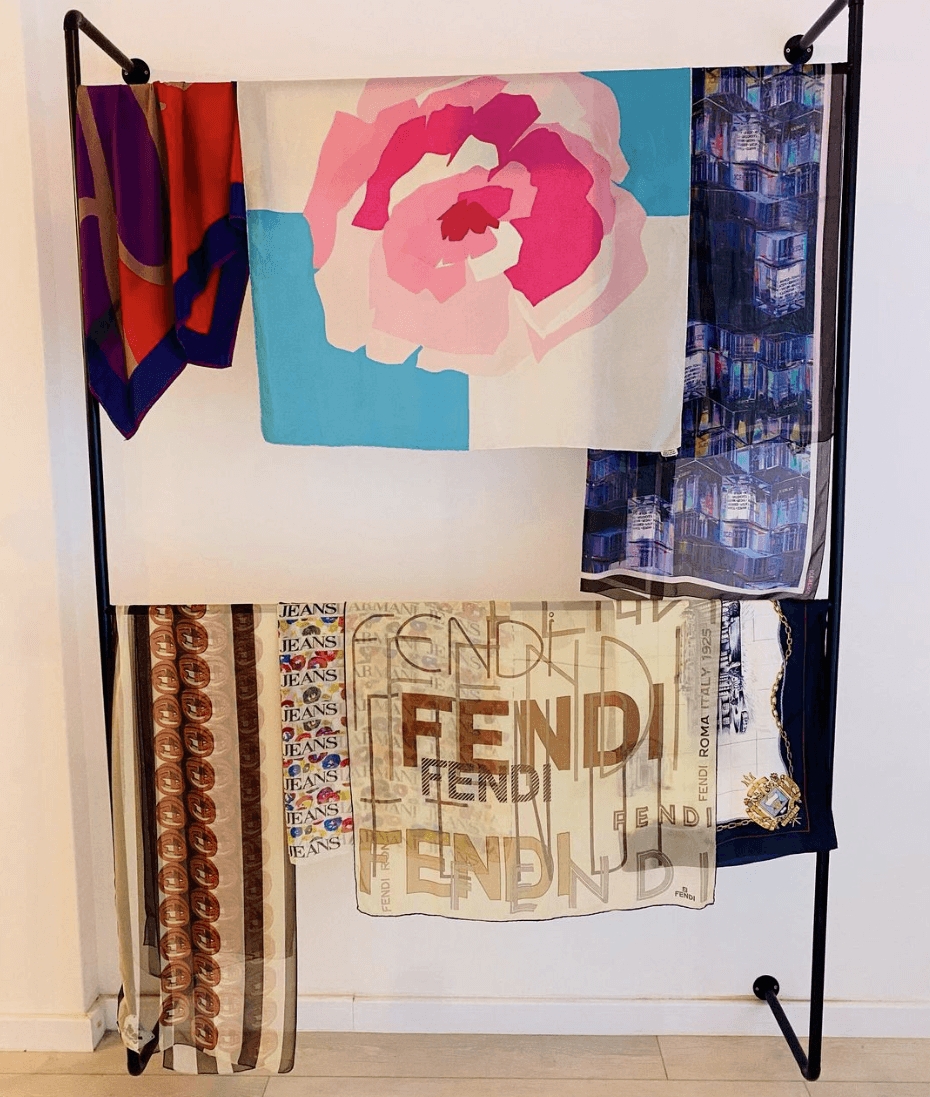
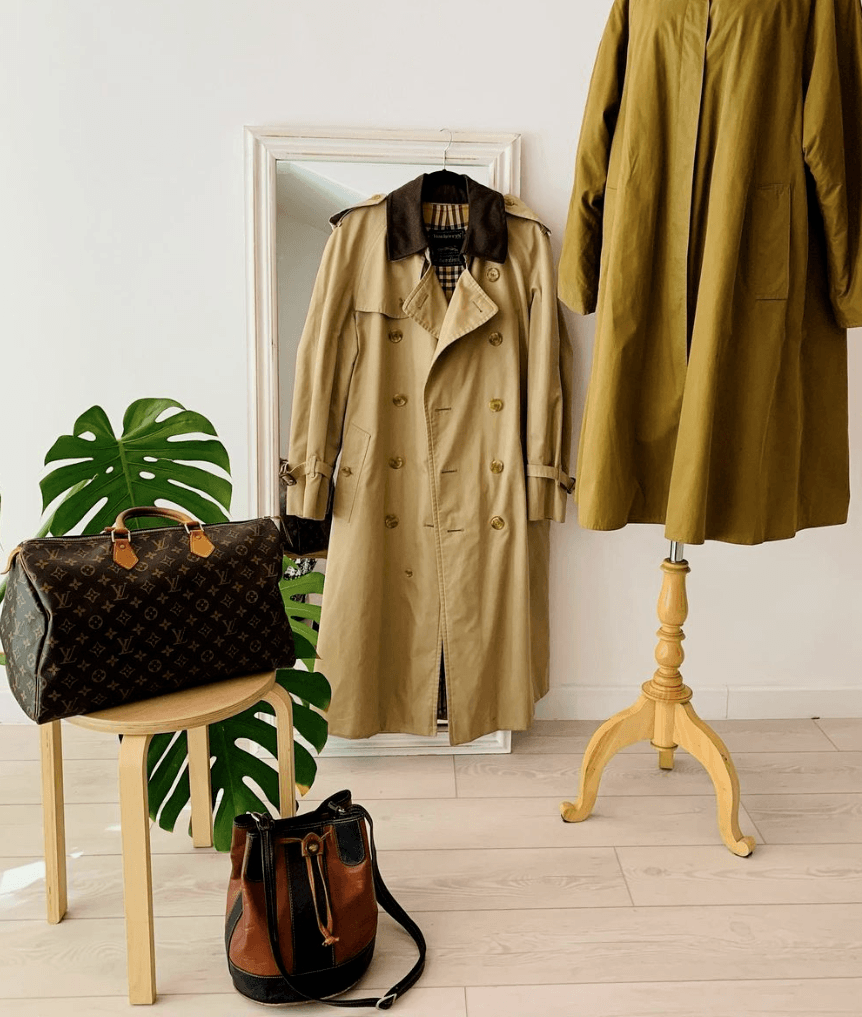
To determine what defines “luxury” – we need to understand the term in and of itself. There is a growing debate as to what defines luxury in fashion, however for this context – luxury refers to designer labels that produce collections defined by consideration, such as beautiful fabrication, thoughtful silhouettes and specific branding which have the ability to market at high prices. Here in South Africa, this refers to labels such as Thebe Magugu, Lukhanyo Mdingi and Rich Mnisi – whereas internationally, we can think of Prada, Vivienne Westwood and Louis Vuitton to name a few. While we generally have a smaller market in fashion than the global north, there is growing interest in curating vintage and newer pieces from luxury brands; through local, small scale curators, or from websites such as us.vestiairecollective.com – an incredible marketplace for previously owned luxury pieces, sold at retail value.

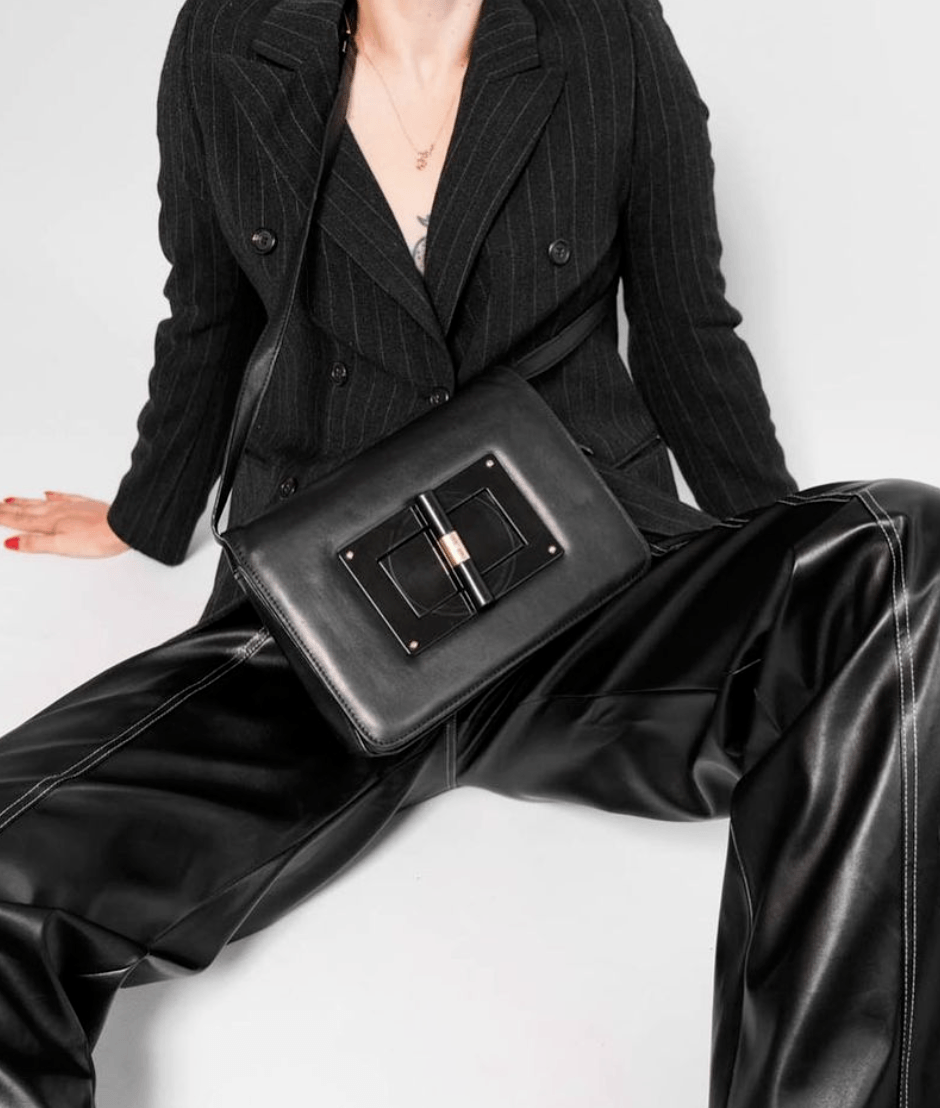
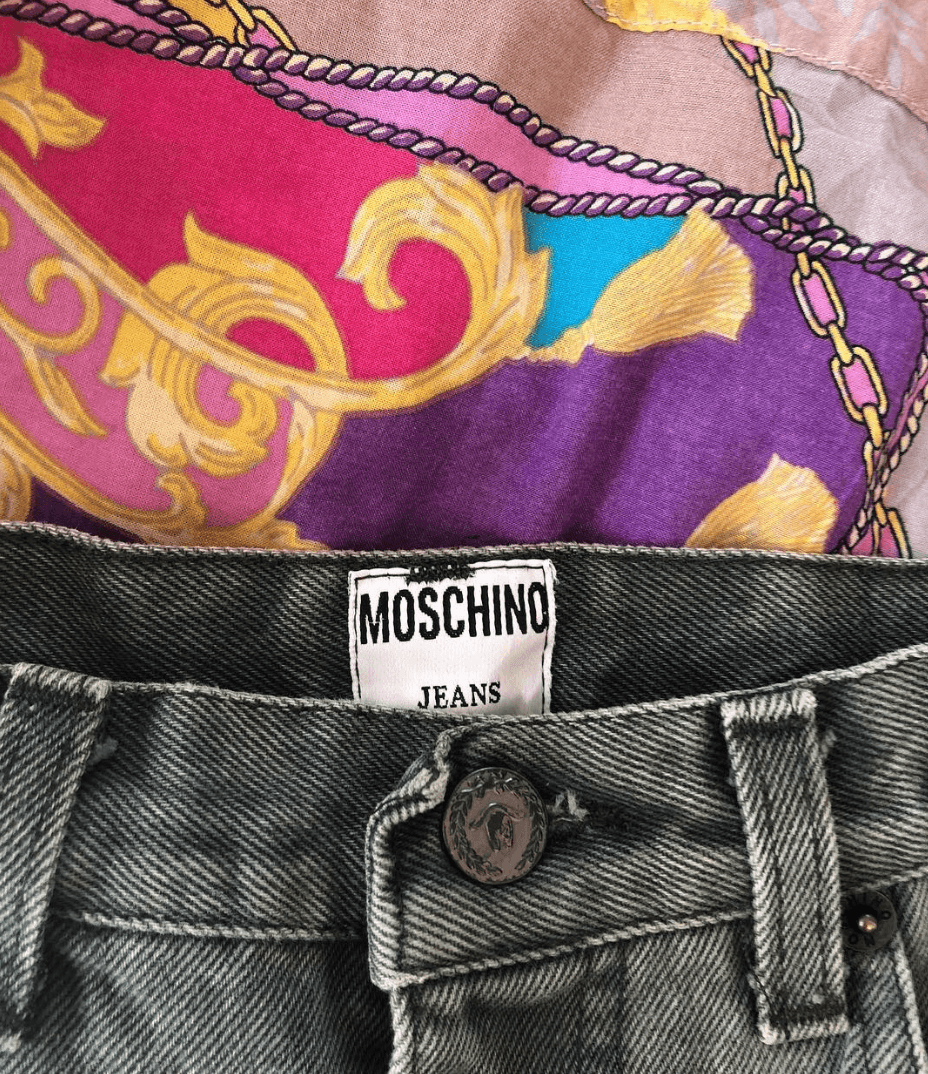
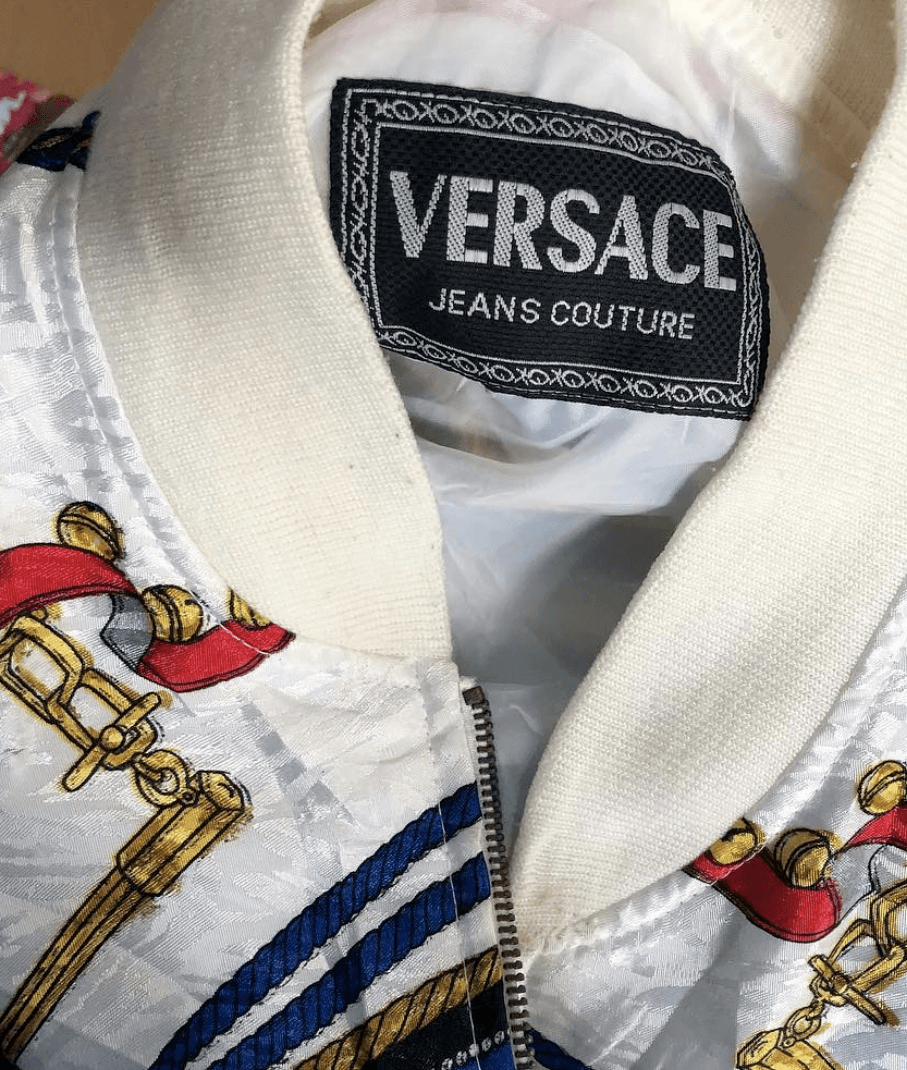
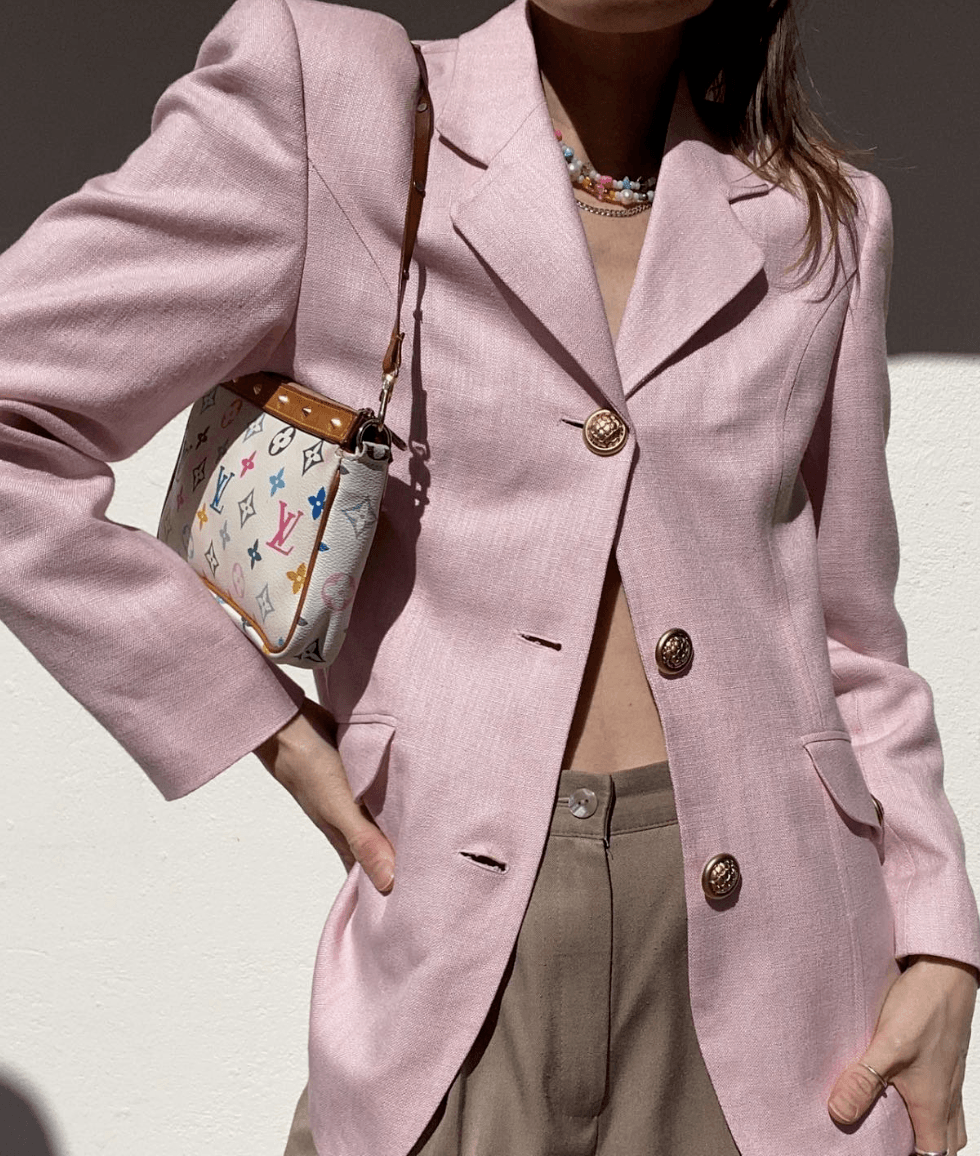
With the evolution of circular economies – linearity life-cycles of garments are challenged, and in the context of luxury resale, there is broadening of access for South African consumers. Stores like Afraid of Mice express the brick-and-mortar model of vintage curatorship; with its store in Harrington St. acting as a custodian for rare, vintage finds ranging from Hugo Boss jackets, Louis Vuitton handbags – to Burberry and Moncler. Vintage denotes the endurance of interest and quality associated with such finds, while allowing more room for the price-points; as opposed to the previously mentioned Vestiaire Collective, that tends to match retail value where possible. Without a website, Afraid of Mice holds true to its vision for nostalgia – and another such discreet store is Stock Exchange on Kloof St – with no social media presence in sight, it boasts a bare-bones store housing everything from Acne Studios to Isabel Marant. Reliability is key in luxury resale; with trusted spaces priding themselves on their ability to provide authentication of their collections. Ready-to-wear luxury centred on its youthful appeal appears to be the central vision for Dreamland Vintage – with iconic drops ranging from Chanel sweatshirts to Moscino jeans, with an emphasis on the 70s, 80s and 90s inspired sourced from the owner’s buying trips overseas. Spaces like The Changing Room and Meonyou Vintage are consignment based, and rely on their fashion communities in a closed-loop system of curation, authentication and distribution.

Known globally for their analysis across varying sectors, consulting firm McKinsey & Company’s report on luxury resale show that this manifestation is set to become a permanent fixture in the global fashion industry; perhaps not merely piquing the interest of luxury brands themselves, but rather resale may be pivoted and co-opted as part of the sustainability projectives increasingly non-negotiable for luxury houses to implement and action. The report states;  “The luxury resale market holds great promise for both customers and brands. Leading the way, largely, are customers, who are generally eager for established brands to play a larger role. For brands, if they choose to participate, it is a way to expand their offerings, appeal to committed client segments, stay abreast of digital innovation, and reinforce their sustainability efforts—if they can find ways to add meaningful value to loyal customers’ experience.” It will be interesting to see how this continues to rise in South Africa, where luxury fashion continues to remain integral for our countries’ participation in global sartorial consciousness.

Cape Town based Singer/Songwriter Luh’ra Releases expansive new EP ‘Nice’

Cape Town based singer-songwriter Luh’ra harnesses a purity of sound and story that reveal an artist on the cusp of reaching a wider, global audience, with her second release, “Nice”. The seven-track record, a follow-up to her 2019 debut EP ‘Luh’ra Luv’, takes the indie soul that Luh’ra has been sharing with audiences for the past five years and gently, and quite beautifully, expands it. Subtle notes of jazz, silky R&B and smooth beats now also help propel an intimate journey through the multiple facets of human connection that Luh’ra sketches out on “Nice” bringing the artist into the sonic terrain occupied by artists like Lianne La Havas, Cleo Sol and Raveena.

“I took it as an opportunity to grow – especially in terms of the musicality of my work,” says Luh’ra of her 2022 release.

Luh’ra describes the title track as being inspired by a post adventure story that was shared with her. “My friend and her sister had spent a few days together out in the wild and the way the memories were shared with me evoked many visual ideas as well as feelings of admiration at their sisterhood and friendship. It allowed me to reflect on my own relationships which I have in my life.”

With strong reviews already for its first singles, Luh’ra’s EP is a welcome addition to a timeless musical canon that matches beautiful music with words that connect directly to the human heart.

/// Stream and download “Nice” on

Spotify

Apple Music

iTunes

Deezer

Amazon

Soundcloud

Tidal

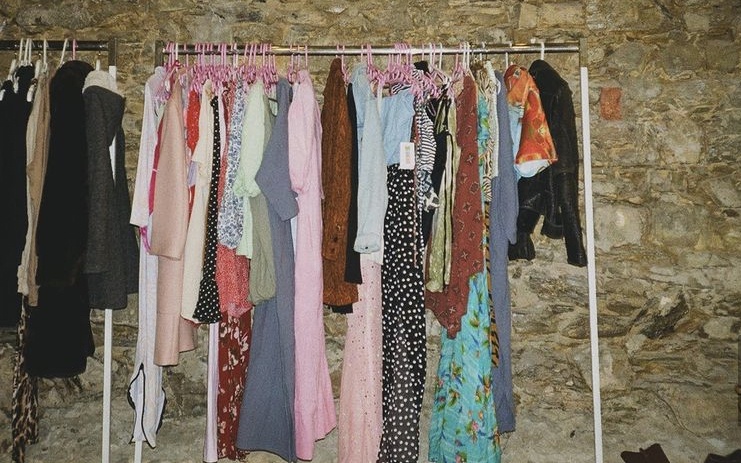
The Rise of Thrifting in Cape Town

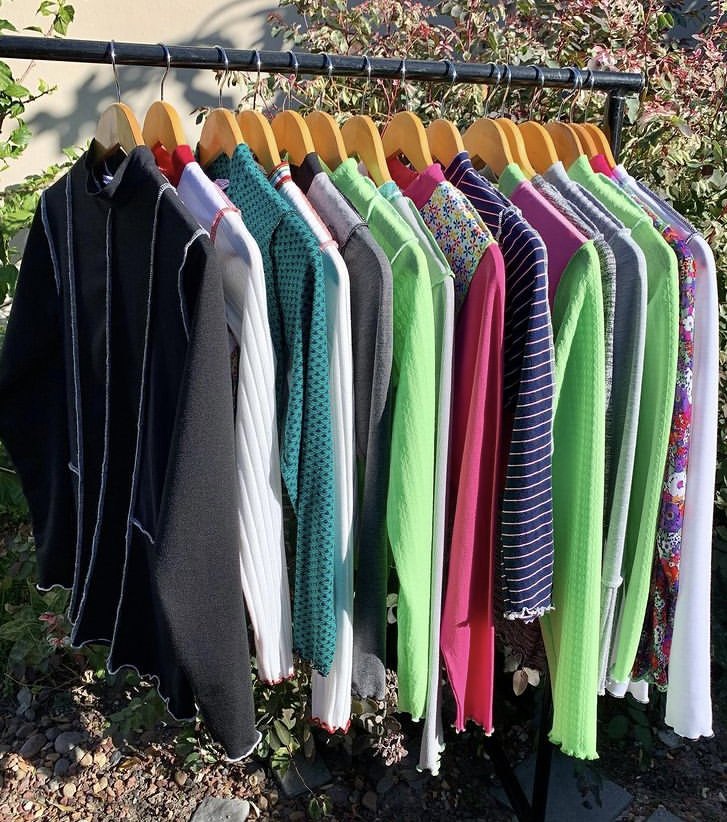
To be “thrifty” is to be economical – and with the rise of second-hand resellers, vintage stores and the culture around thrifting – the fashion purchasing landscape has seen popularisation of consumers opting for unique, often cheaper priced garments; a welcomed challenge against the onslaught of fast-fashion’s hyper-consumption and ceaseless trends. In Cape Town, second-hand culture is an expression of a larger African informal economy, and locally it can be seen to emanate from vendors at Grand Parade, outwardly across markets, online, and brick & mortar stores. This landscape of thrifting, although positive in its intention, speaks to a greater systemic issue – where countries in the northern hemisphere send massive bales, regularly, to key ports along the continent’s coasts; most notably, this is an almost epidemic aspect of garment trading in Accra, as researched and reported by the OR Foundation’s project Dead White Man’s Clothing. During my initial “thrifting” awakening as a teenager, there was a store in Spencer Rd, Salt River that brought in bales of army jackets, fur coats etc – redirecting these garments from “aid” towards profit for the owner. While this appears deeply problematic, there is also the inherent problem with “aid” – the idea that the global south should only advance or benefit from the charity of wealthier countries. As with any large-scale systematic reflection of our greater economic state as a society, I urge you to dig deeper into thrifting as a practice for low-income people; and the care we must take in understanding the nuances of gentrification of this practice.

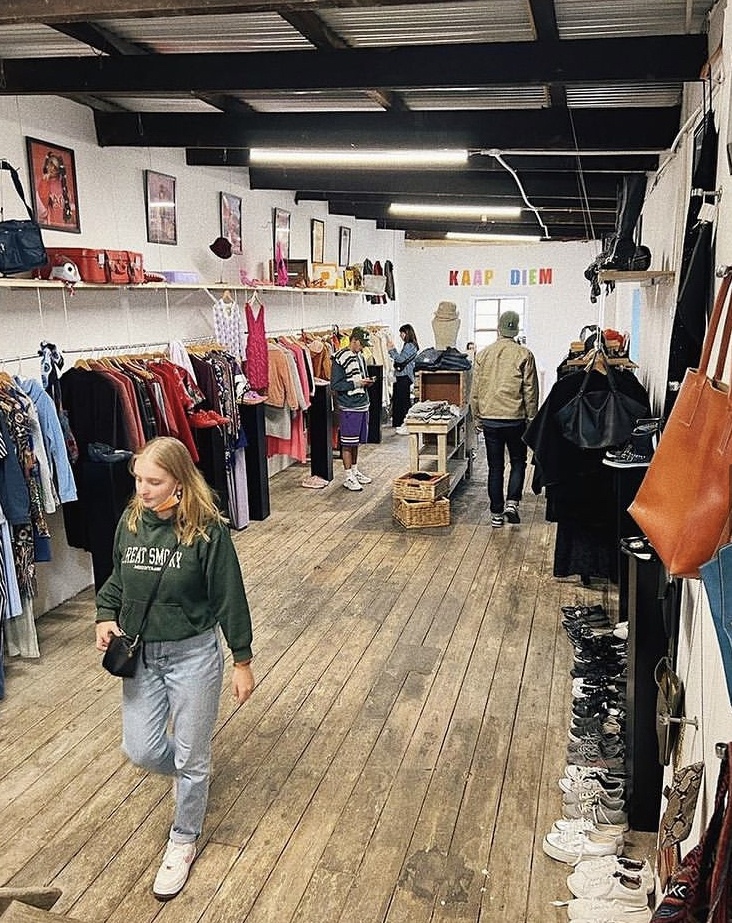
I spoke to a number of store owners around the city on their thoughts about thrifting. Iin asking Abigail Merhar of Eku Collective how curating and re-selling can be more dynamic for her clients than conventional fashion retail, she says “I think it makes the creative process behind curating your wardrobe much more fun and dynamic. It challenges you to find new, fresh ways to wear clothing you wouldn’t otherwise consider wearing. You will be able to find one of a kind treasures, collectors pieces and pieces that no one else around you would be likely to find as well. You also know that the footprint and impact of your purchase is much lower than that of a conventional fast fashion or retail purchase.” Thrifting is an act of lengthening the life-cycle of a garment, preventing it from reaching a final fate in a landfill – where it may never degrade, along with the rest of our intense amounts of waste as a species. Robyn Uria and Michelle Solomon of Kaap Diem – a thrifting collective located in Bo-Kaap – speak to the circulatory of thrifting, and normalising it as a desirable purchasing method for young people, “We really believe that gently owned or previously loved fashion always has a place for a new home. If we can contribute to well priced pre-loved fashion being continuously cycled rather than putting additional strain on the environment we are doing our part in ensuring a healthy future for our beautiful planet. Styles come and go but they are cyclical and there will always be a demand for them again. Our key is to have an ecosystem of trading and buying or selling of beautiful styles but not necessarily designer brands. We try to cater to all genres and sizes.”

A favourite of Cape Tonian thrifters, Sarah Byram’s Better Half Store is an exceptionally curated offering in Observatory; showcasing the possibilities for thrifting as effortlessly aligned to a concept store setting as any brand or label, and not merely the usual chaos of rails and piles of clothing (although the latter is always a fun exercise in finding the right piece). 

Sarah explains the origins of Better Half, and how it has always functioned to complement and host local, small-scale designers embodying the same values, The backbone of Better Half has always been rooted in sustainability, although it is my belief that no brand, no matter how big or small, is 100% sustainable. We can only do our best to be as transparent as possible while still aiming to run a profitable business. Other than sustainability, quality and consistency are our core points of focus, so we consider each of these in every decision that is made. When we opened our store in 2017, our focus was primarily on second hand clothing, specifically 70s – 90s garments. By 2018, we were ready to open up a store in Johannesburg and decided to run a 6 month pop up at 99 Juta Street called Better Half and Friends.The aim was to spotlight upcoming Cape Town brands, and included some of our favourite women-run brands such as Sama Sama, Artclub and Akina.” The store, online and physically, is set to host more events in the future – as Sarah grows the adaptive nature of Better Half’s vision, “In 2019 we broke down a wall and expanded our store to include a curated range of dècor and homeware pieces, sourced locally or from independent family run businesses in India. This expansion seemed like the natural evolution of the brand and had always been a dream of mine. A treasure-trove oasis of carefully curated and exhibited items, my aim for this version of Better Half was to spark joy and inspiration within our customers to explore their unique style through offering an alternative to mass manufactured garments and homeware pieces. The next version of Better Half includes the Better Half Content Studio and A Rentable Section, which we plan to launch this Spring. By 2023, we hope to move fully online, but we’ll keep our store as a base for weekend try-ons and pop up events.”

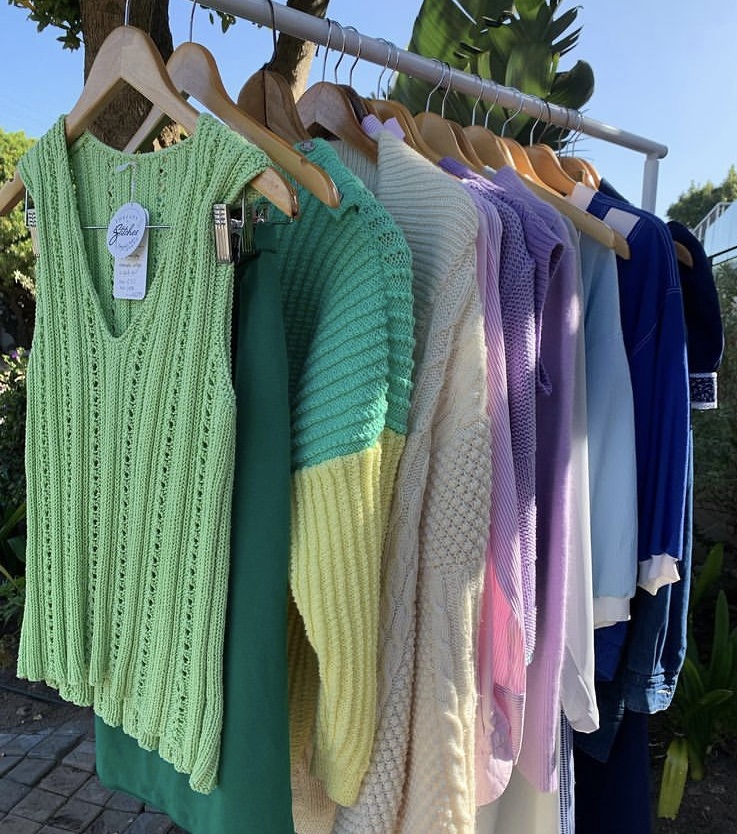
Shelby Bailey of Threads and Stitches conceptualised her business as a response to the hard-hitting industry scarcity of the COVID pandemic, and utilises the philosophy of “rethink, reuse and recycle” – and has since added an up-cycling brand of her own, using offcuts to create beautifully stitched and unique pieces. Commenting on thrifting as a profession, she speaks to her experience as a thrifting consumer, and the greater responsibility of store-owners to be cognisant on how thrifting needs to remain accessible even as it continues to be more coveted, “For me, it started to change, by rather buying, for the means of necessity, rather than out of want and popularity. I love clothing. Some might say it’s an addiction, and  I needed to change how I was doing things and thrifting was my start. There are loads of articles on these issues and how we can convert our wardrobe into something that is fun, recirculating, and sustainable. We as the consumer can also look at personal preferences and style and build a wardrobe that’s durable, functional, and timeless. If we look after our things well enough that the next person can use them then we are creating a sustainable wardrobe. A noticeable difference that I have seen is that thrifting has changed from charity shops circulating in an accessible retail space catering to those that rely on secondhand clothing to becoming infatuated with the new thrift trend and putting up the prices to make necessities unobtainable. This, in turn, causes thrifting businesses to sit with an excess of leftover stock that finds no home.”

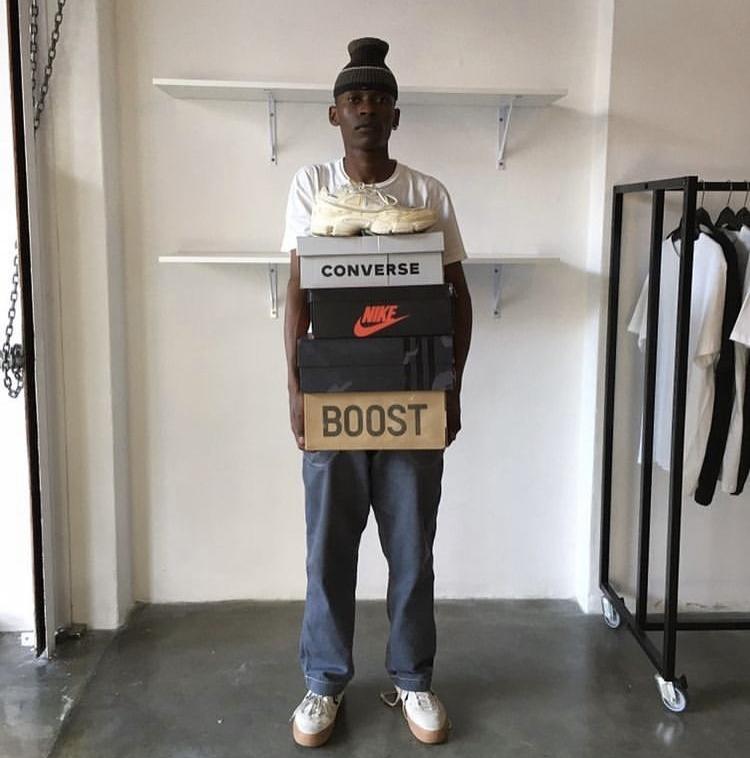
Before Andile Dlamini pioneered BROKE, his initial entry into the thrifting market was through his much loved business Hopeville Grailz; in which he channeled rare finds from his own experience thrifting and styling, to a destination that reflects he and his friends’ affinity and passion for streetwear. Now predominantly curating and reselling pieces that can’t be thrifted in Cape Town like Patta, Palace or Stüssy – Andile comments,Hopeville is definitely the sister to the clothing Brand BROKE as it inspired us to find our own place in the streets, as we stood out in the colourful and cheap thrifted garments we couldn’t move a thrift store, we had to find a name for us as the movement hence Broke Boys, at that time it was a group of friends just trying to make the most with what they had, everything was achieved through a shoestring budget. The importance of thrifting is that more than anything, it is financial and environmentally sustainable,but besides that it allows you the opportunity to travel back in time through the old  clothes that you need to browse through and appreciate the era it came from; trust me they don’t make them like they used to.” The crux of these owner’s vision is young entrepreneurship, each building a business and creative models that speak to their experience as consumers and that of their communities; and this is the essence of thrifting as a practice,  born from a joy that cannot be bought at just any store. It is part of a solution, of which we need many, to tackle our growing global fashion-consumption crisis.

Written by: Holly Bell Beaton

Influential shape-shifter and twofold artist-photographer, Soweto-born Fhatuwani Mukheli debuts first solo show in Cape Town

This July, Kindred Gallery brings to life an inceptive edition to their Winter exhibition programming, following the success of their first Summer exhibition, (Hopeless) Traumantic by Koooooos which unfolded earlier this year. Shaking up Cape-Town’s local art scene – in the very best way possible – is all part of the indispensable mix for Double Exxposure, a not-to-miss solo show curated by Samantha Whittaker, and creative duo Jana Hamman and Koos Groenewald (Jana and Koos).

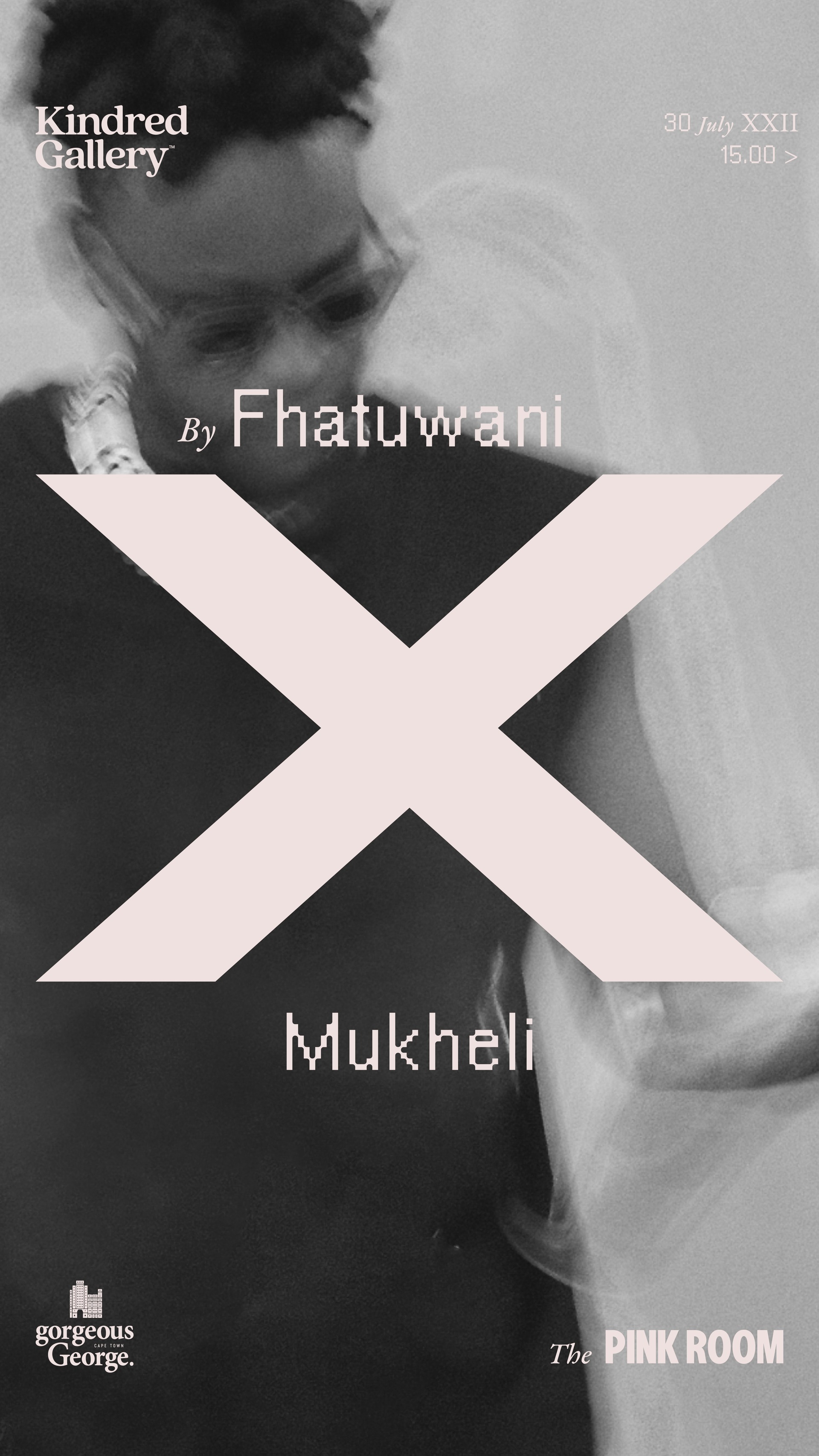
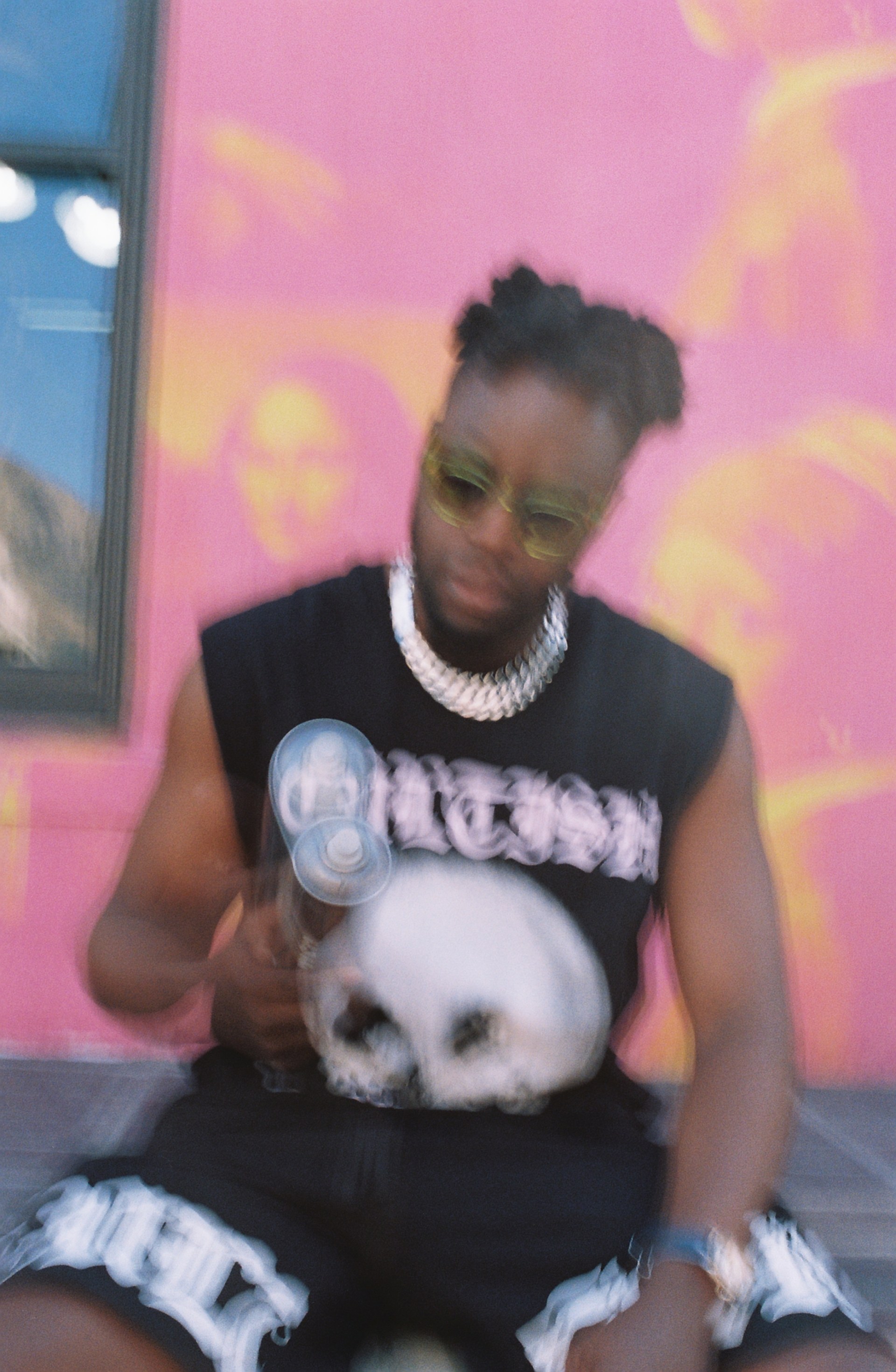
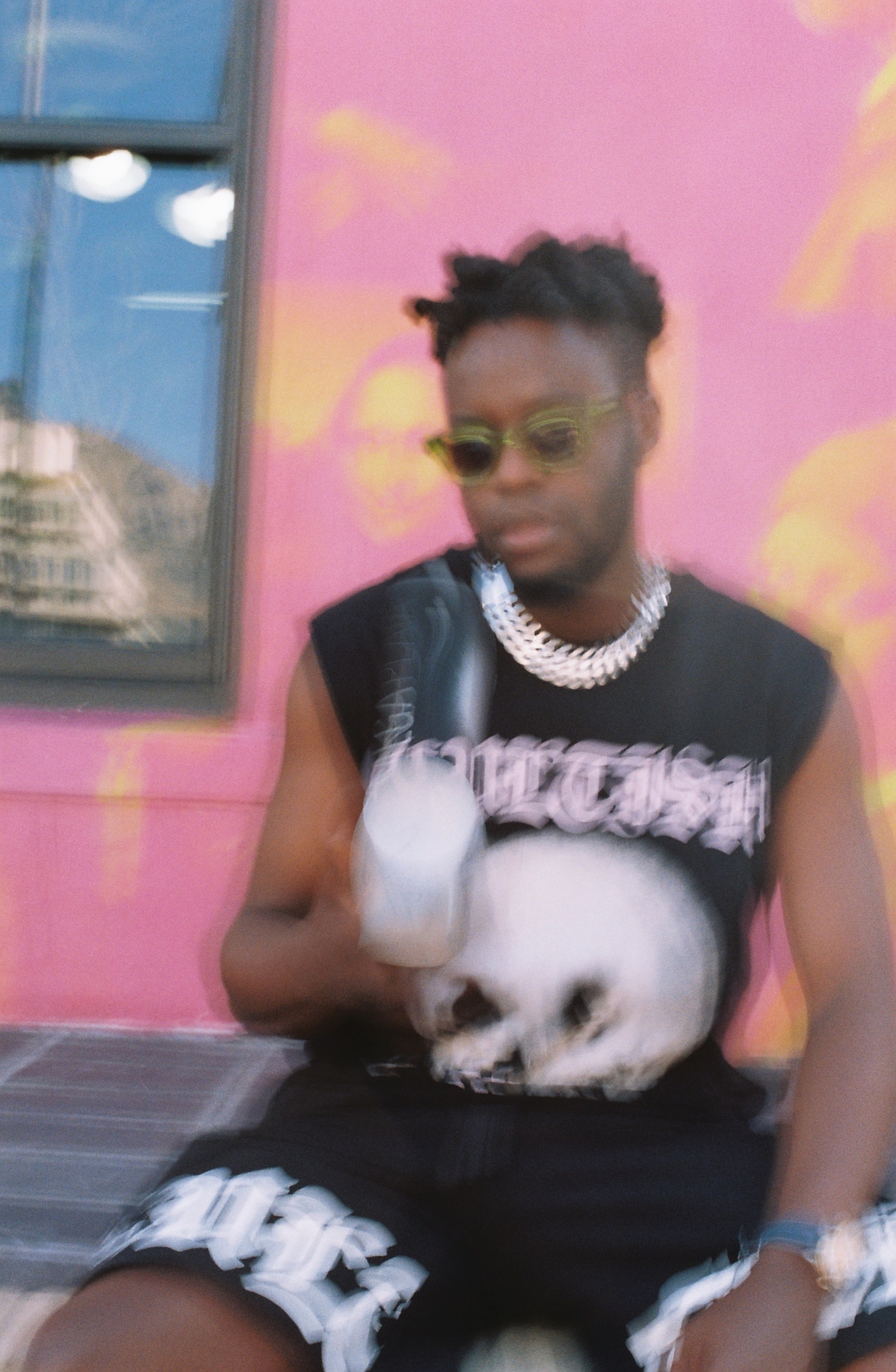
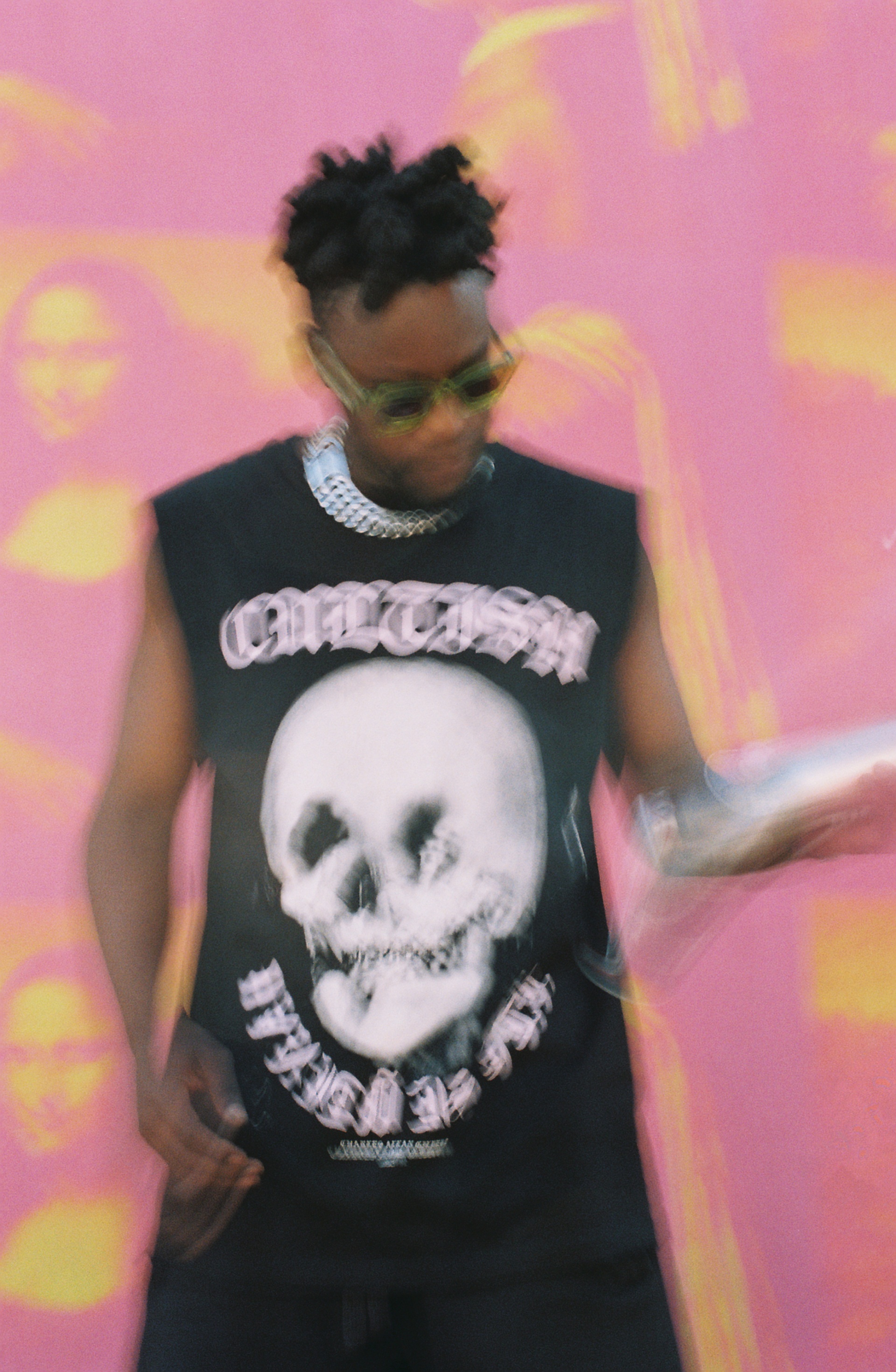
On the evening of 30 July 2022, Cape Town will play host to a gripping solo exhibition by well-respected multimedia artist Fhatuwani Mukheli that both embraces and champions the mysteries of double meanings. As artists, there is always an ardent and intrinsic need to create. This dedication flows through the mind and spirit of any artist. Mukheli etches this philosophy of art into his work and has established himself as the reigning prince of story-telling within Johannesburg’s local art scene. Double Exxposure takes on inspiration from the various aspects of the artist’s personal life which involve duality and juxtaposition: his photography background, being a twin, being a “character” in the influencer world whilst being someone else in real life. Here, Fhatuwani moves away from the palpable narratives that characterised his previous bodies of work. Instead, the artist’s new body of mixed media objects are what usher into a new chapter of introspective experimentation.

Double Exxposure is the very first product of an artist residency experiment, a collaboration between Kindred Gallery and the Gorgeous George Hotel. For Kindred, the future beholds collaborations of the same calibre.

Located at St George’s Mall in Cape Town’s CBD, Gorgeous George has offered its space for the duration of the residency, where for the month of July, Mukheli will work towards his final exhibition. An artist on the cusp of his creative inter-exploration phase, he will experiment with completely new mediums, the outcome of which we can expect to see at the exhibition opening event. Running alongside the sociability of music, DJs and drinks that comprise the launch to this freshly conceived Double Exxposure exhibition, a single RSVP unlocks entry to the exhibition opening event. The event is not just for art enthusiasts – the culturally curious from all walks of life are invited to benefit from what’s on offer. Founder of Kindred, Ryan Brüssow says, “Art is a playground for the mind. Kindred wants to create better playgrounds for everyone that loves art. Fhatuwani gave us that instant chemistry with his work, ethos and outlook on life.” The exhibition opening event takes place on 30 July 2022, from 15:00  at Gorgeous George in their new venue, the Pink Room. The exhibition will remain up at Gorgeous George until the end of August 2022, with more details to follow subsequent to a public programming schedule announcement that will be released in the coming weeks for those who missed the opening weekend. With limited space – registration is essential to avoid disappointment. Please RSVP to [email protected] at your earliest convenience.

For more information about Kindred Gallery:

Please visit https://kindredprints.com, contact +27 (0)11 549 8300 or email [email protected].
Follow Kindred Gallery on social media:
Facebook: https://www.facebook.com/shopkindredprints/ – @shopkindredprints
Instagram: https://www.instagram.com/kindred.prints/?hl=en – @kindred.prints


About Kindred Gallery:

Kindred Prints was born to democratise art, and Kindred Gallery is a byproduct of this freedom to produce and share art. It’s an anything-goes kind of space, that is home to alternative artists who produce work bigger, weirder and more complex than just print. Our seasonal exhibitions will blur the boundaries of art~culture, and connect creators to a new kind of artlover and buyer. The Double Exxposure exhibition and exhibition opening event are proudly brought to you by Kindred Gallery in partnership with Gorgeous George Hotel.


About Gorgeous George Hotel:

Local design and boundary-pushing innovation meet at Gorgeous George, the new hotel in the heart of downtown Cape Town. Whether you stay for one night or two weeks, it is the ultimate destination to truly experience the Mother City like a local. Created out of two beautifully restored heritage buildings, Gorgeous George is the first in Cape Town to join the Design Hotels™ stable, a hand-selected worldwide collection of privately owned and operated design forward and culturally rooted hotels. The city is on our doorstep, but you may find it hard to leave. Ascend the marble staircase to the 6th floor and blow off some steam at the rooftop pool and Gigi restaurant & bar. This is the 021, where friends come to stay and play. This is Gorgeous George.
MEDIA RELEASE ISSUED BY: Lianca Heemro – [email protected]

Fhatuwani Mukheli begins his Reign as an Artist

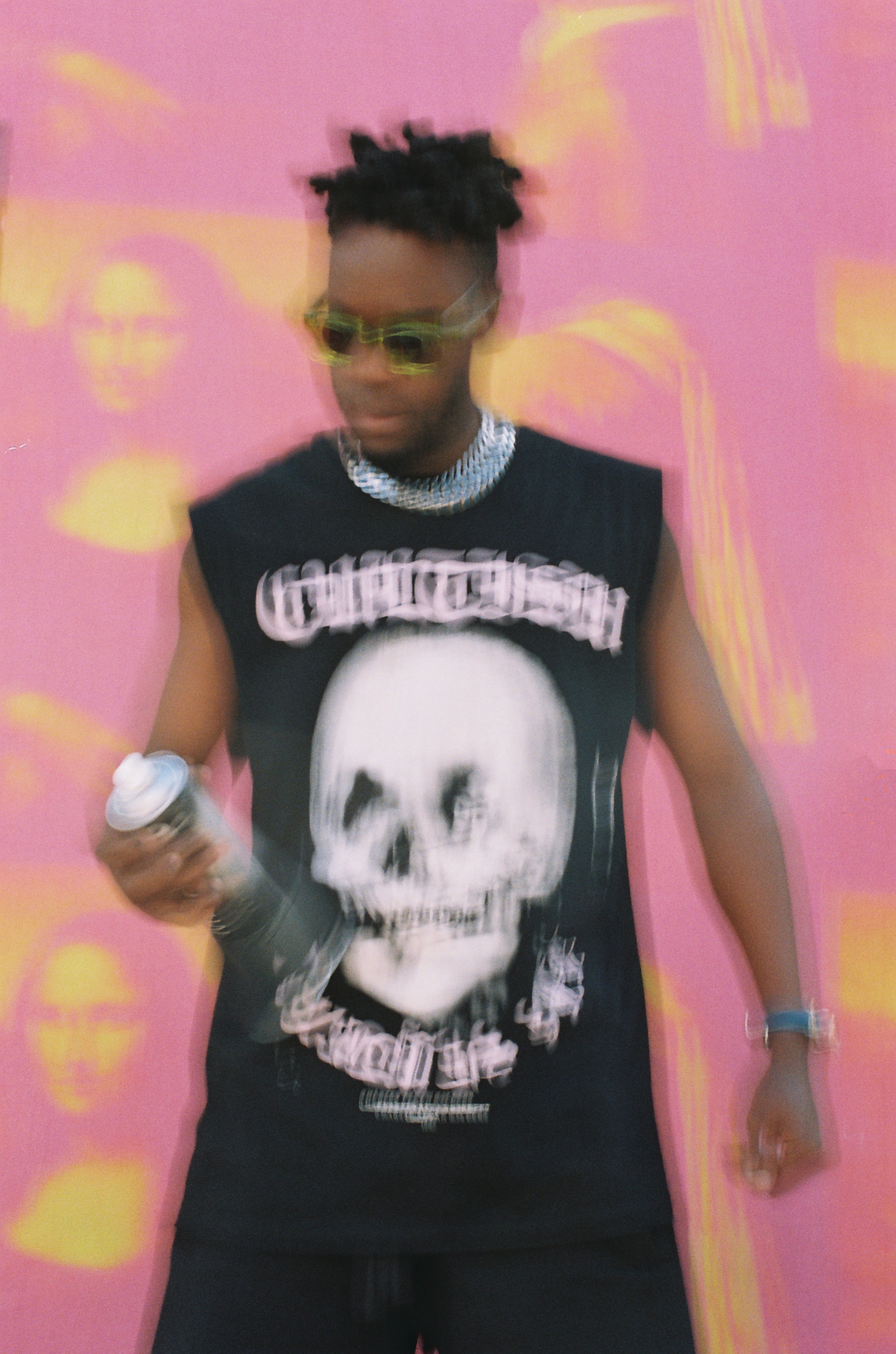
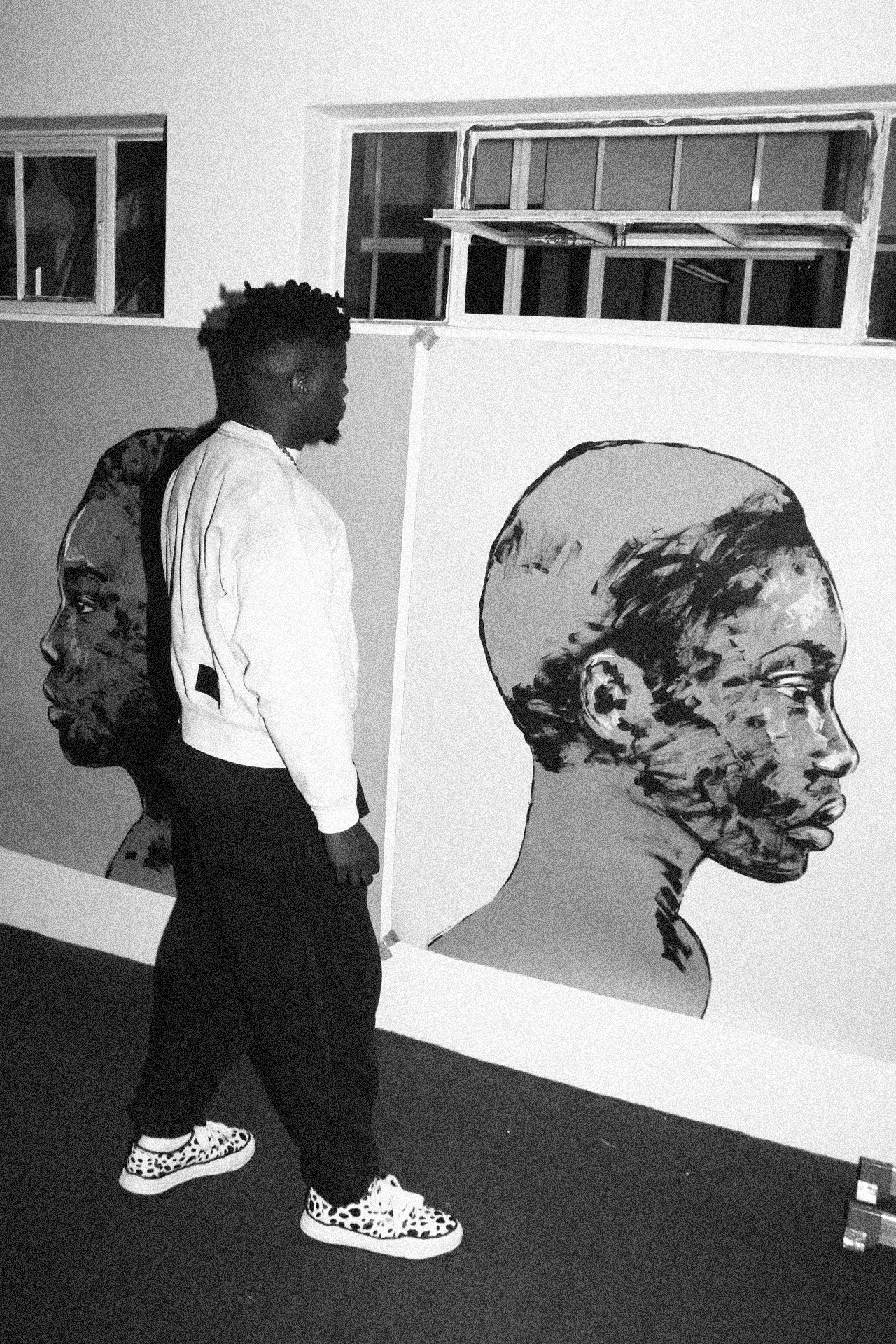
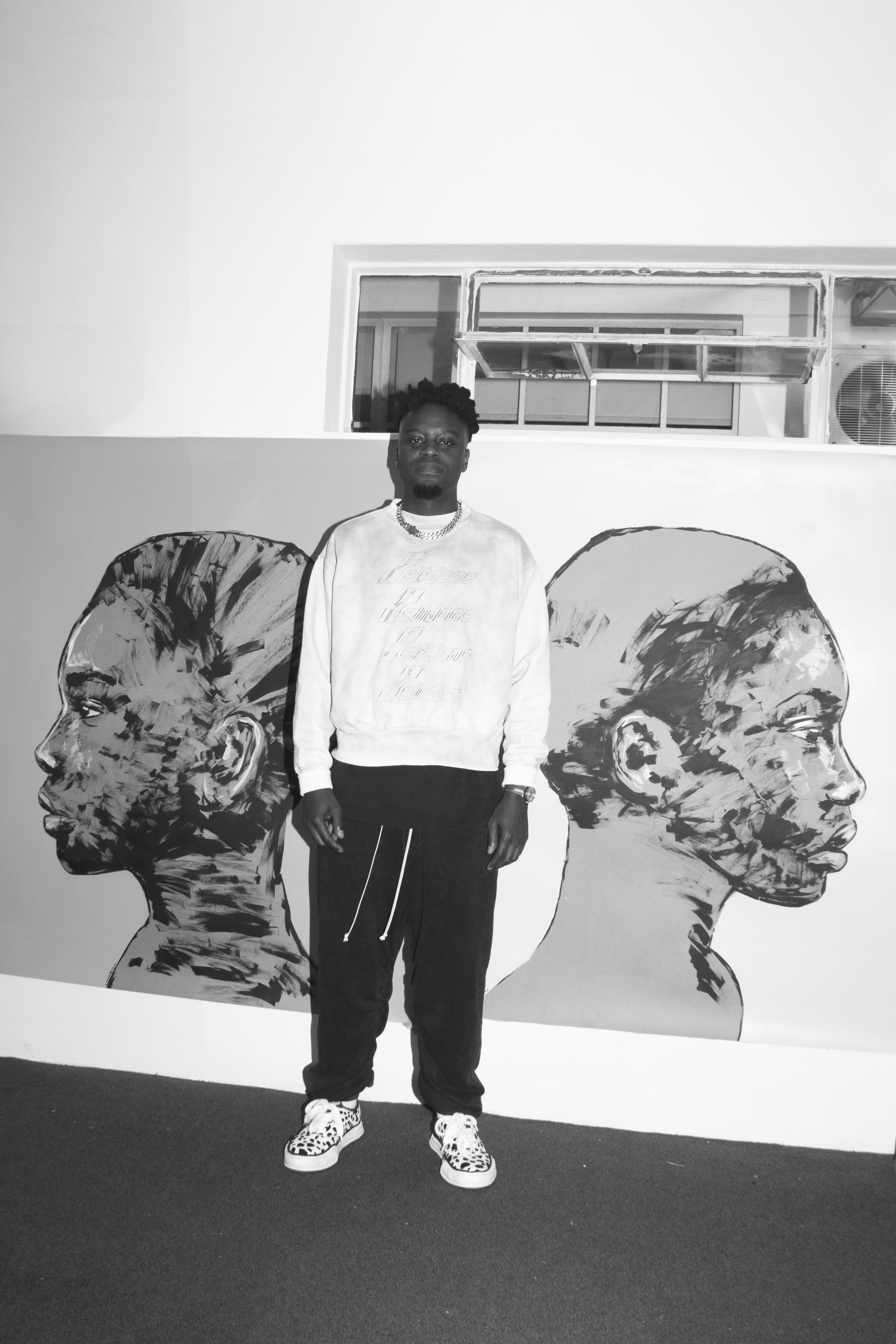
Fhatuwani Mukheli has an air of unbridled joy about him – infectiously positive and determined, as a national treasure and indelible influencer who continues to drive the possibilities of his life beyond further and further. His life’s work has been channeled through varying roles as a photographer, creative director, film-maker and co-founder of varying spaces; and still, he has added another layer of transformation to his creative arsenal; Fhatuwani as an artist – the culmination of all these roles before him. This term, descript in its essence of conveying creativity, is traditional in this context for Fhatuwani’s growth; this new frontier is as a fine-artist: the summit of all Fhatuwani has learned and achieved thus far in his career, While this may appear “new” to his followers and community, in fact, Fhatuwani’s entry into art is a return to his inner-child; in which drawing and painting formed an intrinsic part of his childhood from 7 years old. Encouraged by his twin brother, Justice Mukheli, and his closest friends, to seize this metamorphosis fully – Fhatuwani’s entry into being an artist is his entry into a space of vulnerability, a space that has been carefully nurtured since lockdown 2020 – and now, Fhatuwani is ready to share it with the world at large. In collaboration with Kindred Gallery and Gorgeous George Hotel, Fhatuwani’s first residency will culminate in his first solo show – Double Exxposure. 

Samantha Whittaker, Jana Hamman and Koos Groenewald joined Kindred Gallery and its owner Ryan Brüssow to co-curate and bring this show to its fruition; a project that has come to be a successful study in intentional collaboration and synergy of their shared vision. In conversation with Fhatuwani at the iconic Gigi’s rooftop, we discuss this precious moment for Fhatuwani – delving into the heart of the theme of Double Exxposure, artistic expression as the center from which Fhatuwani has always expressed himself – and that all before this has been preparation for Fhatuwani’s emergence as a critically important South African fine artist.

“I had moved into my new apartment and then the lockdown hit, and I couldn’t leave – like all of us. I was bored, but with that came this time of introspection; I found myself asking, who am I? What do I really enjoy? When there’s no one around me, what is it that I feel? Art and drawing is my first love. Justice and I started doing art when we were 7 years old; we saw our dad draw a portrait of us on cassette tape paper, and he was playing jazz and smoking cigarettes. That portrait that he drew, of the three of us, was our first experience of ourselves as artistic or creative; it opened up a curiosity that continues to this day, and that has guided both Justice and I through everything. I was feeling a  bit anxious or low during lockdown – and between my two loves of art and gymnastics – art seemed to be the most accessible at that moment. I couldn’t do a backflip in my apartment at that time, so art was what I knew could bring a sense of healing and therapy.” Fhatuwani’s admission of this contrast between gymnastics and art as his central passion are concise and sincere in describing his yearning for balance in both body and mind. Fhatuwani is focused on movement – whether it’s in his unfolding career, or challenging his physical body – or guiding his hands to spill forth his inner world. “I started drawing on paper, and it was so therapeutic. It got me back in touch with my inner child – and I felt like that kid who was drawing and getting better at it. It’s the pure excitement of drawing a face a bit better each time. I shared what I was doing with Justice, and invited him to paint and draw, and just chill, like we used to. I think that’s why this experience has evolved into something so special; because it has come from the innocence of my inner-child and curiosity about people and the world.” Fhatuwani shares openly with his community of 77k followers – conveying the aspirational aspects of his life like traveling around the world, brand partnerships – but also of himself, too. Fhatuwani is as delighting offline as he is online – so when he shared his drawings on Instagram during lockdown, it piqued the interest of a woman in the US. The first drawing he sold was to her – and this set his artistic expression in full motion, beyond the privacy of his own therapeutic healing. Although this led money to be quite motivating – particularly during the onset of the pandemic, in which everyone was hit financially – Fhatuwani had to re-establish his intentions for sharing his art, on this he says I started making more, and after selling some and then hitting a quiet spot where no one was interested – I started feeling weird again, or self-conscious. You need to just do it for you – I had to remind myself – money will come, and it does add value, but I have to remember that this is for my therapy and health. It’s for centering myself, everything else is such a bonus and blessing.”

Fhatuwani has since moved his practice to a studio at 44 Stanley in Johannesburg – a growing hub that supports the creative and entrepreneurial spirit that is brimming in the city. He shares the space with Justice, and has never looked back; “I am living my dream, now. I have for a long time, but being able to feel and be a professional artist is a full circle moment for me. It’s a letter to my younger self. The universe is showing me that I can do it. My work is healing me, too. What more could I ever want? I am having that conversation with my younger self, and I’m having my second childhood. I also think this time is about sharing the complexities of who I am – you know, I am about positivity, and Justice and I focus on sharing that spirit with everyone – but we have had hardships and trauma, and there are times when I feel low or am dealing with things that are complicated. Having a broken family when our dad left us, sparked a problem-solving way of life for Justice and I – but that doesn’t mean it hasn’t hurt. My art is a way of showing that side of myself, too; the whole of Fhatuwani. In doing that, I hope we can create space for the full truth of who people are and what we all have to experience in this life.” 

Fhatuwani’s upcoming showcase at the new Pink Room at Gorgeous George Hotel delves into the duality and double meanings in life; the contrast and similarities, the clarity and mystery, of being a twin – an influencer – and of being a photographer and now an artist – and it deals with Fhatuwani’s innate viewpoint of people and memories; translating his exceptional grasp of form behind the lens, to mixed medium depictions of his inner-world. Co-curator Koos Groenewald comments on the richness of this subject, “Double Exxposure is a photographic term, but it’s quite nice to claim it as an artistic term in this context. The great thing about a strong concept is that it reveals itself to you as the process unfolds; funnily, when we first started talking, someone mentioned that “oh, yes because they’re twins!” and we were blown away – we hadn’t even thought of it. I think it speaks to Fhatuwani’s individuation from being a twin, or a co-founder – and into a space that is his own, but inevitably brings all of that with him as the foundation for what he creates.” Samantha Whittaker, who along with Ryan Brüssow, Jana and Koos – all found themselves effortlessly diving into this process with Fhatuwani; in which, their intentionality is so aligned, that the process has been a breeze; a collaboration between friends bring visions into being. On this Samantha says, “One of the most interesting things has been the warmth of the Gorgeous George team. All of our motivations are so pure, so there has been this incredible energy of support and generosity. It’s been a beautiful practice in letting art just happen; we can facilitate it, but together and with the alignment we all have; it’s turning into something very special.”

Regarding Fhatuwani’s medium and stylistic development, what began as a journey with charcoal – has now seen him venture into acrylics and varying mediums- weaving in his own references of graffiti, and the graphic design he learned in advertising. Fhatuwani is driven by what he wants to see in the world; not what the world expects of him; and in so doing, the story of his life has opened up another chapter. This testimony to us all that anything is possible, and Fhatuwani Mukheli has always been an artist; in some way, this is just our invitation to join him as he goes further and further into living beyond his wildest dreams. 

Double Exxposure will be taking place at Gorgeous George’s Pink Room on Saturday 30 July from 15h00

RSVP to [email protected] to attend

At The Altar of Growth with Thalia Strates

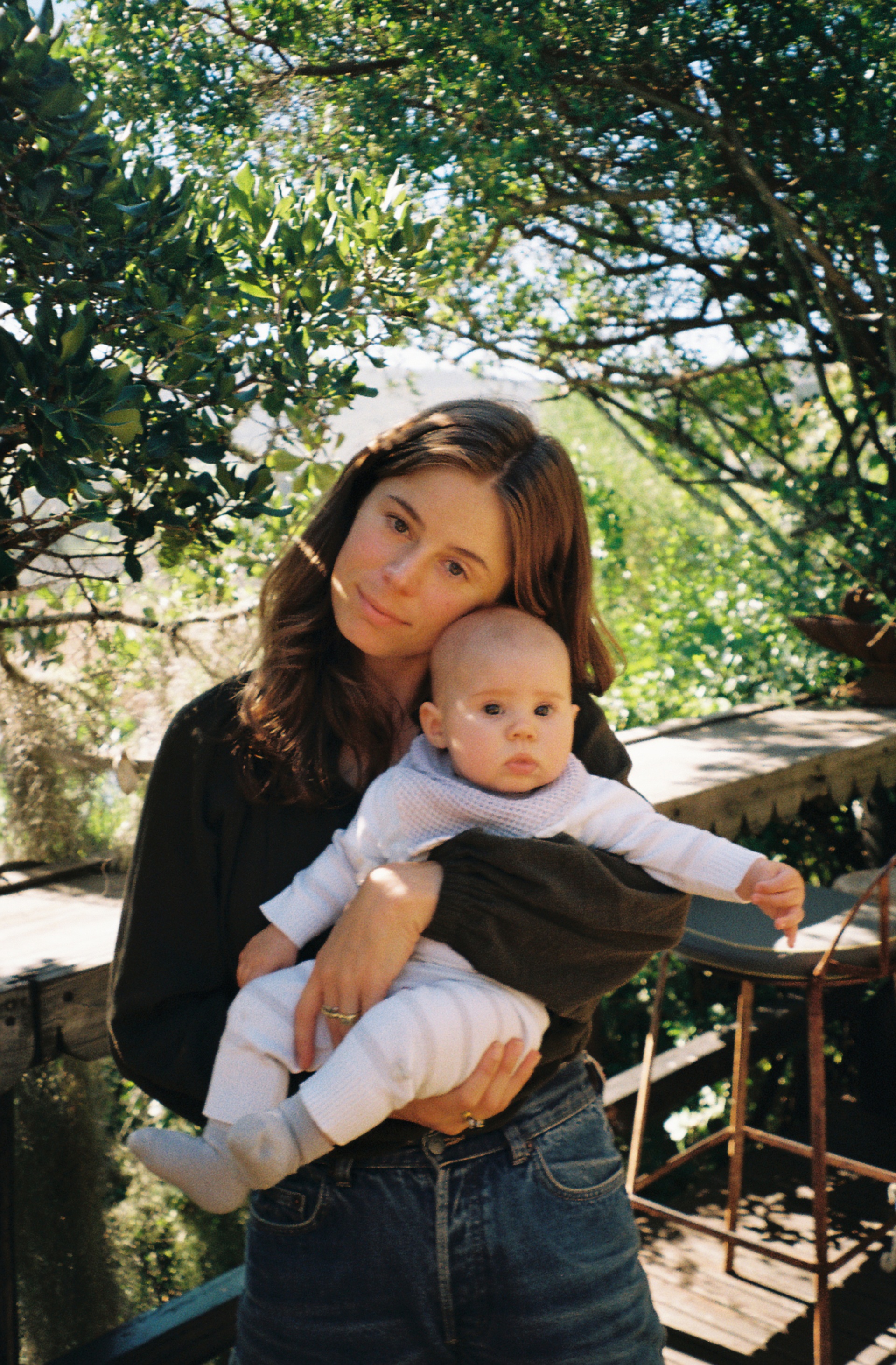
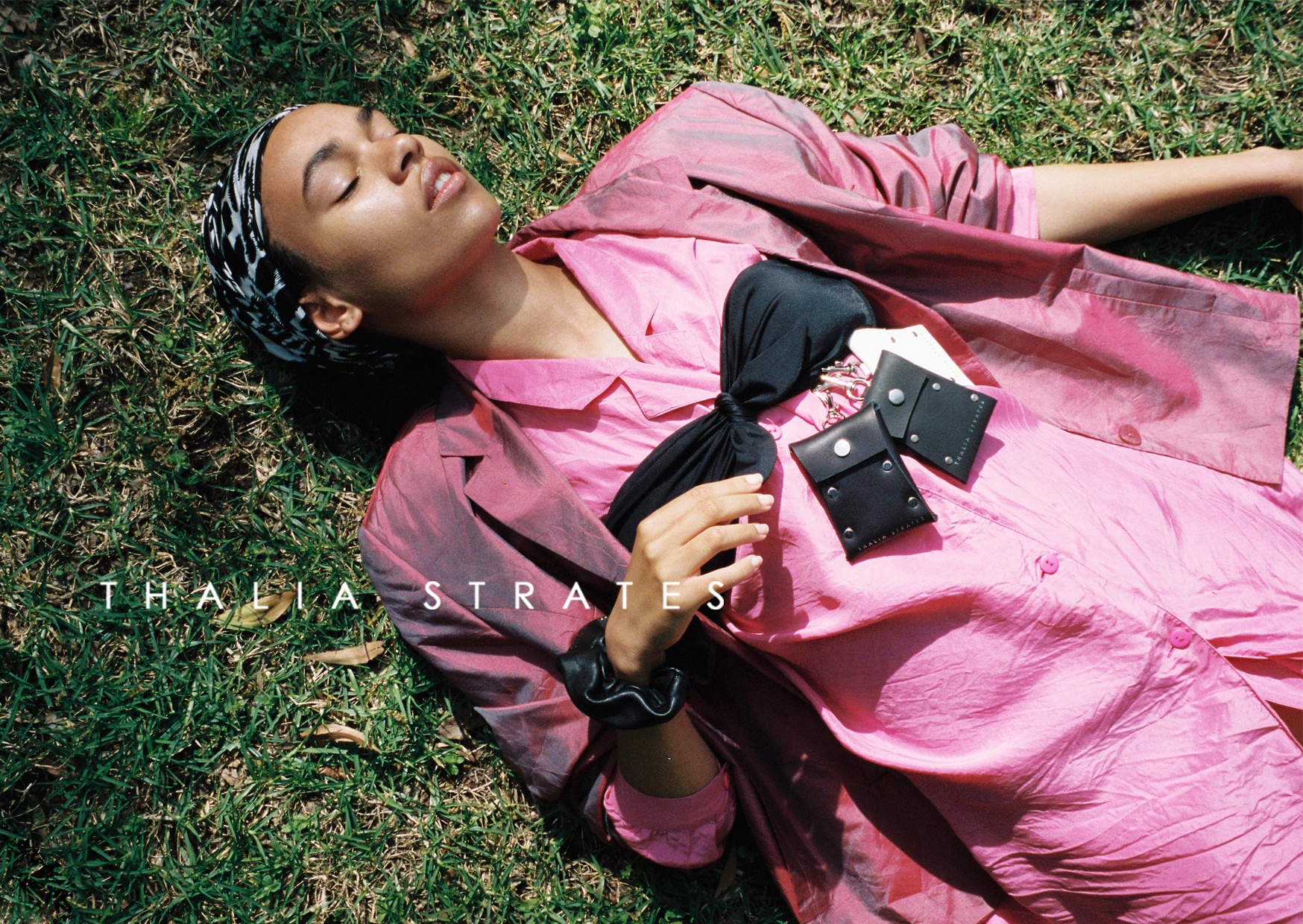
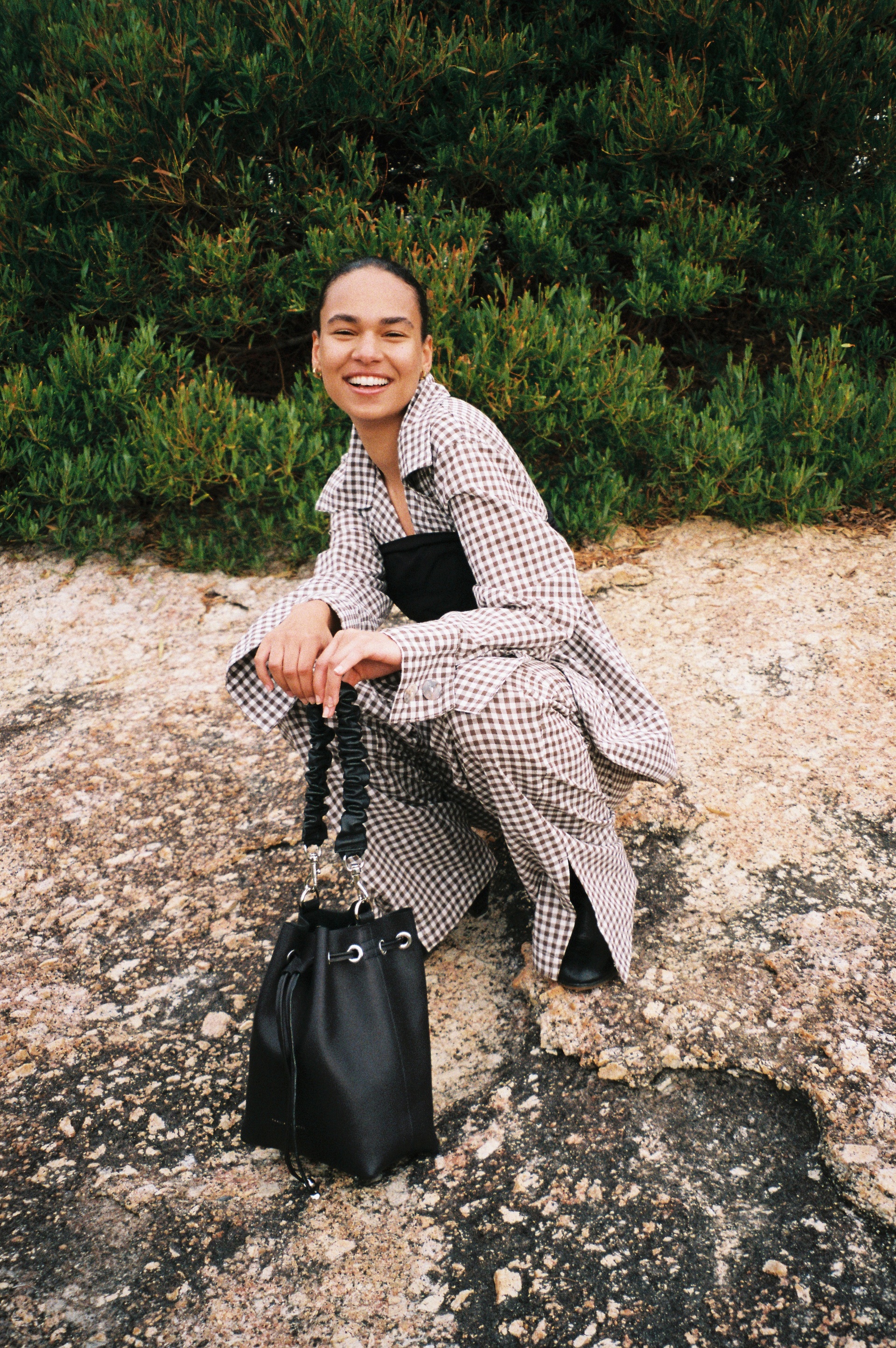
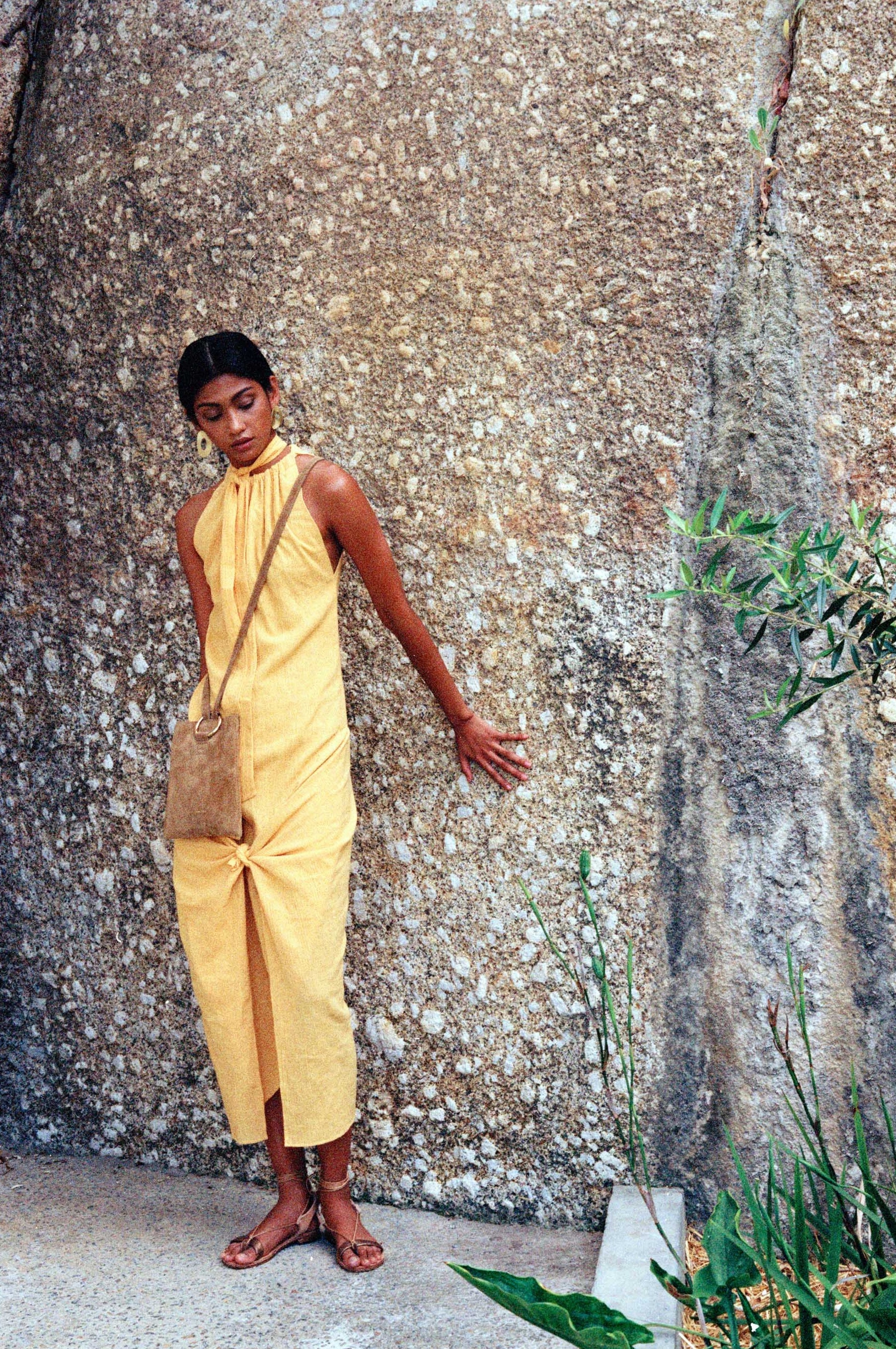
Every now and again, Thalia Strates’ IG becomes a portal into which we are invited behind the front-facing veneer of a brand – and beneath, we glimpse into the tender, yet fervent, heart that emanates outwardly one of the most sincere and meaningful offerings in South African design. That heart, is the brand’s namesake and founder, Thalia herself; and the portal I refer to, are the fleeting and unfiltered thoughts written via ‘stories’, against stellar backdrops of nature, places or moments from Thalia’s living experience. I wondered, when writing this piece and leading up to our conversation, why this act of Thalia’s kept coming up as so present in my mind. I think, perhaps, it is because it is always evident that creatives’ work are a labour of their love – this tends to go without saying – but for some reason, this shining vulnerability and rawness of Thalia’s expression, even in its subtlety and interdispersment, showcases to me a kind of ideal that  I envision one’s life work should be; that Thalia’s brand is an extension of her love, her curiosity, her commitment – and her life. It is entirely co-occurring with Thalia’s growth as a student fresh out of fashion school, to now as she embarks on her beautiful, demanding and destined experience of motherhood.

The principles remain for Thalia – her authenticity is her guiding compass, from gathering off-cuts and stitching purses at the very beginning (as she tells me, not being able to find a specific piece she yearned for) to nurturing a business that supports women, and embodies slow-design from living wages to textile sourcing; all the while tempered by timeless design, soft campaigns and reliable collections that are only ever updated by inspiration, not by consumptive crazes or demands. This is why, after nearly 9 years, Thalia Strates (as a brand) remains a cohesive and invaluable jewel in the growing crown of South African contemporary fashion. TS is your favourite’s favourite handbag brand, and Thalia herself a gem and protectress of craft – community – and consideration. 

I studied at FEDISA straight after matric, knowing I wanted to be in fashion – but not really sure how. The brand was born from wanting things that nobody else had; so if there were trends, I would go in the opposite direction and with bags – I wanted something simple, and understated, but still very beautiful and thoughtful. I went to Woodheads and got a whole bunch of leather off-cuts, and sewed them all up on my domestic machine into little clutch bags. I’d wear them out, and I got a great response from people – and then I started to get a few queries, people wanting to buy one. I thought, okay, I can make one or two extra here and there…and it was actually my dad who pointed out at the time that he thought it was a good business model – I could make a sample, and then everything after that would be made-to-order. I think this has become synonymous with luxury or sustainability now, but then it just really seemed to work because I couldn’t afford to over-capitalise or sit on stock, nor had I even really envisioned a fully-fledged business.” Thalia, tells me that she is not very patient – rather, her strength is in seeing a visually compelling outcome, and then seeking out the most efficient roadmap to get there. This effectiveness has been Thalia’s boon in building TS as a space reflective of her personal integrity as a designer and entrepreneur. Once Thalia found a woman to work with her on production, TS began to take flight – on this, Thalia reflects, “My leather experience at that point was all self-taught, as we didn’t get any leather exposure at FEDISA. This was interesting, because I approached leather from the perspective of my seamstress training – so really winging it – but I knew the type of quality and finish that I wanted, and kept pushing up until that point. The customers I acquired in the very beginning are still customers today, and I think that’s one of the big reasons the business has lasted through all the ups and downs – all the return customers form the backbone of our continued health as a brand. That’s quite remarkable in a world where there is so much, of so much, to covet or to choose from.”

Thalia’s reflection on the beginning of the brand is telling of perseverance – it wasn’t a major acceleration, she recounts, nor an overnight success – in fact, there were many days of doubt – alongside trial and error. Though, amongst this, Thalia was growing her roots, and establishing the foundation and grounding that she required to bring forth TS as an expression of her creative anima – and having it function in a way that would Thalia to realise perhaps her greatest purpose; motherhood. On this, she says “The most important thing for me was to become a mom one day. I wanted to be able to have a business that I could run from home – dip in and when I need to – but prioritise my family. I fell pregnant right at the beginning of lockdown, and now I’ve been able to be a mom, to embody that experience that I’ve longed for, for so long. It’s everything and more – to have created and now nurture my daughter – but it has been overwhelming, too. My mental capacity took a dip, where even an email could create a sense of anxiety and debilitation. Motherhood is caring for oneself, and another – and I take care of a business too – so I felt very stretched thin at first, and it’s taken some time to feel creative and inspired and not just keep the business moving forward.” This is perhaps one of the most telling aspects of being a woman who wants to have children in the 21st century; the demands are deliriously challenging, with the age-old trope of women “having to do it all” – this earnestness from Thalia speaks again to her indelible authenticity; and a reminder that bringing life into the world is no small feat, nor something that should be treated as inconsequential to one’s own experience as a human being.

The brand itself has contributed to defining contemporary South African luxury is; especially in the realm of materiality.“Trying to source materials at the beginning was really hard. I think I came in at the end of an era, in a way where a lot of factories and suppliers were closing down and the variety was very limited. Most of what I could access was upholstery leather. The leather I chose was for the interior and shell of the bag; I wanted leather to be the central material, because it is so incredibly durable and beautiful. I wanted structure – and for the bag to gradually soften with time. I started using shoe leather, which took a very fine dance to source from places that had their last roll left. I still work with the same suppliers today – and in the beginning I was 23, 24 and perhaps it seemed like a side-project or hobby, but they saw the business grow and how serious I was. I looked at importing, but it went against the whole idea of sourcing locally; of celebrating our materials here in South Africa.” Leather exists as an industry, and while there are fabric innovations occurring – like cacti and pineapples – for Thalia, leather is intrinsic to South Africa across many cultures. It is a way to honour the whole animal; to bring about a talisman or heirloom for its life. Thalia’s wisdom and frankness on this; “I really had to use unorthodox leathers. I would bring my team this very thick leather, and we had to learn to stitch and manipulate it – and it got me to experiment with what has become signatures for the label, like springbok and shearling. It’s as relevant as ever. It’s totally raw and rough, which is my best. It’s sincere – and sustainable, too. Springbok particularly; it is being used for its horns, skin and meat. Natural culling, done humanely, is a part of the process. Our commercial farming industries, globally, are very inhumane – it is revolting – however I am a meat eater, it’s in my heritage and my body thrives on it. We make such a small amount of bags, it’s a drop in the ocean – but it’s a respectfully done collaboration with local game farmers with their own connection to the earth. I’m also not too convinced by vegan leathers that are so synthetic.”

For Thalia, the label is about connection. It’s a way to connect with likeminded people – with notable collaborations being Rich Mnisi, Pichulik and Matter of Fakt – but also to connect with her customers, many of whom are loyal supporters that have become friends. Thalia still makes many of the deliveries in Cape Town herself. “I find it interesting that with time, I’ve realised how important the brand has been in creating a space for me to show up to relationships and creative people with a bit of myself already to convey. You know what I’m about from what we do, so I can feel safe in learning and creating through relationships. Those stories I post – sort of, deep downloads – are able to go onto the brand’s social media because the brand is not separate from who I am in any way. I get responses that trigger conversations – and I know there are others that think like me – or there are responses that teach me, or challenge me to redirect my attention. Approachability is something I treasure in my own life, so I hope the brand relays that sense too. I have questions, and I want to learn from other people.” I could spend ages to talking to Thalia, and I found myself telling her my own sense that sometimes, I wonder if my experience as a writer and interviewer is precisely that; a yearning to get to the heart of the matter with the creatively brilliant that people I admire in South Africa – and beyond.. Refreshing and re-invigorating; Thalia Strates has much to say through her mindful practice of design and living on this earth, and I’m here to hear it.

Written by: Holly Bell Beaton