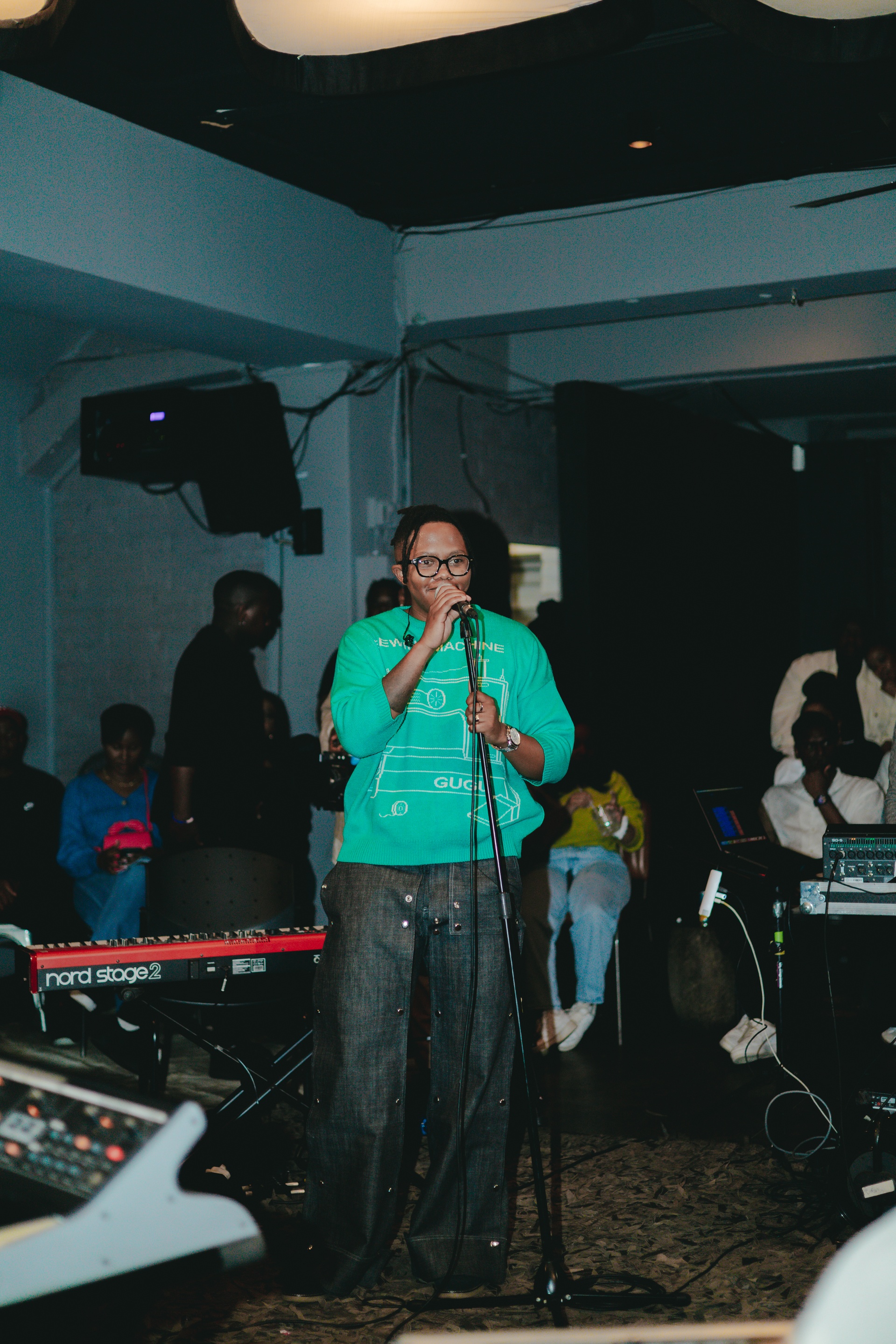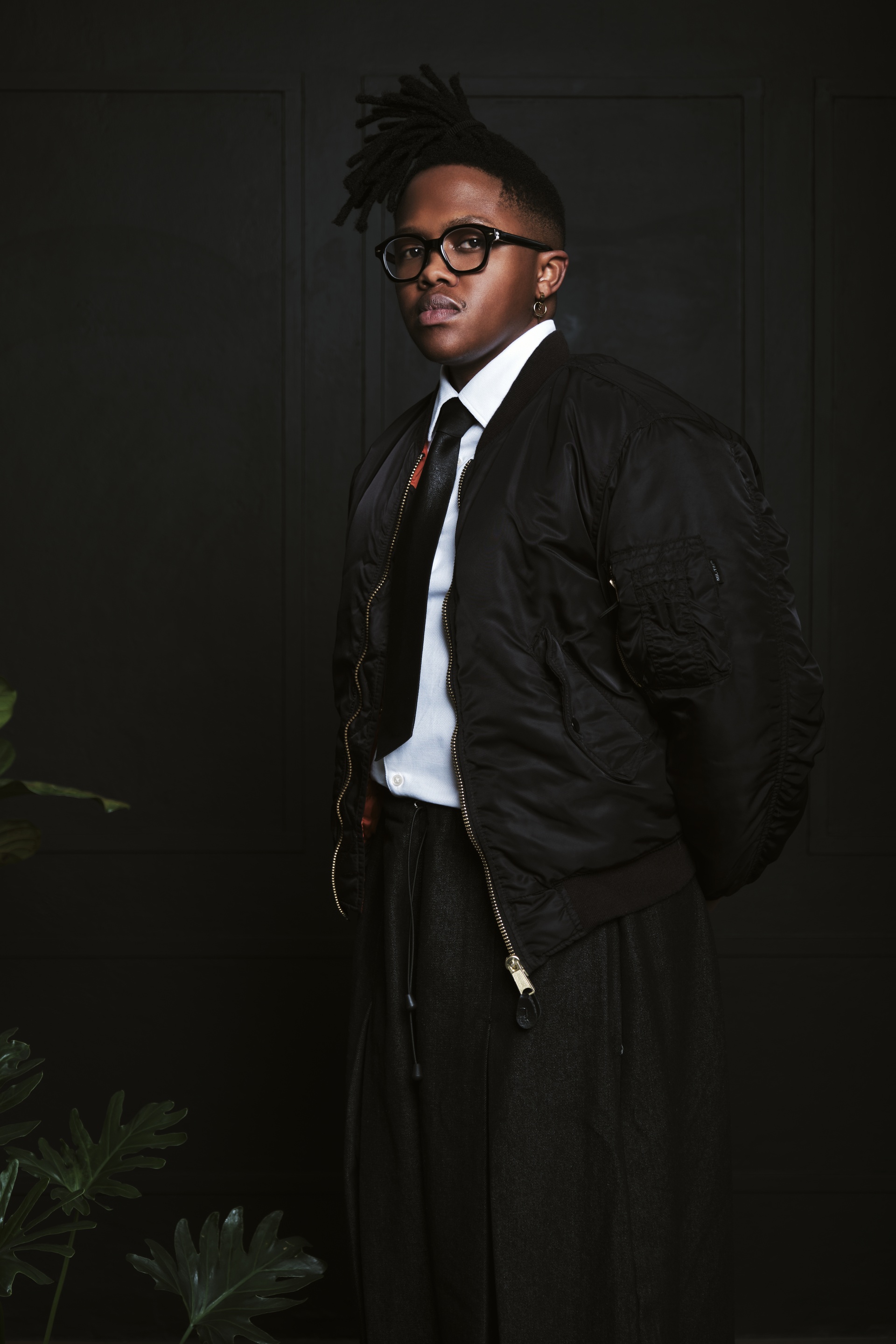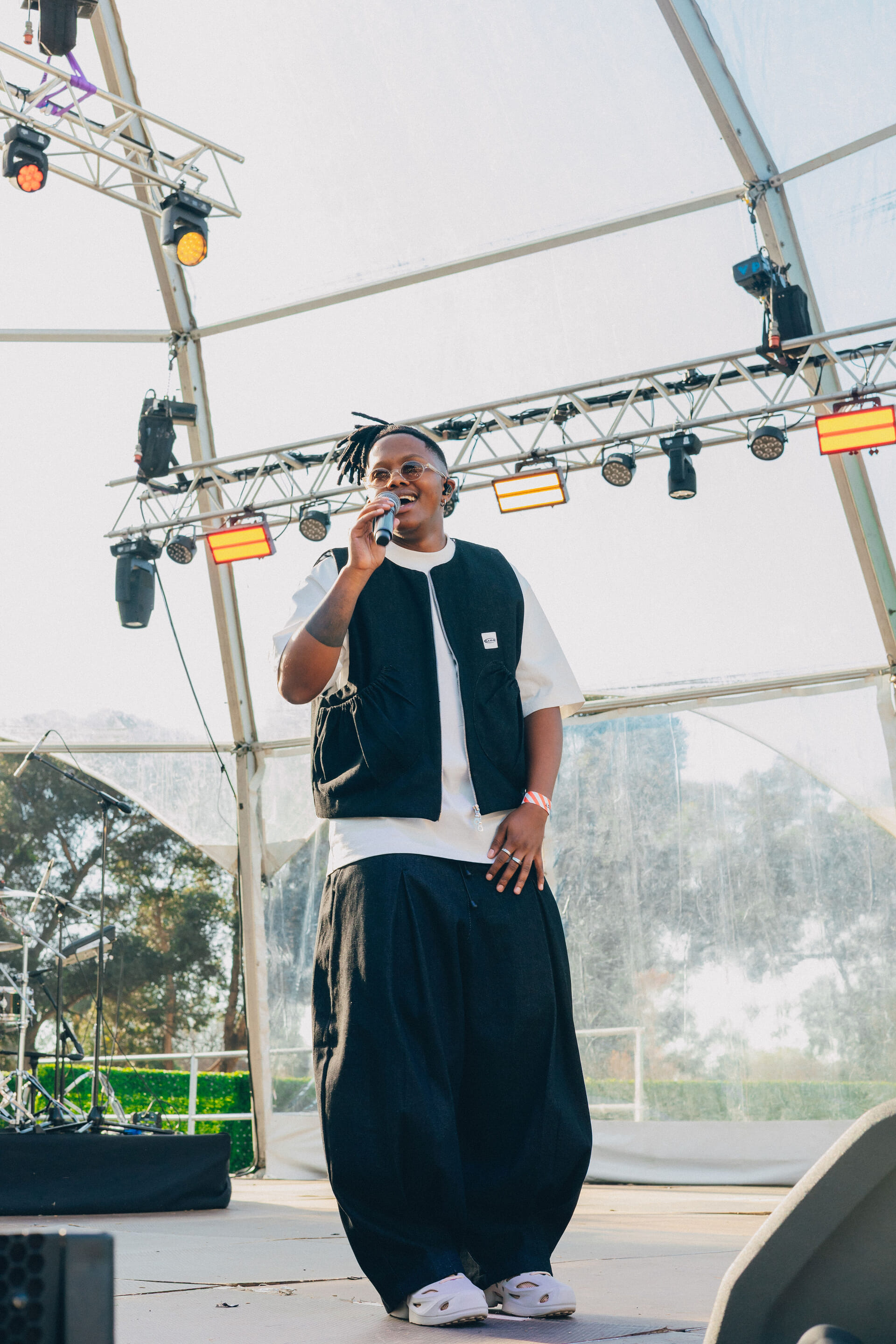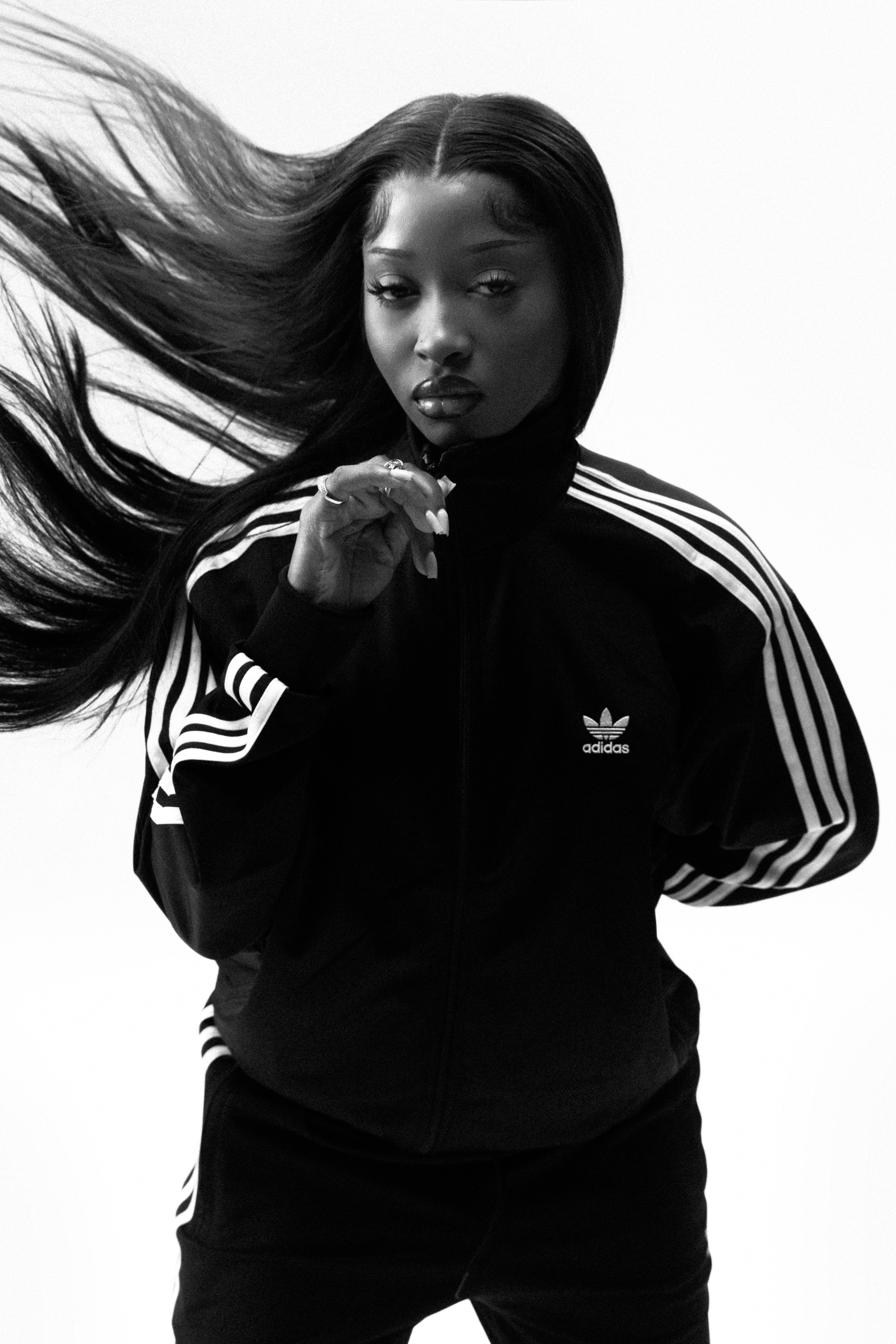
Tandekile Mkize Is South Africa’s Meta Stylist with His Visionary Approach To Fashion Storytelling

Tandekile Mkize’s approach is truly meta; hence his Instagram moniker, the meta stylist. With fashion as his chosen medium, he moves fluidly between roles from stylist, to editor (most notably at Twyg, where he has been instrumental in advancing our understanding of sustainable fashion, particularly within the African context), curator, and fashion director. To be “meta” is to operate with an awareness of the bigger picture; to examine the frameworks, codes, and narratives that shape the thing itself.  

In Tandekile’s work, this means interrogating fashion as a cultural text and identity, and expressing this innate understanding through a broadly-scope practice; one steeped in sartorial consciousness – from the fabrics Tandekile favours to the stories that he elevates, and one only has to pass their eye across one of his works, to understand the depth of intention and cultural literacy embedded into every choice that he has made. 

Lately, Tandekile has been busy; in between all he does, he curated Threads of Renewal, an accompanying group show to Twyg and Imiloa Collective’s Africa Textile Talks. It seems his  love affair with fabrication is deeply rooted, and as he’ll tell me later, someone recently referred to him as a “man of the cloth.” Stylists and editors are often praised for the big picture — the composition of the entire thing — but it would seem Tandekile is motivated in this moment by the very granular threads that bear it all together. 
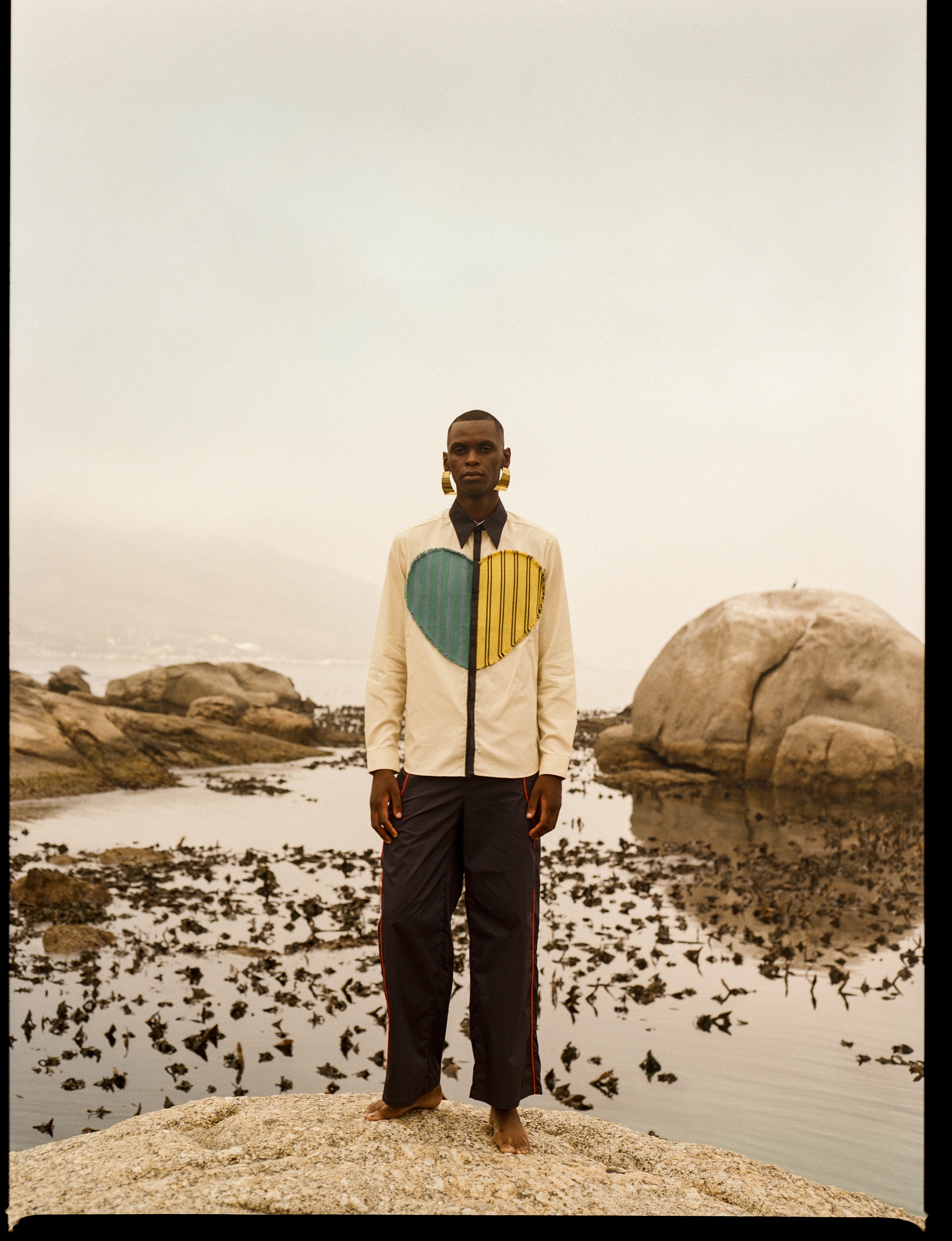
Styling by Tandekile Mkize, photographed by Andile Phewa
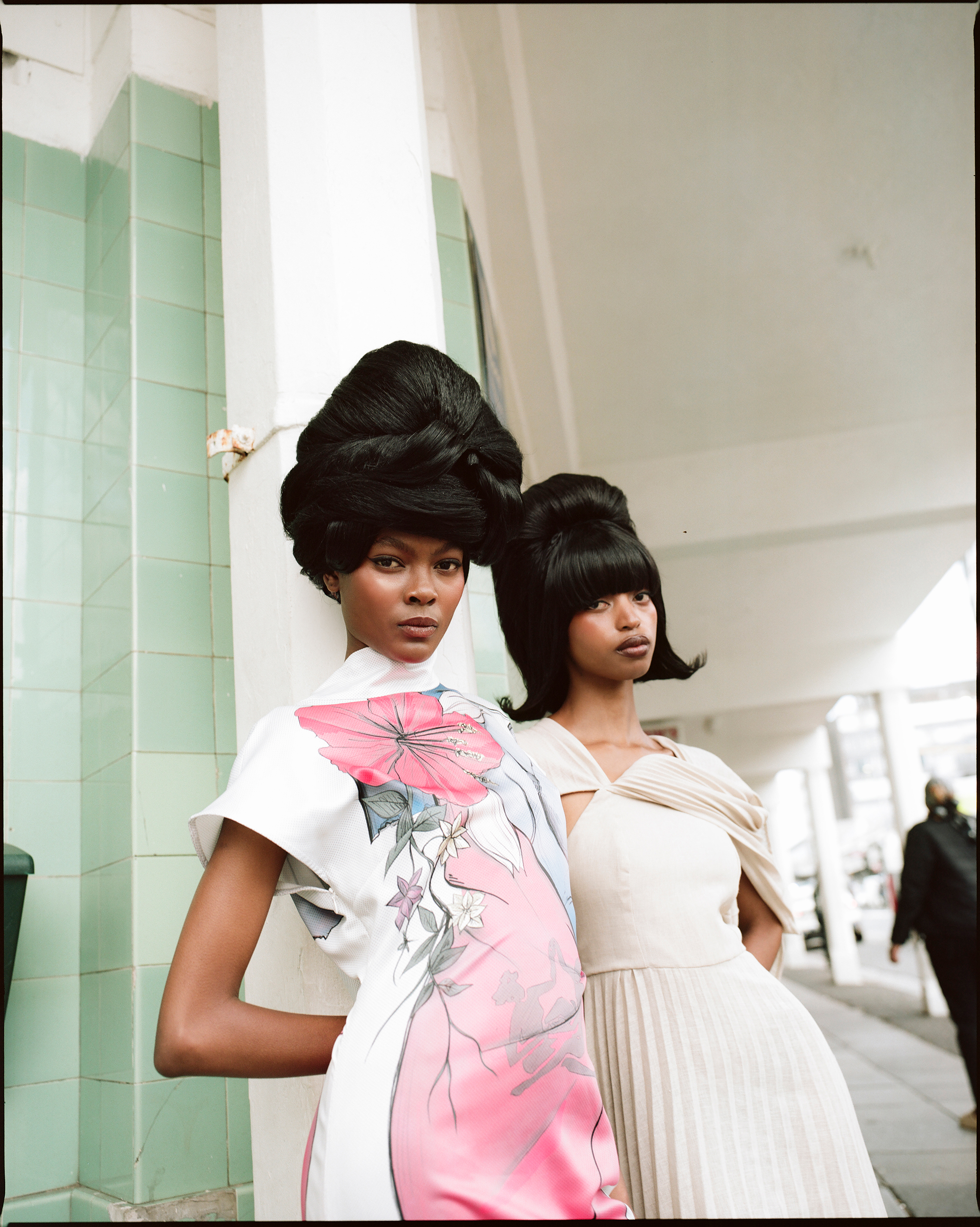
Styling by Tandekile Mkize, photographed by Dan Carter

In this way, Tandekile is, yes, concerned with the image and composition, but more importantly; he is devoted to the stories and histories embedded within fibre. After all, without fibre; fashion styling would be somewhat bare. I can’t think of a better return to essence than this, for someone whose creative expression and career present a loom of entwined ways to understand fashion beyond mere commerciality.

His cousin played a pivotal role in introducing him to the world of fashion, as reminisce, “my cousin would switch on Fashion TV and I’d just be around. It really opened my eyes to this world. I became so invested in who the models were and what shows were happening. He’d get annoyed because every time a model appeared, I’d always mention their name. I was that annoying kid! So it all grew from there and then I went off and figured things out myself.” From that iconic channel, FTV, with striking models darting down runways as pulsating music blared, many fashion kids had their first real taste of the industry’s energy and spectacle. For Tandekile, it was equally the glamour and a drive to uncover the stories behind what he was witnessing that sparked his enduring fascination with fashion.

“I’d say my path started when I was at UCT for about a year but didn’t last much longer. I had asked myself, ‘What’s next? What do I actually want to do?’ I wasn’t focused or invested in school at all at that time.” After leaving university, Tandekile had to chart a new course for himself. Fashion had always been a calling, but practical realities led him to jobs at call centres. With the money he earned, he began buying clothes and cameras, connecting with friends through social media and collaborating on editorial concepts.

Initially, Tandekile styled and modeled himself in projects inspired by his personal transitions. Over time, he began to negotiate an ensuing,  broader perspective and around 2018, as photography gained momentum and analogue photography burst on the scene, Tandekile grew fascinated by the medium, sharing that “Friends would shoot me, and I became fascinated by the camera. I got my own and started shooting my own work, even exhibiting some pieces. Having photography skills has been really useful, as a stylist and fashion director, and understanding image composition is important. Photography demands total commitment though, so I’ve never been serious about photography — it’s something I’ve parked for now.”

On his styling philosophy, Tandekile notes, “Starting from a personal place with real pieces has shaped the stories I want to tell. It’s important to layer fashion stories with deeper meaning. I’ve come to understand that when you embed layers of yourself in these stories, they carry more emotional resonance. Fashion is also a way to archive your own story, and the stories of others.” For Tandekile, this meta approach to styling has naturally evolved into curatorial work, and where styling often remains confined to ephemeral digital imagery, Tandekile’s role as a curator brings fashion into three-dimensional space — a physical presence that revitalises the relationship between maker, wearer, and audience. Ultimately, this roots fashion in community and dialogue and in this way, I’m increasingly convinced that Tandekile embodies precisely what we mean when we say “a fashion storyteller.”

Tandekile is Twyg Magazine’s Fashion Director, a collaboration that began in 2020, sparked by a creative partnership with stylist and spiritual healer Noentla Khumalo during the heavy COVID-19 lockdowns. “When bans eased slightly, we felt frustrated but full of energy,” he recalls. “We needed an afternoon to come together and create an editorial called Shift in Flow about the period of transition we were in. Transitions are a recurring theme in my practice. That project reflected on the times, what it meant to be in fashion, and where fashion could potentially go.” 
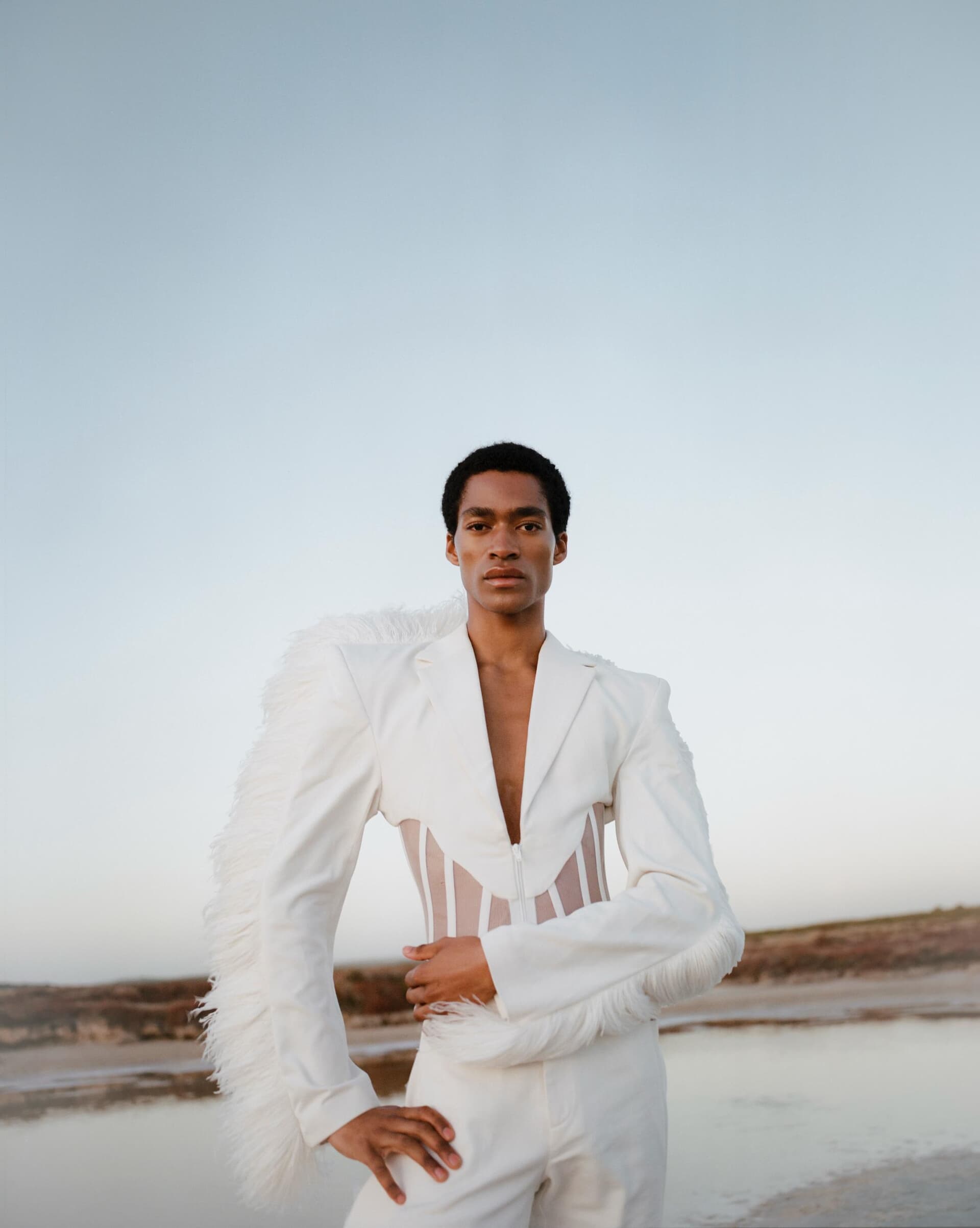
Styling by Tandekile Mkize, photographed by Dan Carter
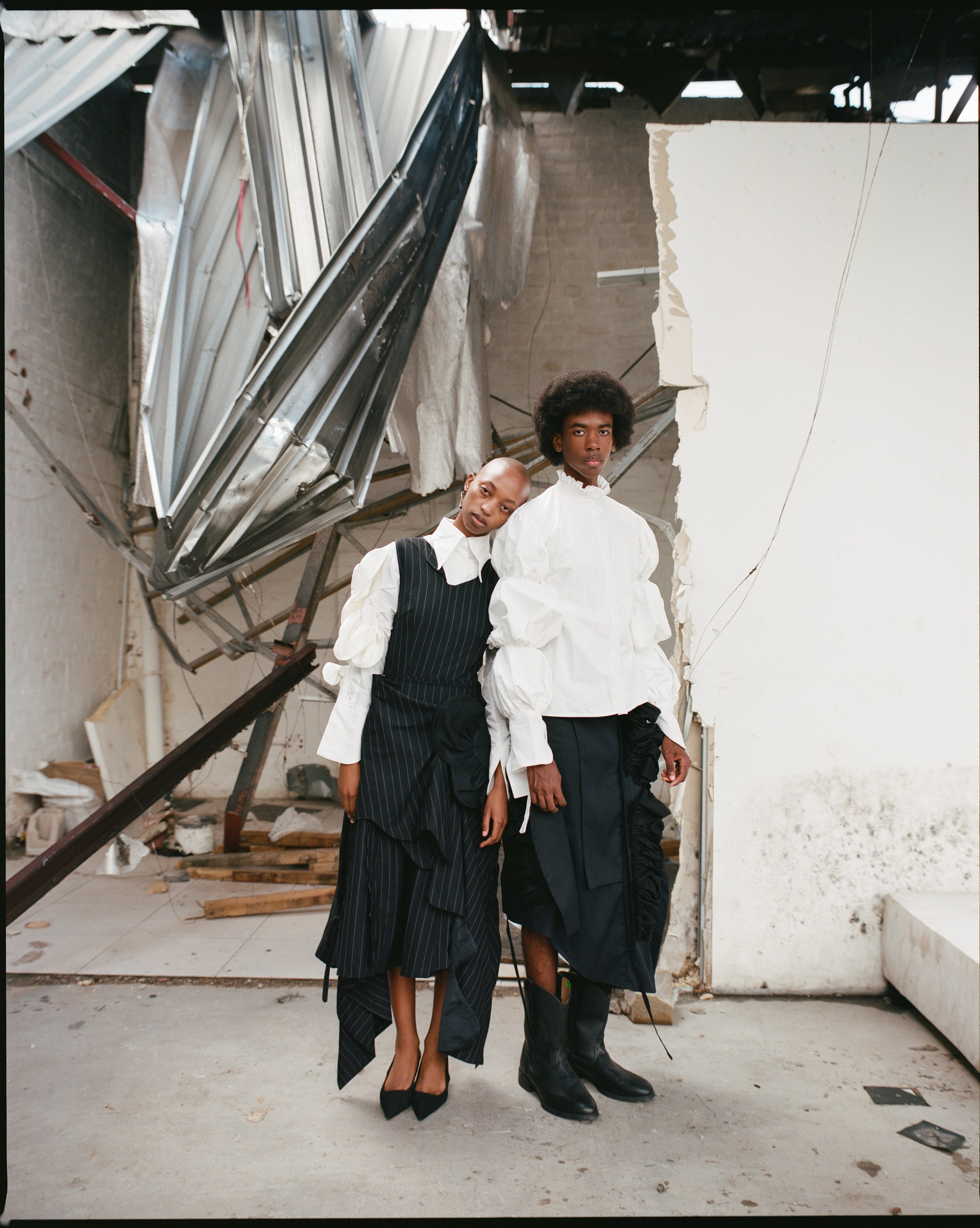
Styling by Tandekile Mkize, photographed by Dan Carter

This initial collaboration led to an ongoing relationship with Twyg, where Tandekile now works alongside Ky Boshoff and Jackie May as part of the Twyg Fashion team. Reflecting on his curatorial role and the broader scope of Twyg’s work, he explains, “Bringing together the ecosystem across the continent to discuss innovation and what’s happening has been inspiring and insightful. It’s important to make sure the message is carried across. We get to witness so many beautiful moments, like local designers collaborating with textile makers in Uganda to develop fabrics for their collections, as an example. This cross-cultural exchange of ideas is incredible. It localises the idea of pan-Africanism; borders dissolve and we can actually connect with one another.”

Beyond the collaborative spirit, Tandekile is deeply invested in the ongoing renaissance of African fashion, particularly the revival and preservation of indigenous craft practices. “I’m very excited about indigenous craft practices. With our work, there’s exposure to so much more. Many young designers are tapping into this, which is exciting,” he says. “The richness of African fashion means we’ll never run out of stories.” For Tandekile, this blend of tradition and innovation is central to Africa’s fashion future.

Reflecting on a recent exhibition he curated, Tandekile describes how it was about striking a balance; “It was important to represent both traditional techniques and contemporary expressions — looking at the past and how it can inform the future,” and he emphasises how African textile traditions use cloth as “a vessel for storytelling and cultural heritage,” a concept he wanted to convey while also “pushing it further and imagining new ways to tell stories through cloth.” 

Indigenous practices reveal that cloth has always been deeply intertwined with other senses — sound, taste, and ritual — in both ceremony and daily life. This multisensory understanding challenges our modern perception of fabric as merely practical wear, and extends the very act of weaving, a complex and ancient craft, as a remarkable achievement of human ingenuity and cultural expression. I’m still amazed at the thought of ancient human beings drawing the connective possibilities between plant fibres and the living world around them; and everything that has occurred in the way of fabrication since this moment.

Tandekile’s fascination similarly includes the spiritual and healing qualities of textiles, particularly as explored in the exhibition’s Cosmology of Materials section. Featuring works by Wacy Zacarias, Yemi Awosile, and Djamila De Souza, this segment examined the four elements as “material collaborators.” Tandekile notes how Wacy, a spiritual healer and textile practitioner, “understands plants and materials with healing properties and incorporates that into her textiles to give them healing and protective qualities.” This nurturing and protective aspect of what we wear, he says, proves that clothing is an intimate extension of self with profound cultural and cosmological significance.

I’ve caught Tandekile this week as he’s wrapped Threads of Renewal, alongside his showcase at Greatmore Studios. Amidst the recent launch of his role in FIELD BAR’s extraordinary campaign and the daily drum of life, Tandekile’s current creative focus is about slowing down and embracing depth over speed. As our conversation winds down, we fawn over Bubu Ogisi’s IAMISIGO debut at Copenhagen Fashion Week the night before — another etch, we agree, in the immense blossoming of Africa’s fashion renaissance. 

On his own creative journey, Tandekile shares, “I’ve gotten into weaving recently; it requires time and attention.” As a multi-hyphenate, this tactile, material exploration feels a natural consequence of Tandekile’s depth as a fashion storyteller; from eyes to hands. “Someone once asked me if I’m a ‘man of the cloth.’ That made me think. I wouldn’t necessarily describe myself as one yet, but there’s definitely curiosity there! Before I take that title on, I know I have a long way to go.” Lastly, Tandekile’s advice to aspiring creatives is simple; “Just do it. Even if you don’t end up where you thought, taking the leap and putting yourself out there is how you discover your path.”

Written by Holly Beaton

For more news, visit the Connect Everything Collective homepage www.ceconline.co.za

Follow CEC on Instagram

In It Together: The DHL Stormers Unveil a New Identity

Cape Town, 13 August 2025 — The DHL Stormers have stepped boldly into a new era, unveiling a new brand identity. At the heart of the launch is a simple truth: rugby in South Africa isn’t just a game — it’s a cultural force that connects people, places and passions.

We attended the press launch this morning and one of the biggest takeaways, is that the refreshed emblem draws from the team’s heritage while signalling its future. The familiar hoops of the Stormers jersey wrap and interlock, forming a shape inspired by the curves of DHL Stadium. At the centre, a lightning bolt captures the team’s raw energy and the electric charge that they [the team and their supporters] bring to the city.

The ‘In It Together’ campaign reflects the Stormers’ mission to unite Cape Town’s diverse communities under one banner. It’s a statement that sports and culture, woven together, can create powerful connections. From the schools that produce world-class talent, to the fans whose passion fills the stands, to the local creatives who helped craft this rebrand — every voice is part of the story.

With Cape Town as both backdrop and heartbeat, the DHL Stormers aim to be more than a rugby club: they are positioning themselves as a premier sports entertainment brand that belongs to the city and its people. The new visual identity is a badge for everyone who believes in the team’s mission to Make Cape Town Smile.

This campaign was brought to life through a collaboration of some of Cape Town’s leading creative talent, including Duncan MacLennan (Sunny Futures), Chris Moore (Partners in Crime), Justin Gomes (Bananas Advertising), Anton Visser and Zayd Halim (Patriot Films), and Simon Ringrose (Music Producer).

The new Stormers identity is a celebration of heritage, a call for unity, and a reminder that when sport and culture meet, a city’s spirit can be unstoppable.

Reported by CEC

For more news, visit the Connect Everything Collective homepage www.ceconline.co.za

Follow CEC on Instagram

The Moments Between Mending Broken Hearts: A New Dawn For Critically Acclaimed Singer-Songwriter Manana

A fellow scribe by the name of Langelihle Radebe once wrote, “Lord, when I say, “May Your Will Be Done” in my prayers, I never anticipate that your will would break my heart. I don’t say that in hopes that you will send more devastation my way” –  the weight of those sentiments sent shockwaves to my core. An emotional conflict endured in me where I wrestled with the acceptance of pain as part of life’s balancing act. 

How do we dress the wound around heartbreak in all its forms and charter the elusive path of healing? For Grammy-award-winning Songwriter, Singer, Producer and creative visionary Ndumisio Manana, affectionately known as Manana, the answer lies in introspection and a shift in perspective. The intertwining of the two is a key anchor embedded into his catalogue, which boasts EPs such as “In the beginning was the end” and “But could the moments in between”, which weave into each other as intimate chapters of a broad musical universe that confronts the nitty-gritty of shadow work. The philosophy behind Manana’s pen as a seasoned songwriter is to translate crippling vulnerability into relief, closure, optimism and resounding faith.


Photography by Arron Moos


Photography courtesy of Manana


Perhaps we can credit his articulation and conceptual brilliance to his extensive behind-the-scenes experience, having worked with renowned artists like Amanda Black, Ami Faku, Sauti Sol, Burna Boy, Shekhinah, Langa Mavuso, and Rowlene, to name a few. Being in these different creative hubs to birth songs that carry distinct messages has filtered a universal intentionality behind his work that has a laser focus on eliciting a sense of submission to feelings one would rather avoid and sparking a search for a healthy resolution to those feelings, as opposed to being poisoned by them. 

At a critical point of my personal path with rediscovery and rebuilding, I was introduced to his impeccable debut album “Our Broken Hearts Mend,” which can only be described as an ode to being present and accountable in choosing yourself and your happiness. Through songs like “Alone (I’m Tired),” “Never After,” “See What I See” and “Isililo soThando” Manana performs an ethereal open heart surgery, crafting not only the daunting but unclenching process of letting go, but the glory of allowing yourself to revel in the beauty of allowing yourself to love again and restoring your sense of worth. 

It is the beauty of quotes like “Let’s go dancing in some place we’ll never find again” from “A view with a beach outside (interlude)” that reminded me that beyond the walls of wailing, adventures are waiting to grace my memory in the greener pastures I am nurturing within. In turn, the experience sparked my curiosity to converse with Manana about songwriting, content culture and what lies ahead for his career.

For our readers who may not be familiar with you. Please introduce yourself and share more about your creative path. How was life growing up leading to your journey with music?

Manana: I go by Manana, which is my surname. I was born Ndumiso Manana in Mbabane, the capital of the eSwatini kingdom. My life began there in my early school years before I moved to the Drakensberg, where I attended the Drakensberg Boys Choir School.

I spent six years there, arriving when I was eight or nine years old. At the time, it wasn’t a conscious decision to pursue music, but looking back retrospectively, I would never turn away from music once that happened.

After that, I attended Cape Town at Hoerskool Stellenberg in Durbanville. Following matriculation, I studied jazz music and performance at the University of Cape Town, where I graduated and lived for a few years.

About eight years ago, I moved to Johannesburg and started working as a songwriter in the music industry. Initially, I was signed to a publisher who pushed and propelled my songwriting in terms of professionalism, proficiency, and confidence. From there, I developed enough confidence to start releasing my own music.

What strikes me most about your songwriting is the cultural textures it inhabits. What has your experience in songwriting camps with acclaimed artists and writing from a personal vantage point taught you about genre as a culture and language? 

Manana: We often hear that music is a universal language. My biggest takeaway is that melody and harmony are a language on their own. That’s been the most significant realisation from my experience.

I’ve been privileged enough to be in different rooms with artists from various parts of the world, and what I’ve realised is that melody and harmony are central to how songs are formulated, even for rap artists. The intention and precision of the lyric usually starts with melody and harmony, which most people don’t consider when thinking about a song, whether it’s rap or a song in Swahili, for example. 

Linguistically, many things about Nguni languages or African languages would naturally influence what a melody sounds like. Most people will write a melody in the language they think, which sounds like abstract thinking, but the influence of topline melody, lyric, and harmonic content is deeply intertwined. The relationship between these aspects is what makes a song what it is.

Watch “Never After [Live from the House Of: The Embassy]” here

Photography courtesy of Manana


Photography by Maishe Duke Motloutsi

“If We Move” made me ponder the lost art of living in the moment. Do you feel that content culture has engineered us to chase after unforgettable moments instead of surrendering to their spontaneity? 

Manana: Yes, absolutely. I talked to someone about this last week because I had a moment to leave and go to Durban a while ago. We got to this part where Durban was evergreen and beautiful, and as we’re driving, the conversation in the car was, “Hey, can we stop and grab a photo?”

Now, I’m fully anti-phone and anti-social media, so take this with a pinch of salt. But my first thought is always: when we see something extraordinary these days, we feel the purpose of the beauty we’re experiencing is to be shared instead of just being experienced. That’s a huge thing I’m trying to avoid, and I’m trying to get more people to avoid it too, especially as creatives.

Beauty for beauty’s sake is something we’re starting to lose because of content culture. Nature will curate something perfectly beautiful, and then you want to take it from that perfectly created moment. Instead of being like, “Wow, this is so beautiful,” and maybe sitting there for an hour appreciating the beauty meant for you in that moment, you’re already repurposing it. You’re already repurposing beauty.

Obviously, there’s a space for sharing, and there’s a reason we want to do that. But we must be aware that sometimes, just like in music, right? Sometimes I’ll write a song and feel like, “Oh, this is so nice, but this is for me.” Beauty for beauty’s sake is consumed by this desire to create a perfect, curated content piece out of what we’re experiencing every moment.

Why did you decide to make a deluxe edition with your debut album being such an enriched encounter? What are some of the stories you want to share through the deluxe?

Manana: So with the Deluxe, there are two things. First, I change my mind a lot of the time. The deluxe is slated to be released soon, but I’m also at a stage where we’re creating new music that’s coming out quite well. The songs are coming together rapidly, so we might release some of the songs we intended for the deluxe as a separate thing entirely.

To your point, the stories and journeys we tried to put in the album are perfect. But there are also some creatives I had the privilege to work with that I would have loved to release music with. That’s the hope with the deluxe, or whatever we release next.

The idea is to capture. I spent some time in Kenya with some artists I admire, so I want to release that music. Some extended versions of songs were too good to lose on the project. For example, “A view with the beach outside” is a song I wrote in full and had to fight tooth and nail to have on the project. The compromise was that we put it as an interlude, but there is a full version that people would appreciate. Same thing with “Time,” there’s a full version we want to get out there.

This aims to express the stories of the creators behind the project, honour them with the work they’ve put in, and then expand further on the stories that already exist in the album.

Thank you for joining us for this interview. Before you go, please share what you have in store soon. What’s next for Manana?

Manana: So like I said, I’ve been in the studio. To be honest with you, I thought I was only going to get back into the studio to start working on the next project in November, that was the plan. But things worked out, so I was itching to return in around February. So between now and December, we’ll release a lot of music.

Our band Seba Kaapstad with Sebastian Schuster, Zoë Modiga, and Philip Scheibel is coming out around the 8th of August. Then we will start the rollout for the next album in February. It will be action-packed, and I’m shooting for the stars as far as some artists I want to work with and feature on this next project.

Next year, we want to put together a one-man theatre show and take that to as many cities on the continent as possible, especially first. That’s what we’re planning for the near future. We’re also trying to get some vinyls together, and I’m trying to express myself through fashion and clothing, so that might also be something we see next year.

I say “might be” just because I don’t know exactly what the near future holds, but these are our hopes and dreams for the coming year.


Stream “Our Broken Hearts Mend” here

Connect with Manana on Instagram here 

Listen to Manana’s music here


Written by Cedric Dladla

For more news, visit the Connect Everything Collective homepage www.ceconline.co.za

Follow CEC on Instagram

Princess of Amapiano, DJ and Producer Uncle Waffles is adidas South Africa’s Latest Superstar

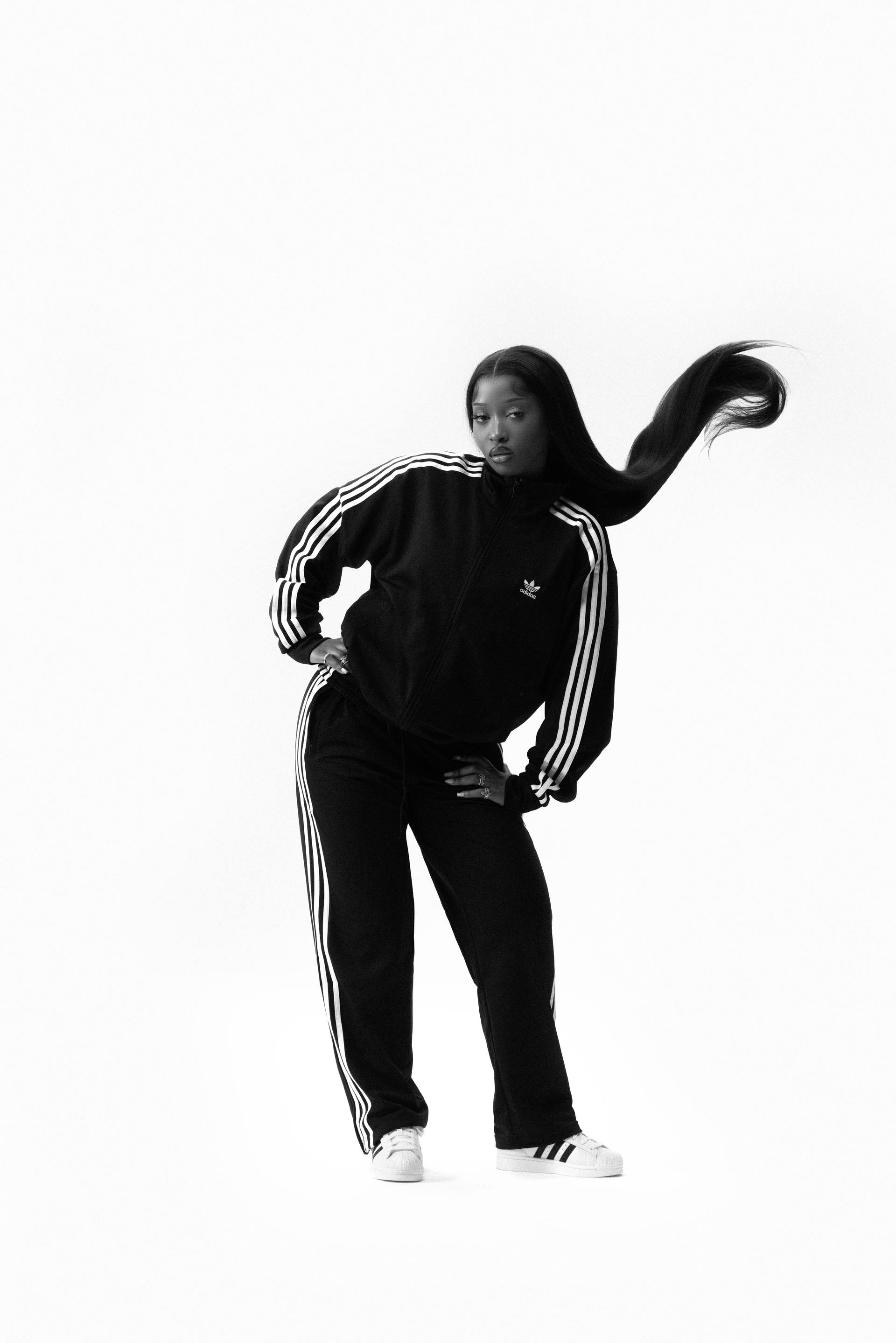
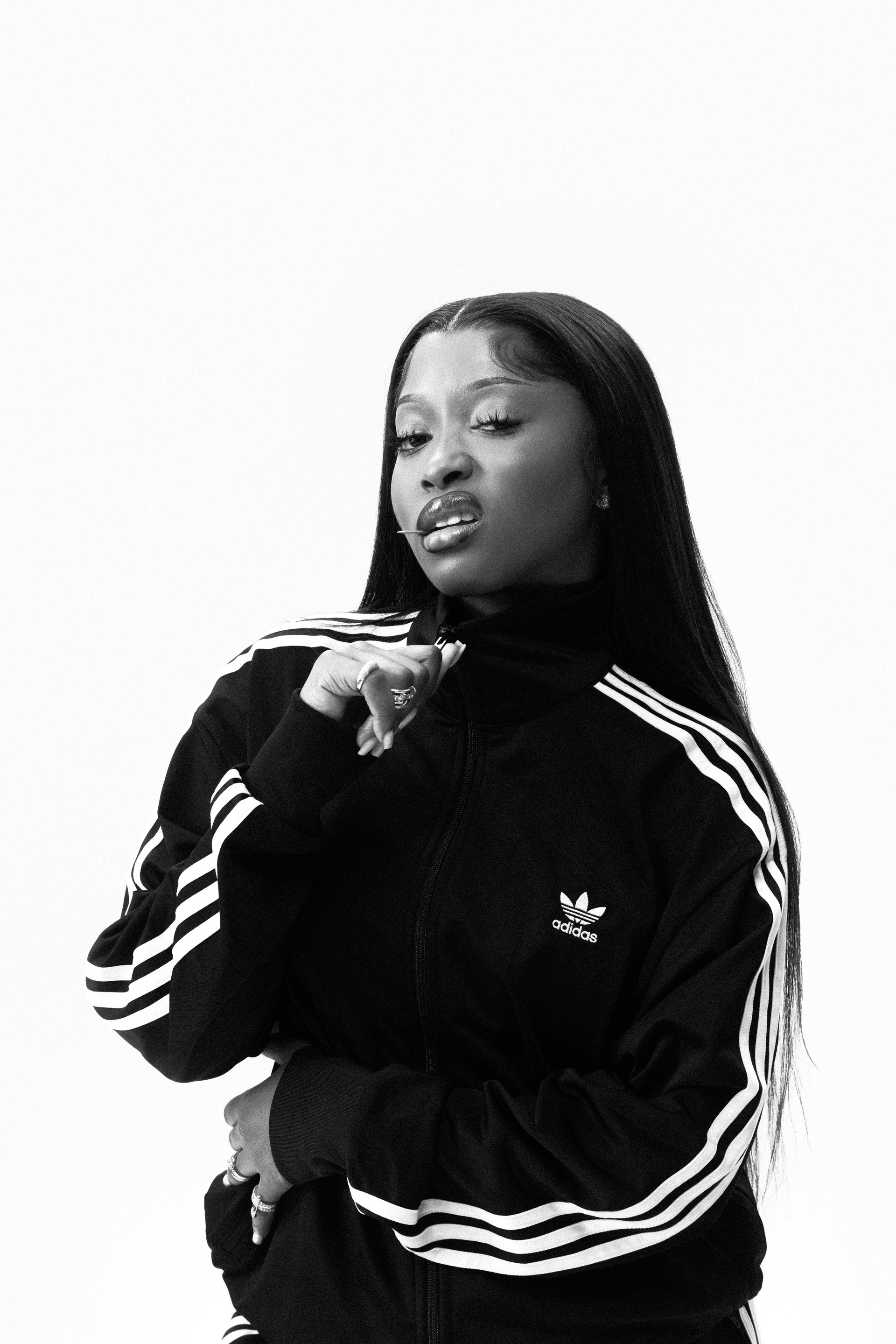
adidas South Africa announced multi-platinum international DJ-producer Uncle Waffles as the latest partner to sign to their Lifestyle portfolio. To celebrate the partnership, she features in the global “Superstar: The Original” campaign joining a multi-generational cast including Samuel L. Jackson, Missy Elliott, JENNIE, Anthony Edwards, Mark Gonzales and GloRilla, to name a few.

“Superstar: The Original” brings together an unprecedented roster of cultural trailblazers who exemplify what it means to be an Original Icon. The newly released campaign with Uncle Waffles spotlights the groundbreaking artist rocking her superstars in a series of bold, black and white shots – an ode to the Superstar’s original colorway. 

Photography courtesy of Play Makers  

Uncle Waffles defines what it means to be an Original Icon through her authenticity and innovation. Dubbed the Princess of Amapiano, she has been monumental in bringing the South African genre to the mainstream. In 2023, Uncle Waffles made history as the first Amapiano DJ to play on a main stage at the world-renowned Coachella Valley Music and Arts Festival. Her unique style of dancing and viral social media videos helped accelerate her music career, where she quickly established herself as an internationally acclaimed standout artist. With 6.2 million followers across platforms as of August 2025, Uncle Waffles has proven to be a global powerhouse. 

At the heart of adidas’ partnership with Uncle Waffles is the recognition of working with impactful icons that continue to shape music, fashion and culture not only locally, but on a global scale too.

Photography courtesy of Play Makers  

About adidas Originals

Inspired by the rich sporting heritage of adidas – one of the world’s leading sports brands and a global designer and developer of athletic footwear and apparel – adidas Originals is a lifestyle brand founded in 2001. With the adidas archive at its foundation, adidas Originals continues to evolve the brand’s legacy through its commitment to product innovation and its ability to filter the creativity and courage found on the courts and sporting arenas through the lens of contemporary youth culture. Marked by the iconic Trefoil logo that was first used in 1972 and championed by those that continue to shape and define creative culture, adidas Originals continues to lead the way as the pioneering sportswear brand for the street.

About Uncle Waffles
World-renowned DJ-producer Uncle Waffles is taking over the music scene by bringing the South African Amapiano genre to the forefront. She’s been making her rounds with international tours/performances and most recently performed at Coachella and Cannes in 2025. Despite being only 25 years old, Waffles has solidified her position in the industry in a way that hasn’t been done before. In 2024, she was nominated for a BET AWARD, nominated for a Headies Award and garnered nearly 3M followers on Instagram and over 3.3M followers on TikTok, and has amassed over 384K+ subscribers on YouTube. Since the beginning of her musical journey, she’s garnered major cosigns from top artists including Drake, Beyonce, Ciara, and more. 


Follow Uncle Waffles on Instagram here 

Press release courtesy of Play Makers   


For more news, visit the Connect Everything Collective homepage www.ceconline.co.za

Follow CEC on Instagram

Selfi x Shelflife is A Totemic Vision of Femininity And Streetwear

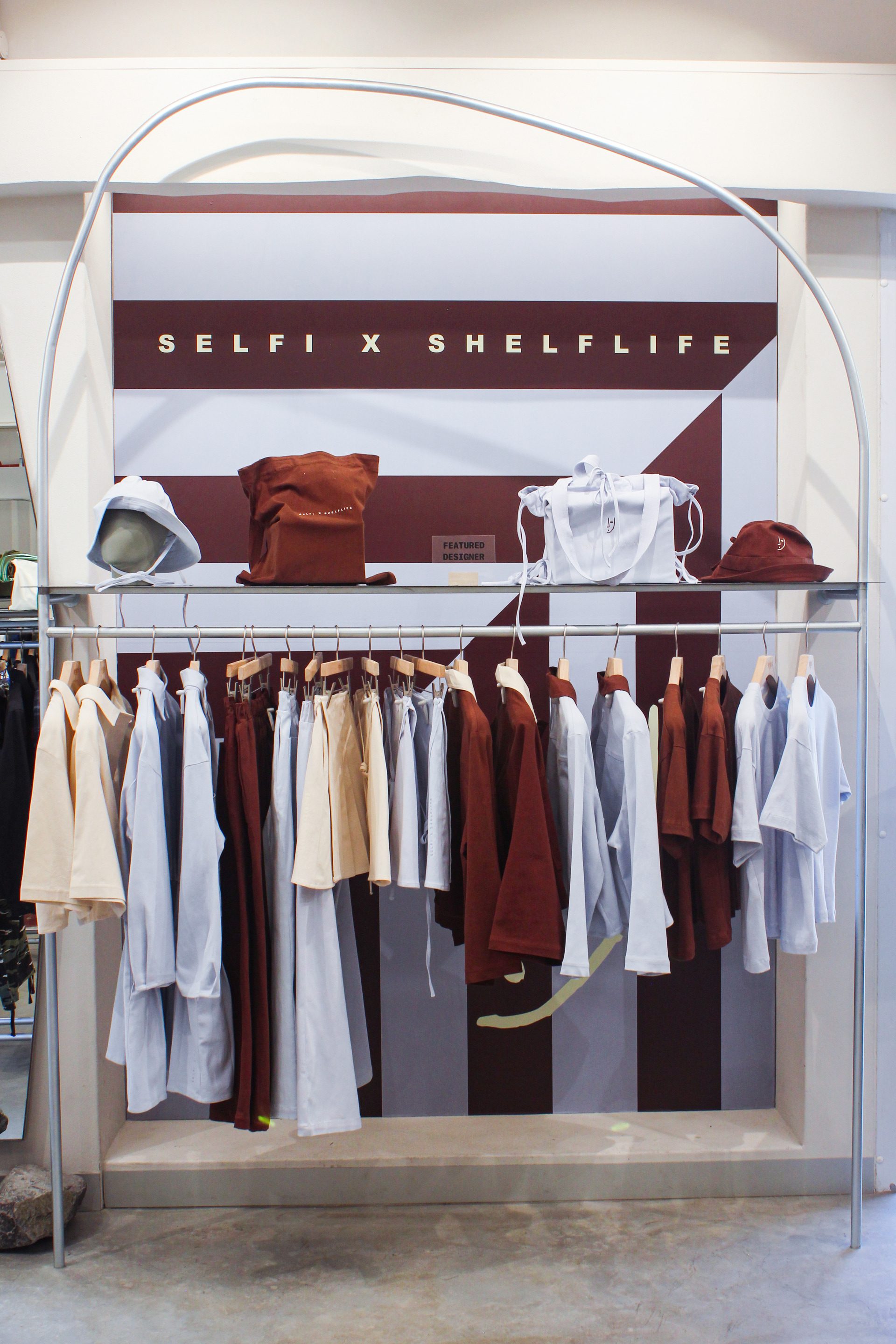
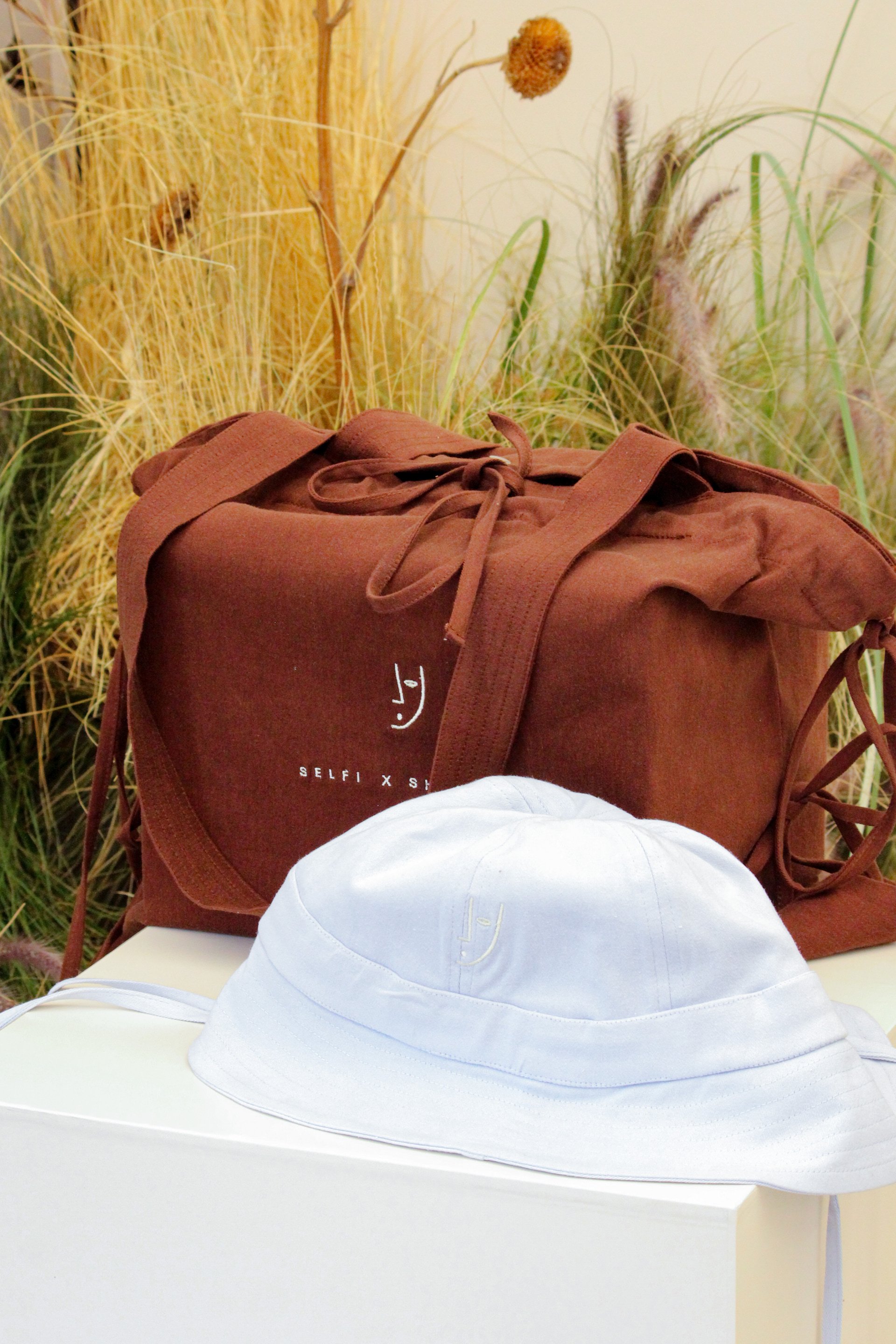
The collision of Selfi and Shelflife is a collaboration for the South African archives; each occupies its own distinct space, with Selfi rooted in refined minimalism and narrative-driven design, and Shelflife anchored in the bold, graphic language of streetwear culture. The culmination? Conscious design meets the structured sensibility of streetwear in the new Selfi x Shelflife capsule — a 15-piece limited edition range in sky blue, chocolate brown, and soft cream and as the collection notes state, “rooted in nature and emotion, the palette reflects earth, sky, and skin, with every piece an ode to sisterhood, loyalty, style, and self-expression. Designed and made in Cape Town, the silhouettes embody clean utility, soft strength, and a modern edge.” 

Using one of Selfi’s signature fabrics from their all-natural library, cotton forms the foundation of the collection: from crisp T-shirts and an everyday bag, to weighty, boxy co-ord work jackets and trousers, pleated skorts, and a perfectly cut sky-blue pleated dress. Each piece is intentionally designed to be worn monochromatically or mixed across colourways, with the adherence to the three colours entirely and totally delightful. Selfi’s founder Celeste Arendse’s signature attention to fit and technical precision is ever-present, only here, it’s filtered through Shelflife’s streetwear lens, demonstrating the growing space for femininity in streetwear and how it can – and should — be reasserted with intention.

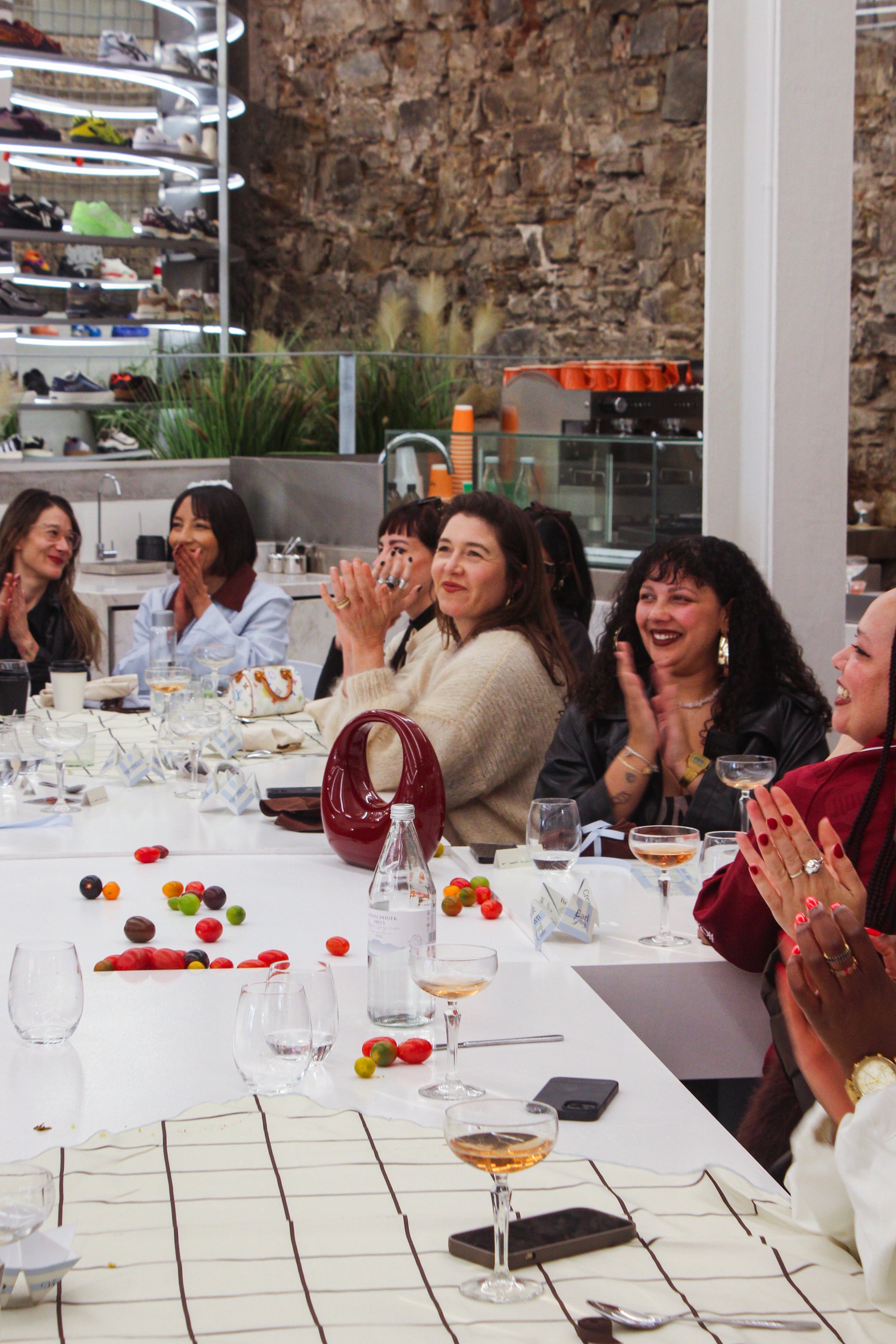
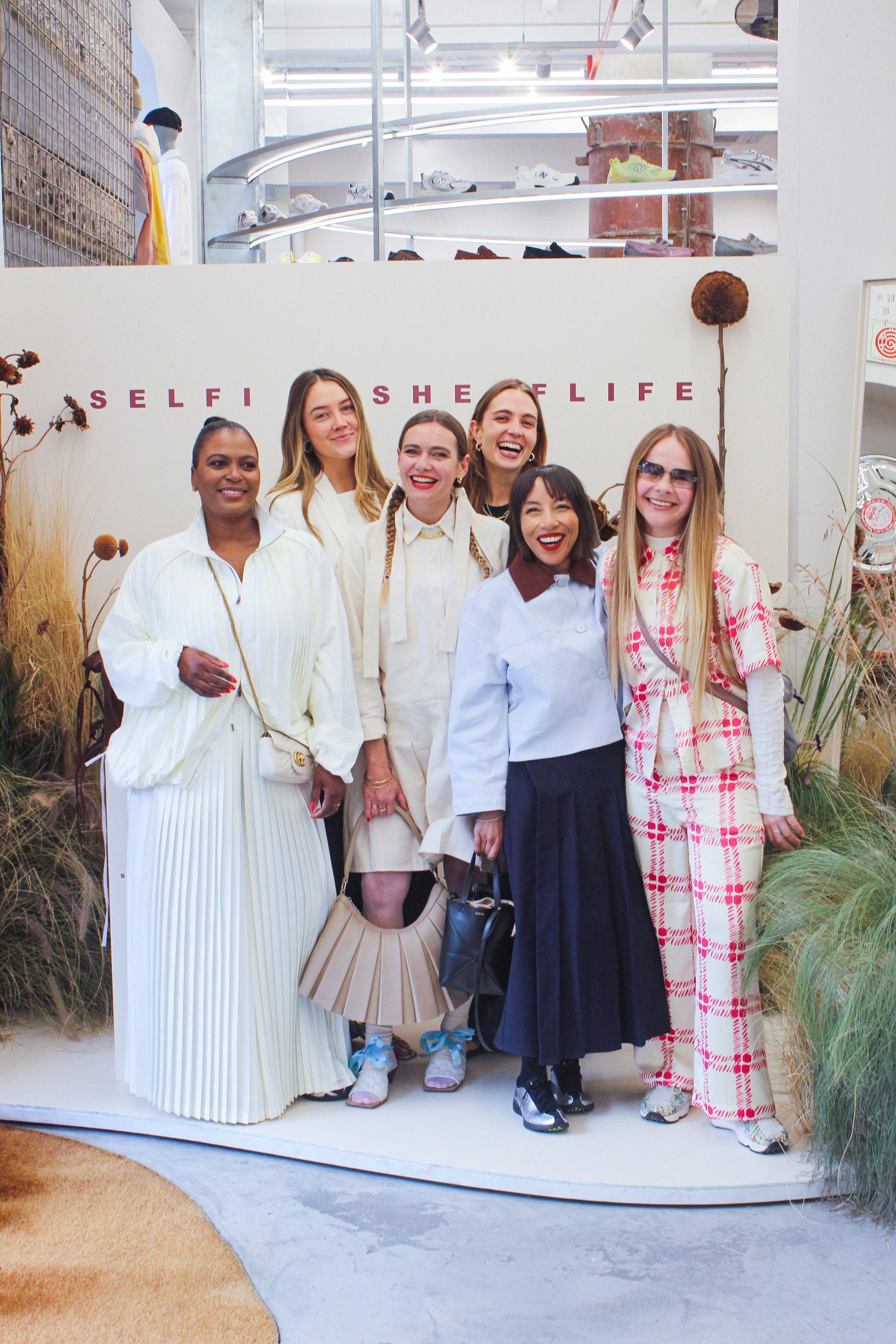
Supported by Nike, the collaboration was celebrated through a Women’s Day Bestie Brunch hosted by Shelflife alongside Studio H, Ceremony Matcha, Pina Jewels, and of course, Selfi. The event was as much a feast for the senses as it was a gathering of creative minds. For photographer Anke Loots, the project carried a personal weight: “When I was a lot younger, Selfi was a brand I obsessively collected, so it’s been a full circle moment shooting this collection. Shelflife is always an honour to work for, and this has been a magical collaboration of women who’ve all poured their hearts and souls into it.” 

Photography by Briony Blevin for CEC 


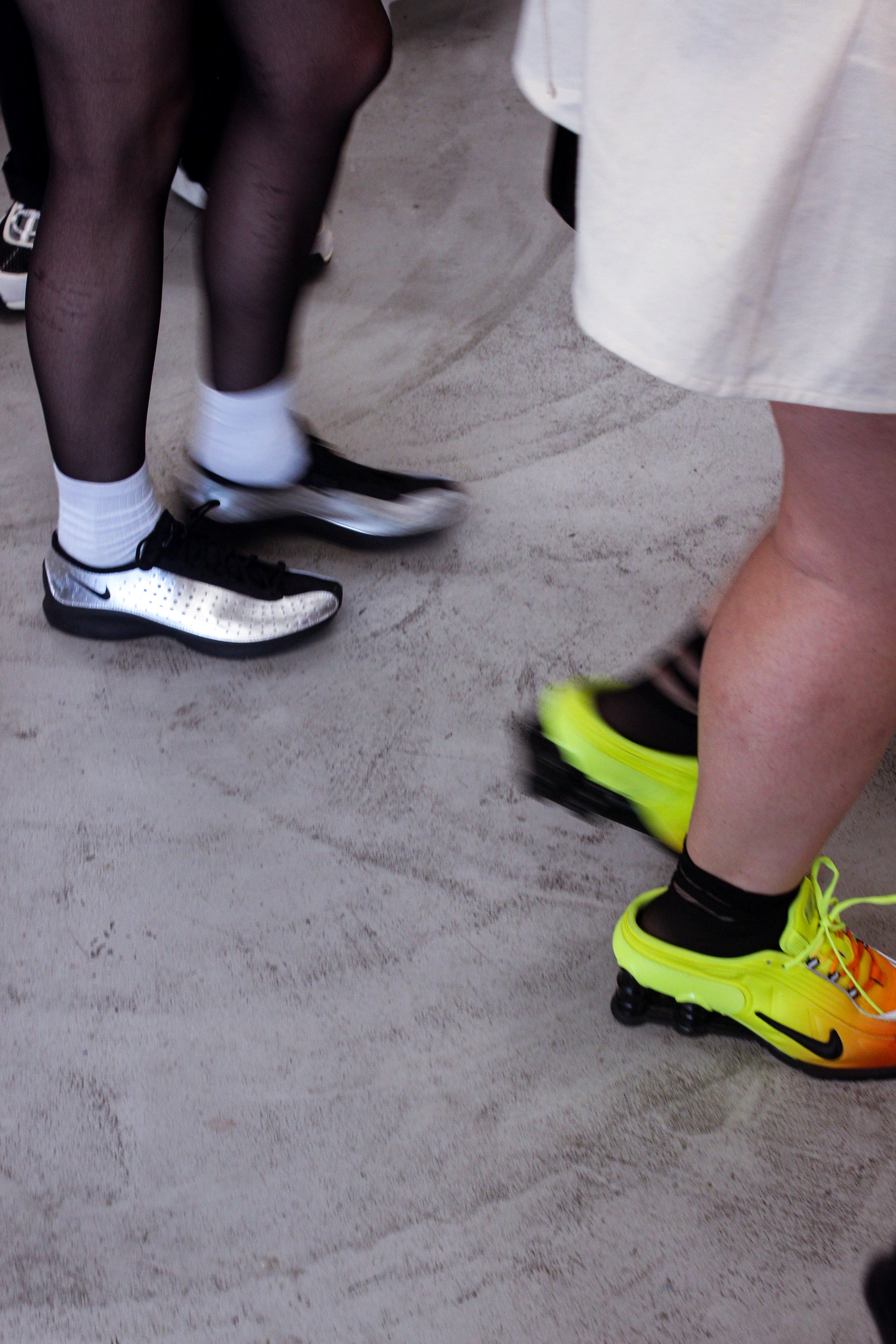
Stylist Kristi Vlok echoed the sentiment: “When Celeste reached out to me to style this collaboration my curiosity was piqued — and with the mention of Anke shooting, I was all in. The collection is thoughtful, comfortable, and beautifully tailored. The chic, effortless trans-seasonal minimalism that imbues the spirit of Selfi is beautifully balanced. I aimed for true femininity paired with braids, bows, and metallic sneakers, and when I’m on a project with an all-female team my creativity is fuelled. Women holding each other creatively and commercially; magic happens.”

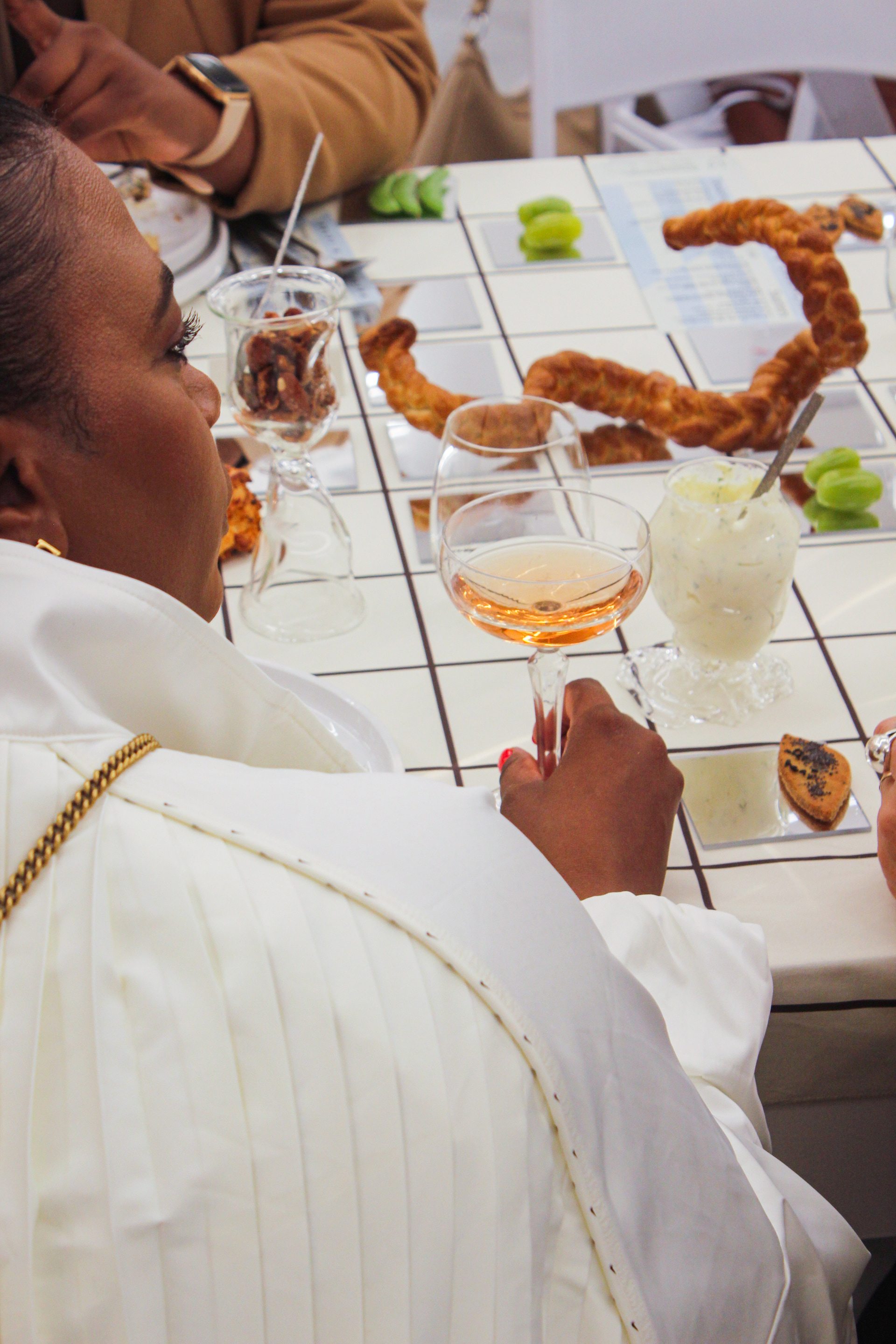
The brunch menu, curated by Hannerie Visser and her team from food design studio Studio H, was an interactive celebration of local, women-led food producers. “Today is very special to me because we founded FoodXX, a network for women in food, on Women’s Day,” she shared. “The meal was cooked by an all-women team, with as many ingredients as possible sourced from women-led and women-owned businesses.” The food was as inventive as it was beautiful, with Studio H, as always, skilfully demonstrating the possibility of food as a central medium of connection. Starters were laid out along a checked cloth almost as a mix-and-match game; among them, colourful crudités, whipped salted butter, devilled eggs, gluten-free crackers, roasted garlic and feta dip, walnut and spinach dip, baba ganoush, and flaky cheese-filled pastries. 

For the main course, each table pulled a multi-tiered savoury cake to the centre, with each of us dismantling it layer by layer: the first tier, an olive oil cake with tomatoes and fior di latte layered with basil cream cheese; the second, a bay leaf cake with pickled cucumber and carrot, finished with a cream cheese and ricotta frosting and more pickled cucumber. Dessert was abundant and playful — chouxettes with a piping bag of roasted strawberry custard for DIY filling, the most sensational tiramisu, and a variety of cakes. 

The ingredients told a story of women’s enterprise and craft within our local, mindful agricultural spaces: dairy from Cream of the Crop, fruit and vegetables from Meuse Farm, matcha from Ceremony, eggs from Homegrown Eggs. In the spirit of generosity and care, all leftovers were donated by Studio H to a local women’s shelter; beautiful. 

From Shelflife’s side, Caitlin Hoogervorst explained how the partnership came to life: “Each season we collaborate with a local creative who resonates with our culture. This year we wanted to focus on women’s wear, something we haven’t explored enough. Selfi’s clean aesthetic, minimal branding, and neutral tones felt like the perfect counterpoint to Shelflife’s bold graphics and colours. We worked hard to merge both worlds, and the result is something we all fell in love with.” 

Photography by Briony Blevin for CEC 


For Celeste, the inspiration for Selfi has always been an act of artistic tribute, while this collaboration pushed her to adapt to a new design language. As Caitlin noted, convincing Celeste to embrace certain streetwear cues — like embroidered ‘Selfi’ and ‘Shelflife’ branding alongside Selfi’s abstract logo — was a gentle and deliberate shift! Celeste shared that, “I started Selfi to honour women, friendship, and self-empowerment — inspired by my sister, who I lost at a young age, and a family history in tailoring. This collection celebrates women who balance careers, family, and creativity, while cherishing the joy of connection. We dyed two new colourways, including a blue neither brand had used before, to create something truly special.”

Between courses, women from the collaborating brands took the floor to share their stories; among them was Mikayla McClean of Ceremony Matcha, and Courteney Krauss of Pina Jewels, who gifted each guest a Pina x Shelflife star-chain heirloom necklace engraved with both brand names; a cultural heirloom to carry the day forward. Crucially, though, is the position from where each collaborator leads in exalting women’s work, women’s networks, and women’s vision. The brunch gathered pioneers from across creative industries; women who, like the collection itself, embody creativity and instinct to build futures in which the multiplicity and tenacity of womanhood is centred. As Jake Lipman, Shelflife’s brand and marketing manager, reflected, “When we started, we had about 30% women and 70% men through our doors. Today, this figure is more 50/50,” expressing the brand’s focus on creating space for women, alongside Nike, who continue to champion women in sport, culture, and design.

When women gather together, reality bends ever-so-slightly; new possibilities emerge in the liminal, feminine spaces between conversation and creation. This brunch, and the collection celebrated at its centre, is proof that when the work, the joy, and intentions align, the outcome is more than the sum of its parts. The Selfi x Shelflife capsule is beautiful on its own, though elevated through the relationships, shared resources, and creative generosity that brought it into being make it a marker of a moment in which culture is actually advanced through collaboration, and women-centred communities shift from an abstract ideal into a lived reality. 

For the gals, by the gals and with the gals? Divine.

Selfi X Shelflife is available both in-store and online at Shelflife

Written by Holly Beaton

For more news, visit the Connect Everything Collective homepage www.ceconline.co.za
Follow CEC on Instagram

IAMISIGO’s SS26 CPHFW Debut Was A Ceremony of Duality

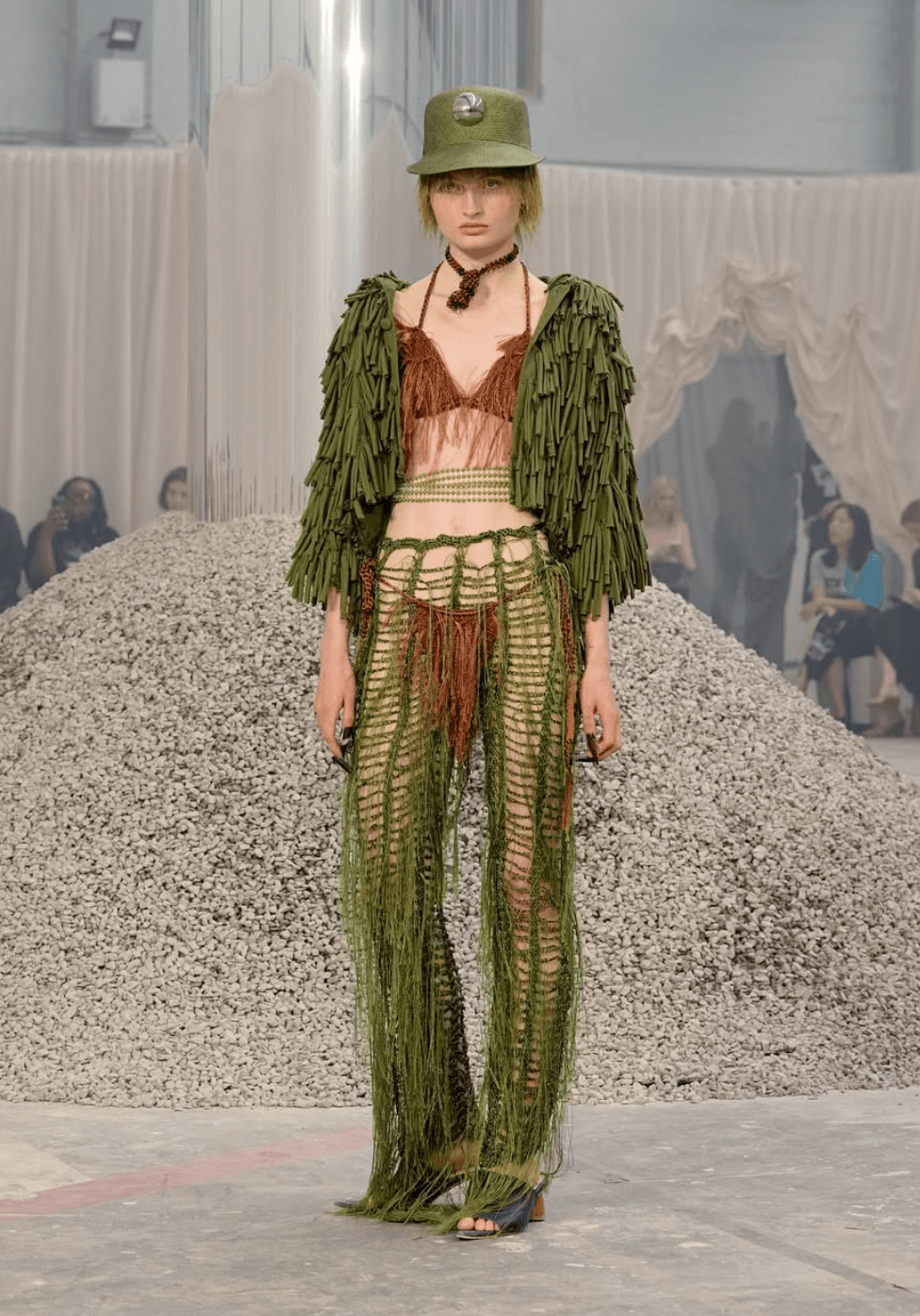
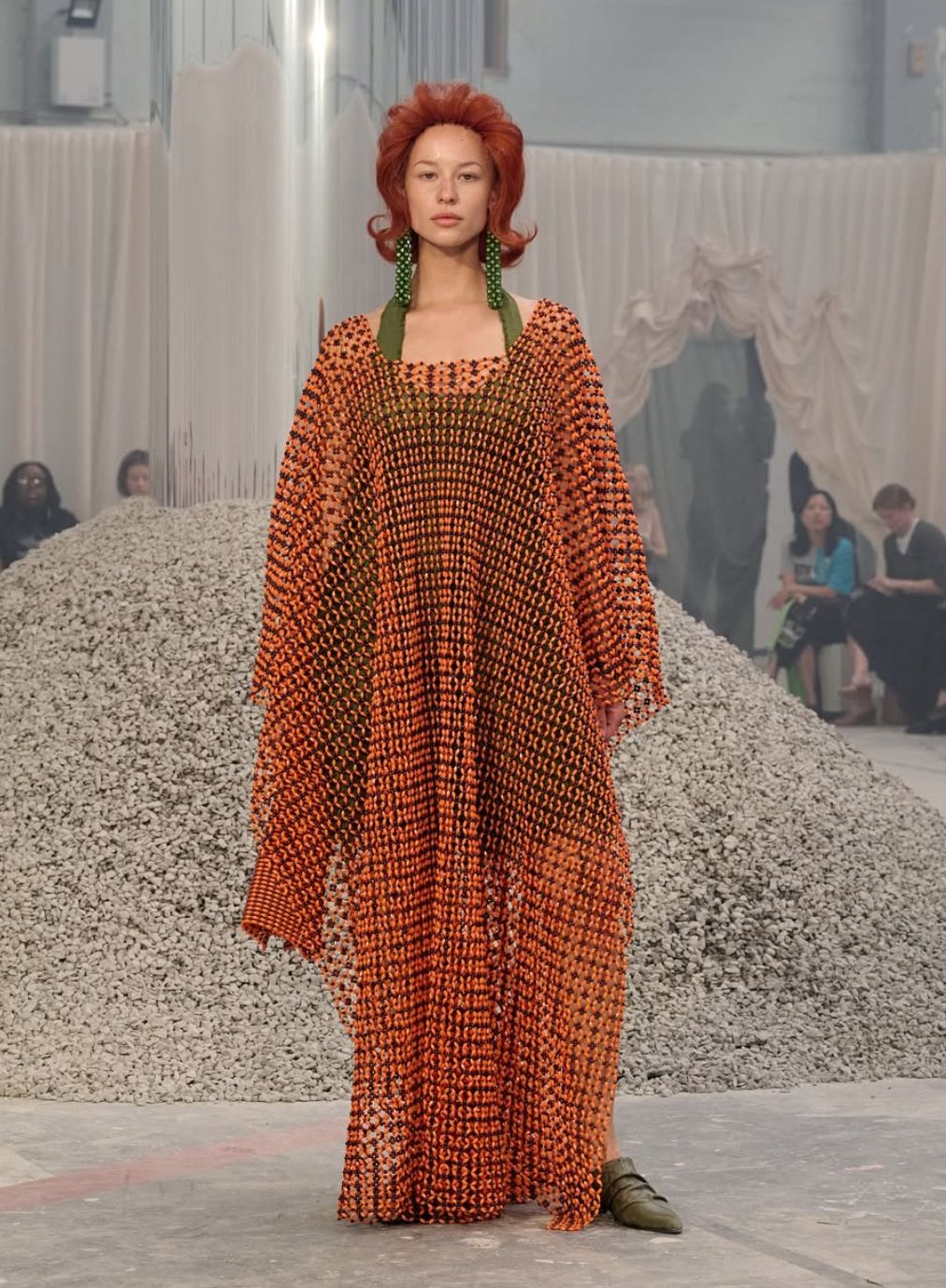
For her Spring/Summer 2026 collection, Lagos-based designer Bubu Ogisi of IAMISIGO posed a question that would frame the entire show: “What does it mean to protect yourself and still remain open?” It’s a poignant question, particularly within the context of fashion’s Western hierarchy, in which Europe is still regarded as the dominant authority, and where designers from the Global South must often navigate the tension between safeguarding their cultural narratives and engaging with an industry shaped by colonial legacies. Bubu Ogisi expresses the multiplicity of being an African designer unconstrainted by borders, given she is Nigerian and lives between Lagos and Nairobi in Kenya, as well as having studied in Accra, Ghana; Ogisi thus draws on multiple threads and frameworks to underscore her broadened and deep vision for contemporary African fashion. 

Presented under the title Dual Mandate at Copenhagen Fashion Week, where IAMISIGO appeared as the recipient of the Zalando Visionary Award, an annual accolade introduced by Berlin-based ecommerce platform, celebrating emerging fashion designers who excel in creativity and design, innovation, and positive social impact, while meeting CPHFW’s rigorous sustainability requirements. IAMISIGO was named the 2025 recipient for its trailblazing use of African artisanal craftsmanship with modern textile innovation, its ethical sourcing practices, community empowerment efforts, and boundary-pushing designs.

IAMISIGO SS26 debut at CPHFW, photographed by @jamescochranephoto, via @iamisigo and @cphfw IG

Ogisi’s latest collection reasserts ancestral crafts as sartorial technologies and reframes a charged piece of colonial history. The phrase Dual Mandate originates from Lord Lugard’s infamous 20th-century text advocating for Britain’s colonisation of Africa. Where Lugard’s mandate was steeped in empire, Ogisi’s is a reclamation. Ogisi told Vogue Scandinavia that, “instead of using it to talk about empire, we turned it inward. What if duality could be sacred, not violent?”

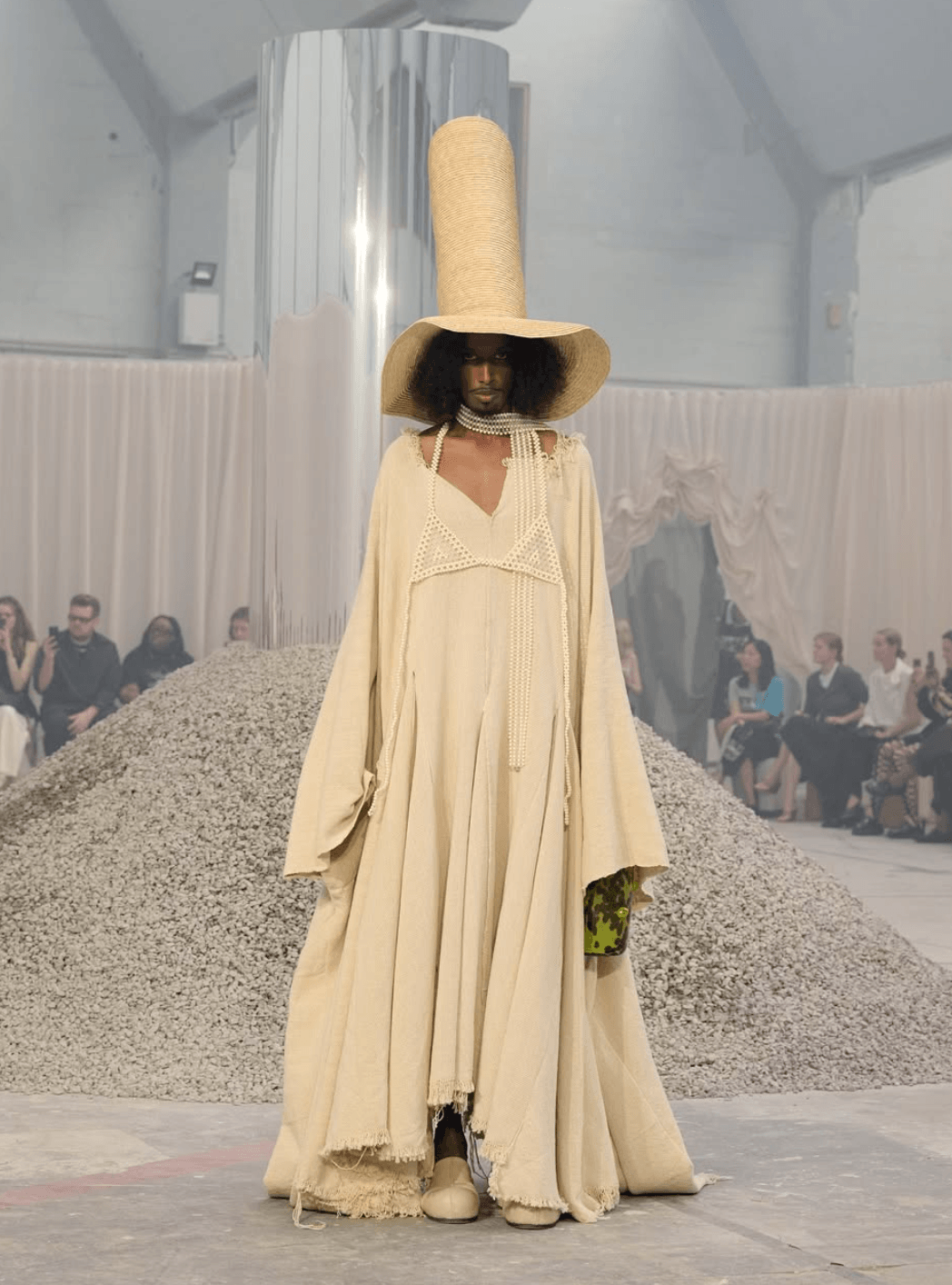
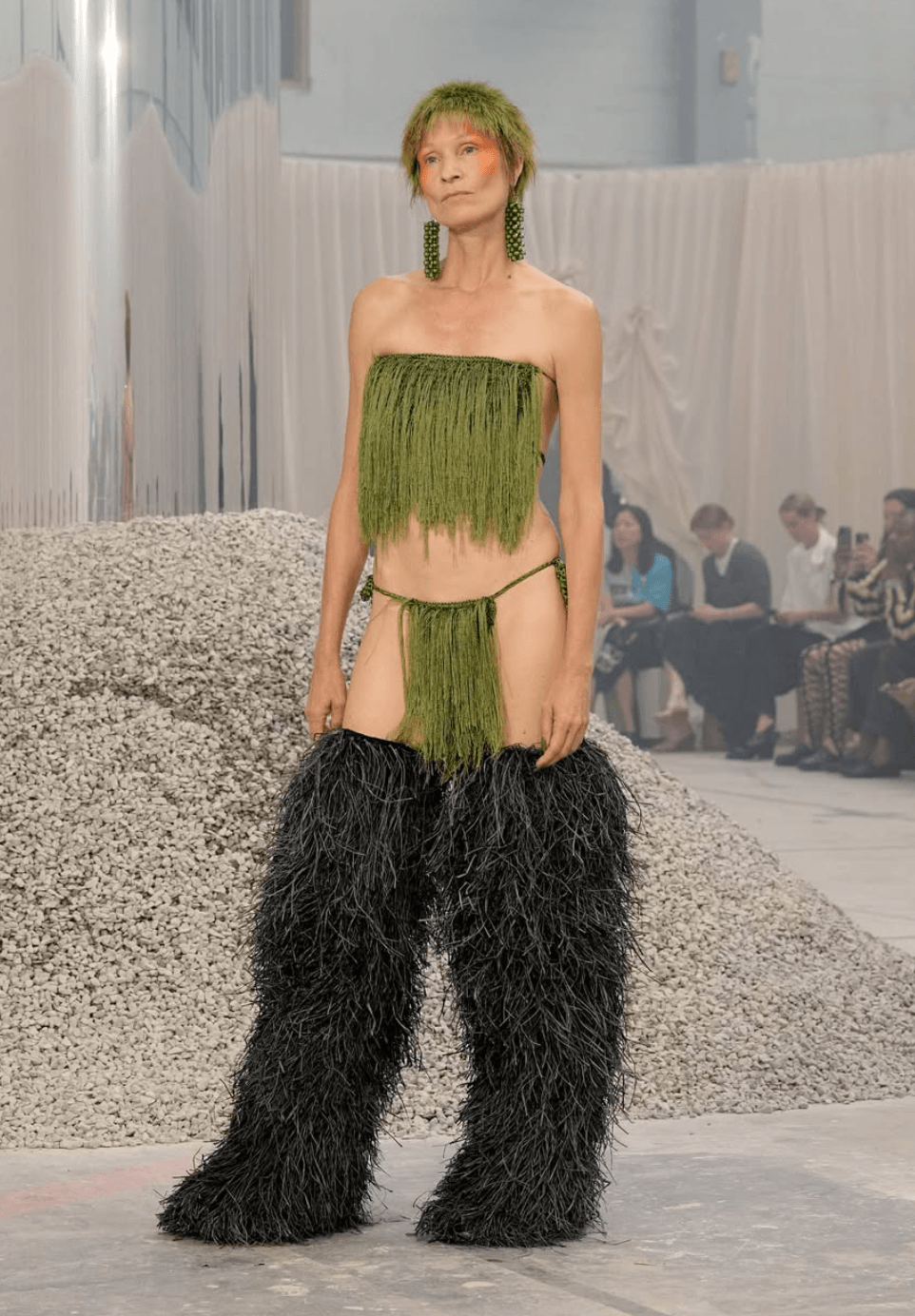
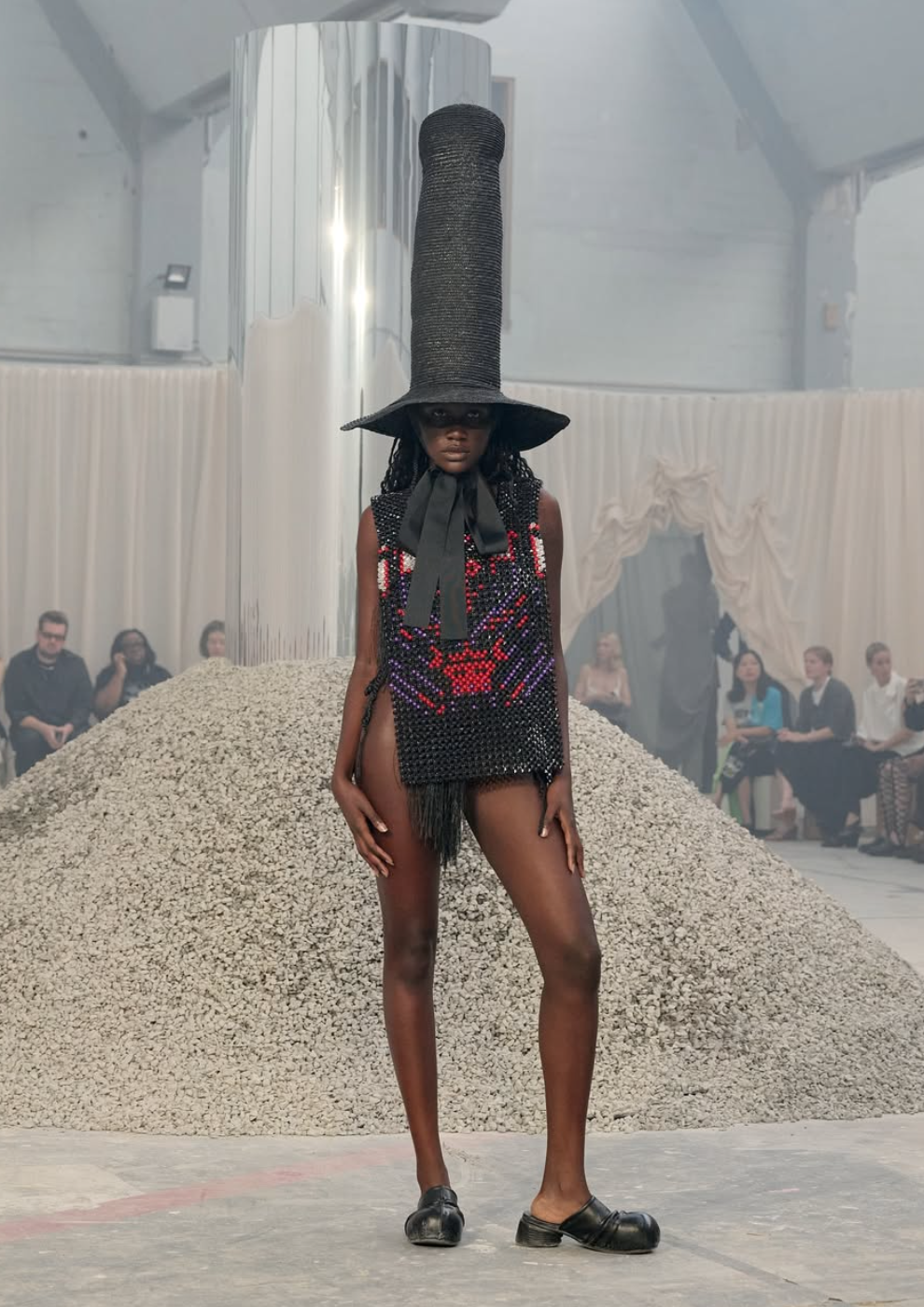
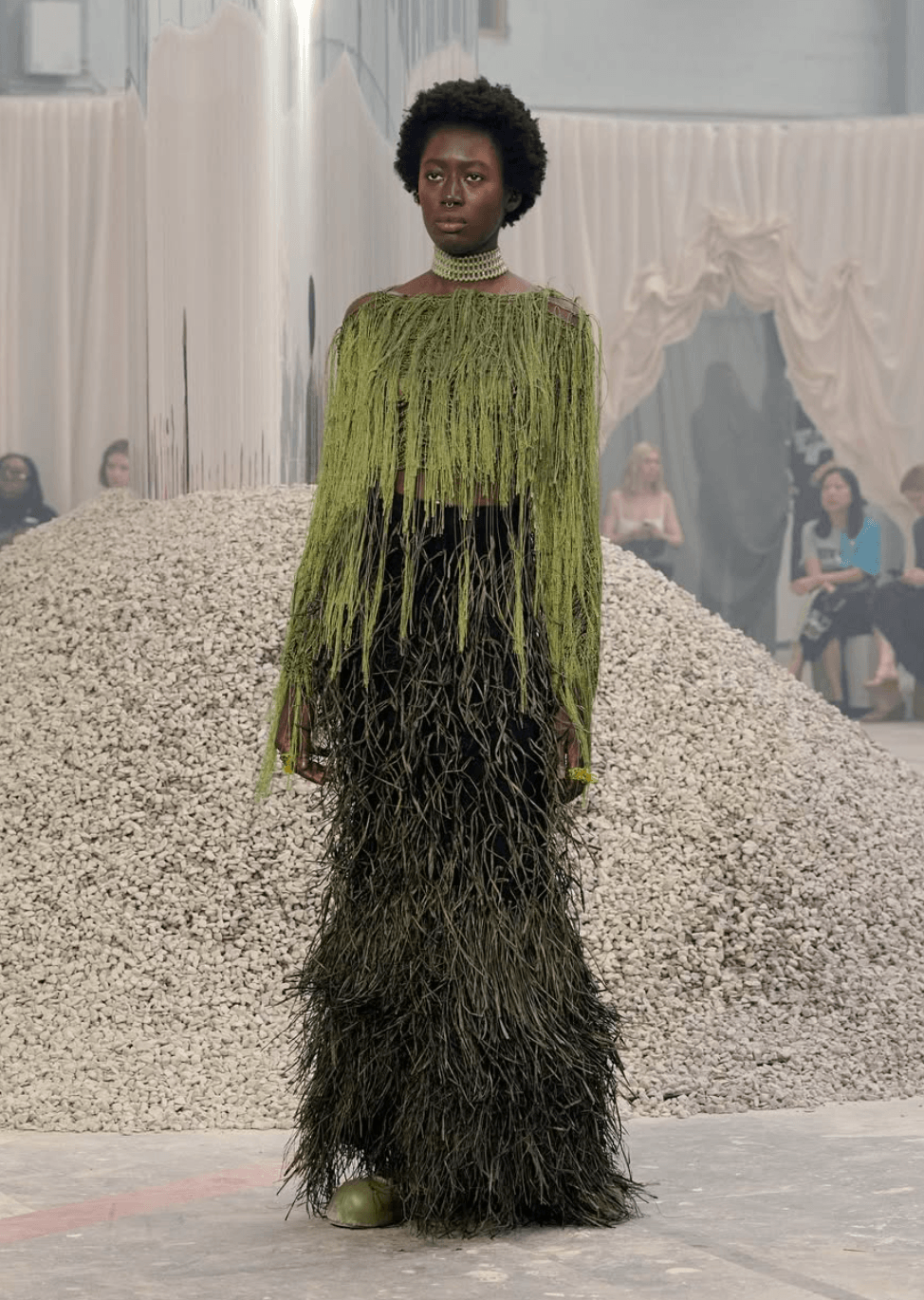
Dual Mandate dazzled in its beauty and craftsmanship. IAMISIGO drew on a rich reservoir of African materials: Ugandan and Kenyan cotton, Nigerian raffia and jute, Tanzanian sisal, and employing all manner of techniques such as hand-weaving, chainmail forging, fibre knotting, glass blowing and hat-making by milliner Crystal Birch, each of these rooted in pre-colonial and indigenous practices. This forms what Ogisi denotes as “ancestral technologies”: functional, spiritual, and encoded with memory, utilised by the label to demonstrate Africa’s provenance in sartorial expression. 

For those new to IAMISIGO, Copenhagen offered a powerful spotlight to Ogisi’s practice, and it’s a vision that has travelled far. In 2024, IAMISIGO captivated audiences here in Cape Town at Confections x Collections at the Belmond Mount Nelson, bringing the same reverence for African craft to a South African audience.

African designers are commanding global attention as leaders for the future of fashion. Across the continent, designers are reasserting indigenous, sartorial consciousness, and challenging the industry’s Eurocentric lens, insisting on narratives that are authored from within. “The collection explores body, mind, spirit and emotion as intertwined terrains. Each piece is an instrument – meant to ground, to tune, to expand. It’s not about spectacle. It’s about energetic alignment.” Ogisi told Vogue Scandinavia. 

In Dual Mandate, the garments are built to be inhabited, their power revealed when worn, moved in, lived with. That openness – to craft, to story, to multiplicity – is what makes IAMISIGO’s CPHFW debut a titanic offering to the industry from the continent, and to anyone willing to understand fashion as equally a material culture and as an archive of spirit. In reclaiming the Dual Mandate, Ogisi proposes a new one: protect the self, remain open, and let beauty carry the memory forward.

IAMISIGO SS26 debut at CPHFW, photographed by @jamescochranephoto, via @iamisigo and @cphfw IG

For more news, visit the Connect Everything Collective homepage www.ceconline.co.za

Follow CEC on Instagram

One Shape, Styled With Intention – Robyn Agulhas Is A G-Star’s G-Shape Denim Muse

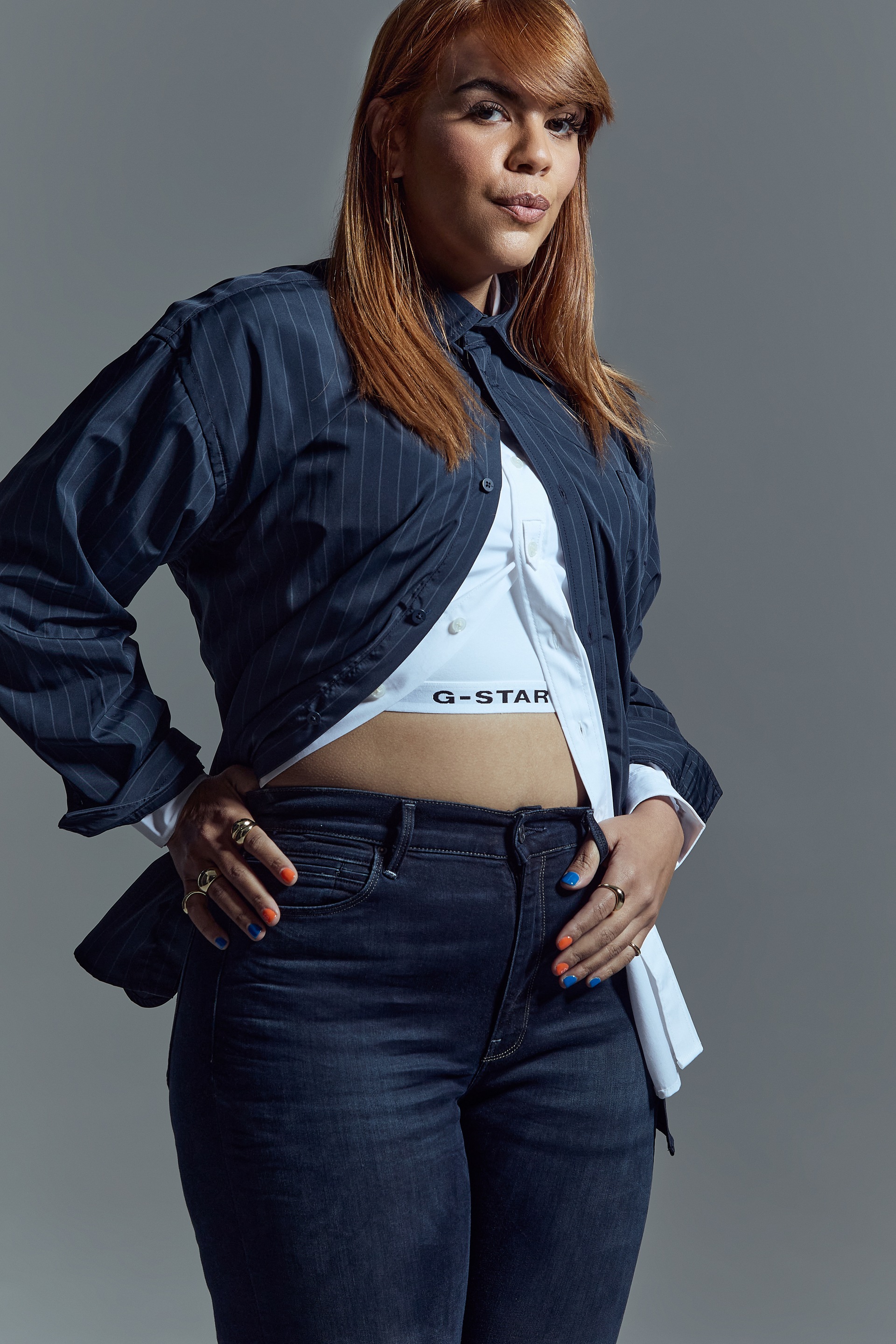
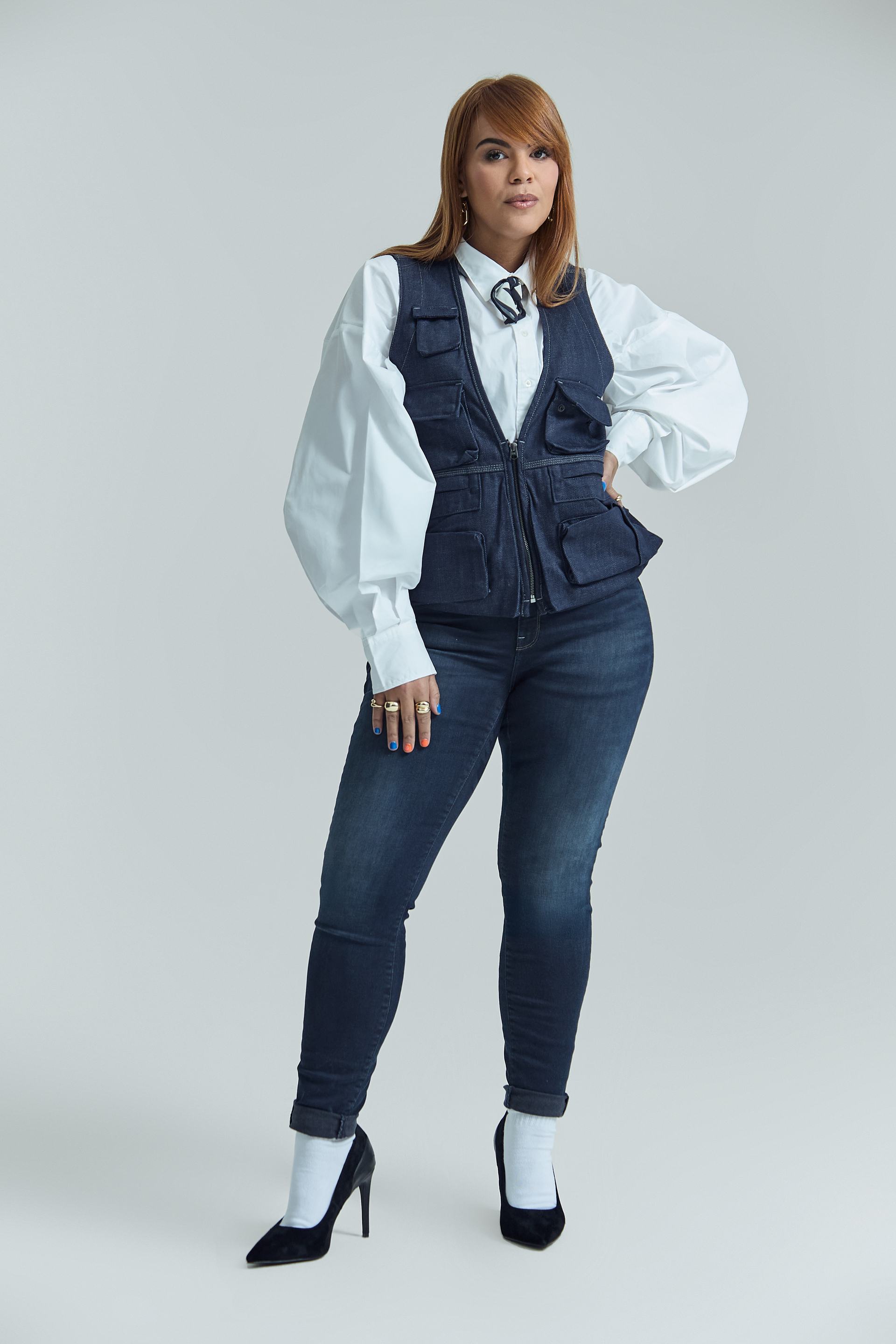
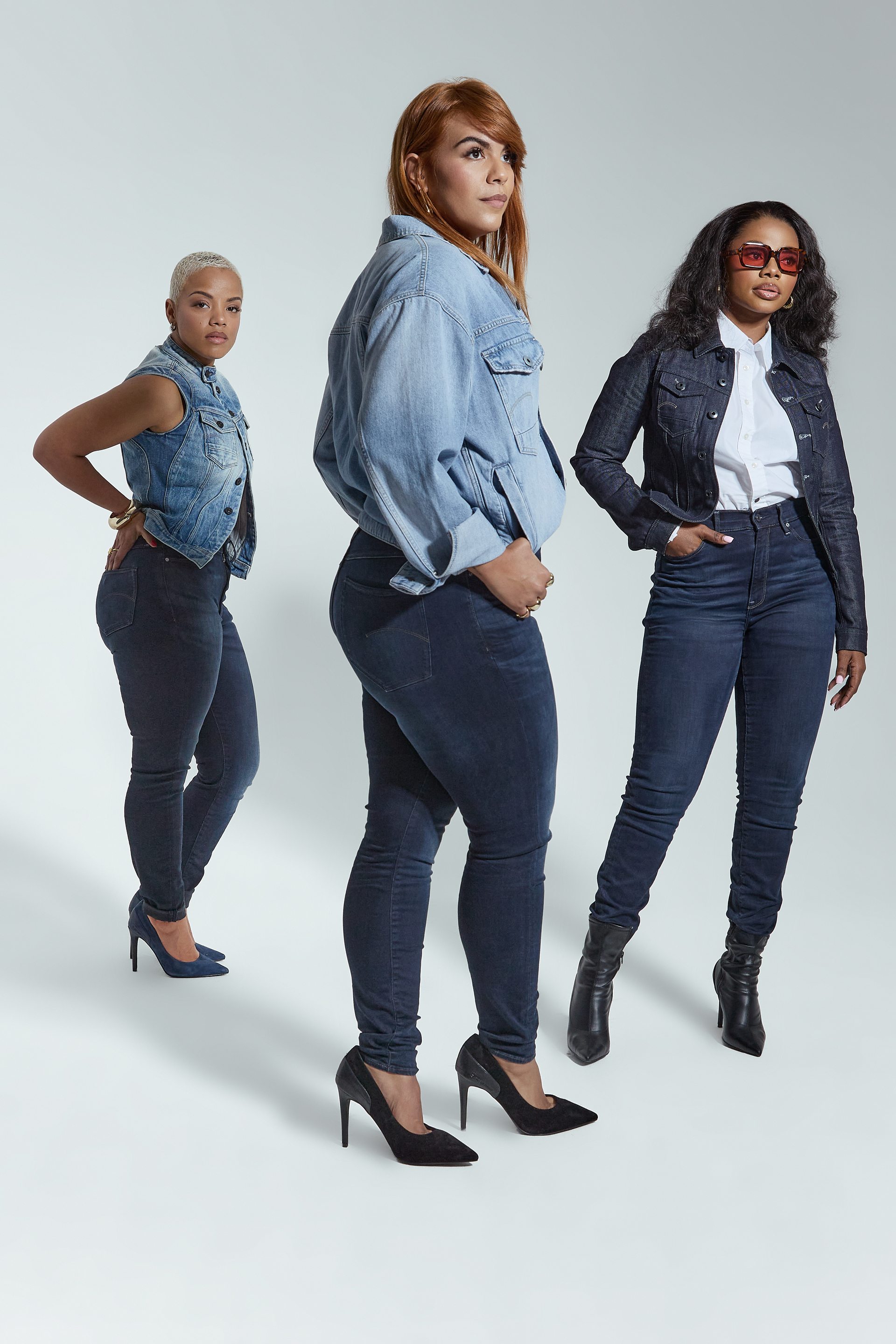
G-Star, a brand known for celebrating the multiplicity of possibility with denim, transcending trends, has partnered with designer Robyn Agulhas for their latest campaign. Engineered from high-stretch denim, G-Star Shape offers a streamlined fit that holds its shape while giving you the freedom to move. The latest iteration enhances the natural curve of the hips while cinching gently at the waist, and the G-Star Shape reinterprets the skinny jean through a modern, technical lens. It’s a fresh take on a silhouette that once dominated the early 2000s and 2010s, and as all good things tend to do, the G-Star Shape brings this iconic form forward into today’s context. 

For G-Star’s South African campaign, the brand turned to three creative forces: Pamela Mtanga, Jamie-Lee Domburg and Robyn Agulhas. We chatted to Robyn, best known for her behind-the-scenes work – designing, styling, and building her brand SinCHUI – as she steps in front of the lens to show us how it’s done with skinny jeans, circa 2025. 

“I’m usually the one curating the looks or directing from the sidelines,” Robyn says. “So when G-Star approached me to model, I was shocked! It’s not where I naturally place myself, but once I was on set, I had a lot of fun. It reminded me that stepping into a new space can be really empowering.”

The decision to feature Robyn was intentional, with her own design sensibility – minimal, architectural, considered – echoing G-Star’s own design approach. “G-Star has always been on my radar,” she said. “I’ve loved their aesthetic for years and their technical approach is amazing. I’ve actually had them on my 2025 wishlist to work with for a long time.”

All photography courtesy of G-Star, by Shezan Waggie


Designed with three-dimensional tailoring to fit the body more naturally, the G-Star Shape is engineered with a higher waistband and innovative seam placement; ensuring a flattering, comfortable fit. For Robyn, discovering a pair of jeans that offered a true fit – combining comfort with subtle structure to complement her silhouette – was a game changer for her already bold confidence, “I hadn’t thought I’d  return to skinny jeans again but I actually felt really feminine in them,” Robyn notes. “They sit perfectly on my waist, which is rare. I’ve lost weight recently, and finding denim that fits properly around the waist and hips can be tricky. It felt like they were made for me.”

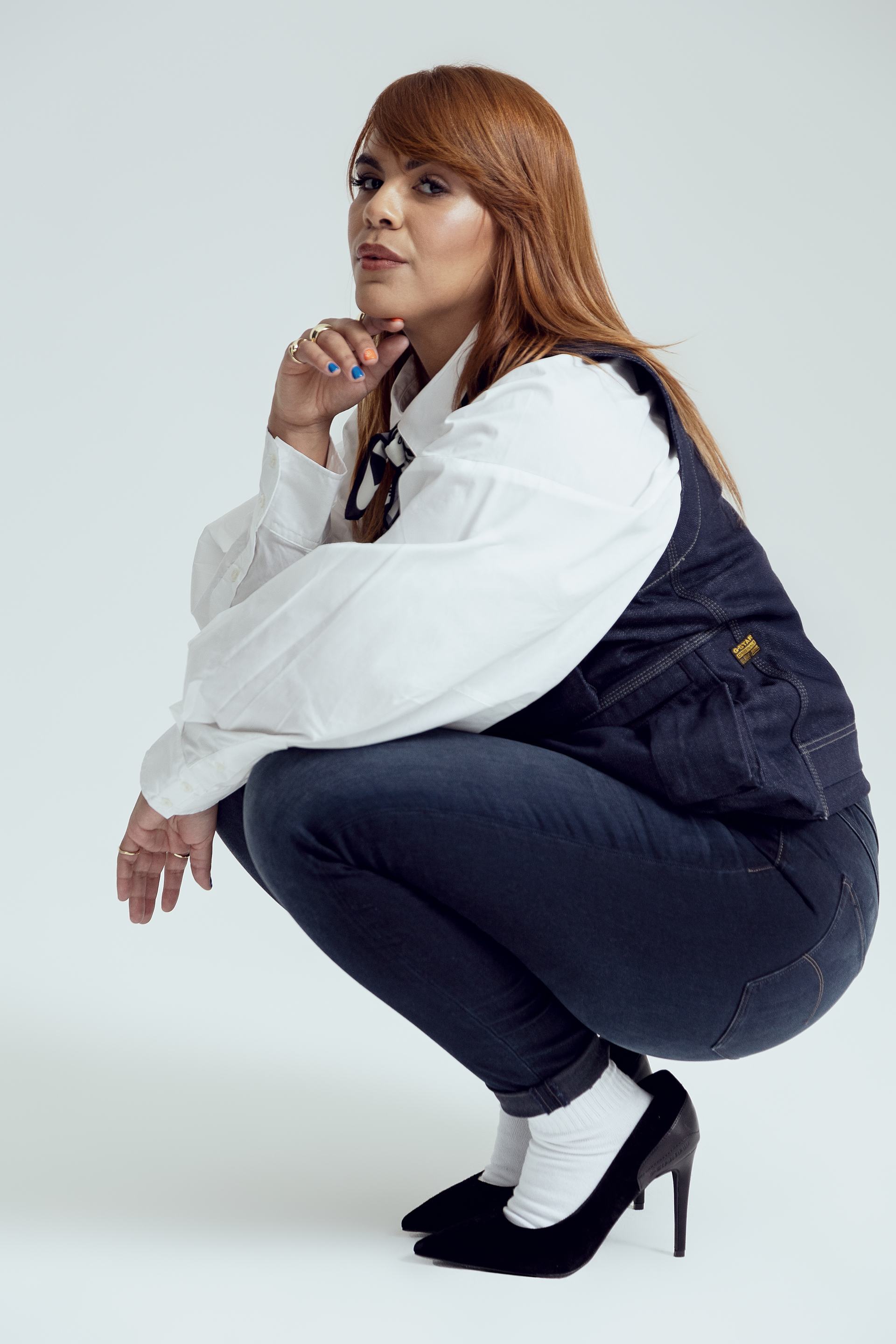
While Robyn’s own designs tend to lean into genderless silhouettes and structural shapes, the campaign allowed her to explore a softness she’s been longing to return to. “I’m always referencing menswear in my work, but lately I’ve been questioning how I want to show up – as a woman, as a designer, as a person,” Robyn reflects, and the styling for the campaign has unlocked new ideas for her. “G-Star styled me in pointed stilettos with socks, and I was like, okay! This is something I’d wear and the whole look is so modern and playful. I’ve seen skinnies on the runway and on the streets, and I’ve been really interested in its comeback.”

Robyn’s own fashion language has long been influenced by Japanese minimalism; a design philosophy she credits with shaping the early foundations of SinCHUI. “That Japanese aesthetic will always be part of me,” she said. “Even now, while I’m more focused on the business side, I carry that influence in how I approach silhouette and restraint.” This alignment between Robyn’s personal affinity for Japanese design and G-Star’s own aesthetic sensibilities is clear, with G-Star’s long-standing reverence for Japanese craftsmanship and innovation is evident across their use of premium Japanese selvedge denim, architectural silhouettes inspired by traditional workwear and so much more. 

All photography courtesy of G-Star, by Shezan Waggie


In between campaign shoots and styling work, Robyn continues to grow her brand slowly and thoughtfully, anchored by values of intentionality and self-trust. “I’ve never stopped styling, it funds the brand,” she explains, “That’s the reality when you’re running an independent label. There’s very little infrastructure or funding, so we learn to do everything ourselves. I’m building the website, sourcing fabric, and managing production, and everything in between.” For Robyn, building a relationship with G-Star is both a meaningful collaboration that supports her growth while aligning with her values, and speaks to the broader way in which a brand like G-Star are actively supporting independent creatives in South Africa. “When a brand comes along that I align with and I truly enjoy the product or respect what they stand for, I’m open to collaborating in any capacity” Robyn says. Of the campaign, Robyn expresses the affirmation of being seen, and that “working alongside Jamie-Lee and Pamela, and with a female-led team, just made everything feel so grounded. The energy on set was beautiful. We were really seen held.”

With refined form, function and femininity, Robyn Agulhas is the perfect muse. She reminds us that when clothing is designed to meet us where we are, and that stepping out of our comfort zone opens new avenues for self-expression and confidence. There’s few things more important than a stamp of approval from a designer themselves, who knows intimately the kind of construction that goes into the perfect fit. Skinny jeans? Make it G-Star Shape – we love to see it. 


Written by Holly Beaton

For more news, visit the Connect Everything Collective homepage www.ceconline.co.za

Follow CEC on Instagram

N-You-Up and Boogie Vice feat. Joshua Morris release ‘All By Design’

N-You-Up and Boogie Vice join forces with vocalist Joshua Morris for a sun-soaked house groover, ‘All By Design’.

Built around a slap-style bassline, tight percussion, and a rolling acoustic groove, ‘All By Design’ showcases the creative chemistry between Boogie Vice and N-You-Up, who have regularly collaborated on labels like Get Physical, Rekids, and Definitive Recordings. 

The track unfolds with evolving vocal phrases from South African artist Joshua Morris, adding both charm and depth. As the groove progresses, warm piano chords and a more melodic vocal section lift the energy into new territory while keeping the dancefloor in focus.


Boogie Vice, the French producer now based in Cape Town, has carved out a niche with his fusion of funk, soul, and house. With a catalog stretching across respected labels and a growing presence in film scoring and artist development, his sound is both refined and rooted in rhythm.

Southern France’s N-You-Up brings a jazz-and-disco-infused house touch to the project, backed by his years behind the decks and a track record that includes standout releases on Nervous Records and Get Physical. His productions continue to win support from tastemakers like Solomun, Dennis Ferrer, and Jamie Jones.

Adding the final piece is Joshua Morris, a Cape Town-based vocalist and producer known for blending psych-pop influences with rich, layered vocals. His distinctive tone and songwriting instincts shine on ‘All By Design’, making the track feel as immediate as it is lasting. The result is a vibrant, feel-good single that channels the chemistry of seasoned collaborators with a fresh vocal twist: Tailor-made for dancefloors and sunsets alike.

Listen to ‘All By Design’ here 

Press release courtesy of Get Physical Music 


MF Robots release ‘Hello Sunshine’ ahead of their upcoming album

MF Robots launch their own label Good People Records as a joint venture with Republic Of Music and their first single ‘Hello Sunshine’, is the lead single and taken from the forthcoming album III (three).

‘Hello Sunshine’ offers up a first taste of III, which is due for release in summer 2025, and what an introduction it is: uplifting and sun-filled soul/funk, showcasing Dawn Joseph’s effortless yet powerful lead vocal and Jan Kincaid’s unmistakable, vibrant rhythm section to perfection. Jazz-tinged and feel good chords, ultra-tight arrangements and a glistening flute solo makes this one of the band’s most polished songs to date. 


Jan Kincaid, co-founder of MF Robots, comments: “We have always been independently minded and wanted to do things on our own terms, with our fans at the forefront of any decision collectively made – Each record has always been from an organic place of creatively and positivity, push boundaries musically and we feel the same about the way that our music is released, so it only felt natural to take the leap and launch Good People Records with a small team of talented and passionate music fans.”

This release follows their 2021 ‘Break the Wall’ record which was released to rave reviews. Collaborating for the first time while recording and performing with one of the UK’s most successful Acid Jazz bands, The Brand New Heavies in 2013, founder / drummer Jan Kincaid and vocalist Dawn Joseph discovered immediate musical chemistry and began writing songs together right away. They soon left the band to concentrate on their own work, starting MF Robots (Music For Robots) and releasing an eponymous debut in 2018. The album was so well received that the duo soon morphed into a band as they found themselves in-demand at venues and festivals all over Europe including being personally invite on tour across Europe by Lenny Kravtiz, himself.

The forthcoming long player III represents a new sonic and song benchmark for Jan and Dawn, reflecting the MF Robots project coalescing and maturing while fine-tuning their material, both on the road and in the studio.

Listen to ‘Hello Sunshine’ here

Press release courtesy of Only Good Stuff

The Phenomenal Handclap Band releases ‘We Are Worlds Away’ Single

The Phenomenal Handclap Band releases ‘We Are Worlds Away’, the uplifting and anthemic title track from their upcoming EP on New York’s Nublu Records.

‘We Are Worlds Away’, was written and recorded in Stockholm, Sweden’s Pansarmarängen Studio with the help of longtime collaborators Fredrik Swahn (Dungen, Melody’s Echo Chamber) and Morgan Phalen (Justice, Drakkar Nowhere).

The Phenomenal Handclap Band is Daniel Collás, Juliet Swango, and Monika Heidemann. Since 2017, the Brooklyn based trio has released numerous critically acclaimed singles on labels such as Daptone, Toy Tonics, and Glitterbox that have garnered attention and praise from such luminaries as Paul McCartney, Zane Lowe, Bryan Ferry, Gilles Peterson, Elton John, Don Letts, and Simon LeBon, to name but a few.


In 2023 the band released the Burning Bridges EP with the venerated New York dance label Razor-N-Tape, followed by the vinyl-only 12” Like a Constellation on Lone Limited at the end of 2024.

Listen to ‘We Are Worlds Away’ here

Press release courtesy of Only Good Stuff