For Peet and Nick, the book is the second iteration following AFROSURF – a similar project that focused solely on the untold legacy of surf culture in Africa. As Peet explains, “after creating Afro Surf, we realised that there was a greater context of sport in Africa, of which surfing was part of. We wanted to learn what the history of that was and what role design played in that. At the same time I was researching design in Africa and its relationship with design in the west. Sport was a great place to look at as for a large part its universal, diverse and the place where different cultures meet but also has a big impact on local culture making.” Among Africans, there is a palpable sense of a revelatory moment for the continent, despite the challenges that we contend with – from the legacies of colonialism, the tides of globalisation, the political and socio-economic complexities of being the bread basket of the world, with little in return. The perception of the continent in the eyes of the world can be summed up by the harrowing and explicit geographical error in which Africa’s size is distorted on maps to look smaller than it is. Yet, Africa remains the mother continent – and her stories are yet to be fully told, loud and clear.
As Peet notes, “sport in Africa is extremely creative, and what drives it mostly is the desire to be seen, and to be acknowledged. There is an ocean of new sports developing and these new sports challenge western culture in an incredibly creative way we don’t see coming from the rest of the world,” and that in developing AFROSPORT, the hope is that it will challenge tropes used to to confine the continent to singular perceptions, namely that “Africa is much more than a rural and traditional culture. Africa is challenging brands like Nike’s cultural meaning. Africa is challenging western design. Africa will produce not only the best new athletes in every sport, but will bring many new sports to the table. Sport in Africa cannot be separated from popular culture and design.”
Nick shares that, “for me, the book creates connections between different things – design, story telling, sport, data, creativity, history, popular culture – that hasn’t been done before. These new connections should inspire fresh thinking and perspectives that challenge and redefine how people think about the continent,” and AFROSPORT indeed undertakes the immensely tall order of condensing the vast and varied context of the continent into something comprehensive – that touches on the swathe of 54 countries that inhabit its 30,365,000 square kilometres from shore to shore. As Peet explains on their approach, “it’s a massive problem to try and box a whole continent with so many cultures into one book, so we tried not to simplify something extremely complex. We just started to speak to writers and researchers from all over the continent and let stories come in. It was very quickly that we started to see some links between stories and that was our golden thread. There are as many stories as there are people and some people might have more than one story, it’s obvious this is just a tip of something really big.”
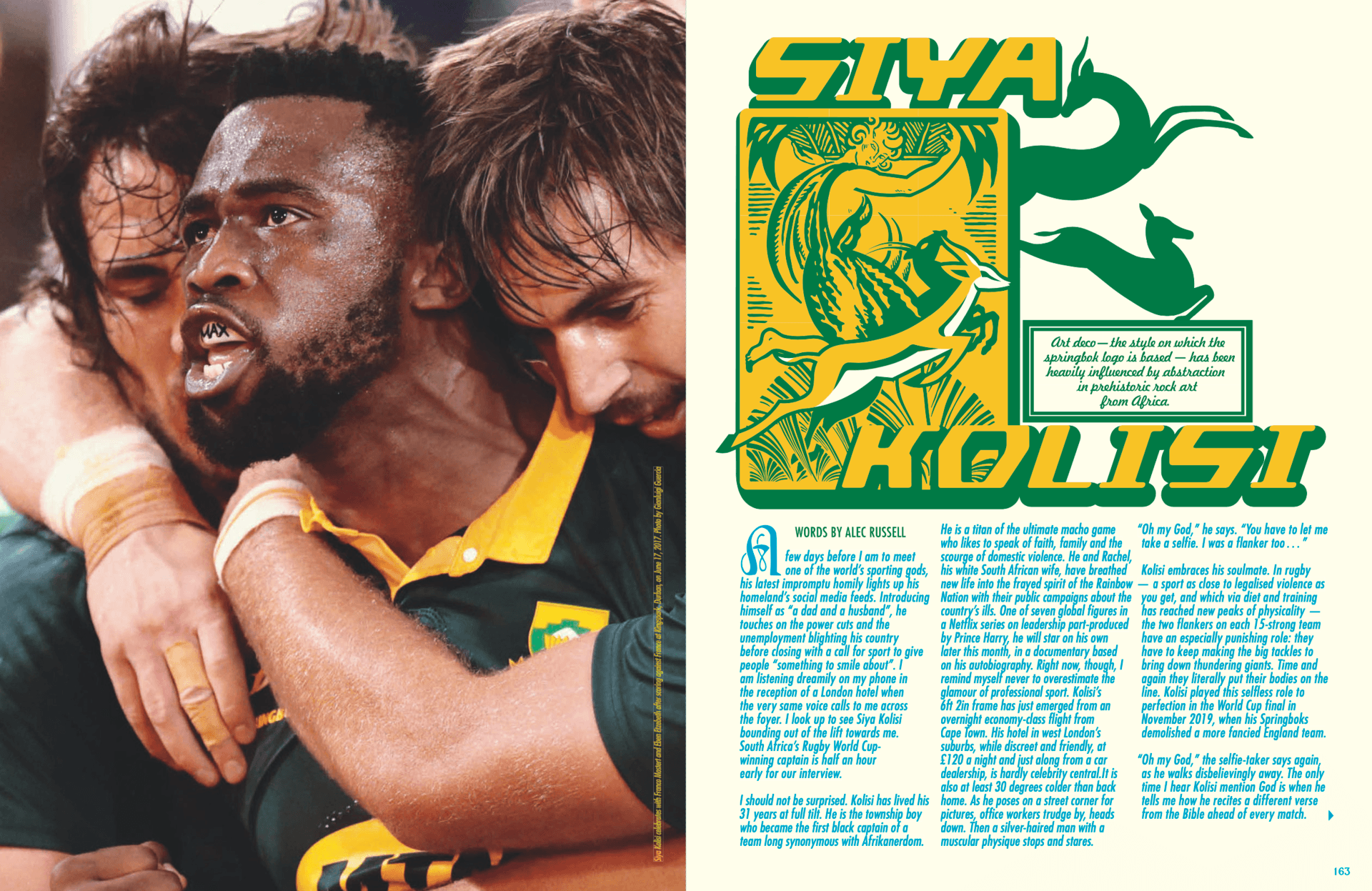
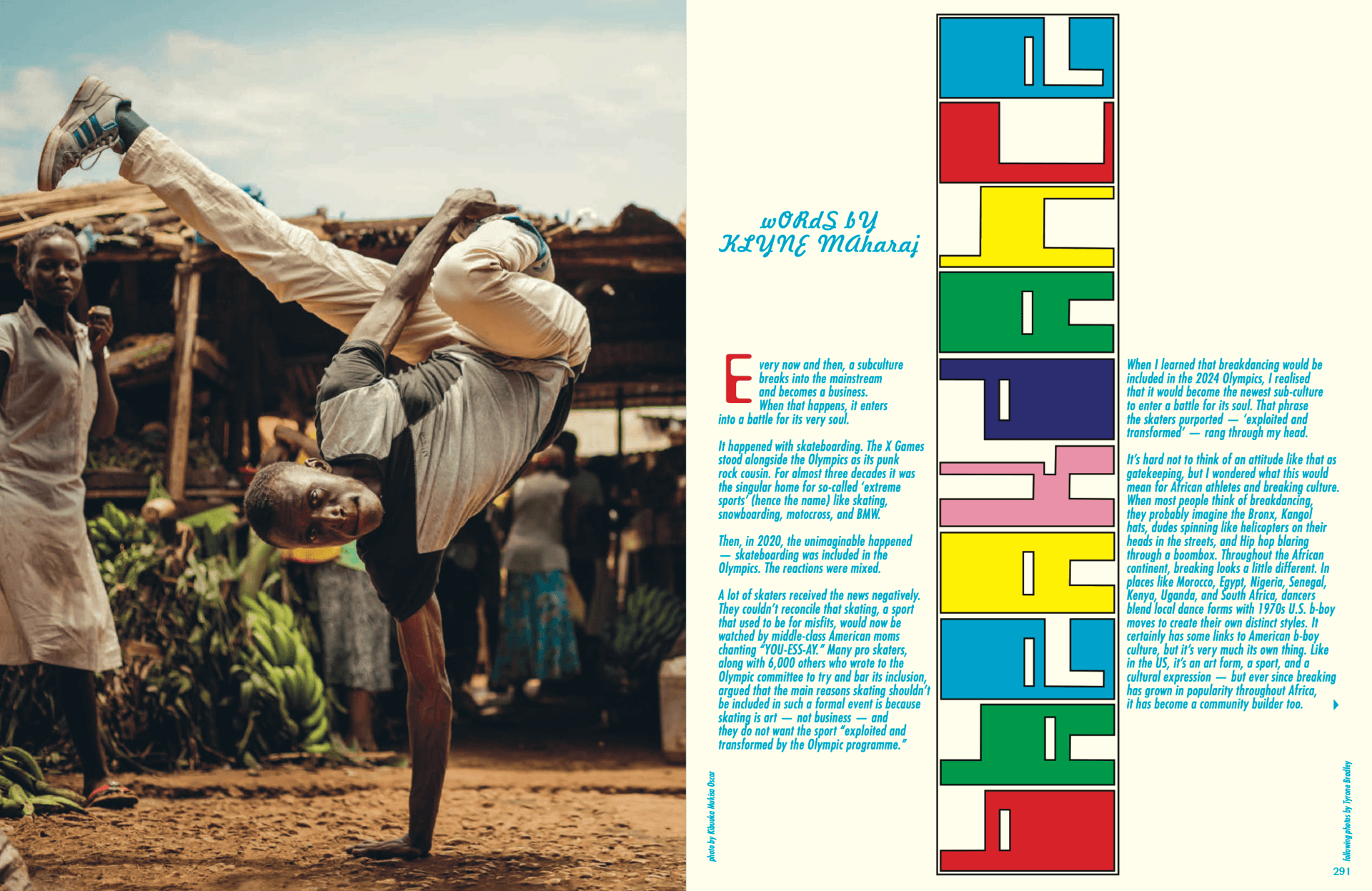
Peet is a renowned designer and artist, and AFROSPORT synthesises bold, graphic style signatures to his style, as an exploration of Africa’s design lexicon in the context of sport. The book is a kaleidoscopic, visual feast, portraying the efficacy of using sport as a means to understand Africa’s contemporary design vision. “Firstly we need to acknowledge that everything in terms of design in Africa is seen as vernacular in the west.” says Peet, adding, “One of the best places to challenge this perception would be to look at a space like sport and design in Africa. Except for a few traditional sports in Africa, sport in general is the melting point of different cultures. Design in sport in Africa comes from within the sport community and is not drenched in traditional culture, and is a good place to start looking at design in Africa that is not only about traditional culture. This allows one to see a much better version of what drives contemporary design on the African continent. I looked at design influences from outside on design in Africa, how it was interpreted and how Africa influenced design in western culture. I believe all design is this constant play of influence presented with a new local context. Instead of visual influence only, I focused on the conceptual influence behind the visual influence. I reject the idea that western design is the universal default of design.”






















Recent Comments