In the midst of Love Month, certain assumptions come to the fore, pressuring us to compare our own simple sweetnesses to the grandeur of TV-type love. Surrounded by Hollywood billboards where hetero couples kiss passionately with dyson-wrapped waves blowing in the artificial wind, the everyday moments we embrace with our loved ones, our friends, and ourselves, can start to feel less than.
Suddenly, no matter how self-assured we are as singles, or how satisfied we are in our relationships, we get the sense that it’s not quite enough. That’s because Valentine’s Day marketing panders primarily to one common belief underlying traditional, heterosexual dating: That romantic love within a partnership is inherently superior and more fulfilling than any other kind of love, particularly self-love.
Fortunately, however, our acquiescence to such myths has slowly been dismantled by the dawn of decolonial thought. Homosexuality, queer love, polyamory and platonic love, have gained renewed recognition by historic studies evidencing that community and culture has long-since sustained itself on more than traditional romantic partnership and marriage alone. In Ancient Greece, philosophers acknowledged that love was often homoerotic, with many men relying on same-sex relations as a portal for intellectual engagement, courage and mutual care.
Meanwhile, on the African continent, matriarchal structures provided safety and community, acting as both “the economic base of the family as it determines the production, distribution and consumption of goods”, and an important parallel functioning alongside patriarchal units. Further, throughout the Global South, evidence of polyamorous communities demonstrate the importance of friendship and community for subsistence. Evidently, the idea that romance and love exists purely within our Judeo-Christian whatever, is in some ways, dissolving.
But still, one particular type of love remains deeply underexplored both historically and in popular culture: self-love. Think about it. Have you ever seen a truly romantic look into a singleton’s life, besides, maybe Eat Pray Love? The best I could think of are Perfect Days or maybe, indirectly, The Worst Person In the World. But even so, it’s not enough to watch the movies. You have to live them to understand them. That’s because we act as though we know the concept, but self-love isn’t just skincare. It exists beyond consumerist principles, encompassing personal creativity, curiosity, emotional and physical care, sacrifice and nourishment. Romancing yourself requires transcending the routine maintenance of beauty and tradition as we know, to discover more of your own unknowable depths and desires.
Simone De Beauvoir says that love is “sensitivity, imagination, fatigue, and this effort to depend on another; the taste for the mystery of the other and the need to admire…” In this instance she was referring to friendship, but if you inflect these principles you also have clear instruction on how to divine a more romantic interiority for yourself. At the end of the day, who is more reliable to depend on than you? Who is more full of mystery, complexity and sensitivities than you? When you spend your entire life with someone – that is, with yourself – the answer is nobody.
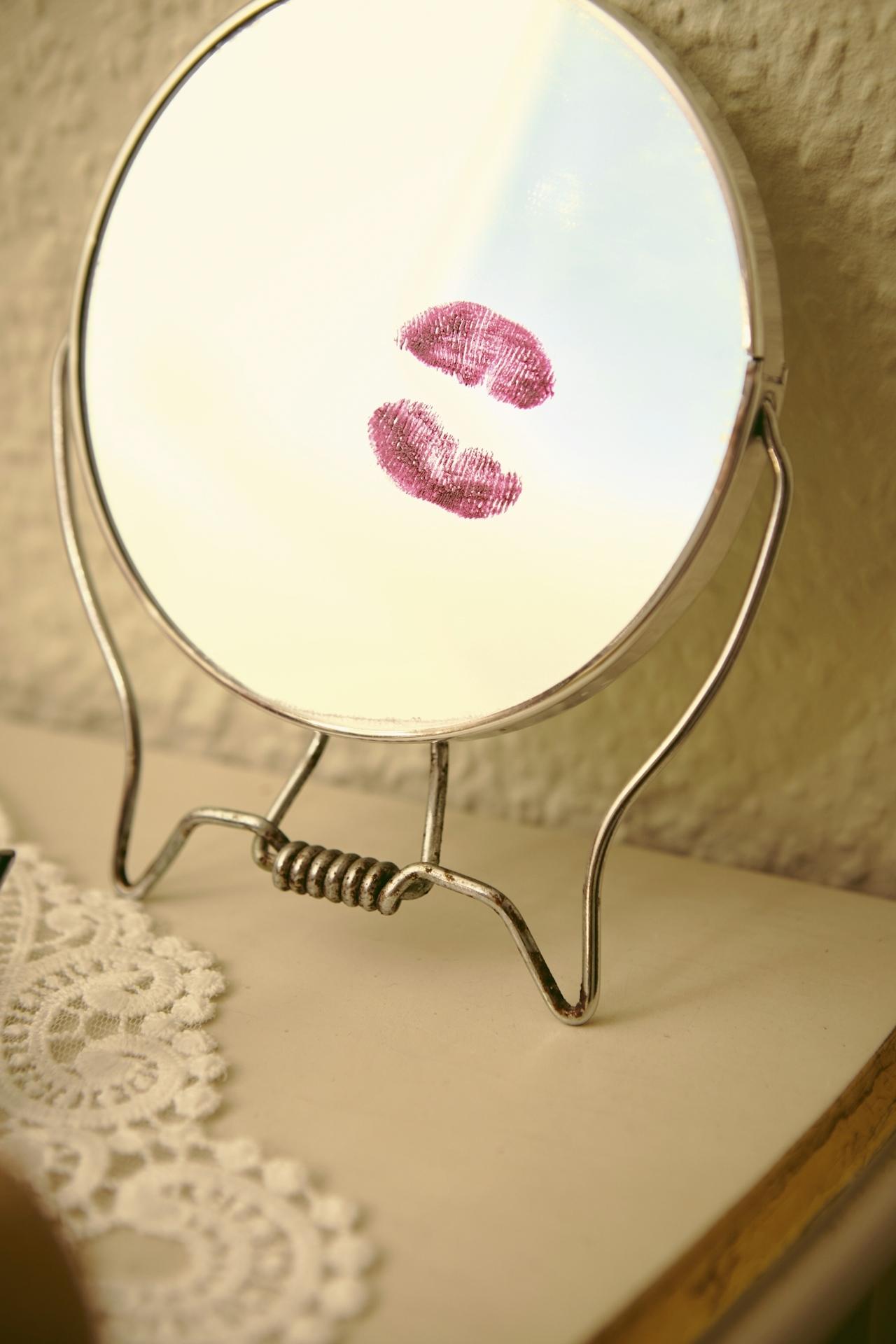
Imagery courtesy of Death to Stock

Imagery courtesy of Death to Stock
But of course, when seeking out tokens of affection from others, it’s easy to lose sight of the sanctity of self-love. Our culture glorifies externalised offerings and public performances as a sort of pinnacle embodiment of romance. Comparatively, the practice of self-love is without clear reward, indefinite and undefined. But the thing is, these performances and gestures are only a channel for love, through which we are the ones who transfer the meaning. Romance then, in some ways, can be entirely self-determined, shapeshifting with us and through us.
After all, if so much of ‘romance’ is defined by the early stages of infatuation, shaped as it is by projection (and the tall pedestals we place our lovers on), then what, really, is keeping us from projecting these same infatuations onto ourselves? I mean, if I think back to some of my earliest romances and my younger, more naive loves, I can clearly see that, more than anything, I was perhaps falling in love with my own curatorial capabilities.
A romantic at heart, I soundtracked my first love nearly religiously, falling in love with Pierro Umiliani and Skinshape as much as the person. The poetry I read, the music I played, the candles I lit all contributed to a dream which was then evoked, (but not intrinsic) in any kiss we may have shared. The enchantments I bound and the spells I whispered made the objects of my desire precisely so: desirable. Now that I’m a margin smarter, I know better than to conflate my own imagination with my lover’s actual intentions and actions. But still, I remain devout to the delicate craft of fashioning a passion, a crush, a swoon-worthy sensuality, and I continue to use these skills to routinely woo myself.
And this is still important even when you’re dating someone, by the way. Despite its seeming obsolescence, romanticising yourself still remains instrumental even in partnerships. As Psychotherapist Esther Perel notes, one of the moments in which people fall in love is, “when they are away; when we are apart; when we reunite… time apart allows our partner to re-occupy our imagination—particularly the part that shrinks when daily life together becomes predictable.” Similarly, unpacking ancient Greek philosophy, Professor of Classics from the University of Oxford, Armand D’Angour, reinforces this by arguing that, “Love’s aim, we eventually learn, is not to complete us, but to inspire us to grow creatively in relation to another person. Not to guide us to love our mirror image, but to lead us to educate and be educated.”
But of course, it takes time. In our current condition, it is easier and perhaps more validating to understand romance in relation to another. But the true, and potentially more fulfilling work, is to bear witness to ourselves. This love cannot be overlooked, because more than it is self-determined, it is also inherent. Every act of care, every meal, every moment in the sun, every hour spent resting on cotton sheets, is a service, and thus an act of love, regardless of whether we call it one, or whether we think we’re doing a good enough job. And if it doesn’t feel that way, perhaps the only thing missing is the rose-coloured tint that we’re so willing to place over others.
Romancing yourself is an art that requires the same kind of active curiosity and willing patience we often give others. And more than anything, it requires you to stop waiting. That’s the real trick. Stop waiting for the invite, for the compliment, for the sensation that you could probably produce yourself. Not because you want feign independence, or because you’re ‘better off alone’ (nobody really is), but because you know deep down that regardless of the love you may or may not have, only you are really capable of understanding your inner world. Those ideals, and those wounds, are so deepset, so internalised, so intimate, that they couldn’t easily be expressed, or soothed, by another. And even so, asking anyone else to heal them would require the kind of instruction that would ruin it all anyway.
The fleshy bits are easily grasped by another pair of hands. But what of the marrow? The essence of the essence? The ever-changing yet constant inner dialogue that defines our worldview? The habits, the ancient genetic code? These truths can only be translated with gut instinct. Even if somebody else was willing to dedicate themselves to you entirely, would it really be fair, or even feasible, to let them? Moreover, with somebody else to lift the weight, what would become of us? With nothing to carry, our bones may grow weak and our will, frail. The sacrifice is sweet, sure, but the more sustainable love story is the one in which purpose and direction are not replaced by love, but rather ignited by it.
In obligation, passions erode, but in self-actualisation it is surprisingly plentiful. Whether it’s reading, running, writing, crafting, or cooking, the challenge of observing and then acting upon your desires is very, very sexy behaviour. Especially when it’s done with the intention of improving yourself, and your surroundings, and not just inflating the ego or performing for the public eye. That self-observation induces what Gabi Abrão calls in her book of poems, Notes on Shapeshifting the “magic of living.. a vastness that extends beyond any betrayal.”
So then, as a final note: whatever they try to sell you this Valentines Day, remain cautious. Caveat Emptor. There’s a lot to love about love, but there is an equal amount to dismantle. Despite what the billboards and the ooey gooey media will tell you, you don’t need to be with anyone during Valentine’s Day if you don’t want to. In fact, regardless of where you are, or who you’re with, dedicate a piece of this day, and every day, to the one person who’s been there from the start: yourself. How do you do that? Well, start by mapping what thrills you, what opens you, what closes you. Pick lavender. Walk for ages. Listen to the same beloved album, over and over and over again, the way it would only ever annoy somebody else but deeply satisfy you. Learn the names of your favorite flora and fauna. Take photos of everything, and send them to nobody. Dine alone. Make a date to see the sunset. Write down your dreams. Go see a movie. Follow the scent of a memory. Let your curiosities consume you. Create. Whatever it may be, just be sure to tell yourself that it warrants attention, and love, because it’s yours.
Written by Drew Haller
For more news, visit the Connect Everything Collective homepage www.ceconline.co.za