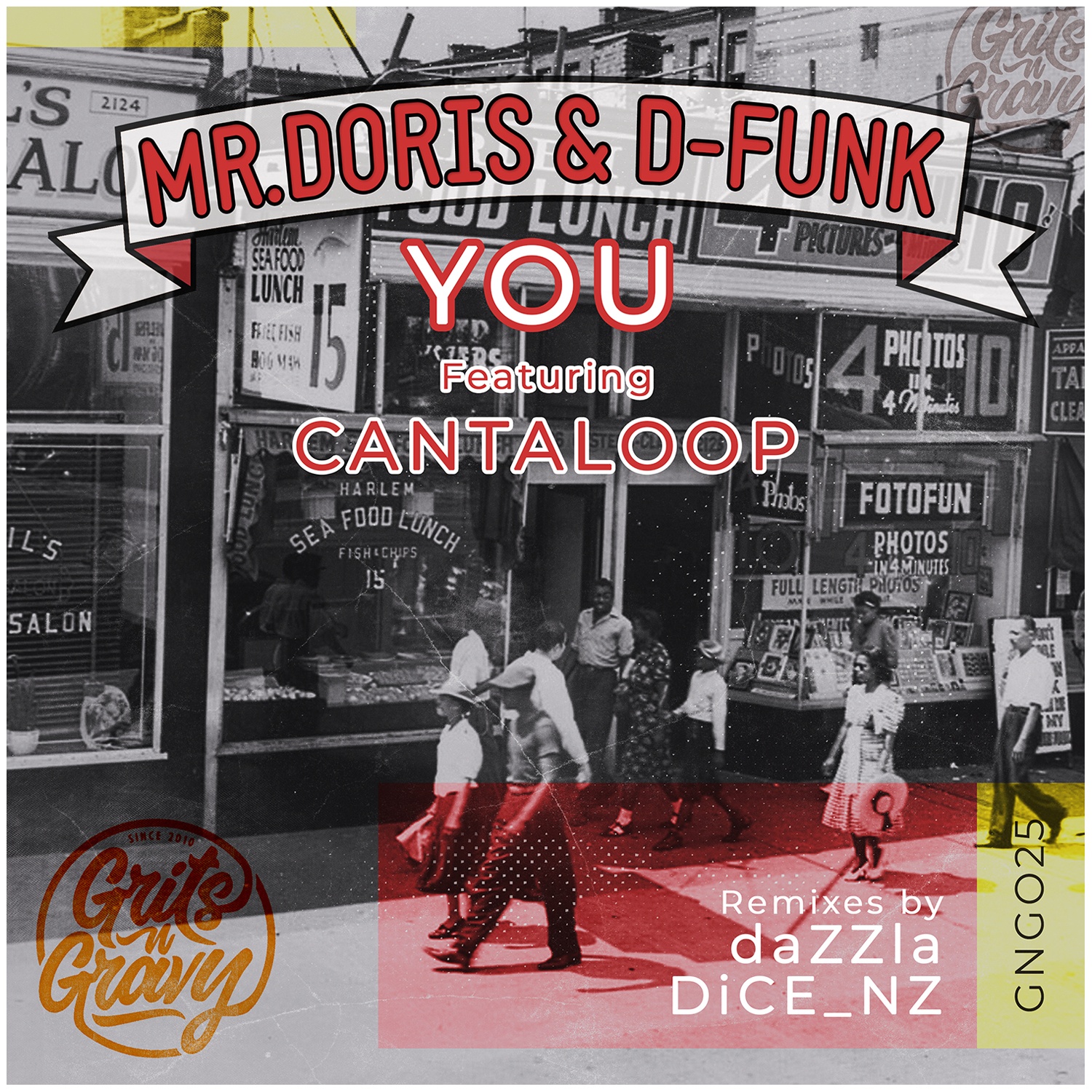
Mr Doris and D-Funk release ‘You’ feat. Cantaloop

Mr Doris & D-Funk, renowned for their eclectic and genre-bending collaborations, join forces once again with the captivating Cantaloop for their highly anticipated 2025 release, ‘You’. This is their first original release on Grits N Gravy, and trust us, it’s worth the wait.

These guys are no strangers to killer collaborations. Their diverse musical palette has garnered support from figures like Fatboy Slim, Nightmares On Wax, Nickodemus, Craig Charles & Don Letts. A testament to their innovative approach.

‘You’ represents a soulful evolution for the artists, building upon their previous hip-hop infused collaborations with Cantaloop on tracks like ‘Feel Good’ (Jalapeno Records) and ‘All Down’ (BombStrikes). Dannie from Cantaloop delivers the vocal performance, weaving effortlessly through a soundscape anchored by a seductive live bass-line and a laid-back groove. This track blends neo-soul sensibilities with live instrumentation, striking a perfect balance between organic warmth and modern sonic precision.

Listen to ‘You’ here

Press release courtesy of Only Good Stuff

GOOD GOOD GOOD presents their AW25 Collection, ‘SPROUTS’

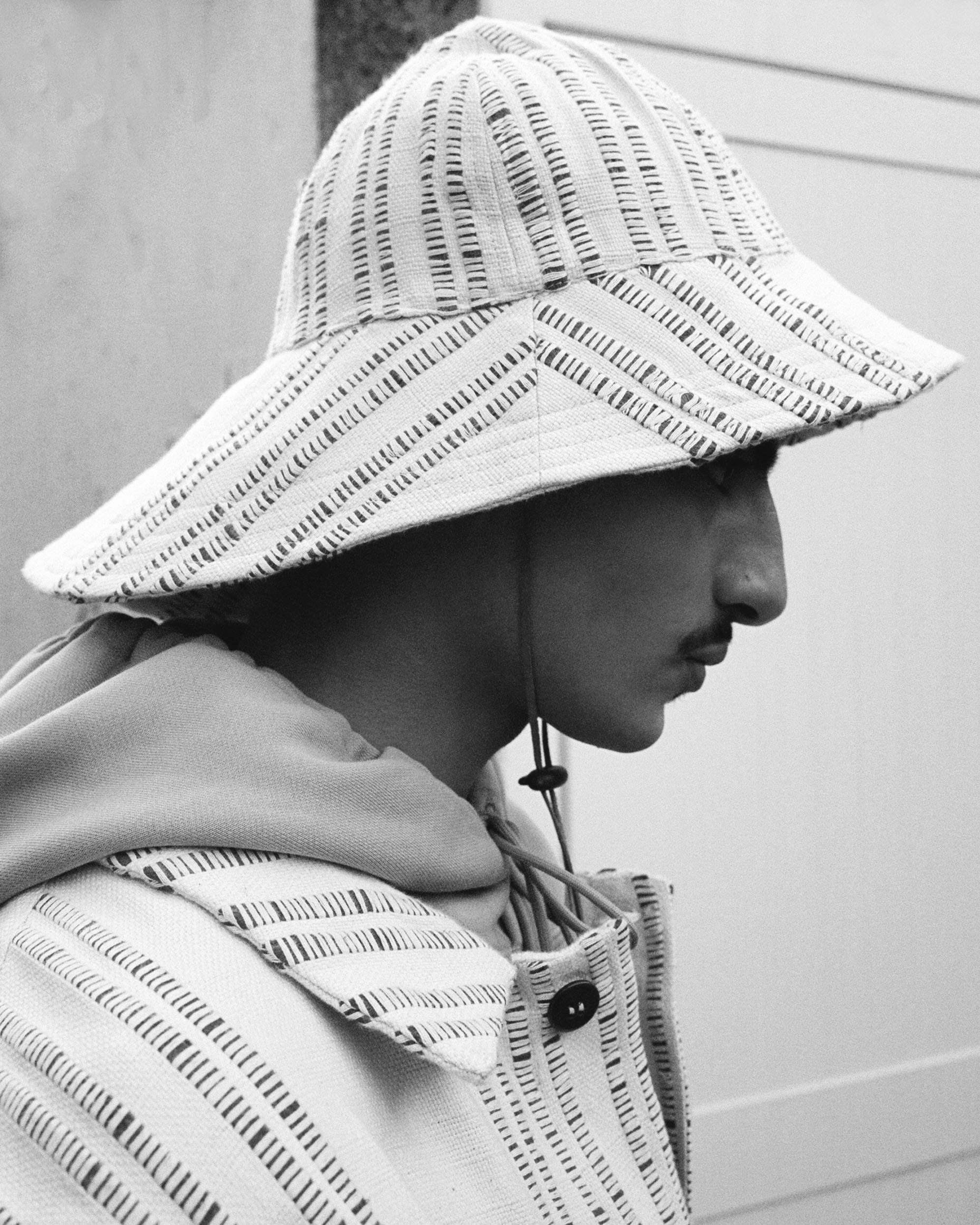
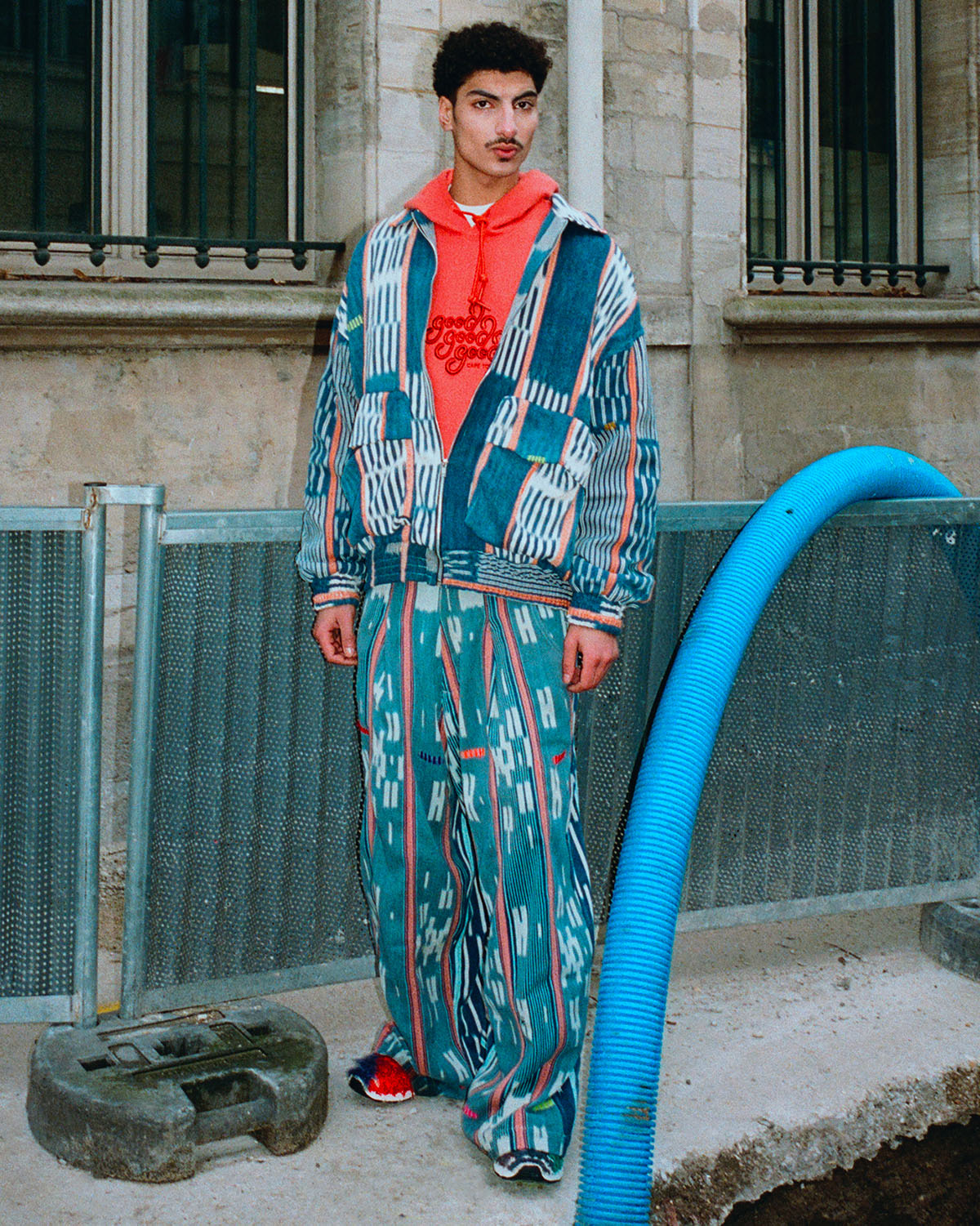
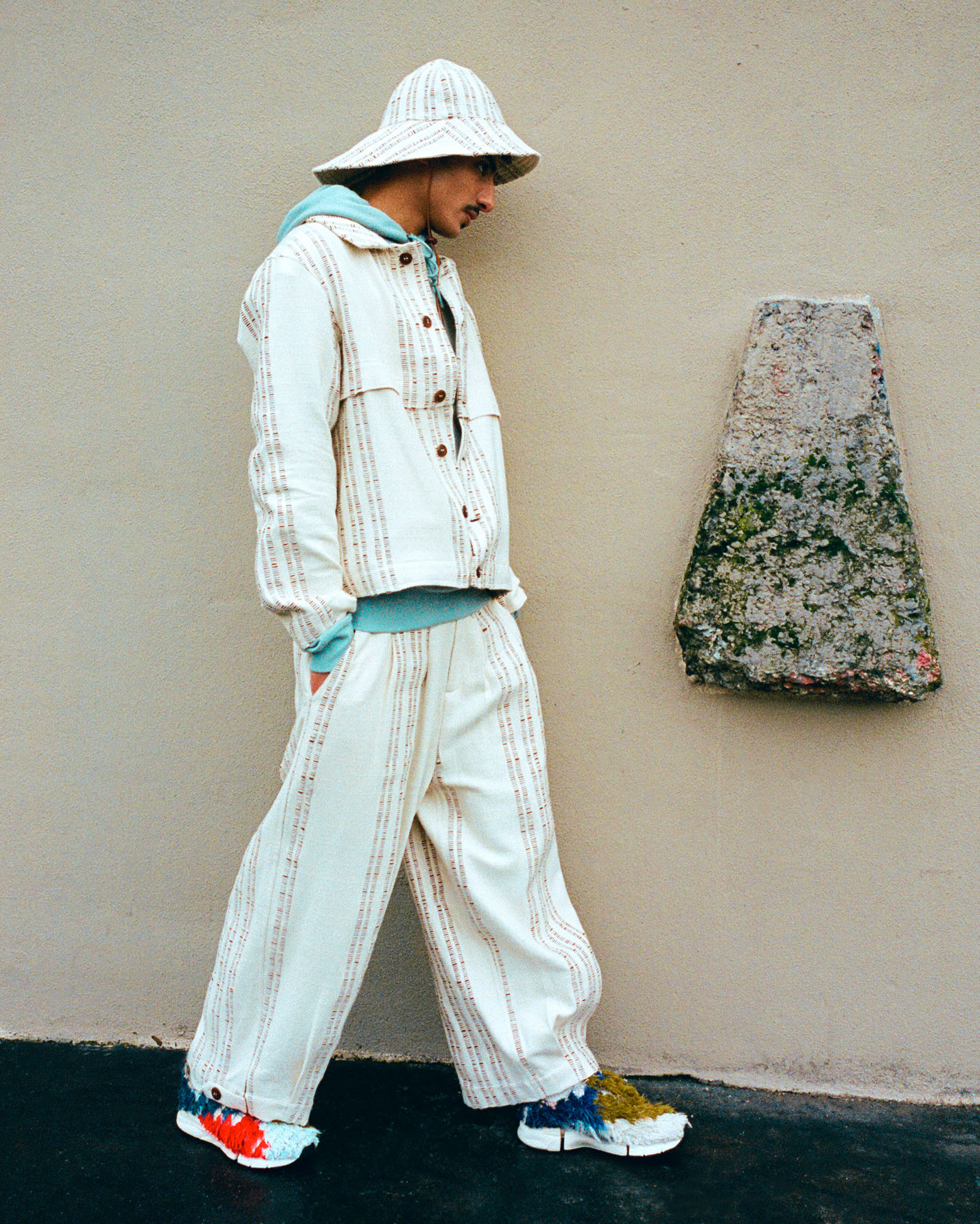
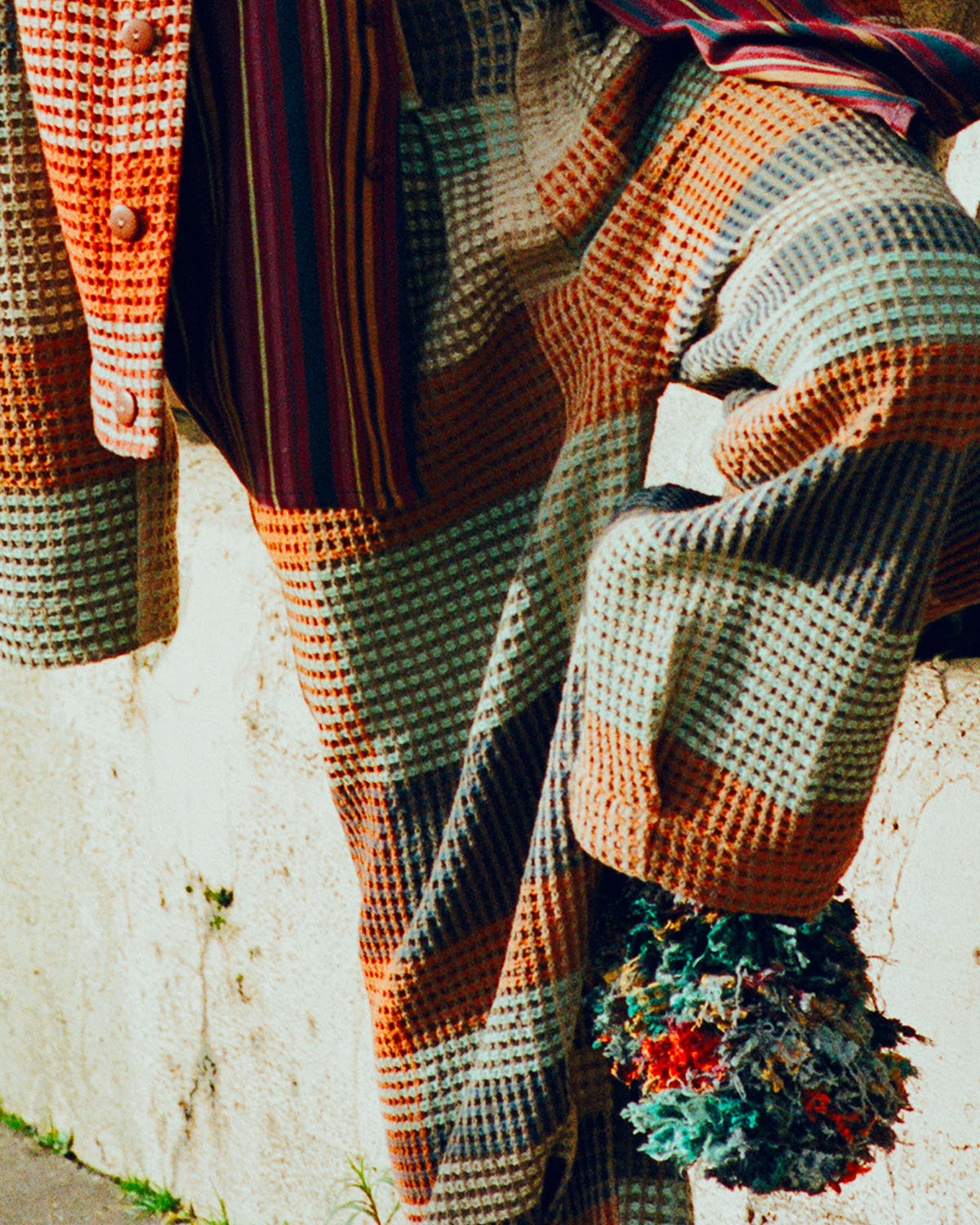
Good Good Good’s AW25 Sprouts collection sees the Cape Town brand developing in various aspects of its identity, sourcing African materials from outside its home-country’s borders and making full use of its in-house manufacturing capabilities. This collection builds on the foundations of the SS25 Roots collection, in which Good Good Good’s founder and creative director Daniel Sher revisited and strengthened the brand’s core offering. For AW25, Sprouts introduces a handful of new silhouettes to the brand’s core collection, alongside more unique garments made from textiles originating from across the African continent.

For the first time, the brand explored materials from greater Africa, having previously worked exclusively with textile mills and designers within the brand’s native country. While the collection still features textiles sourced from prominent South African homeware textile mill Mungo, the other standout garments in the collection are cut from cloth made in Uganda and Côte d’Ivoire. Using a material created by Mekeka Designs, a textile house based in Uganda, the Cropped Collared Jacket and Balloon Trousers in Lubugo Obutono Cloth feature strips of barkcloth, sourced from the Matuba tree. Barkcloth is a renewable material, harvested from these trees annually for up to 80 years with no impact on their lifespan. The Ivorian Baule cloth used to make up the Collector’s Jacket and Crescent Trousers was sourced from various African traders on Long Street, a rich cultural hub of Cape Town’s city centre. Primarily, the team dealt with a trader named Manan, who Daniel met through taking his two sons to participate in a weekly drum circle hosted at Manan’s Long Street shop. Building on the foundations of Roots, these textiles are cut into the brand’s strengthened contemporary ready-to-wear silhouettes, recontextualising them and giving them new life for the AW25 Sprouts Collection.

All imagery courtesy of Good Good Good

Sprouts is also the brand’s first collection to be shown at an international fashion event since Milan Spring/Summer Fashion Week in 2021. Since then, Good Good Good has focused on its relationship with its community through its Cape Town-based flagship store Duck Duck Goose and honed in on the capabilities of its 30-year-old heritage cut, make and trim (CMT) manufacturing facility, Together MFG, which has completed jobs for both local and international clients, most notably Thebe Magugu and Christian Dior. The T-shirt is Good Good Good’s core product, having settled on 5 different silhouettes in 10 sizes in its core offering after more than a decade’s worth of development. Since its beginning, the brand has used the graphic T-shirt as a vehicle for collaboration, often with prominent South African illustrators, artists and fellow independent businesses. Included in the Sprouts collection is Good Good Good’s Heritage Day T-Shirt Capsule, consisting of 3 graphic tees depicting what it means to be South African according to illustrators Amy-Lee Tak, Russel Abrahams (AKA Yay Abe) and Shaun Hill. These stand alongside more subtly branded T-shirts in various colourways, made in 3 of the brand’s core silhouettes.

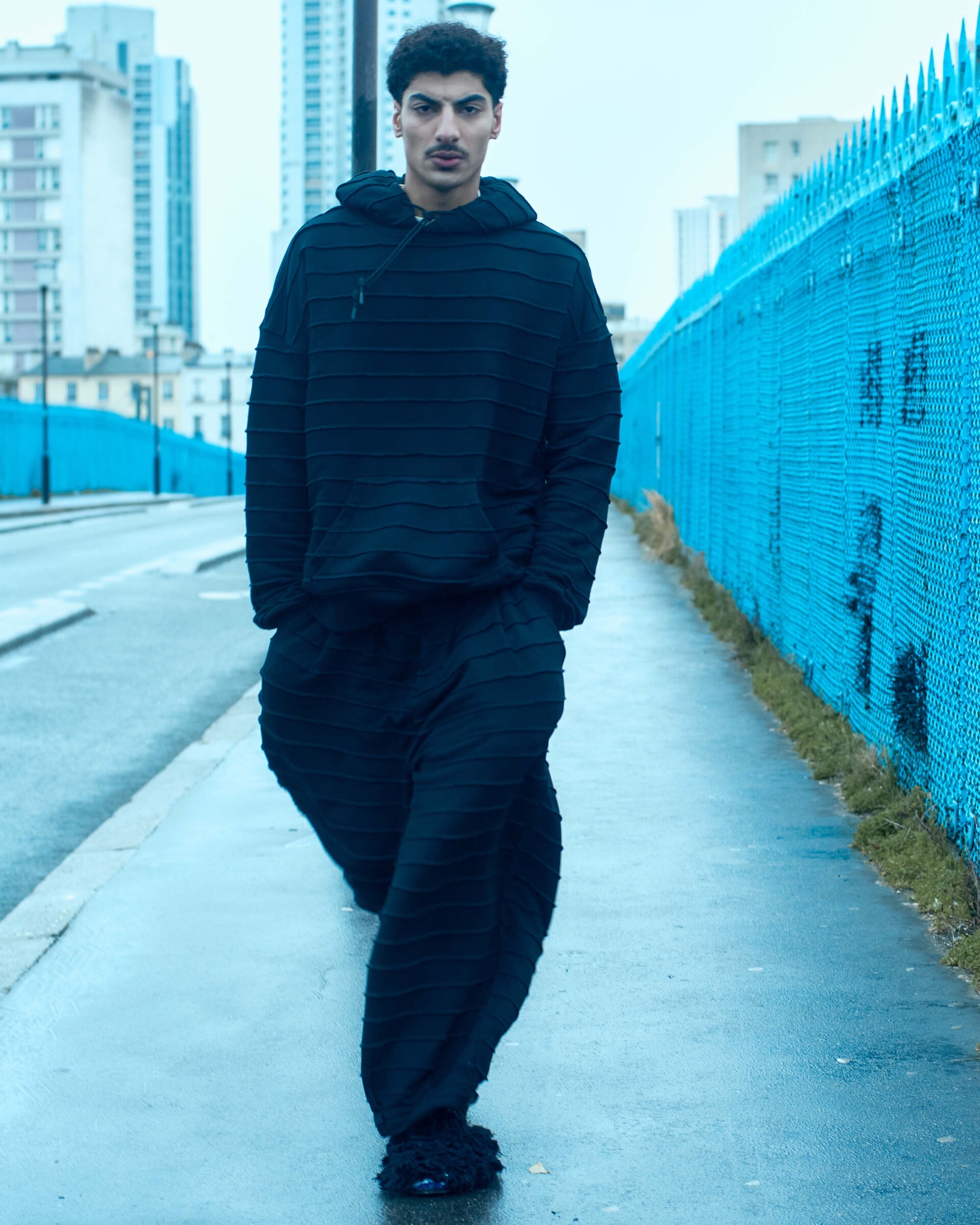
Through the creative experimentation that an in-house CMT factory affords the brand, Good Good Good also introduces an innovative initiative to curb fabric waste in the Sprouts Collection. The Strip-Stripe T-Shirt is an example of the sustainable method that the brand has developed to use the cotton single-jersey offcuts and deadstock T-shirts left over from Together MFG’s regular production runs. Through rigorous sampling to produce an enduring patchwork garment using waste material, the Strip-Stripe T-Shirt represents a new step in the brand’s continuous and innovative effort to produce the best possible T-shirt. With meticulous attention to detail, offcuts are selected by hand and cut down to strips. The strips are sewn together individually to create a large enough piece of fabric from which to cut the panels of the tee, and finally, the T-shirts are cut, made and trimmed in the shape of the brand’s Heavy T-Shirt silhouette. Other Strip-Stripe garments in the collection include the Strip-Stripe Hoodie and Strip-Stripe Balloon Trousers, which are made from offcuts of fleece. Each of these garments is completely unique, due to their handmade nature and depending on what excess material is available. This process would not be feasible if the brand didn’t have its own manufacturing facility at its disposal.

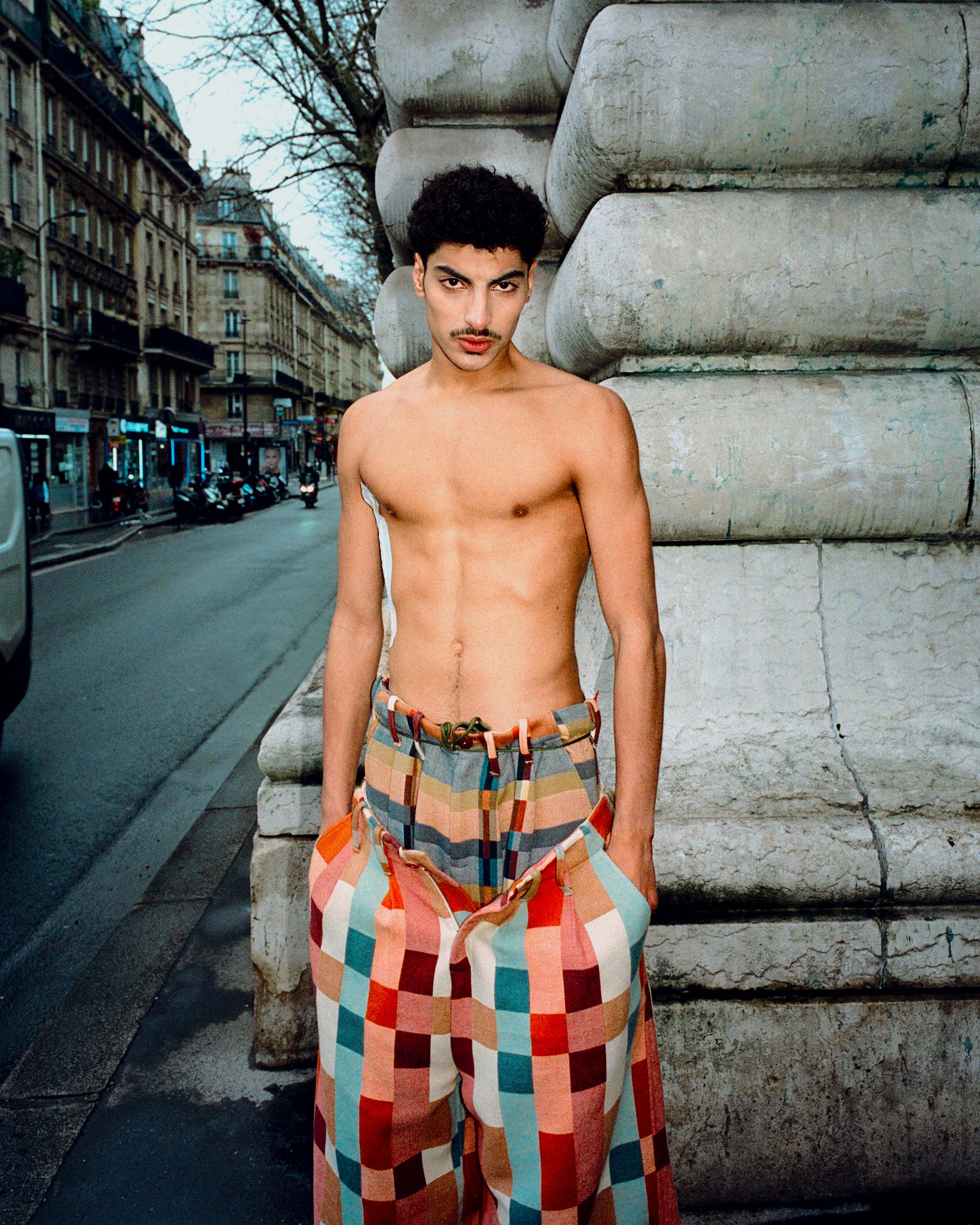
About the editorial shoot in Paris, the Good Good Good team shared, “While we were in Paris in January 2025 to showcase the Sprouts Collection, we thought it would be remiss not to take the opportunity to shoot with the collection out there. We had brought the clothes with us all the way from Cape Town, so we wanted to make the most of the effort we already put in. We also found ourselves in a very photogenic city with some of the most photogenic people on the planet, and we had access to talented photographers who were all in Paris for fashion week. We started speaking to Elie Benistant, who grew up in Cape Town but lives in Paris, and whose work we had been admiring for some time, to shoot the editorial. 

We’ve always gravitated to working with South Africans, since we’re often already familiar with each other’s work, which lays a solid foundation for a comfortable working relationship. Elie also knows Paris very well, so we felt like we were in safe hands. He drew on his network to organise the crew for the shoot, while we got in touch with stylist Chloe Andrea Welgemoed, who we had worked with on the collection’s lookbook, to style the looks in new and even more creative ways than the lookbook allowed us to.

Shooting in Paris also felt important for the collection because it was the first time that Good Good Good had participated in an international fashion event since Milan Fashion Week in 2021, which happened online due to COVID. The Sprouts collection dealt thematically with a new phase of growth for our brand especially in relation to sourcing fabric from outside of South Africa for the first time, and we thought that shooting in Paris also spoke to that growth for Good Good Good, which was making a return to the international fashion stage again. The brand is getting back into the rhythm of producing new collections every season, and we’ll be going back to Paris later this month to showcase our latest work.”

Good Good Good’s roots and ambitions lie in high manufacturing standards and the discovery and recontextualisation of interesting and innovative African textiles which uplift the continent’s fashion economy. Coming into its 9th year of existence since Good Good Good’s establishment in 2016, the AW25 Sprouts collection sees the brand enter a new phase of growth, both internally through its manufacturing proficiency and externally through its explorative sourcing philosophy and global community-building aims.


All imagery courtesy of Good Good Good

ABOUT GOOD GOOD GOOD

Good Good Good is a Cape Town-based fashion brand that creates trans-seasonal garments for every body.

Founded in 2016, our garments are manufactured in our 28-year-old heritage manufacturing facility, Together MFG, in Cape Town, South Africa. Our core product is the T-Shirt, which aligns with founder and creative director Daniel Sher’s initial purpose when he started the brand in 2016: to create functional basics for people of all sizes and genders.

Since 2016, however, the brand has produced unique garments cut from fabrics sourced from some of South Africa’s most distinguished textile mills & designers, and released meticulously crafted contemporary silhouettes that are as focused on longevity and utility as they are on aesthetics.

Good Good Good is as much a community-oriented brand as Daniel is a community-oriented person, embracing collaboration with and support for local creatives and businesses in the country’s cultural sphere. This is facilitated particularly through the brand’s flagship store, Duck Duck Goose, positioned in the heart of Cape Town at 120 Bree Street, where Good Good Good acts as an anchor brand surrounded by a rotating curation of other independently-owned South African fashion and lifestyle brands.

Good Good Good, for every body.

Follow Good Good Good on Instagram @goodgoodgoodstore

Visit their website goodgoodgood.co.za

Press release courtesy of Good Good Good

For more news, visit the Connect Everything Collective homepage www.ceconline.co.za

Follow CEC on Instagram

Sex in Crisis: OnlyFans, Hollywood and Hypocrisy

While entertainers get into the industry for varied reasons, two points of motivation are consistent. 1) Sex work provides an income even during times of instability and 2) it presents an opportunity for self-exploration and bodily autonomy. Pornographic content has historically been available to us only in the archives of Playboy or the dark corners of Pornhub. That was until, platforms like OnlyFans offered a chance to interact with sex workers more directly, granting access to a more nuanced human interaction and more varied entertainment styles. The services are diverse, and so are their creators. Customers can purchase either explicit pornographic content or modest lingerie media. 

Cosplayers, polyamorous performers, solo amateurs and hardcore entertainers exist alongside each other as easily accessible thumbnails for the wandering eye. And your horny loyalty towards them could end up paying their bills during the toughest periods. Many entertainers joined OF during COVID-19 – hardcore professionals moved onto the site to maintain an income when touch wasn’t possible in-studio, and everyday people in need of insulation from shocks such as retrenchment turned to the site to begin budding amateur careers. Many have since found a home there, and now OnlyFans is one of the most popular sites for explicit content creation. In 2023, it had approximately 305 million fans, and 4.1 million creator accounts, with certain stars able to rake in millions of dollars. And yet, despite the high demand for this content, censorship and stigma remain the most effective blockade to adult entertainment. 

While films like Anora rake in firm applause at the Academy Awards for their mere representation of sex services, actual porn stars are clapping back at censorship and the banning of pornography in more than a third of U.S. states. Age verification laws are attempting to protect underage viewers, and simultaneously causing major losses in viewership. In defense, pornstars like Asa Akira argue that as a mother of two, she doesn’t want her kids watching porn either – but better sex education is the better solution, and more likely to keep children from their site. At their annual pornhub event and red carpet, WIRED reported, The stars in attendance discussed how social media censorship and Pornhub’s greatly reduced footprint are impacting their bottom lines, the pros and cons of shooting “mainstream” studio porn versus self-publishing their own videos, the struggles of online dating, and celebrating transgender porn—a category that’s been steadily rising in popularity—under a presidential administration that is openly hostile to trans bodies.” 

Even with losses in Pornhub’s rebranding and (frankly much-needed) regulatory reviews, pornstars are reverting to platforms like OnlyFans to continue earning their living in a world that sexualises them anyway.


Imagery courtesy of Alamy

These regulatory controversies are not limited to the sex entertainment industry. Even in Hollywood, red carpets are being policed by nudity bans and dress codes, likely attributed to outrage caused by Bianca Censori’s nude dress. These regulations re-emphasise old-school notions of ‘decency’, ‘modesty’ and ‘morality’ (read: conservatism) that seem well-aligned with the right-wing swing under Trump. In response, stars have reigned it in, but their films still display the same progressive sexual ideals, as if making a case for more open-mindedness. 

After all, film has notoriously aided the acknowledgement of desire outside of conventional bounds, and used display to facilitate discussion. Kazmierczak notes that movies like The Graduate are known for their impact on Feminist Theory, and Midnight Cowboy for its impact on LGBTQ rights movements. Just like the miniskirt serves as a recession indicator, horny media can be correlated with rising political and social turmoil. It’s no coincidence then that OF had its biggest spike in popularity during COVID-19, and films like Pilion, BabyGirl and various other milfy Nicole Kidman movies aired during some of humanity’s most volatile months. When in doubt, we turn to that which unites us all: desire. 

The popularity of entertainment that edges sexuality, kink and commerce brings into question our openness, as a society, towards sex work and the people who partake. High demand indicates increased acceptance, right? Cosplayer and OF professional, Spookykins, says in an interview with us, I think the only shift that has happened is people have become more open about these things. Overall they have always existed and always been there, now people are just a bit more willing to talk about it.” Yet, she adds, “but it has also definitely amplified the hate in some communities as well. As more people come to accept and embrace it, there are equal numbers of people who hate and reject it.” 

We saw this divide in the uproar over OnlyFans models Bonnie Blue and Lily Phillips, whose attention-maxxing stunts have left the comments section overflowing with questions regarding the actresses’ mental health, agency, and impact on feminist progress. These questions reflect an obsession with the moral quandaries surrounding sex and sexuality, particularly when it affects everyday middle-class people, as it did the educated, bouncy blondes that are Philips and Blue. 

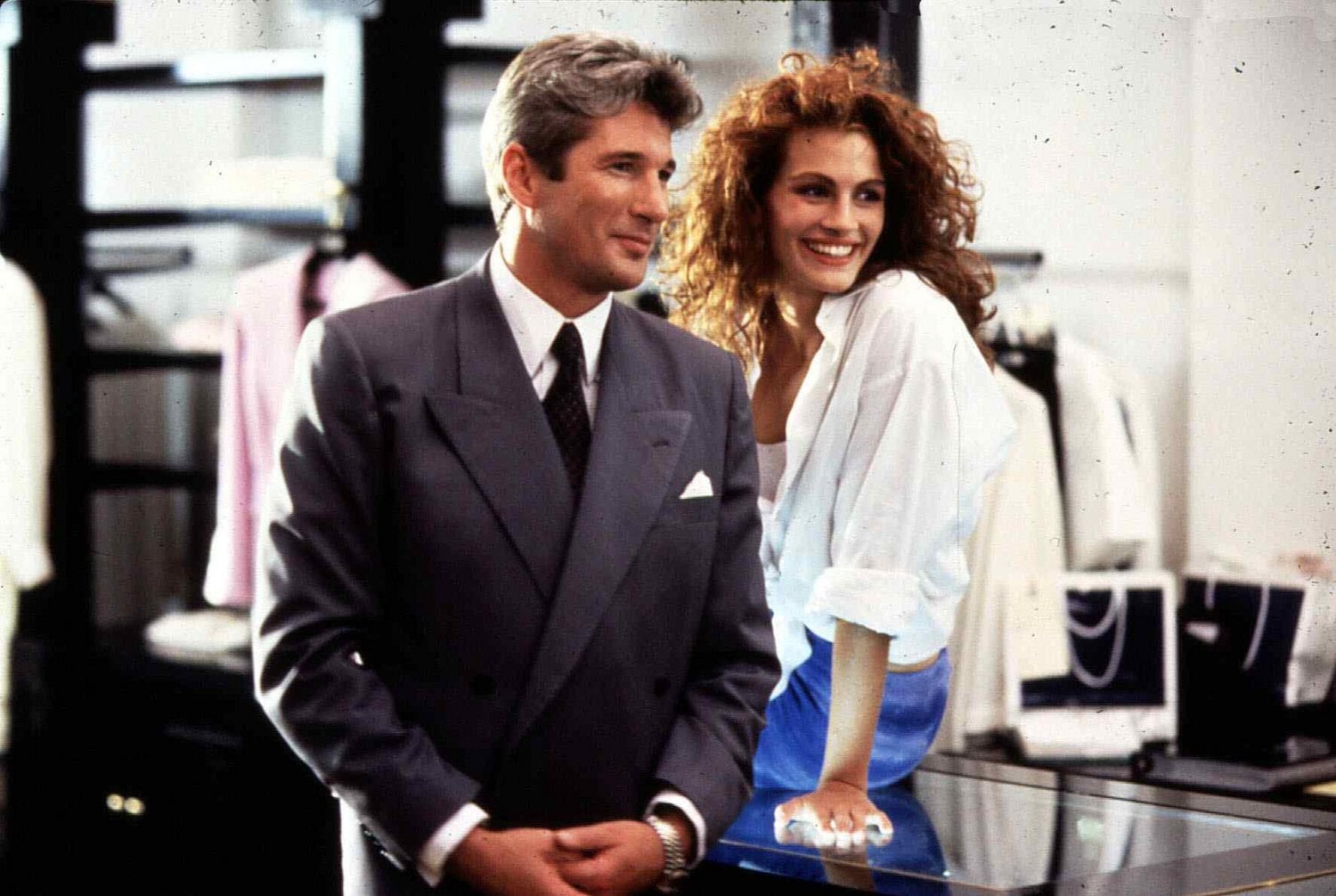
In the past, we’ve been comfortable leaving sex workers embodied on-screen by the tragedy of Les Miserable’s Fantine, or the redemption of Pretty Woman’s Vivian. In such big-budget productions, where there is an incentive to moderate moral messaging, the narrative of sex work must be laid out neatly. But the widespread availability of OnlyFans content shows us that sex work motivations or meanings are not always so clear-cut. Is this why some still lash out at OF creators, because they do not fit the moulds of promiscuity, ie. fragility, brokenness or moral bankruptcy? 

To be clear, coerced sex work and non-consensual pornography are very real problems. But then, why do we project this onto OF creators who choose this? Surprise surprise, they have in fact chosen their livelihoods, made good money, and lived whole, healthy experiences. As Spookykins says, among the many expectations and / or misconceptions about sex workers, I think the biggest one I always see is just that adult entertainers must be promiscuous or have multiple sexual partners, which couldn’t be further from the truth. In fact many of the creators I know are in some of the most committed, stable and healthy relationships I’ve ever seen. I think it’s hard for people to wrap their heads around the idea that seeing pictures or videos of someone online does not equate to them being with multiple people… A digital image is not reality. And even if that person has been with 100 people, the truth is that you still don’t know who they are or what they need. “I think everyone is very quick to jump to conclusions and assume people who use the site all create the same content, when this is not the case at all.”

Imagery courtesy of Alamy

Imagery courtesy of Spookykins

The difference between Hollywood and OnlyFans is that one is a character, the other is real. Sure, some have personas. But for many, they are simply themselves – as Spookykins says, “My online presence is very much just me in every form.” So why is it then that we are so much more comfortable applauding Hollywood for its promiscuous displays, and so disturbed by the reality of sex work for everyday people? Is it the glamour we want? Is it the glorification or the moral messaging we are drawn to? Why can’t we show the same curiosity to the living creators who provide us with a service much the same as their parallel Hollywood stars? 
Obviously because anonymity and privacy remain incredibly important for most creators. Because despite the perceived access we may have to them, they still face risk in the form of cyberhate, content misuse, leaks and misrepresentation. Perhaps that’s why this piece was not easy to write either. With numerous creators declining to speak and limited resources to learn more about the industry titans who get us off, it became clear that the media, the tabloids and the audience must not be so progressive if OF creators still aren’t willing to open up. Although we may be ready to buy what they’re selling, until sex workers are offered the same protections as our beloved Hollywood darlings, it’s safe to say that we have a long way to go.


Written by Drew Haller

For more news, visit the Connect Everything Collective homepage www.ceconline.co.za

Follow CEC on Instagram

African Textile Talks Returns for its Fifth Iteration this July

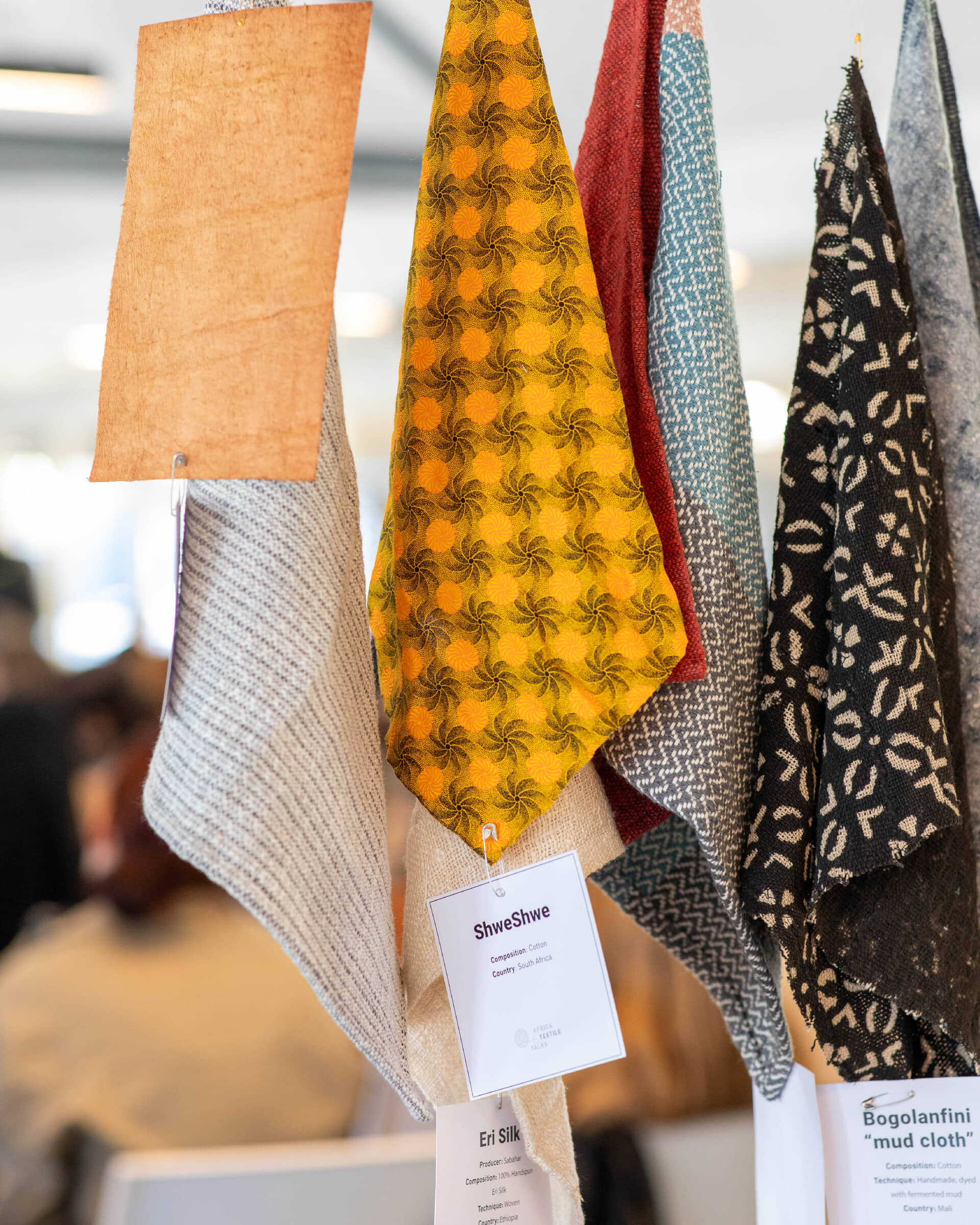
Sustainability and fashion platform, Twyg, has announced the fifth edition of the Africa Textile Talks, taking place from 29 July to 31 July 2025 in Cape Town, South Africa. This three-day gathering, presented by Twyg (South Africa) and Imiloa Collective (Mauritius), brings together practitioners, manufacturers, designers and visionaries from across the African textile ecosystem to explore and advance sustainable, circular, and regenerative practices.

Tuesday 29 July: CIRCULARITY IN CLOTHING AND TEXTILES

Opening the week, they’ll be hosting experts and practitioners of circular solutions. This day of talks, discussions and networking is designed for professionals, researchers, academics, and others who work in clothing and textile manufacturing and who have (and seek) solutions to the end-of-life of the items they produce, and of production waste.

This first day explores how circular design, recycling systems, and extended producer responsibility (EPR) policies could shape the future of fashion and textiles in South Africa.

Confirmed speakers are Dr Linus Naik (managing director of Green Gap Consulting), Jesse Naidoo (Clothes2Good), Gary Erasmus (MD of full-scale textile recycling company Connacher), David Torr (co-founder and co-CEO of Faro), Dr Philippa Notten (Pippa, a principal consultant at The Green House), and Roan Snyman (circular economy analyst at Green Cape)

All imagery courtesy of Twyg, Photography by The Dollie House

Wednesday 30 July: WOOLCYCLE

The WoolCycle event, co-hosted with Cape Wools SA, brings together key stakeholders from across South Africa, and beyond, to engage in discussions about the challenges and opportunities in the wool value chain. The purpose of these discussions is to explore the wool industry in South Africa and to promote sustainability, inclusivity, ethical practices, and to meet the demands of responsible consumers.

This day unpacks the full story of wool—from farm to fashion —through the voices of farmers, processors, designers, and retailers. African Textile Talks will examine opportunities for greater traceability, the role of regenerative grazing, and how designers are rethinking wool’s role in circular fashion.

Deon Saayman (CEO at Cape Wools SA), Matthew van Lingen (Karoo regenerative sheep farmer), Gugu Peteni  (luxury fashion designer), Stefan Gerber (founder of Gerber and Co), Leandi Mulder (head of department at Design Academy of Fashion), Ronel Jordaan (textile artist) 

Thursday 31 July: THREAD WITH CARE

Finally, Thread with Care, a full day of inspiring and informative talks, will appeal to industry insiders, designers, makers and consumers. In times of uncertainty, we seek comfort in what is closest to us—our second skin. Cloth, more than a mere covering, is a protective layer that soothes, shields, and connects us to the world. We will explore the healing power of fibre and textiles at a time when the world feels unnerving and unsettled. The textiles we wear and surround ourselves with should not harm us, nor should they add to the destruction of our planet. Instead, they should be free of toxins, imbued with care, and capable of regenerating the earth and communities that create them.

The final day celebrates the diverse worlds of textiles in Africa—from slow making to high-tech innovation. The day will hear from artists, designers, manufacturers and visionaries who are weaving new narratives of sustainability, heritage, and bold material experimentation.

Dr Aaniyah Martin (South African environmentalist and social designer), Osione Itegboje (co-founder of This Is US), Danayi Madondo (creative director of Haus of Stone), and Sessi K (Fashion entrepreneur and multidisciplinary visual artist)

Key Takeaways:

Be inspired by ideas at the intersection of fashion, culture, sustainability and the circular economy. The speakers are innovators, artisans, researchers, and designers from across Africa. They bring deep expertise and fresh vision to the urgent questions of our time. Gain insights to move beyond incremental action and join this growing community of changemakers. 

Build powerful connections with changemakers and collaborators. Africa Textile Talks is more than a conference—it’s a gathering of minds and hands, where cross-sector dialogue sparks partnerships, creative solutions, and long-term impact. Whether you’re a maker, thinker, or funder, this is a space for collective growth.

Shape the future of African textiles and circular design. Join the conversation, share your insights, and help reframe what is possible for regenerative fashion and sustainable systems on the continent.


Book tickets to African Textile Talks here


Press release courtesy of Twyg


For more news, visit the Connect Everything Collective homepage www.ceconline.co.za

Follow CEC on Instagram


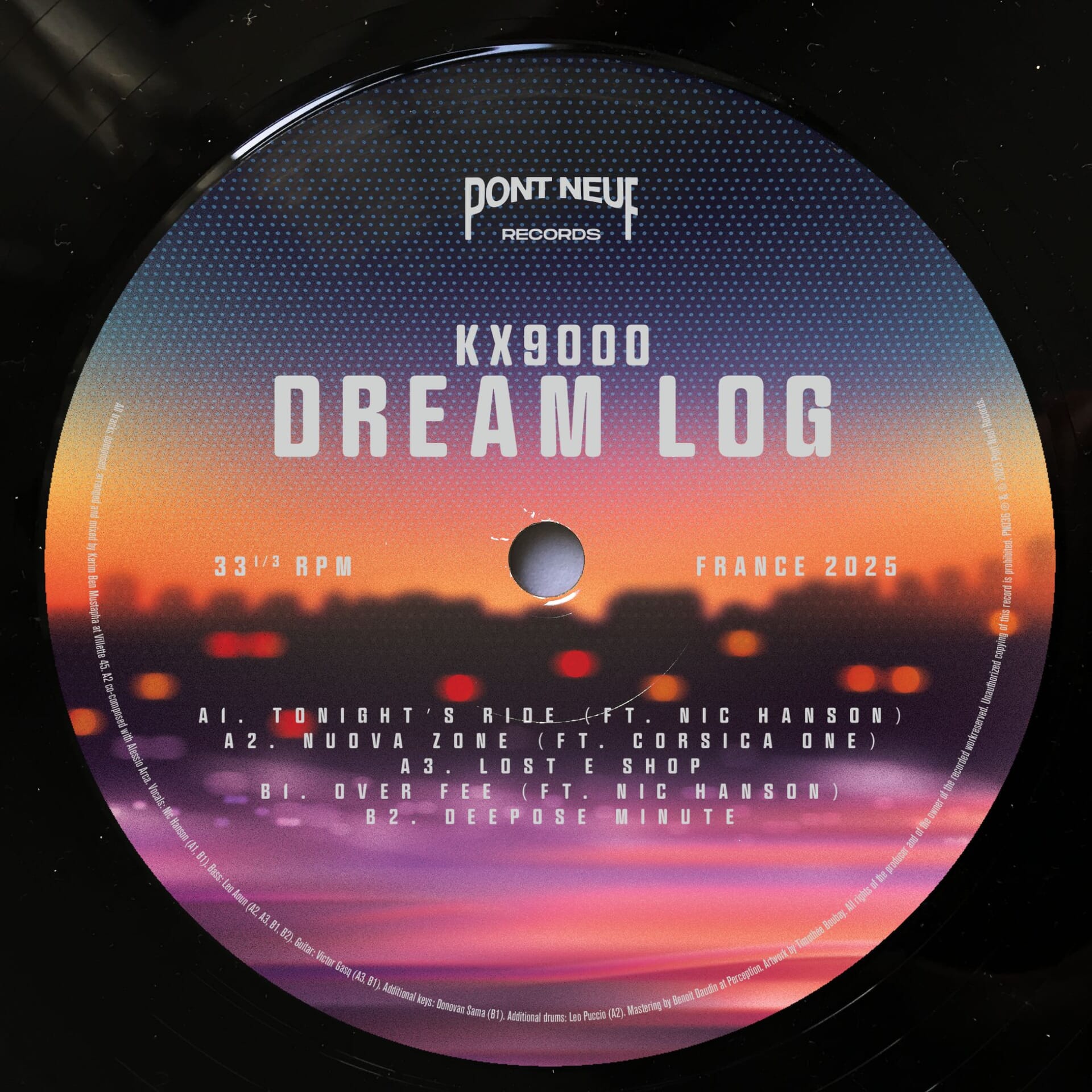
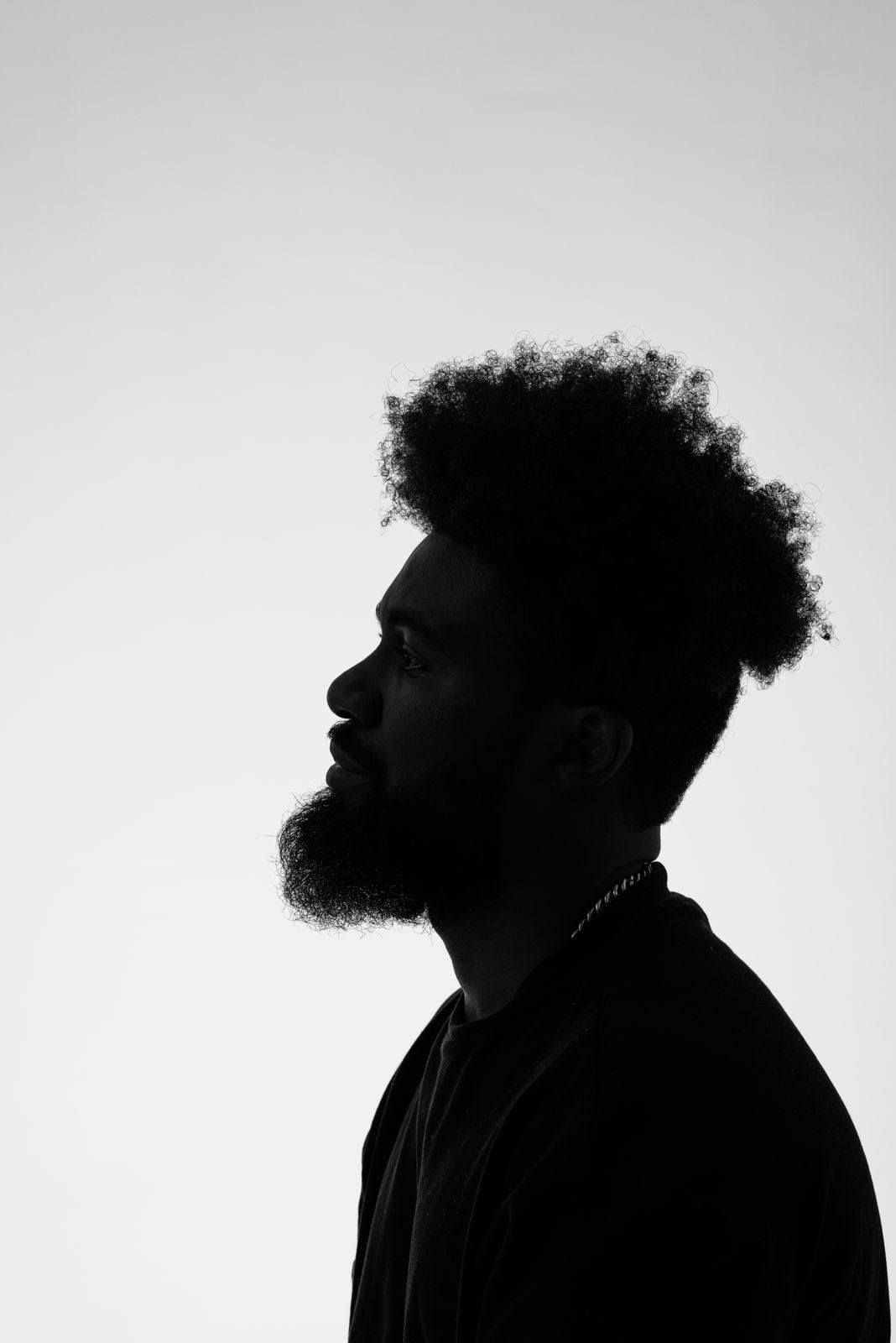
French producer, KX9000, releases ‘Dream Log’ EP

KX9000 is a French electronic music producer. With ‘Dream Log’, he delivers a sonic journey that blends electro-funk, space disco, Chicago house, and broken-beat. This project explores new musical paths while highlighting the richness of his influences and artistic collaborations. 

“Dream Log is a journey through different atmospheres, a reflection on how music can capture emotions and specific moments. Each track on this EP tells a story, with collaborations that enriched this project and made it even more alive. I really wanted to translate into music all the artistic excitement I felt when meeting all the artists I had the chance to work with on each track.” KX9000.
The journey begins with “Tonight’s Ride”, an invitation to a nocturnal adventure tinged with disco and dub. On this powerful and captivating track, KX9000 invited American singer Nic Hanson, based in Paris, to add his unique voice. “We met through Tour-Maubourg, who had recorded some tracks with Nic. Listening to his voice, it was clear: I absolutely wanted to work with him on this track. He came to the studio a few weeks later, and the chemistry was immediate,” says KX9000. This first track of the EP, both energetic and sensual, opens the door to KX9000’s universe.

KX9000 embodies the richness of the French electronic scene, drawing inspiration from a multitude of genres such as electro-funk, space disco, Chicago house, broken-beat, and city pop. Praised by Mixmag as “one of the most remarkable producers of his generation” KX9000 skillfully weaves together all the elements that matter to him, creating music that is as complex as it is satisfying. For years, he has defended this music in the best clubs, from the Rex Club to the IBOAT, Sisyphos, Goya, and festivals such as Marvellous Island, Madame Loyal, or Insula. After several EPs across Europe (Pont Neuf, OATH, Disco Express, Apparel Wax, theBasement), he is back in 2025 with Dream Log, his most accomplished project to date, featuring numerous talented artists.

Listen to ‘Dream Log’ here


Press release courtesy of Only Good Stuff 


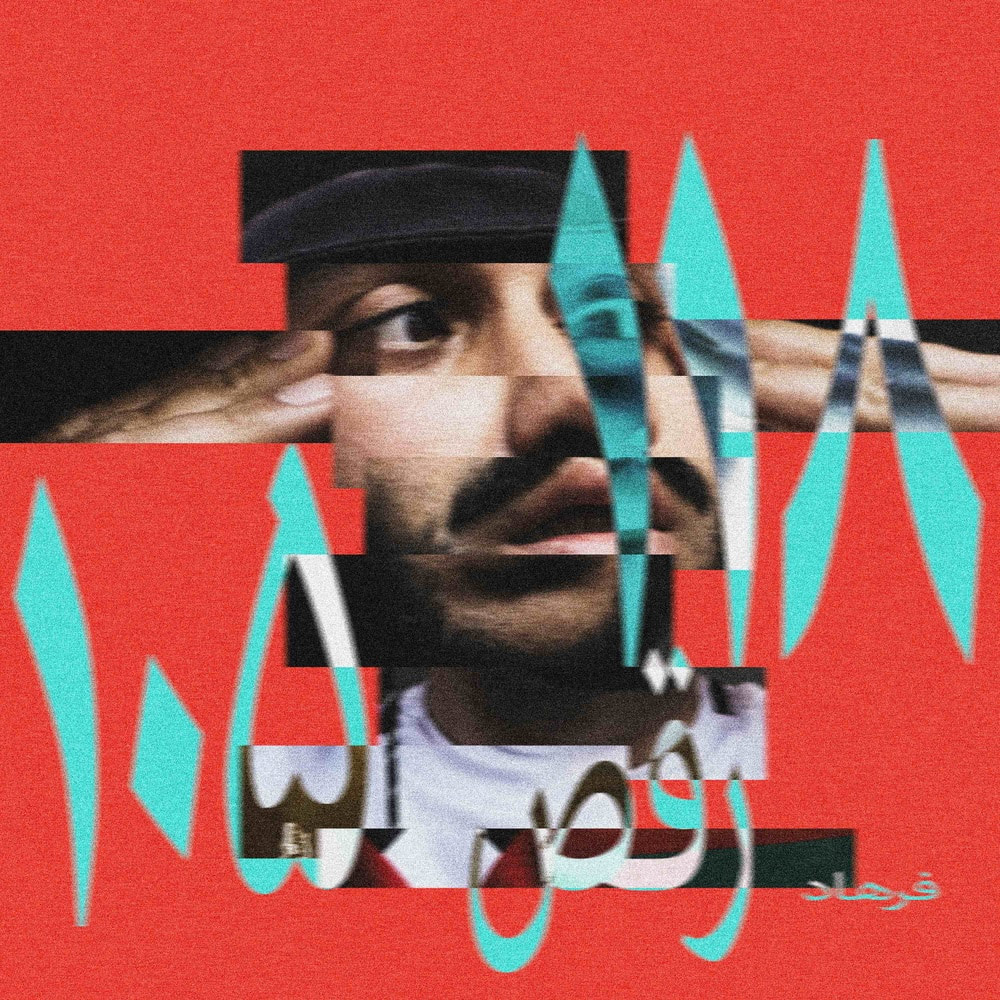
Farhot releases ‘HOOYOO’ with Siriusmo from his upcoming EP

On ‘HOOYOO’, the second single taken from his upcoming EP ‘RAQS (105-118BPM’, Farhot teams up with electronic maverick Siriusmo for a dancefloor track.

Rooted in Somali grooves and flipping a sample from 4 Mars’ “Dhulka Hooyo”, the track fuses East African rhythms with bold synths, chopped vocals, and raw percussive energy. It’s wild, playful, and unmistakably Farhot—bridging cultures through sound with style and intent.

Afghanistan born, Hamburg based producer, artist and founder of Kabul Fire Records, Farhot has been on the scene for over a decade now. He began his career working and touring with singer Nneka also producing most of her albums to date. Farhot productions – and more so his own releases as an artist – carry his personal signature sound, while not limiting himself to a certain genre or style. Still, it’s safe to say that he’s firmly rooted in hip-hop culture. Farhot is one half of producer duo “Die Achse” alongside longtime-friend and collaborator Bazzazian. His impressive body of work includes productions for artists like Giggs, Kano, Isaiah Rashad, Talib Kweli, Selah Sue, 113, LOC, Haftbefehl, Xatar – and at last his own releases of Kabul Fire Vol. 1 & 2 – from which the later of the two has been honored by The Guardian as their album of the month.

Listen to ‘HOOYOO’ here

Press release courtesy of Only Good Stuff

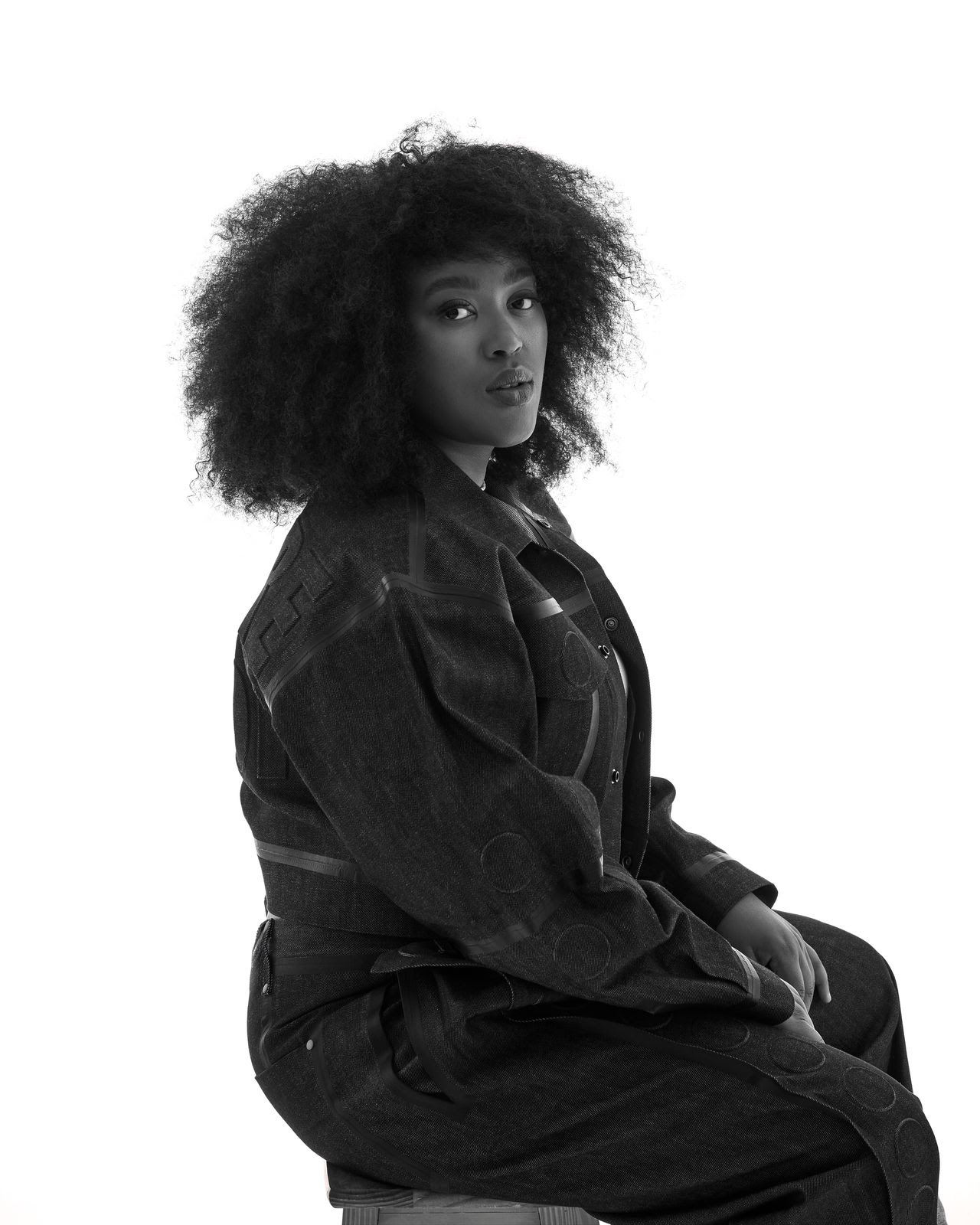
Batundi releases ‘Naliya’ a Debut with Collaborators Msaki and TRESOR

Batundi, the Congolese-born, South African-based artist shaping a fresh wave of African dance music, arrives with intention on his new single “Naliya”, a love song featuring two of the continent’s most revered musical forces, Msaki and TRESOR.

“Naliya” marks a major milestone as the debut single released under Jacquel Dance, the newly launched dance imprint by TRESOR’s Jacquel Entertainment Group. A fusion of African pop, electronic house, and soul-stirring songwriting, “Naliya” signals the emergence of a bold new voice on the global music stage: one rooted in rhythm, culture, and fearless experimentation. 

For Batundi, whose journey has taken him from Goma in the DRC to Nairobi, Kampala and now Johannesburg, “Naliya” is a deeply felt exploration of heartbreak, memory and healing. “We spent many days building this track slowly and beautifully,” says Batundi. “We focused on crafting melodies and placing words with intention. It was a patient, emotional process, and one that truly reflects my spirit as an artist.”

Anchored by Batundi’s electronic production sensibility and elevated by the unmistakable voices of Msaki and TRESOR, “Naliya” moves with elegance and energy. A sonic tribute to love’s highs, lows, and enduring imprint. It builds on the legacy of “Sondela”, his earlier collaboration with TRESOR, while pushing the boundaries of African dance music toward new emotional and sonic territory.

With a growing list of accomplishments including co-producing “Fountains” by Drake ft. Tems and “We Caa Done” by Popcaan ft. Drake; Batundi is no stranger to global studios. But with “Naliya”, he steps forward not just as a producer, but as a full-fledged artist with a story to tell and a sound of his own.

Signed to TRESOR’s Jacquel Entertainment Group and serving as an in-house producer and engineer, Batundi brings a singular vision to the future of African pop. His production on TRESOR’s Nostalgia album, which won Best Pop Album at the 2019 South African Music Awards, laid the foundation. Now, with Jacquel Dance, that vision has room to thrive.

“This song is a celebration of love, healing, and lifetime connections despite the obstacles,” says Batundi. “It’s my honour to have created it alongside two of Africa’s greatest musical minds. This is just the beginning.”

Listen to ‘Naliya’ here

Connect with Batundi:

X: @batundimusic

Instagram: @batundimusic

TikTok: @batundimusic


Press release courtesy of Only Good Stuff

The Value Asking: An Interview with Artist Xhanti Zwelendaba

We’ve all watched a stupefying number of conversations unfold, some blooming into repartee and others wilting into awkward silences. Some of the most fruitful dialogues are introduced by those who pose questions, through a series of open invitations. Conversations can, like relationships, start to sink when they sit stagnant. It might seem simple to wallow in the lulls, but for artist Xhanti Zwelendaba the depth of his curiosity jump-starts what can only be seen as perpetual progress. His questions, often non-verbal but rather suggested through visual cues are a necessary and rare excavation into personal and societal self-reflection.   

Xhanti grew up in the Eastern Cape and his initial interest in art stemmed from watching Dragon Ball Z, with his school teacher challenging him to draw subjects other than Goku and Frieza – he shared “It was in grade 6 or 7 where my curiosity began and I realized there’s more to art than just copying things.” He later studied law at his mother’s insistence but eventually pursued art at Michaelis after receiving a scholarship, working primarily in sculpture and printmaking. Being on campus meant he was exposed to diverse perspectives and contexts, where fellow students were fueling their curiosity about differing understandings of the world. This prompted him to create art that poses questions rather than providing answers. For Xhanti, making art was “another form of language, one [he] can’t articulate in any written or spoken form, so [he decided] to create objects to evoke all these questions”.

Photograph of Xhanti Zwelendaba by Luke Kuisis
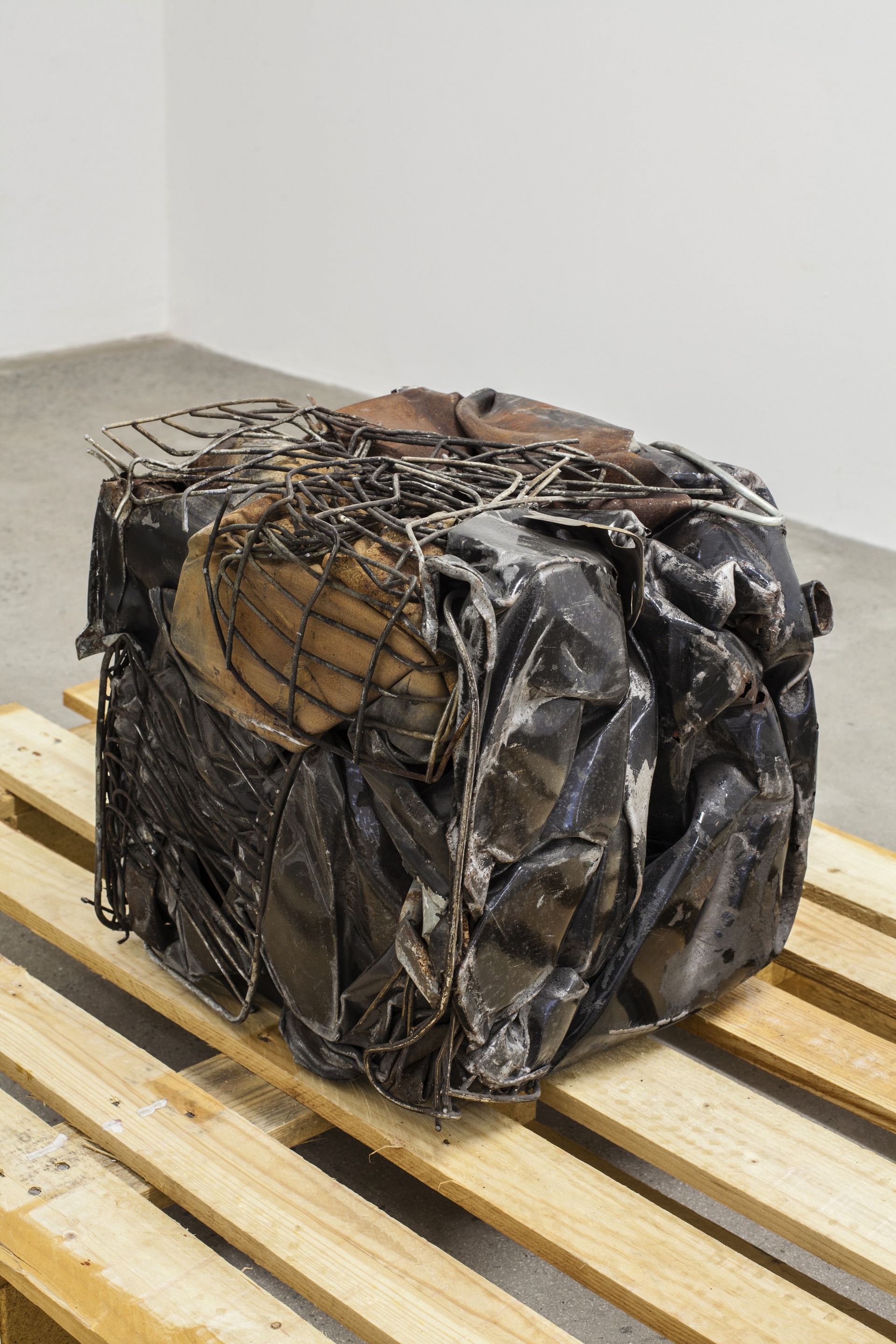
‘Untitled (Bale)’ by Xhanti Zwelendaba and Rowan Smith
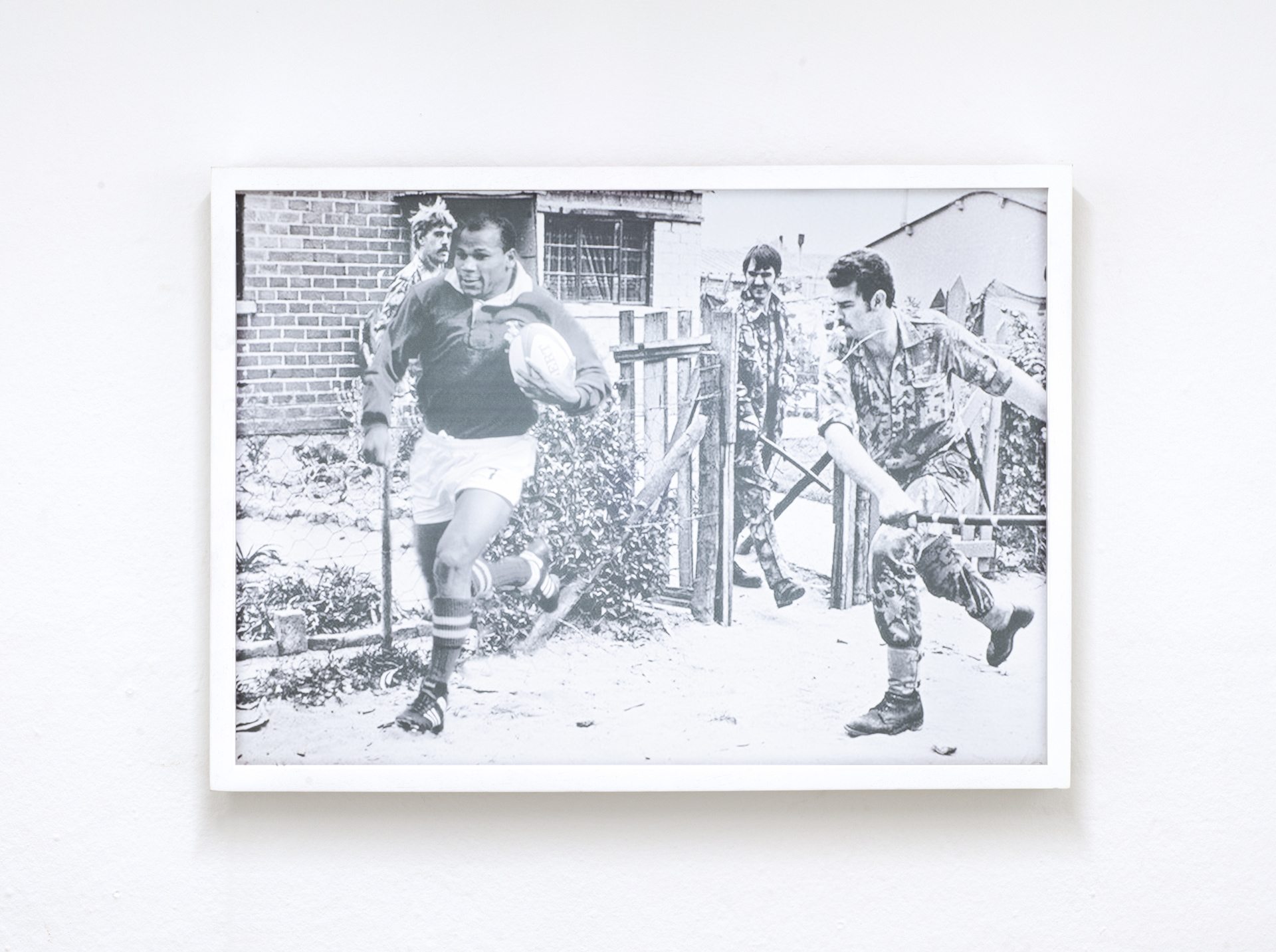
‘Untitled (Amabhokobhoko)’ by Xhanti Zwelendaba
The critical topics of land use, representation, historical injustices, legacies of colonialism and apartheid, South African identity as well as broader socio-political reflections; Xhanti’s work speaks to the overlaps and relationships between these subjects. When asked about his identity being imbued in his work, Xhanti says, “I have many identities, creating a constant tension.” He explains that various aspects of his identity, “being black, being interested in traditional qualities, being Xhosa, and living in a capitalist system”, come through in his pieces, not in a way that his identity is imbued into his work but by “allowing the work to have its own identity”. Reflecting on this, we talk of his collaboration of with Rowan Smith – a square pile of crushed, hydraulically compacted braais ‘Untitled (bale)’ representing Xhanti’s views on the homogenisation of South African Heritage Day being reduced to ‘Braai Day’.

Today, it is significant to witness contemporary creatives exploring notions of fixed identities, decolonial themes and challenging systemic ideologies in order to find new ways of understanding ourselves and our intersecting contexts. Xhanti has collaborated with many artists working in similar thematic realms. When asked about what informs who he chooses to collaborate with, he says “I don’t have a specific process for choosing collaborators, it happens spontaneously with people whose work or thought process I admire. But, you’ve got to be somewhat interesting, funny, smart and you also have to have tough skin.” While always open to collaboration and having worked collaboratively throughout his artmaking career, Xhanti anticipates his next body of work will focus on expressing more of his individualistic ideas, saying “I don’t think I’m going to collaborate again for a while. There are some creative ideas that I think are quite difficult to have with another person. The next  body of work will likely be just my ideas and my thoughts – I’m dedicated to exploring why I have these thoughts. And yeah, I’m just not going to be a little bitch about it.”

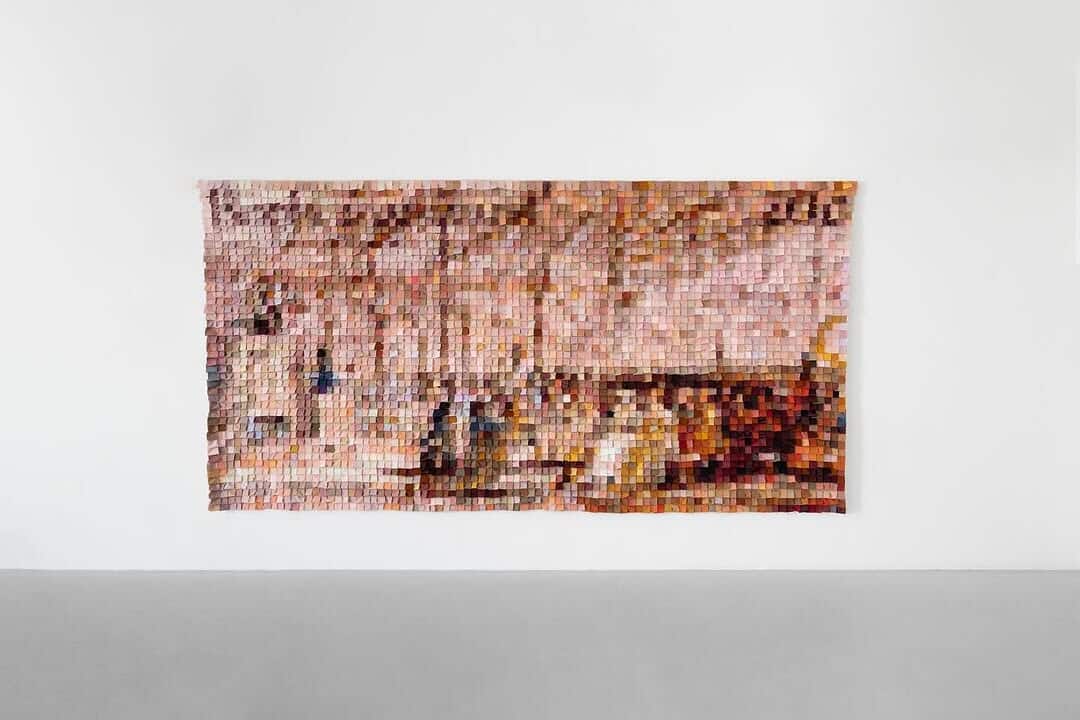
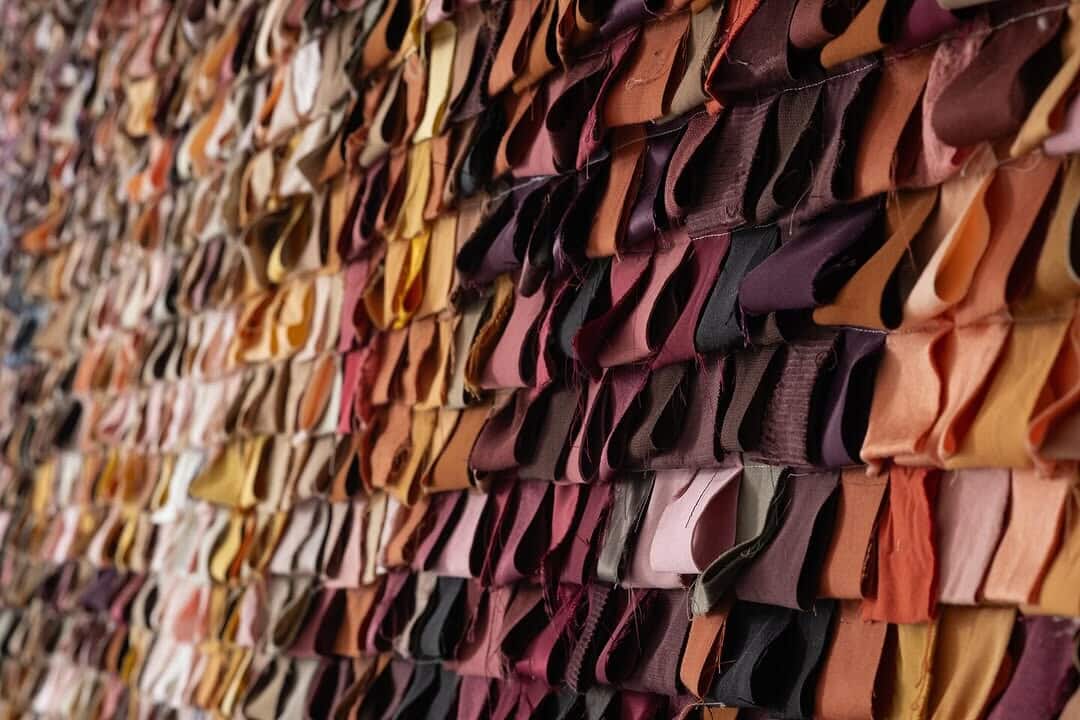
Many of Xhanti’s works, although spanning multiple mediums including sculpture, installation, performance, tapestries, print and video are untitled, followed by an identifier. When asked about this naming style, Xhanti’s view is that titles are somewhat unnecessary. “If I thought about it beforehand,” he says, “I would have titled all my works with a number. The work should speak for itself, and naming is more of a concession to people wanting an identifier. Even the term “untitled” feels like a title. Names may be assigned later or just not exist. Not everything has to be compartmentalised, named, boxed, categorised. So it’s not a matter of a protest for naming. It’s just I didn’t think of a name.”

Not only has Xhanti been a practitioner for over two decades, including a 3 month residency in Leipzig, he’s also taught art in academia. About his experiences of teaching, he adds, “It’s nice to be in an academic space, to be thinking with new thinkers. There are some brilliant people out there. My teaching style was to always let people do whatever they want and let them teach each other. It’s been interesting to see how people engage: with each other, with work, with the institute and with me.

I’m also learning from them. I’m giving them enough room to develop their identities and character – not to have to get a green light from me but be able to oppose an idea. I encourage people to speak out loud and voice exactly how they feel and not worry about whether or not they will get a mark at the end of it. It’s not about the grade, it’s about the work.”

One of Xhanti’s earlier works that has stayed with me personally is ‘IsiXhosa 2nd Additional Language (How to Click)’. The video he created captures the essence of his artistic style with precision: it’s quick-witted, hard-hitting, humorous and poignant.  Xhanti speaks about this work being created spontaneously – when asked if this is usually how his concepts and ideas come about, or whether they are born out of research and a longer development process, he shares this work happened spontaneously because of people trying to pronounce my name. My work differs, there are times where I’m consciously reading and trying to find something out. Most of my work comes from conversations, observations, finding something funny or finding dark areas in humor.” 

“I feel the more organic works are the ones that are interesting, because I also get bored. Sometimes I see materials or objects and just think about those objects – think about their relation to me. That’s where something interesting can happen.”

‘Thaba Nchu’ by Xhanti Zwelendaba and Ben Stanwix. Photography courtesy of RESERVOIR

‘Thaba Nchu’ by Xhanti Zwelendaba and Ben Stanwix. Photography courtesy of RESERVOIR

Photography of ‘Animal, Vegetable, Mineral’ courtesy of RESERVOIR

Untitled ‘Amabhokobhoko’ (collaboration with Rowan Smith) and the Stamp series (collaboration with Ben Stanwix) are two examples of how Xhanti use striking contradictions or contrasts superimposed into one visual. In the case of the former, Xhanti’s drawing attention to the relationship between the 1995 World Cup victory (and subsequent nation-building) and the reality of South Africa in a space of transition and tension, being on the brink of civil war. Subjects are taken out of their place to tell an extremely impactful new narrative, or to draw attention to the contradictions that may be difficult to see otherwise. “I’m not trying to manipulate things to a point where I’m trying to change history. I’m just trying to show more sides to a story in one image.”

When asked what he would hope people take away from engaging with his work, in the context of placement in South African society, he says: “My ego isn’t that big. I’m not just thinking that what I’m making is so important. I’m making because I’m curious. So, I hope someone will be as curious as I am or even more curious and then just keep conversations going, keep the dialogue going. I have no aspirations. I just want to create something that starts the conversation. The conversation has to start somewhere.”

‘Animal Vegetable Mineral’ is an upcoming collaborative exhibition with Ben Stanwix at Reservoir. The title is designed to be abstract and akin to the game Twenty Questions, where the objective is to guess what it is. The title reflects the multifaceted nature of the work. The exhibition consists of eleven different components which have been in development since January this year. About the exhibition and how viewers might engage with it, he shares, “I’ve been trying to be very abstract recently. It’s kind of like all these ideas are finally coming into A THING. So it’s just kind of playing on the idea of curiosity – asking ‘what are they trying to say?’ Then you have to actually break it down to a certain point when you get to an answer.” The categories ‘animal, vegetable and mineral’ are a metaphor for trying to understand patterns or ways of getting to grips with something abstract – to see what it could mean to you.

In society, we often talk about being vulnerable, about answering honestly, however, there’s also a real, certain vulnerability in asking questions. The value in this may be to push a little more against your best instinct, letting another person answer how they will and if they will, revealing that there is always more to discover, that there is an infinite amount of unearthed information. Asking questions suggests, like Xhanti does in his quiet confidence, that you are comfortable contending. 

‘Animal, Vegetable, Mineral’ exhibition with Ben Stanwix is open at RESERVOIR until 4 July 2025, 7th Floor, Bree Castle House, 68 Bree St, Cape Town City Centre. 

Follow Xhanti Zwelendaba on Instagram here


Written by Grace Crooks

For more news, visit the Connect Everything Collective homepage www.ceconline.co.za

Follow CEC on Instagram

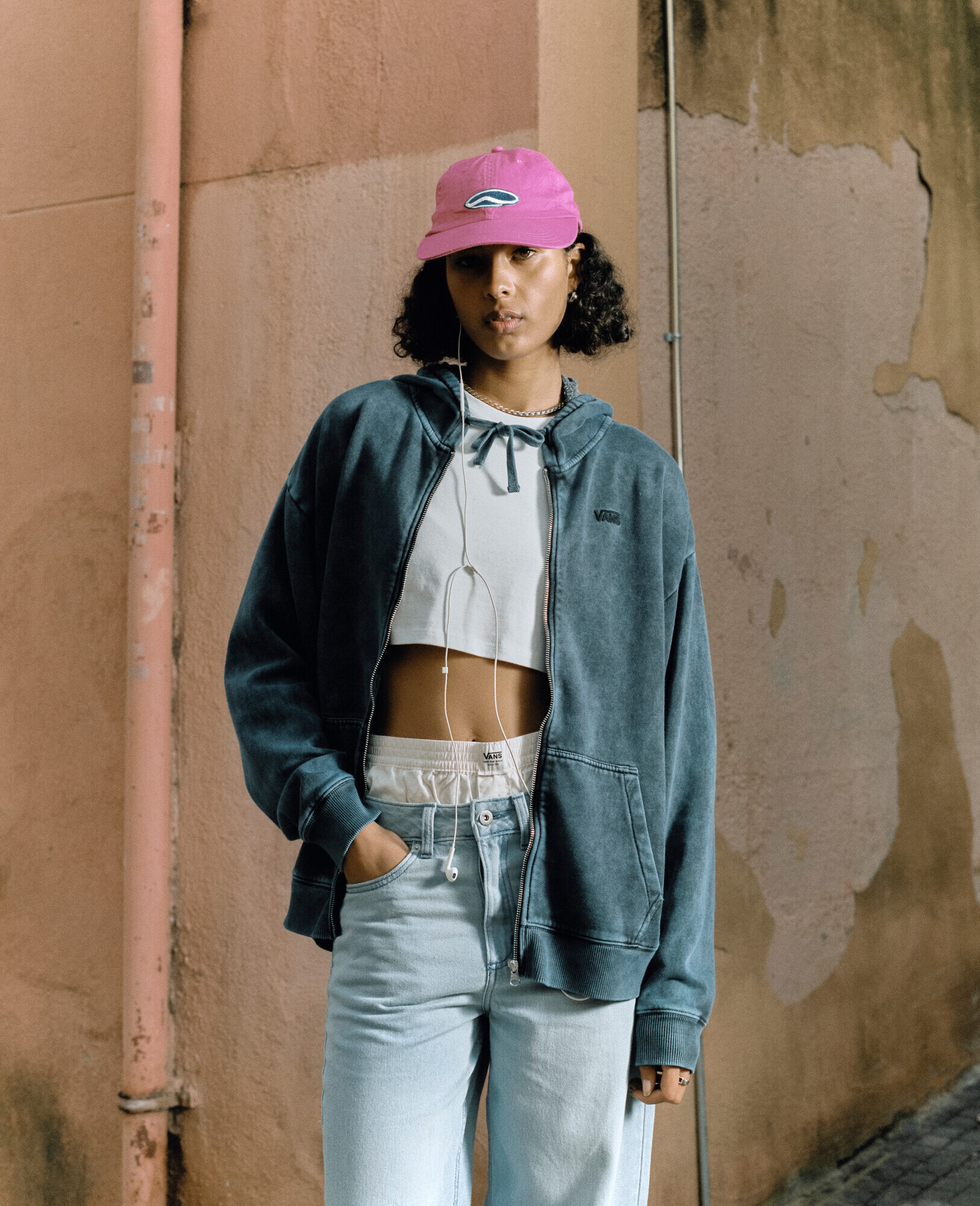
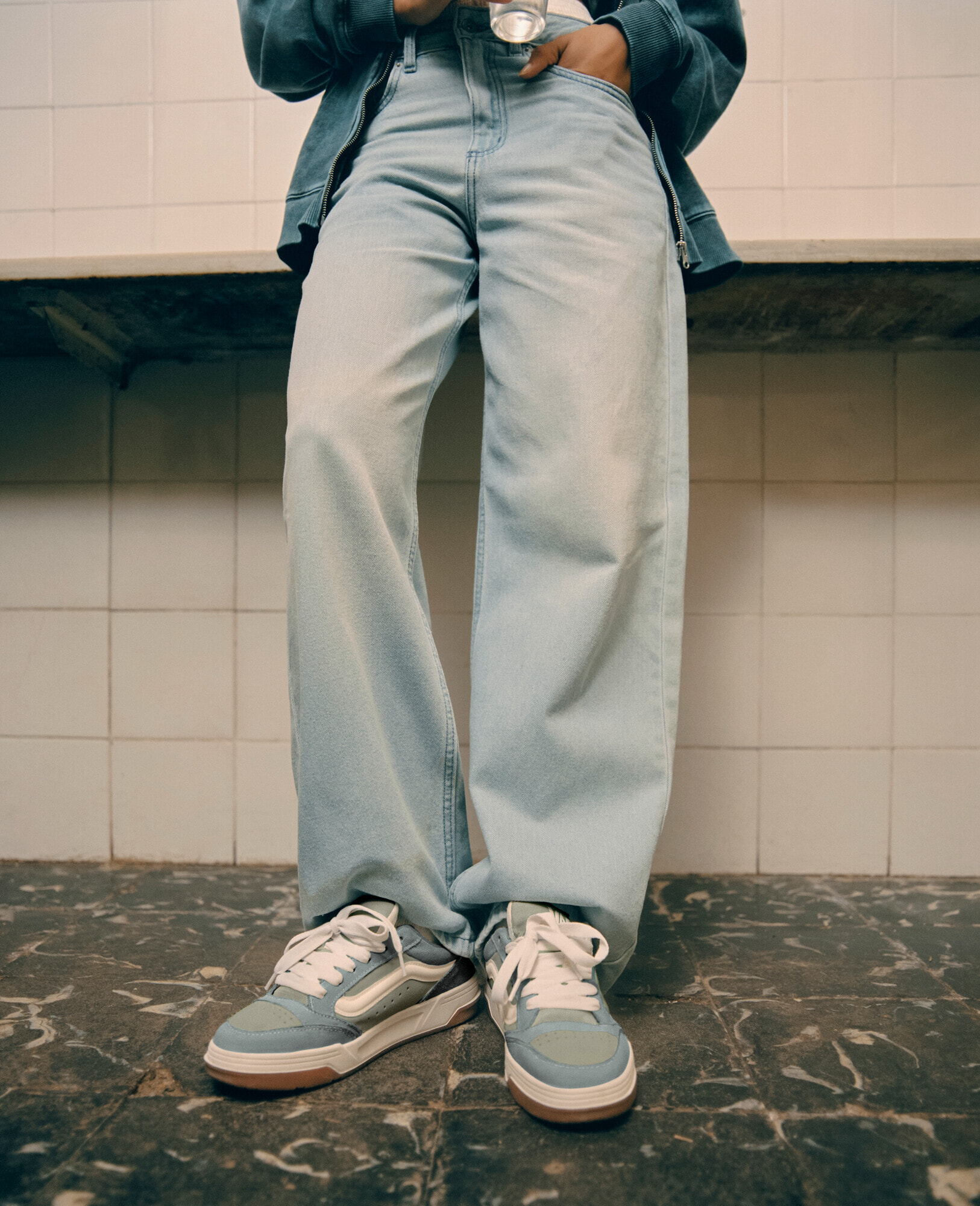
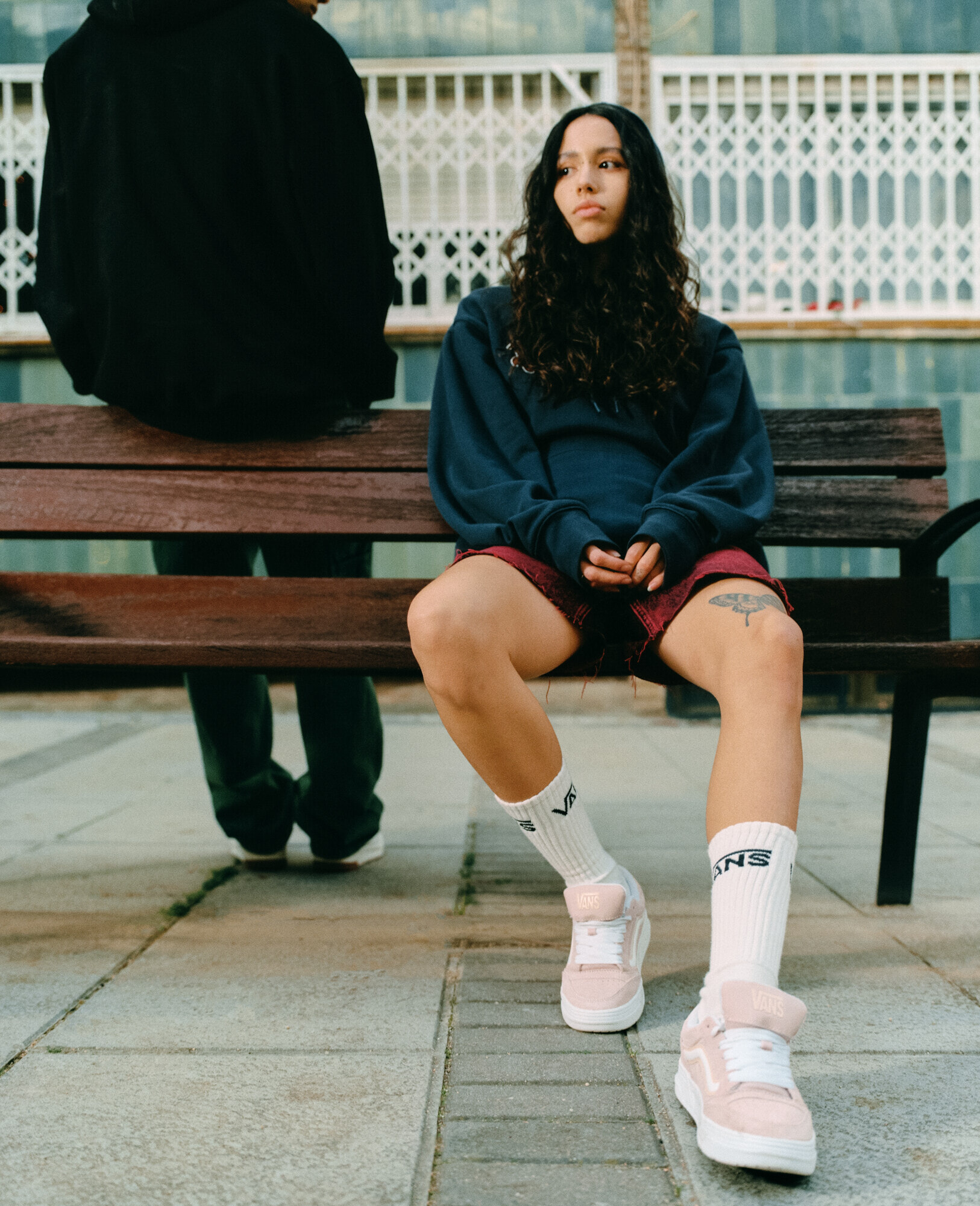
Vans Taps Into Y2K Nostalgia For The Update Of Their Iconic Hylane Silhouette

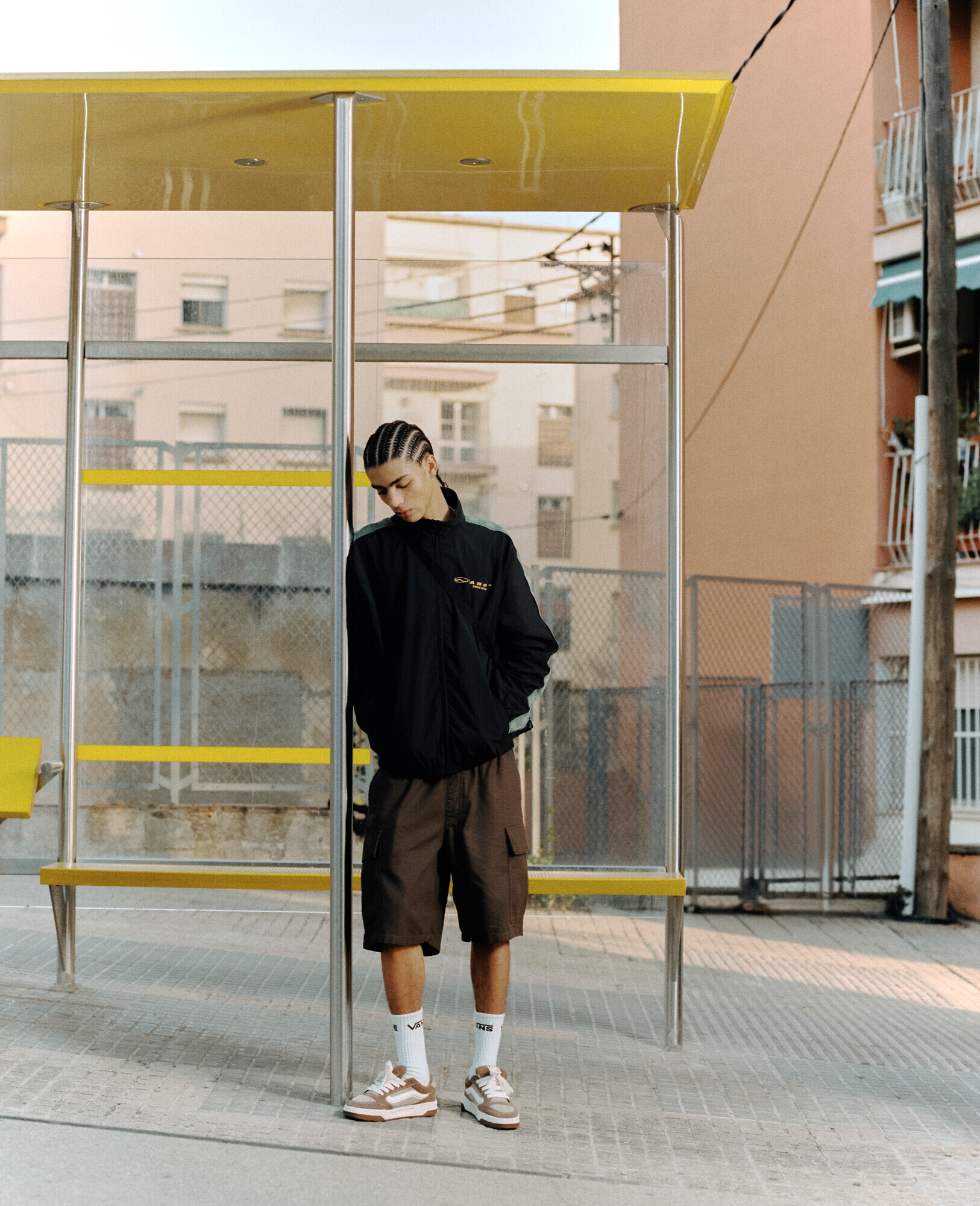
The Vans Hylane taps into a potent kind of nostalgia; one born in the golden era of Y2K skate culture, when VHS edits ruled, social media and smartphones were virtually non-existent, and skate shoes were big, bold, and built to last.

The original Hylane silhouette, inspired by the 1999 Upland, was part of that moment; worn by riders who embodied the raw, DIY spirit of the era. Hooked on MTV and a kind of non-conformist attitude that sometimes feels lost nowadays, the Hylane is a silhouette that honours the culture and mindset of a generation that shaped skateboarding into the global force it is today.

All imagery courtesy of Vans

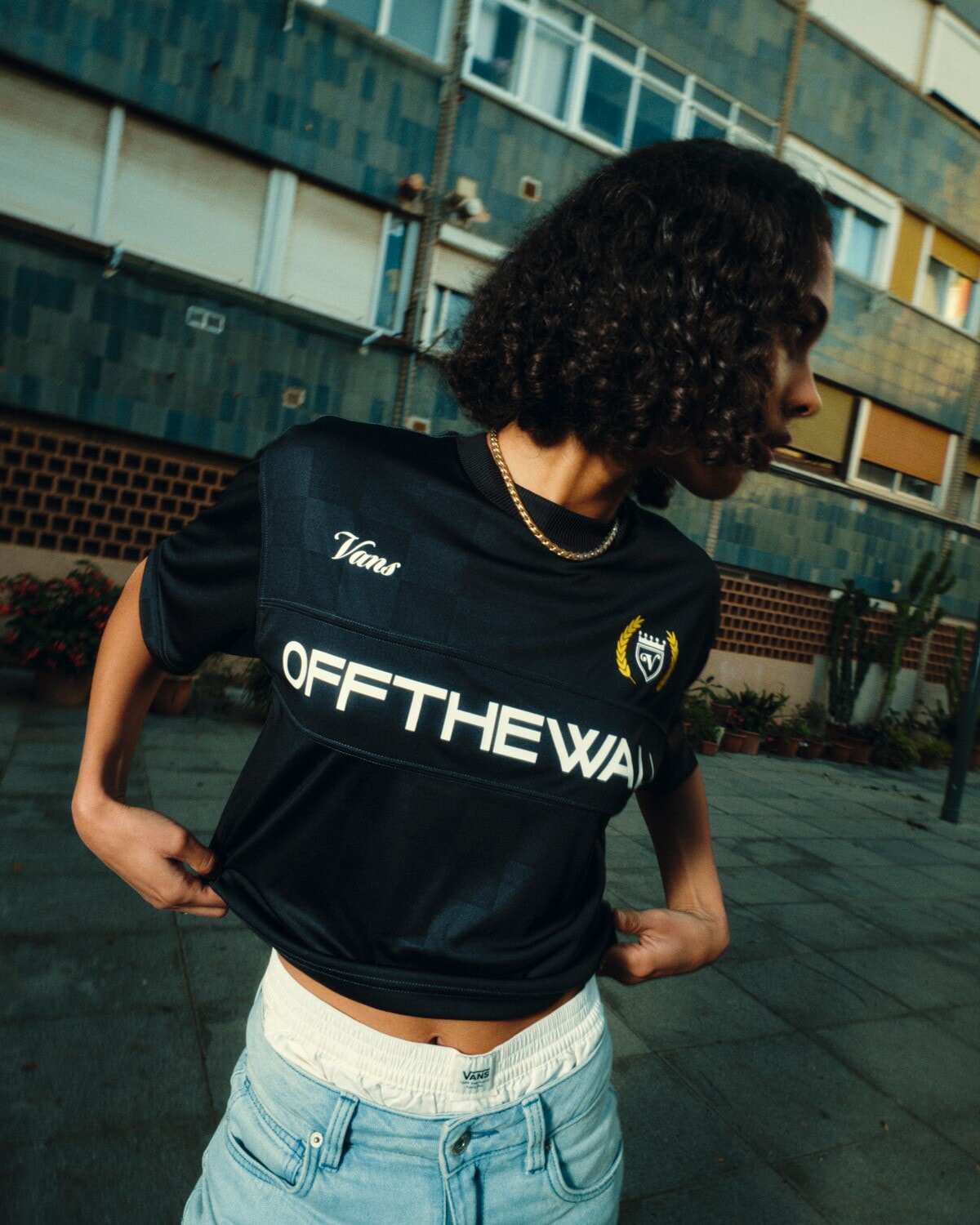
Though it was a you-had-to-be-there moment—even if your only front-row seat was through a VHS skate video or late-night TV segment—Vans is keeping the spirit alive. With the Hylane, the brand brings that Y2K skate energy to a new generation, expanding the silhouette’s story with fresh colourways and a sharper edge. The retro-futuristic style is back in updated colourways that are dialed in for skate-inspired looks, and everything in between. 

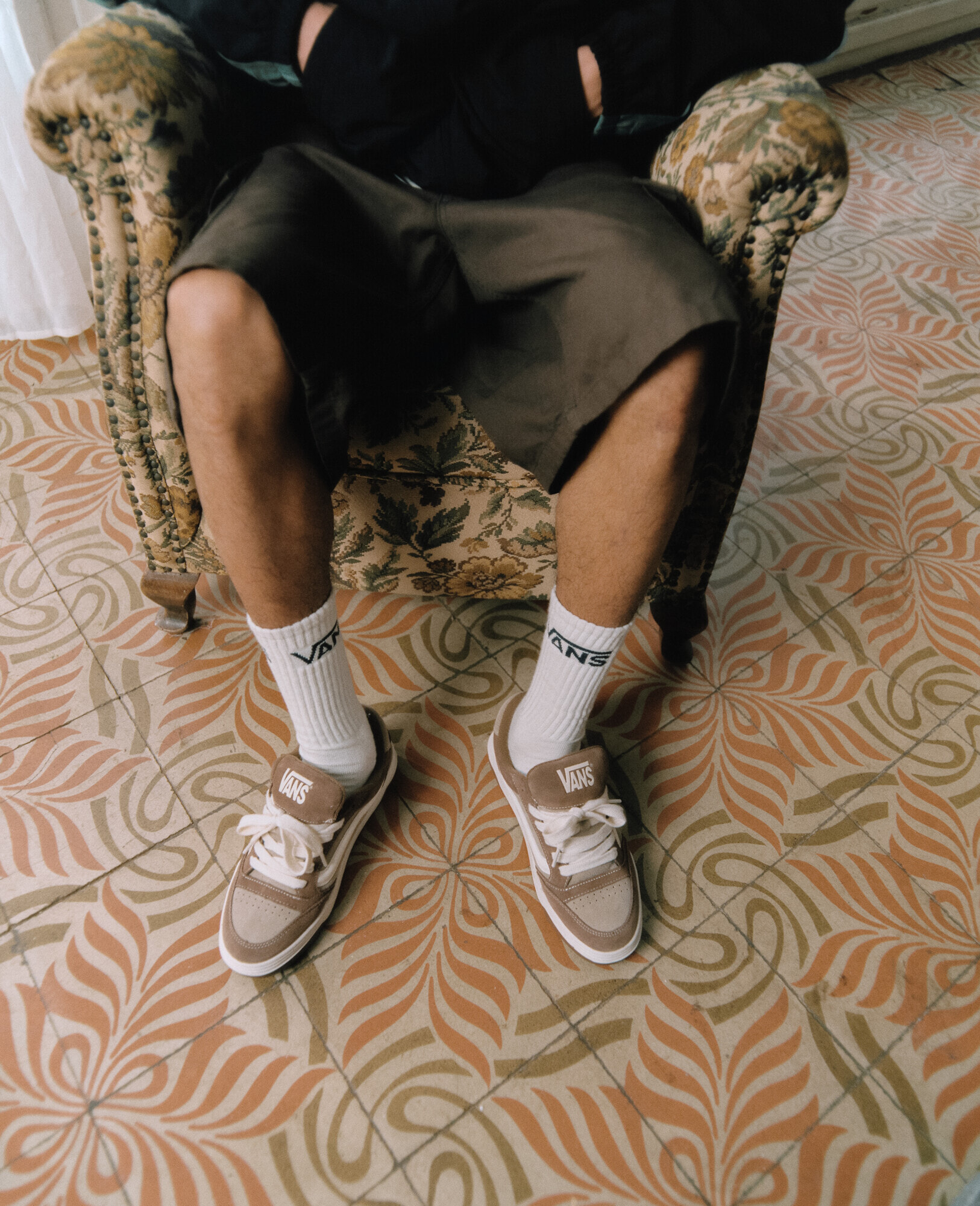
Rooted in late-90s skateboarding and reimagined for today, the Hylane takes cues from the original 1999 Upland silhouette. Chunky, cushioned, and unapologetically nostalgic, it hits that sweet spot between function and fashion. It’s a defiant nudge against the minimalist, hyper-sleek arc of today’s sneaker culture — a reminder from Vans that the OG puffed-out skate tongue deserves its renaissance. Glossed Side Stripes™, 3D logos, and embroidered hits return as design pillars that have shaped streetwear’s DNA in ways we’re still unpacking. Beneath this new iteration of the Hylane sits a reverse waffle outsole, a Cold Cement Cupsole for long-haul durability, and padded collars built for comfort. Vans is crystal clear with its technical details, as always.

With the love for Y2K looks and chunky sneakers in full swing, the Hylane fits right in as an emblem of a bygone era and a marker for the future. These new colorways bring a modern energy to a familiar form, keeping the Hylane’s identity intact while pushing the palette into new territory. 

The Vans Hylane is now available at Vans retailers and online.

All imagery courtesy of Vans

About Vans

Vans®, a VF Corporation (NYSE: VFC) brand, is the original action sports footwear, apparel and accessories brand. Vans® authentic collections are sold in 84 countries through a network of subsidiaries, distributors and international offices. Vans® has over 2 000 retail locations globally including owned, concession and partnership

doors. The Vans® brand promotes creative self-expression in youth culture across action sports, art, music and street culture and delivers progressive platforms such as the Vans Park Series, Vans Triple Crown of Surfing®, Vans Pool Party, Vans Custom Culture, and Vans’ cultural hub and international music venue, House of Vans.


Vans, “Off The Wall” Since ’66

vans.co.za

youtube.com/vans

instagram.com/vans_za

twitter.com/vans66_za

facebook.com/vanssouthafrica

Written by Holly Bell Beaton


For more news, visit the Connect Everything Collective homepage www.ceconline.co.za

Follow CEC on Instagram

ART THEMES | THEME FIVE: All That Glitters

The word ‘pareidolia’ is used for finding familiar forms that appear to us in places where meaning does not necessarily exist. Some of my personal favourites examples of this include: the profile of Mahatma Gandhi that was spotted on the surface of Mars (here) or the Mother Theresa cinnamon bun (here). Whether attributed to human hoax, natural accident, or some divine or paranormal force, all of these allegedly unauthored images can complicate distinctions between design and chance; real and imagined; made and found—reminding us that meaning isn’t something fixed inside an object, but something that emerges from an attentive interaction with it.

Without going too deeply into seeing things as they aren’t, or employing Rorschach’s inkblot test in order to understand what conclusions can be drawn for the human psyche– for the purposes of this piece, we’re looking towards what we see, what we understand to see and the intended message behind. In all of these cases, there is certainly an author behind these artworks, but there is also more depth to each story than something solidly fixed upon first glance. This iteration of Art Themes explores the balance between the physical and the symbolic. On the material realm: glitter, a shimmering, sparkling plastic material while glamorous, celebratory and distracting can also explore the metaphorical notion that ‘All that glitters is not gold’. This suggests the deeper meaning that external appearance isn’t always reliable, or simply isn’t always what is intended. 

I’m always interested in deliberately unusual modes of observing, where we nurture our capacity to see beyond what it is that we think we see and even beyond what we are supposed to see. With that, let’s chassé over to these five artists who may work with a glittery subject matter, but upon inspection reveal so much more. 

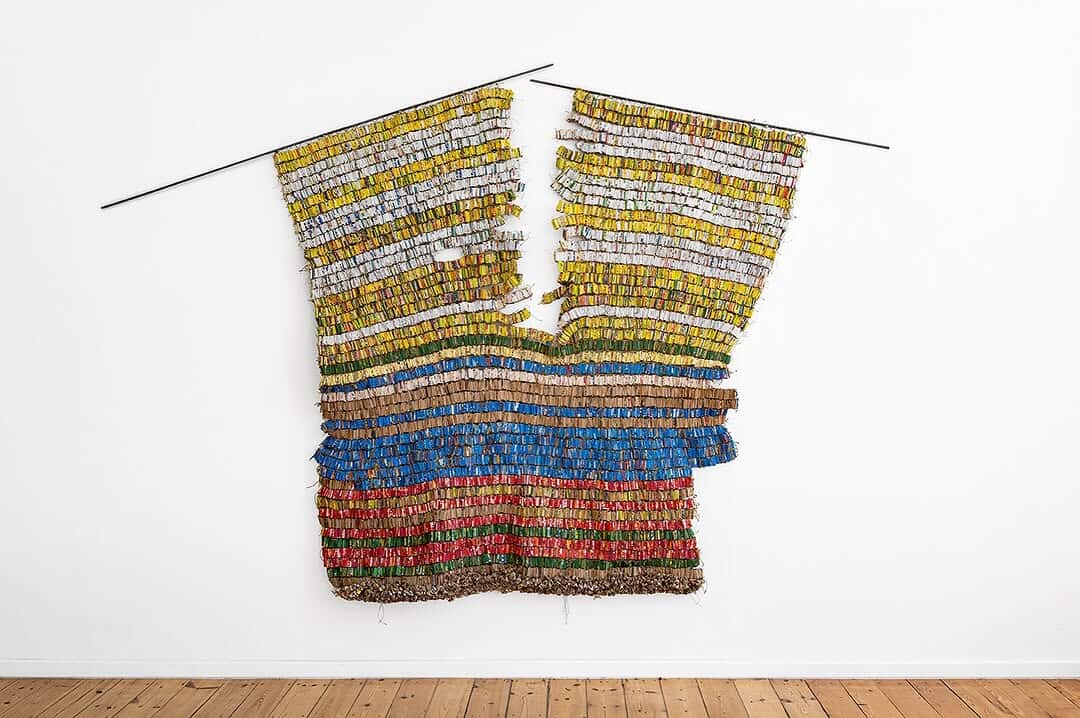
Andy James ‘Candy Flip’, photography courtesy of the artist

Andy James (Marrakech)

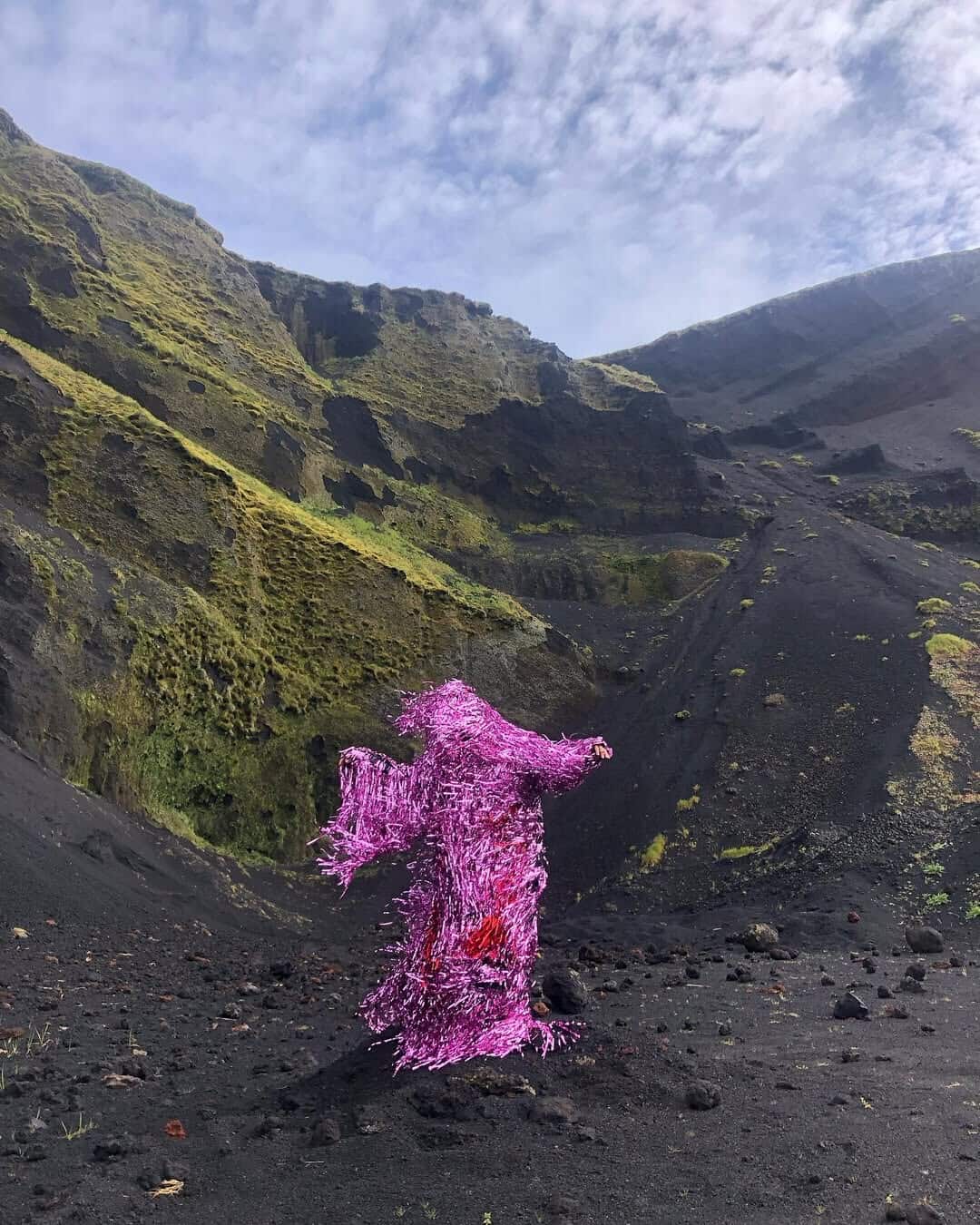
‘Candy Flip’, 2024, Tinsel.

Andy James is a UK born, Morocco-based multidisciplinary artist investigating the tension between autonomy and community. He seeks esoteric symbols in familiar aesthetics, ritualism in habitual behaviour and overlooked binary social structures. Their practice is reliant on perspectives of being an insider, an outsider and an other, all at once.

One of his performative works ‘Candy Flip’ explores the furry underbelly of the binary structures forming society. Here, the artist explores the notion of visibility through a djellaba – a traditional Moroccan garment with long sleeves and a hood symbolising respectability through modesty. The djellabas cultural popularity might render the wearers homogenous, yet subtle manipulation of the garment across the country suggests an Avril Lavigne-esque approach to subverting the regimentation of school uniforms. 

Embracing this nostalgia, Andy James presents a djellaba embroidered entirely with imported pink tinsel and emblazoned with a shocking red acid smiley. Visibility and modesty interchange as a new form emerges from a fully covered body. Andy James shares, “Flicks of laser bright colour whip the smell of industrial plastic up the viewers nose evoking memories of childhood toys and seasonal festivities.” The binary themes at play amplify one another, hence the name ‘Candy Flip’, a reference to mixing MDMA with ecstasy. 

Andy James’s work on a visual level alone is captivating, especially considering it was documented on top of Pico Volcano, the highest point in Portugal – an unusual marriage of material, subversion, nostalgia and night life.

Wallen Mapondera, ‘Hurongwa (Plan)’, Photography courtesy of Smac

Wallen Mapondera (Zimbabwe)

‘Hurongwa (Plan)’, 2024, Waxed Thread, Metal Rod and Cardboard

For Wallen Mapondera’s solo exhibition, ‘Kura Uone’, presented by SMAC Gallery in Cape Town in February 2025, the artist unveils a most introspective body of work touching on various themes that have shaped his studio practice to date. ‘Kura Uone’, a common Shona phrase meaning ‘mature and then see’, serves as a poignant reminder of the trials that accompany the transition into adulthood. It is a foreboding of the material tests, obligations that await as we take on responsibilities as adults.

Materiality plays a crucial role in Mapondera’s body of work. His use of found materials, particularly cardboard and textiles, is a response to Zimbabwe’s economic realities. The hyperinflation of the early 2000s made purchasing traditional art materials prohibitively expensive, forcing artists like Mapondera to innovate with readily available materials. This constraint became a catalyst for his practice leading to his signature style of transforming ordinary objects into complex, textured artworks.

In his work ‘Hurongwa (Plan)’, his relationship with his mother is at the heart of the piece. What appears to be the shape of a large glistening knitting needle represents the core of his work. About the exhibition as a whole, Mapondera said, [My mother’s] role as a cross-border trader, crafting doilies and other objects to sell in South Africa, forms the cornerstone of this series. Through her journey of creation and ritualistic practices, she imparted a rich legacy of resilience and artistry. The act of crafting, packing, and traversing borders was imbued with a performativity, laden with hopes, prayers, and cultural significance that resonates in [my] work.”

Igor Tsvetkov and Tanya Pioniker, ‘Love is… Red Flag’, Imagery courtesy of the artists

Igor Tsvetkov and Tanya Pioniker (Both based in Berlin)

‘Love is… Red Flag’, 2024, multimedia 

Igor is an animator and filmmaker, specialising in stop-frame hand-drawn animated visuals. This process is extremely time-consuming and the results strike a balance of organic and futuristic. 

“For my works I draw images from the hidden corners of the human soul – from what is commonly called transcendent. That is why my works focus on passions and inner demons. I often explore themes of dreams, death, love, sexuality, violence. However, as a ‘combat unit’ I am primarily focused on fighting social constructs – those imposed norms that strip the individual of access to genuine happiness. Therefore, my works become a surreal fusion in which apparently radical themes take on new meaning. Through these images, I aim to guide the viewer in the search for truth and the pursuit of inner freedom.” – Igor Tsvetkov

The collaborative project with Tanya Pioniker‘Love is… Red Flag’ — is dedicated to exploring how the magical and rational concepts of love intertwine in modern reality. One of the key features of the project is its conceptual nature. At its core lies a unique logical narrative constructed as a series of 10 interconnected works that tell the story of the development of romantic relationships between people.

Within the series, they also incorporated elements of alchemical and other mystical systems, as well as botanical and religious imagery that precisely correspond to the various stages of relationship development. This is why all ten works resemble a timeline of ancient mystical initiation.

For Tanya Pioniker, the project merges their artistic practices: graphic works on paper and traditional hand-drawn animation. By merging their methods, the resulting project exists — like contemporary people themselves — simultaneously in two dimensions: the physical and the digital. It’s a quite unusual format, not fitting into the conventional “white cube” gallery space, which is why they are looking for a suitable venue for the public presentation of their project once it is fully completed. 

“What I love most about this project is that it not only engages with current issues, but is also deeply intimate — since we are not only co-authors, but also partners in love. I believe this beautifully reflects the core idea of the project: that in order to create something together, we must truly listen, collaborate, and find shared ground.” – Tanya Poiniker

Hylton Nel, Glazed Ceramic Stoneware. Imagery courtesy of the artist.

Larissa Zaidan (Brazil)

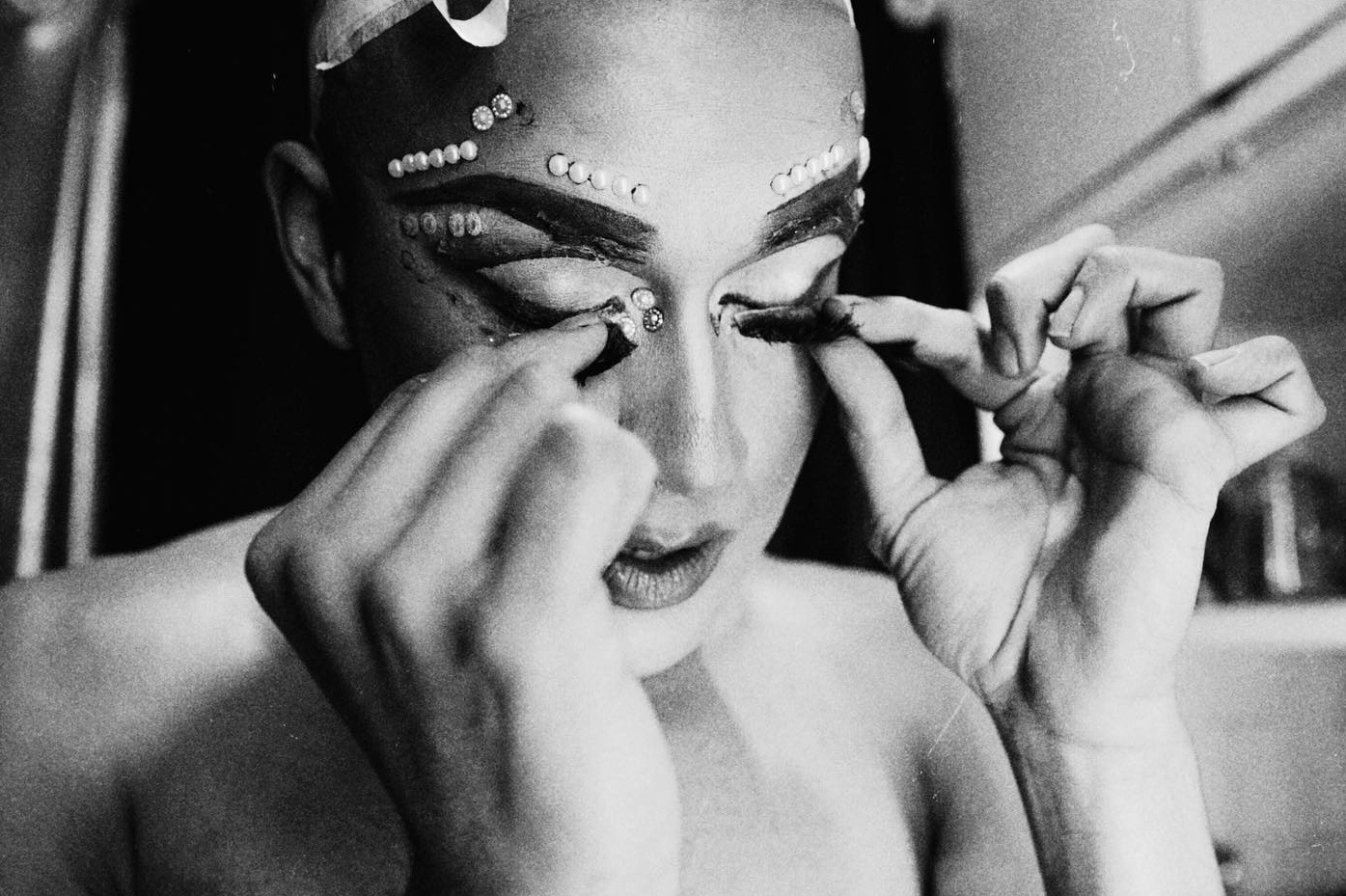
‘I, Mackallya’, 2018, Photography

In Larissa Zaidan’s photographic series ‘I, Mackaylla’, this Brazilian photographer captures the glamour and the isolation of the drag queen world in São Paulo, Brazil. Larissa Zaidan began her career in photojournalism at VICE Brazil in 2016. At VICE, she mainly documented youth culture and the LGBTQIA+ universe, photographing and directing documentaries such as the series on sex called “Transe”.

By day, Larissa would capture the colorful plasticity of Mackaylla’s transformation, and by night the glamour. The drag queen became Larissa’s muse, and after spending eight months together, Larissa moved beyond Mackaylla and got to know her creator, Vinicius Santana. This project helped to develop Larissa’s artistic style: photography through intimacy.

Their friendship was sealed with trust, intimacy, and tenderness. “It was more than simply photographing a drag queen, because I’m part of her life as much as she’s part of mine,” Larissa explains.

Mackaylla is a product of traditional Brazilian drag queen culture, dating back to the 1960s. She doesn’t try to be the perfect embodiment of femininity, nor emulate someone that we could be familiar with. Larissa tells Marie Declercq that she believes “it is essential to make my photos as accessible as I can for the people captured in them. My work is not made only for the outside gaze, but for every corner that the visual arts don’t reach. Brazilian youth have a unique charisma, the same charisma I found in Mackaylla.”

In each of the artworks discussed in this piece, a contradiction to ‘pareidolia’ becomes apparent: it is not that we have found the face of an icon where it shouldn’t be, but rather that meaning in objects can be found everywhere – especially in artworks with intersecting layers seeped with personal storytelling. A piece of found shiny litter, a makeup look put on only at night, an animation made by hand or an outfit made of tinsel – all these pieces are deeply rooted in meaning that goes beyond the visual, but represents more than what meets the eye, every time attention is given to it.


Written by: Grace Crooks

For more news, visit the Connect Everything Collective homepage www.ceconline.co.za