Zanele Muholi’s ‘Faces and Phases 19’ opens this month in Los Angeles

Accompanied by Zanele Muholi’s rich, interdisciplinary practice exploring self-portraiture and identity, race and the notion of becoming racialised, pleasure and sexuality, as well as other photographic engagements with Queer life, their new solo exhibition ‘Faces and Phases 19’, while ever-evolving, continues to provide solid ground to the artist’s work.

This solo exhibition held in Los Angeles celebrates 19 years of Muholi’s seminal photographic project documenting the lives of Black lesbian, bisexual and Queer women, Trans and gender non-conforming people. Initially focused on South Africa, the new series of portraits expands the project’s geography into the US, UK, Brazil and Portugal. This now-historic body of work comprises a collection of close to 1,000 photographs, collectively forming a “living Queer archive”.

Moved into action by both love and loss, Muholi began the work of Faces and Phases in 2006. That year marked the 10th anniversary of the passing of the 1996 Civil Union Bill in South Africa, which legalised same-sex marriage and civil partnership. While this move for Queer institutional inclusion is notable for being ‘ahead of its time’, South Africa’s progressive branding is rarely indicative of its reality: a situation of extreme homophobic, Transphobic and patriarchal violence forms the backdrop of a nation in which poor Black Queer people find themselves at particularly high risk of being the victims of horrific, often-fatal hate crimes.

In the face of the LGBTQIA+ community’s experience of grief, often exacerbated in the media by traumatising imagery or faceless statistics, Muholi sought to assert a counternarrative. In the collection of minimally staged, non-glamorised black-and-white portraits, Faces and Phases offered stories of Black lesbian life as beautiful, defiant, and crucially, as normal. As it has gained international recognition for its historical importance, the Faces and Phases archive has grown not only in size, but in its scope and philosophy, too. While its initial focus was on Black lesbians, it has since made way for more fluid understandings of gender and sexuality, and now includes the images and stories of Black Trans men and gender non-conforming people.
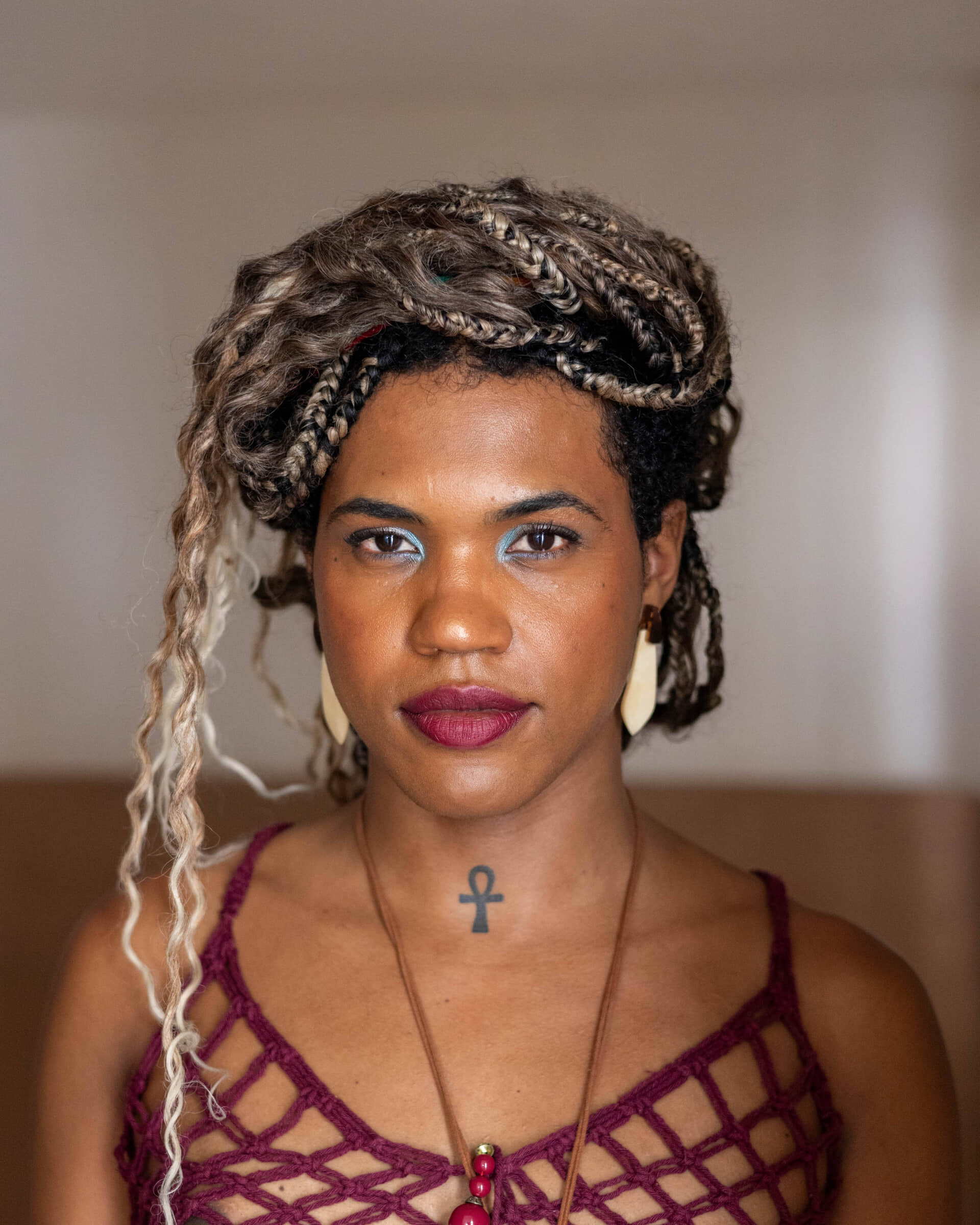
Kindala Araújo Ferreira, Casa de Cultura Marielle Franco, Salvador, 2025, photography by Zanele Muholi, courtesy of Southern Guild
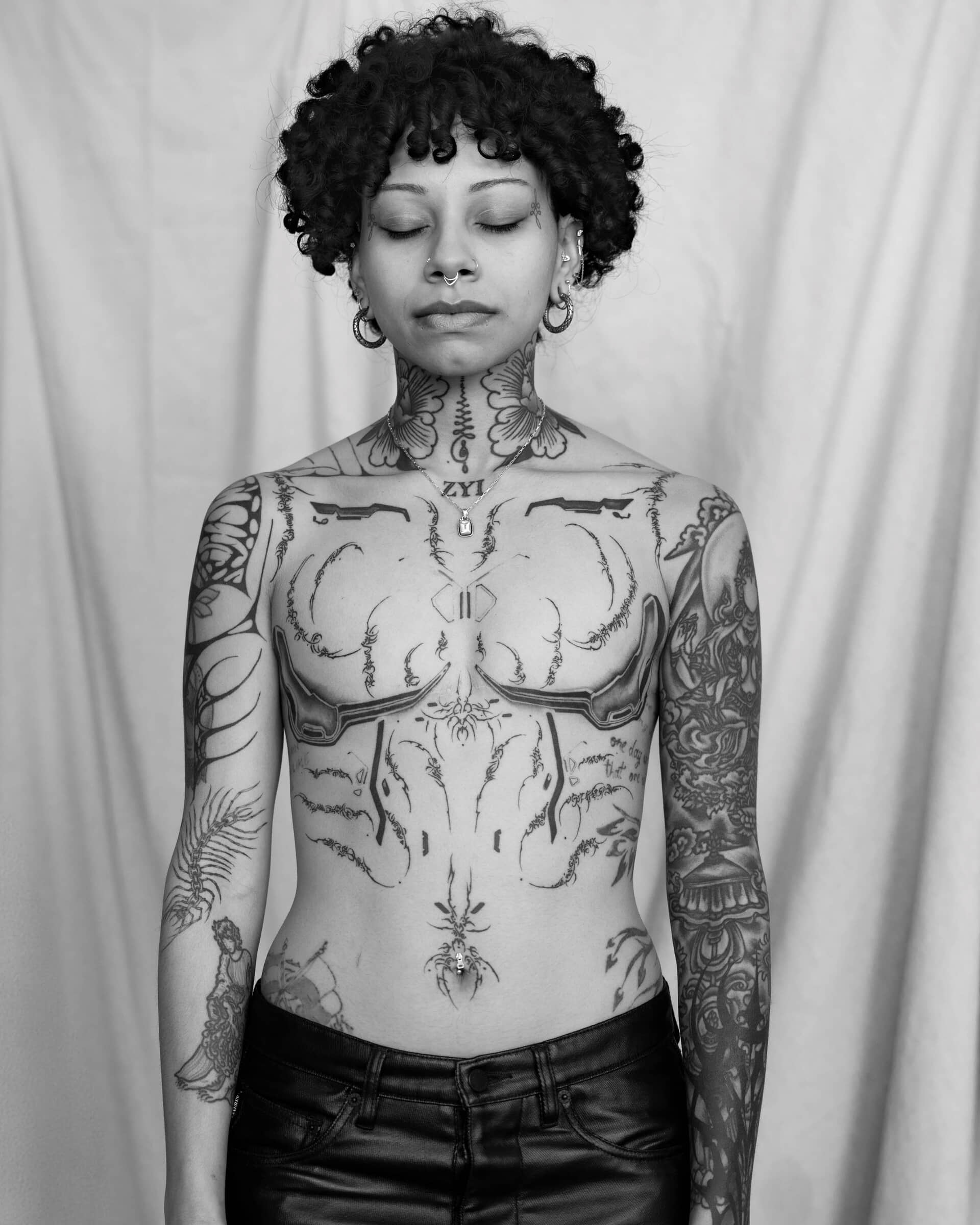
Zyi Saenz, Los Angeles, 2024, photography by Zanele Muholi, courtesy of Southern Guild

The project’s representational diversity of Black Queer expression and personal history is contrasted only by the singular, hard gaze of each participant, which meets, challenges (and potentially flusters) the viewer. Configured around this gaze, Muholi’s photographic strategy can be imagined as an ongoing exercise in portrayal, prioritising the carriage of the participant’s power over the photographic potential to capture the subject or hold them still.

The Faces and Phases’ gaze stares directly at the colonial archive, and at modern histories of patriarchy and violent attempts on Black Queer life; it stares down escalating global fascism, which chooses the Trans body, the colonised body, the diasporic, immigrant, or otherwise ‘foreign’ body as the site upon which to wage war. As Muholi describes it, “it’s like everyone is looking at you no matter what direction you take”, ultimately landing these gazes on the body of the viewer, who is unable to escape either their scrutiny or their beauty. Sakina, an LA participant, finds freedom here: “Seeing someone else’s expression broadens your ability to be human.”

Muholi’s production of an archive of self-fashioned Black Queer people must thus be recognised first as an expression of love for the community of which they are a part. And like any good love, Muholi’s is active, curious, and committed to its cause, extending beyond the photographic zone into the building of a connective social universe that affirms, validates and deeply admires Black Queer existence.

Less visible than the portraits is the foundational labour of the project — the extensive interviewing and documentation of participant testimonials that precedes and shapes how, or even if, participants are photographed. This work is the enactment of Muholi’s curiosity, highlighting listening as the central ethic and strategy of their photographic practice.

The act of return is absolutely central to the work, with Muholi often revisiting and rephotographing participants over the years, allowing time and the joyous instability of identity to do its work. Formerly-identifying lesbians transition, their pronouns changing, sometimes along with their voices, muscle mass, facial hair and preferred clothing silhouettes; sometimes not. Faces and Phases does not pretend to ‘conclude’ the impossible, slippery task of Queer representation, but through frequent return, commits to remaining alive with the concerns and tensions of its community.

In the colonial ‘tradition’, the archive is static and consumable, instrumentalising its power to still histories through category, where Faces and Phases is enlivened by what participant Farai thinks about as “that energy that Queer people carry”. ‘Home’ for the Black Queer body, is a repeated attempt to reckon with the histories of violence and social rejection that have caused self-abandonment, where return marks a defiant rescue mission towards a deeper, and still deeper, repressed internal self. Participant Alyx says, “None of us are free until we liberate ourselves from all of those societal and cultural norms… being yourself is the biggest first step toward freedom.” Muholi’s commitment to witnessing and grappling with Queer return is echoed throughout their practice, as they honour the work of transition — in all its iterations — as an ongoing and largely internal process of self-discovery. 
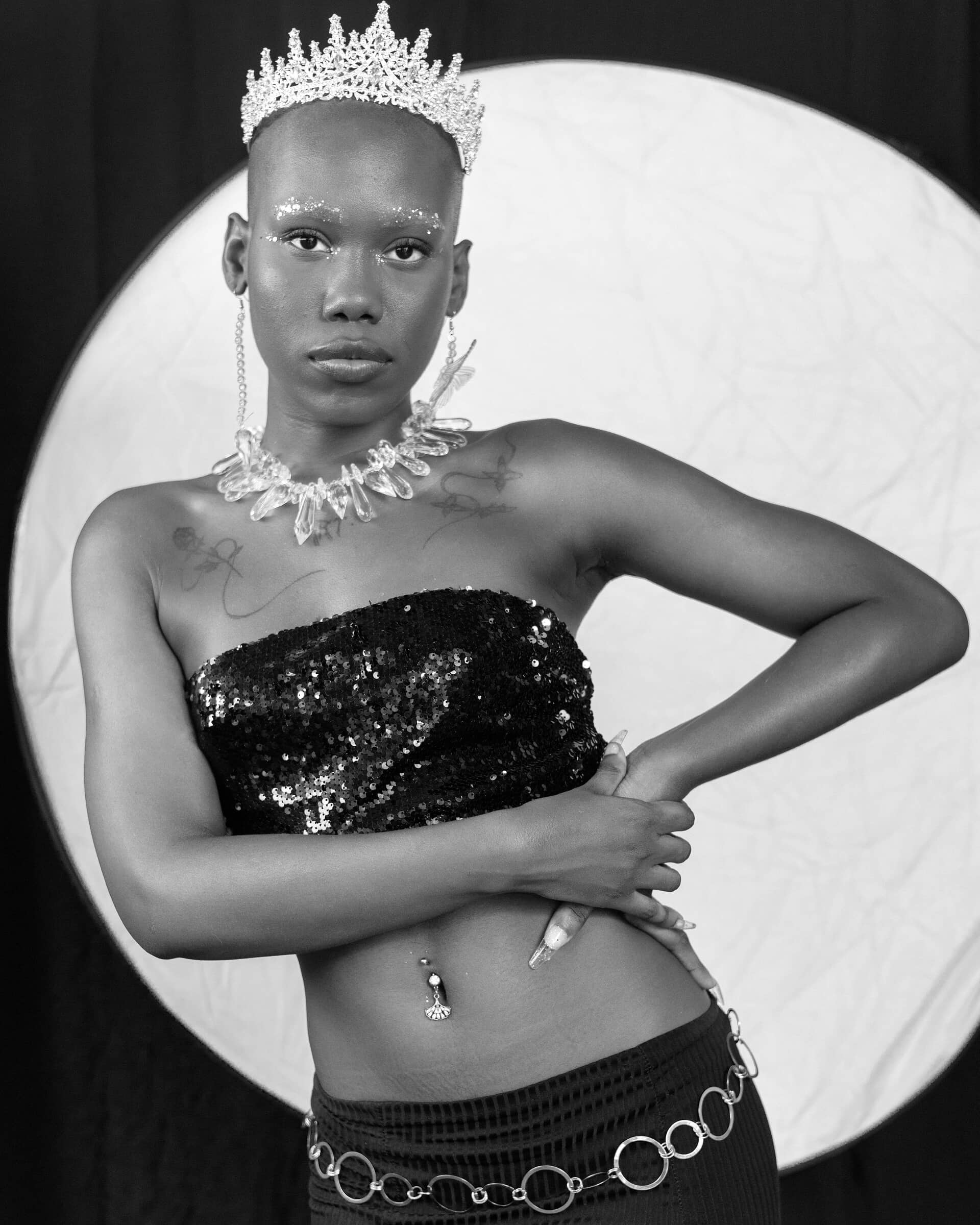
Diana Cristina Nascimento Ramos, Salvador, 2025, photography by Zanele Muholi, courtesy of Southern Guild
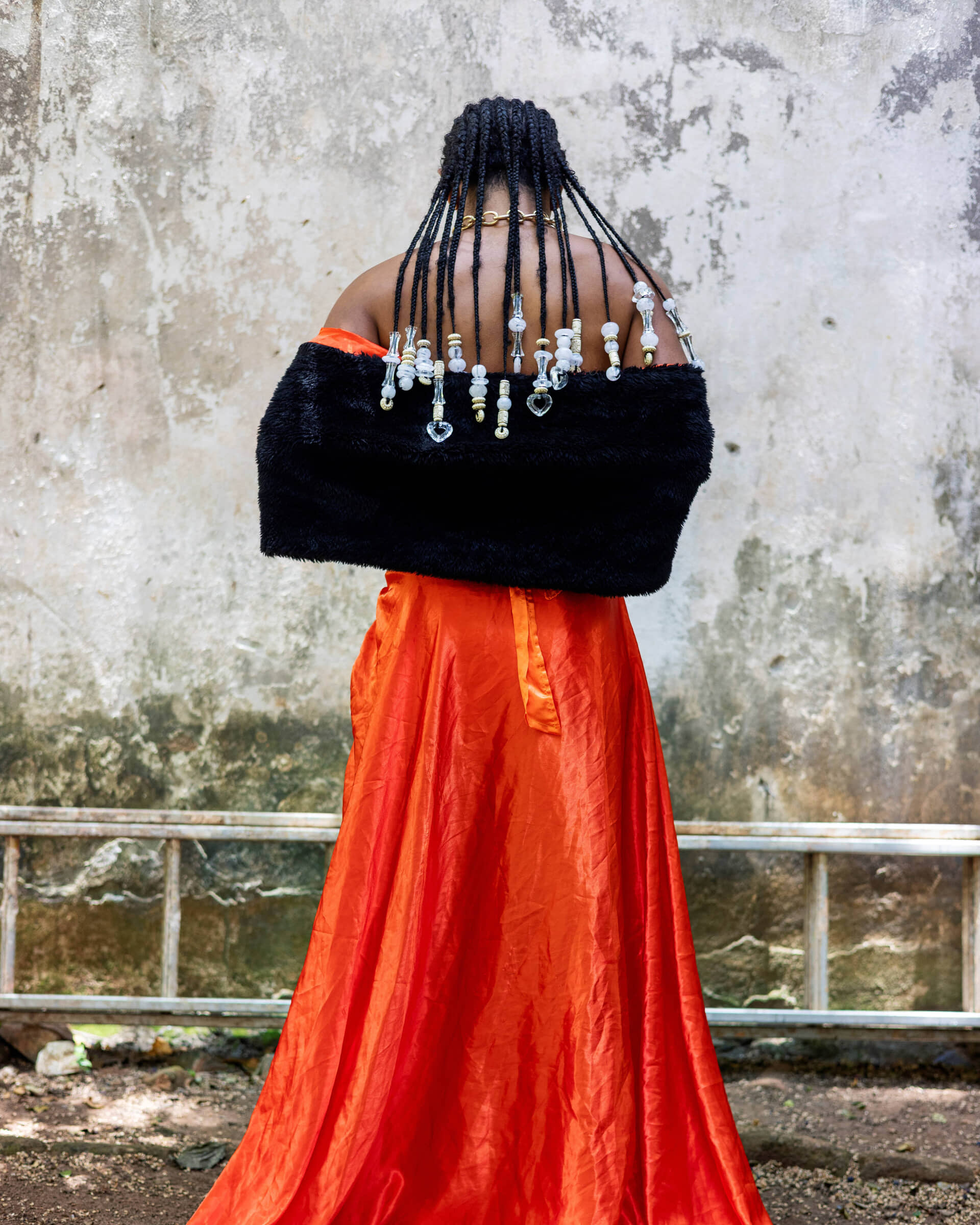
João Vitar Gomes de Souza (_Vittor Adél_), Salvador, 2025, photography by Zanele Muholi, courtesy of Southern Guild

Centralising identity’s phasic nature, their work ultimately struggles against the historic limits of photographic capture, resisting ending, holding open the openings, and ritualising the sacred practice of return.

In its current iteration in LA, Faces and Phases presents a particular defiance of the current US administration, which makes one of its missions the violent targeting of Trans bodies. The nation’s dominance has global consequences, not least of which is in the withdrawal of funding from Global South initiatives that provide support and healthcare to Queer and Trans people, including in South Africa. These larger stories underlie the personal narratives of Muholi’s Faces and Phases portraits, which are both a demonstration of solidarity-across-borders and a refusal of the idea that ‘true’ knowledge is only produced by the West.

This energy of defiance echoes throughout the project, which always prioritises the invitation and celebration of the participants to whom the archive first belongs. So although making good use of its modes of exchange and circulation, the work of Faces and Phases is ultimately at home well beyond the art spaces in which it is displayed. It finds potent relevance in contexts from gender studies departments and high school classrooms, to Queer friendship groups, who are made collectively breathless by the archive’s ever real and always beautiful faces.

In its many hundreds of gazes, and its embrace of Queer transition, the project is a force of life. Muholi’s ongoing reckoning with histories of violent representation commits itself, in Faces and Phases, to the life work of unconditional Black Queer love: a practice of militant curiosity, care and deep admiration.

Faces and Phases 19 runs concurrently with In Us is Heaven, a group exhibition featuring interdisciplinary artists from Africa and North America exploring the heterogeneity of Queer experience and expression. Coinciding with Los Angeles’ Pride Month, the exhibition will be accompanied by a programme of talks and events featuring Zanele Muholi and the broader Queer community.


Text by Thuli Gamedze for Southern Guild

For more news, visit the Connect Everything Collective homepage www.ceconline.co.za
Follow CEC on Instagram

Julia Mestre releases her third album ‘Maravilhosamente Bem’

Proudly presenting ‘Maravilhosamente Bem’, the female-centred third album by Brazilian singer, songwriter, actress, and creative director, Julia Mestre.

Alongside being a member of the Latin Grammy-winning Brazilian supergroup, Bala Desejo, Julia has been steadily building a solo career where her unique vision and alluring sultry voice take centre stage. Drawing inspiration from ‘80s ballads, MPB, pop and disco productions, each song on this third album finds Julia creatively exploring different characters and tones.

A love-song-driven LP at its core, Maravilhosamente Bem holds a playful mirror up to blissful days gone by, artfully reimagined with Julia’s own modern twist. An album filled with love and nostalgia, it pays homage to her love of classic female disco divas such as Donna Summer, Sade, Alcione, Lady Zu, and the Brazilian rock queens Rita Lee and Marina Lima. Of that latter pairing, the late iconic Brazilian vocalist and musician Rita Lee (Os Mutantes) is referenced in the music video for the first single, ‘Sou Fera’, blessing Julia with a magical guitar. Marina Lima then provides guest vocals on the album’s closing track, ‘Marinou, Limou’, with her name transformed into a mantra by Julia.

Channelling a lo-fi ‘80s ballad aesthetic, Julia navigates a multitude of themes across the nine sublime tracks. From the sexy, whispered performances on vintage horror movie-inspired tunes ‘Vampira’ and ‘Pra Lua’, to the delicate, fragile love lullabies of ‘Sentimento Blues’ and ‘Cariñito’, and the seductive disco diva embodiment on dance tracks ‘Veneno de Serente’ and title track ‘Maravilhosamente Bem’. Another hidden highlight is the palette-cleansing mini-suite, ‘Interlúdio dos Amantes’. A luscious strings instrumental piece that lends to the beautiful Sade-esque ‘Seu Romance’.

Produced by Julia and longtime collaborators Gabriel Quirino, Gabriel Quinto, and João Moreira, Maravilhosamente Bem sees Julia embarking on a new era of her musical career. This sensational third album is a captivating showcase of the creative vision and versatility of one of Brazil’s finest stars. Released on Mr. Bongo (ROW) and Altafonte (Brazil/Portugal).

Listen to ‘Maravilhosamente Bem’ here

Press release courtesy of Only Good Stuff

Yuu Udagawa releases her latest EP ‘Golden Glow’

Following Yuu Udagawa’s EPs “Ride It” and “Peaceful Dawn” from last year, she’s back again in full effect presenting four timeless jazz-electronica-house hybrid tracks for Compost Records.

Title track ‘Golden Glow’ is an electric samba-infused broken beat gem, with joyful vocal melodies and a superfunky bassline creating a truly elevated vibe. ‘Reverie’ comes in smooth, slow-motion house guise. Yuu’s ethereal vocal interludes unfold in interplay with piano improvisations. The track ‘One More’ seems to come straight out of a smoky jazz club. Jazzy piano sounds meet plucked double bass, underlaid with dreamy synth pads and Yuu’s whispers from the twilight zone. On ‘Velvet City’, Yuu unleashes her soulful vocal talent and her flair for wonderfully ambitiously produced deep house. A great, uplifting jam that appeals to both the heart and the dancing feet.

About Yuu Udagawa

Yuu, who studied art and philosophy in high school, has since performed at clubs, festivals and fashion shows and is now a regular in the lounges of five-star hotels like the Park Hyatt Tokyo, showcasing her versatility as a DJ. Drawing on her insights and extensive experience in creating musical atmospheres in various spaces, she continues expanding her musical creation journey.

In 2010, she composed “Blossom,” the main menu BGM for Sony PlayStation 3 (Torne and Vita), captivating gamers. After that, she released several tracks for various projects. In 2021, her music caught the eye of German artist Manuel Tur, leading to her music being released through prestigious labels such as Compost Records in Munich, Germany, Cyphon Recordings in London, founded by Jimpster and Tom Roberts, to the up-and-coming Cosmocities Records in Dijon, France, and the popular Razer- N-Tape in Brooklyn, USA. These collaborations have boosted her international visibility. She was invited by Freerange Records in London to deliver a DJ MIX on Apple Music to celebrate International Women’s Day 2024.

Listen to ‘Golden Glow’ here


Press release courtesy of Only Good Stuff

Spanish Producer, PIEK, releases his LP ‘Celebrate’

Presenting three standout tracks, Spanish producer PIEK‘s forthcoming LP, ‘Celebrate’, has been issued on his own Buenobueno Discos imprint.

With over two decades of experience in the industry, PIEK has built a solid reputation across the international scene, releasing music on top-tier labels like Fabric, Defected, OM Records, Balance, Toy Tonics, and Ubiquity.

‘Celebrate’ marks the beginning of a new chapter in PIEK’s artistic evolution. Eight years after his debut LP, he returns with a radiant, emotional, and dancefloor-ready album that explores the uplifting power of electronic music. Crafted between analogue machines, vinyl-sampled textures, and deep introspection, Celebrate is a vibrant journey through PIEK’s personal universe—where nostalgia, rhythm, and sonic experimentation collide. This is not just an album. It’s an invitation to feel, to move, and to connect.

For this sampler, we’re showcasing the feelgood boom-bap hip hop of ‘New Day’ which features vocals from Ryan Roush & John Vermont, uptempo Latin dance cut ‘Prendan Un Fokin Abanico ‘ which features vocals from rising star Letón Pé, and nostalgic deep house anthem ‘Music Sounded Better With U’.

Listen to ‘Celebrate’ here


Press release courtesy of Only Good Stuff

Creative Authorship Is Photographer Rogers Ouma’s Vision

When Rogers Ouma first laid eyes on the glossy pages of Vogue, he was in a quiet Kenyan village, flipping through old issues his cousin had collected like treasure. His cousin, a literature teacher with an eye for beauty, kept a modest stash of early-2000s fashion magazines that would prove formative. “I grew up between the city and the village, and it was in the village that I first encountered fashion magazines—thanks to my cousin who collected them. I’d look at images in early 2000s Vogues and think, ‘How is this even possible?’ That curiosity stayed with me,” he reminisces. 

What began as a distant fascination with high fashion’s surreal gloss quickly grew into something more urgent: a visual hunger and a drive to make things just as arresting as he’s seen across those pages. It’s a fire that still burns now, years later, as Rogers has carved out his place as one of East Africa’s most compelling visual storytellers, though, less interested in trends than in timelessness, and always chasing the feeling that those Vogue pages first sparked. For someone now known for rich visuals and narrative flair, Rogers’ origin story is deeply spirited. The camera was always meant to find its way into his hands. A visiting Austrian mentor, while Rogers was tutoring maths, changed his trajectory in an instant. “He handed me a camera and said, ‘Let’s go for a test shoot.’ I had no idea how to use it, but I shot a thousand photos that day. They were all terrible, but he told me that’s exactly how it starts,” Roger explains, and this spark of experimentation—unfazed by perfection—is something Rogers has never lost. A high achiever at school, with multiple pathways ahead, Rogers rejected multiple scholarships to study abroad in the U.S., Austria, and India, choosing instead to stay in Kenya and pursue media studies in Nairobi. “I chose to stay in Kenya and enrolled myself at Multimedia University to study media and broadcast. That’s when I started shooting full-time.” Moving to the city was initially a rude awakening; within days of moving from Kisumu, he was robbed at the bus station—camera gone, savings wiped out. Rogers, already used to improvisation, simply borrowed a classmate’s camera and edited on his roommate’s laptop. “Having gear wasn’t going to stop me. I’d shoot when they were in class, then post the work on Facebook. Eventually, I grew a crazy fan base—people started paying attention.” 

Photography by Rogers Ouma

Imbued with Nairobi grit, people noticed Rogers’ work, and granted him something of an underground cult-status. Rogers is an OG on the East African scene. His early work—self-taught —began gaining traction, and landed a feature on Vogue Italia while he was still a student. A huge full circle moment, to which Rogers says, “at first, I was replicating the kinds of visuals I’d seen in Vogue, and for people around me, it was something completely new. That visibility gave me momentum.”

Even as his technical skills evolved, Rogers’ vision stretched beyond beauty for beauty’s sake. Though principally a fashion photographer, Rogers’ subject matter spans across social, racial and environmental justice, all intersections he feels are intrinsic to African sartorial and creative identities, “I’m very open-minded in what I shoot,” Rogers notes, 90% of the time, I gravitate toward non-conforming styles. Highlighting queerness or social justice in my work can be dangerous in Nairobi—it’s illegal to be queer here. But for me, it’s important to tell these stories.” Rogers has had collaborators scrub themselves online after shoots for safety, their identities erased to avoid violence or backlash. One such project, featuring queer creatives, found itself exhibited in New York through OKAYAfrica, “That was major. It meant that stories from here, our truths, were being seen elsewhere,” Roger notes with conviction. 

Rogers is deeply committed to the potential of East Africa, but points out that how the region is framed by the global creative industry is still problematic. “East Africa is still so untapped when it comes to fashion and creativity. There’s so much happening, but almost zero visibility internationally. That’s why collaborations like the ones I’ve created with The New Originals matter, they’re actually committed to amplifying voices from here. Eben and the team from TNO are one of few international teams who travel somewhere and collaborate directly with the creatives in that place.”

Rogers is strategic about changing this narrative, as he lays the groundwork for a more equitable creative ecosystem in East Africa. His call to action is simple; work with the local creative community. “If I have a client who wants to shoot in a different location—Lamu is there. Mombasa is there. I’ll take care of everything. We have equipment, we have a team. If you want to transport something to Lamu, I know people who fly jets. If you want to shoot in the Maasai Mara, I know the people, I know the way there.” This issue is intimately tied to the continual tensions and reclamation of  ownership on the continent. Rogers recalls international productions parachuting in and using Kenyan soil as backdrop, without engaging local talent. “There was a day when a huge brand flew in an entire crew, and the only locals on set were two of my friends—one a makeup artist and designer, and the other assisting by carrying the umbrella. That’s it.”

Rogers’ own education in the importance of authorship arose from his background in humanitarian-led news. While studying, Rogers landed a job at Camera Pix—an esteemed Kenyan production house founded by the son of legendary photojournalist Mohamed Amin. “Being employed in that company gave me a lot. People in my class were in lectures; I was on planes, travelling across Africa. I used to film for CNN, BBC, Al Jazeera, NGOs—all of that.” Those years on the ground, immersed in real stories, taught Roger how to find the human thread in every story, to document without spectacle, and to shoot with a sensitivity and respect for the context and people involved. This hard-won documentary sensibility has never left his fashion work, as is evident to the deeply enriching and compelling portrayal of his imagery; “we’d create human interest stories, political stories, health stories. That’s why my fashion photography looks like a documentary. Even when I’m shooting fashion, I’m telling a story.” As Rogers emphasises, he has worked on sleek commercial campaigns—products, clean backdrops, imbibed by sterile minimalism—but these briefs don’t ignite him the way fieldwork does. “I can shoot the fancy stuff, clean backdrops, whatever—I’ve done those campaigns—but I won’t show them. What I want to show is the documentary side. That’s what makes it all click for me.”

Photography by Rogers Ouma

Even when his peers were preparing for final exams and graduation ceremonies, Rogers was out in the world, already working. It is precisely this expansive vision and determination that has brought Rogers to South Africa, to live between the two regions,“South Africa always had something for me because of the access, and the creatives bending all these norms and everything,” Rogers explains, “I’ve seen crazy stuff being done in South Africa. If I can be free and shoot, that’s me. You will find me there, and that’s what South Africa offers in constant supply.”

For Rogers, the dream is to facilitate the kind of burgeoning creative economy in East Africa that already exists in places like South Africa. His perspective is a poignant reminder of our relative freedom—both creatively and politically—and the importance of access in shaping artistic futures. I’m reminded of the continued work for liberation all across the continent: the ability to create boldly, safely, and without apology, and with the kind of respect and opportunity that Africa deserves on its own terms; far beyond the systems of voyeurism and culture-vulturing that still exist. South Africa’s cultural infrastructure and cross-disciplinary networks offers a rare scaffolding for artists to grow and thrive, despite our need for so much more in this respect. I’m reminded, too, that each creative is working towards a broader model for the future that resists extraction and instead nurtures creativity from within. 

So what’s the endgame, I ask Rogers, after all is said and done? Rogers intimates his vision for seizing this moment of renaissance on the continent,  is a hope to be part of a lineage of ‘greats’, who changed image-making on the continent; “if you backtrack to James Barnor or Malick Sidibé, that’s the vision. It’s timeless. I want to be in my 80s, and the kids are looking at my images the way I looked at their work, thinking ‘oh, this is historic’. I just wanna shoot and create cool stuff that stands the test of time.”

Photography by Rogers Ouma

Written by Holly Bell Beaton


For more news, visit the Connect Everything Collective homepage www.ceconline.co.za

Follow CEC on Instagram

‘Mfecane’ Photo Series Explores the Duality of Destruction and Reinvention

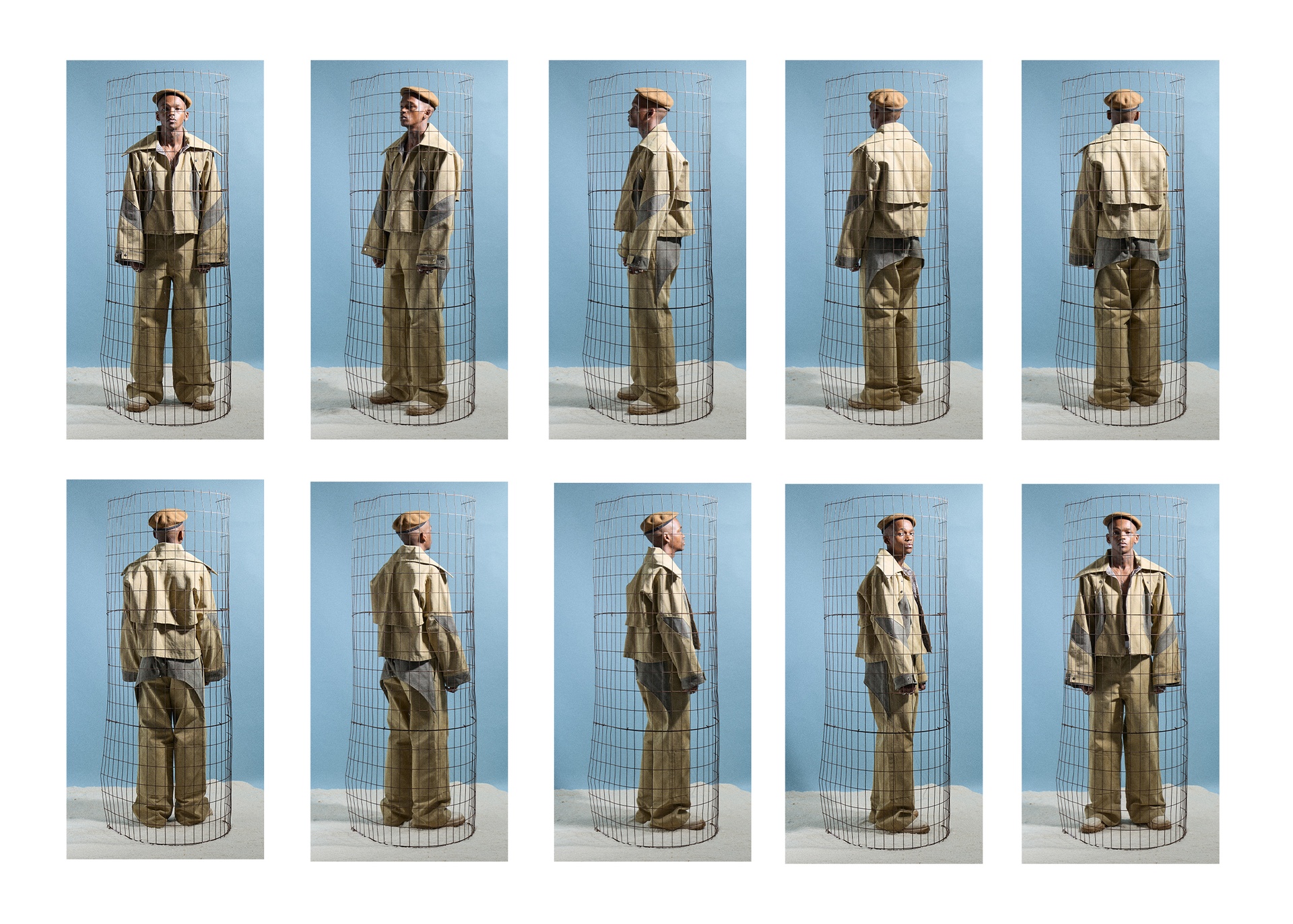
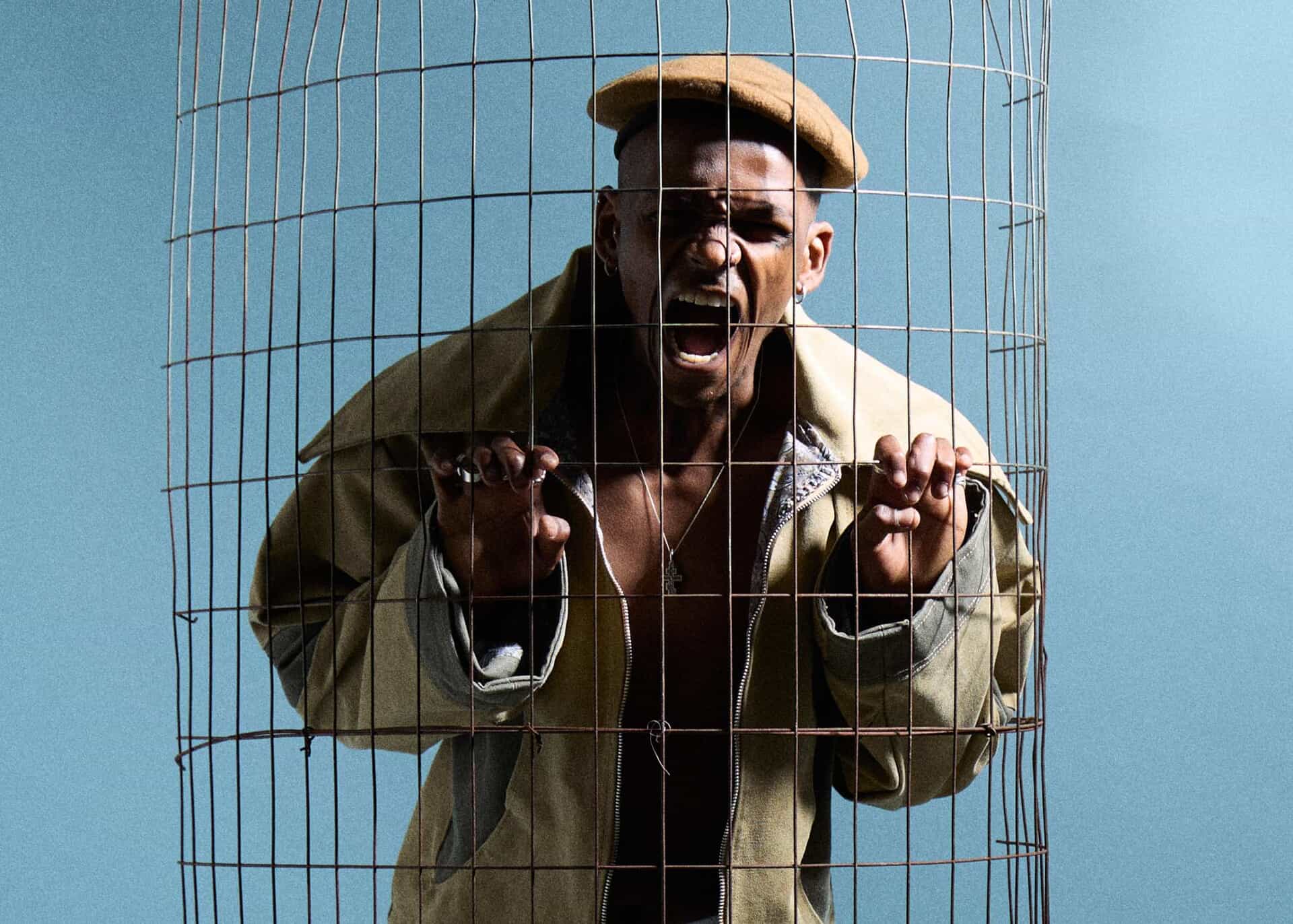
In a new photographic series titled, ‘Mfecane’, Cape Town-based photographer Raphael Blue Bromilow  teamed up with creative partner and stylist Liam Cowie to bring to life an interpretation of their mutually beloved film Beau Travail. After months of conversation and ideation they decided to execute their concept with Ntsika Bungane of Internet Girl who brought his own unique vision onto the field.

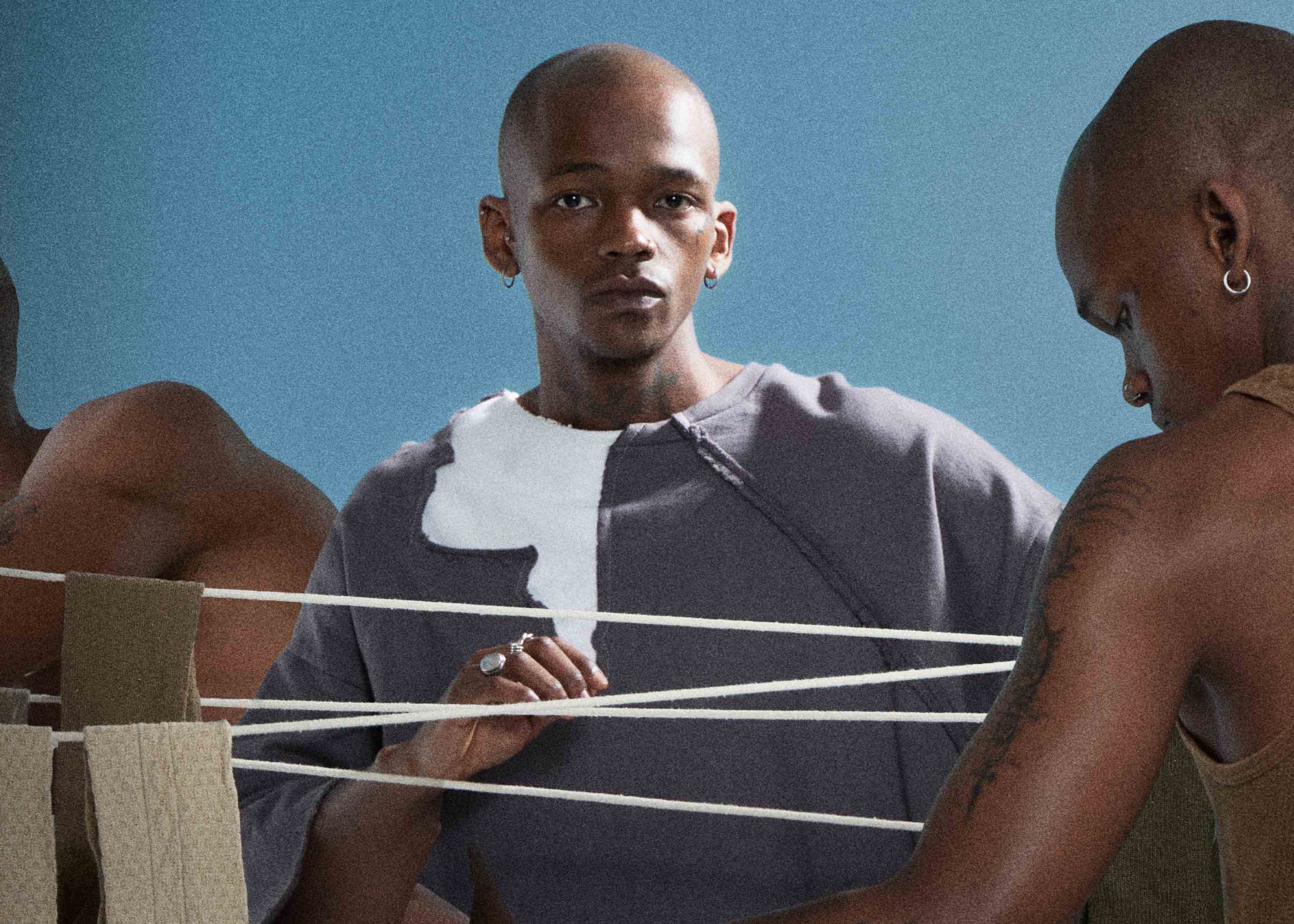
Blending fashion, symbolism, and raw emotion into a visually striking narrative, the series stars Ntsika Bungane, frontman of the band Internet Girl. Known to his audience as a rockstar, this photo series presents a new side of Ntsika — showcasing his personality from a different angle.

The series takes its name from ‘Mfecane’, a period of upheaval and transformation in Southern African history. The term, derived from a Zulu word meaning ‘Crushing’, speaks to the forces of destruction and creation – displacement and emergence – that shaped the region. This duality underpins the imagery in this body of work.

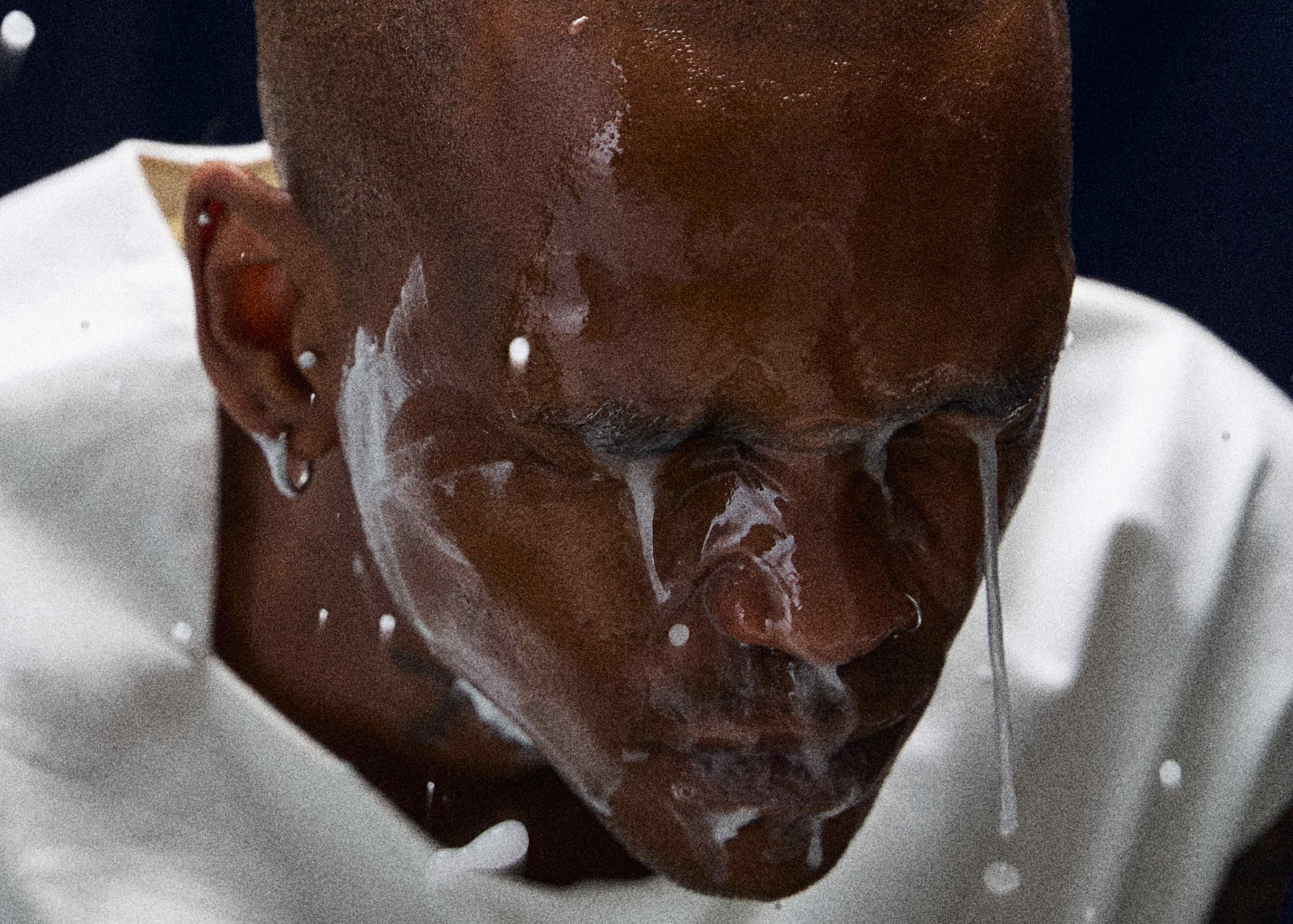
Raphael shares about the work, “Visually, Mfecane draws inspiration from Claire Denis’ Beau Travail (1999), particularly its restrained yet deeply textural approach to storytelling. I was captivated by how she sculpted an austere world through elemental contrasts. In these images, I’ve woven together salt, skin, sky, water, foam, and wire to evoke a subtle, tactile response—an interplay between sensation and structure. 

It becomes clear that while referencing these tactile physical elements, imbued in them are the overarching metaphors of the series. Wire could be seen as just metal but represents restraint, resilience, captivity and freedom. 

Photography by Raphael Blue Bromilow, featuring Ntsika Bungane, Styling by Liam Cowie

Ntsika was an essential collaborator for this vision. His presence in front of the camera is both striking and fluid, capable of embodying a spectrum of emotions with an understated intensity. This duality breathes life into the minimal studio environment, making it feel at once abstract and deeply human. In post-production, my focus was on proximity—getting as close as possible to the subject to reveal the nuances of his expression. Through this process, the dialogue between his emotions and the raw, textural elements of the scene became even more pronounced, reinforcing the quiet tension that defines this body of work.” 

About Ntsika, Raphael tells us more about his background: “Raised in the suburbs of Johannesburg, he often felt a disconnect from those around him—his clothing, speech, and artistic expression setting him apart. A few years ago, he channeled this outsider energy into forming Internet Girl, a genre-defying band blending alternative rock, pop, and electronic influences. Fast forward five years, and Ntsika has emerged as one of South Africa’s most compelling young talents. His band is now touring across Europe and the U.S., while he expands his creative reach into modeling and acting.”

“His presence in front of the camera is both striking and fluid, capable of embodying a spectrum of emotions with an understated intensity. This duality breathes life into the minimal studio environment, making it feel at once abstract and deeply human. In post-production, focus was on proximity—getting as close as possible to the subject to reveal the nuances of his expression. Through this process, the dialogue between his emotions and the raw, textural elements of the scene became even more pronounced, reinforcing the quiet tension that defines this body of work.” Says Raphael.

Photography by Raphael Blue Bromilow, featuring Ntsika Bungane, Styling by Liam Cowie

This fashion art series is not only a collaboration between creatives but showcases the merger of fashion and photographic culture in South Africa, where a new generation of artists is reimagining genres in groundbreaking and transformative ways.

Watch the latest video with Ntsika by Royd Ringdahl titled ‘Treat Him Like a Baby’ here

Creative Credits:
Photography by @raphael_blues
Stylist @liumcowi
Starring @ntsikabungane
Video by @roydr_
Produced by @katyaaaaaaaafromcapetown
Mua: @lexi_makeupartist
Stylist’s Assistant: @galajwinkler
Lighting Assistant: @__ifemi_
 

For more news, visit the Connect Everything Collective homepage www.ceconline.co.za

Follow CEC on Instagram

Is The Creative Industry Uniquely Positioned to Thrive in an Impending Economic Downturn?

When the stock market shudders and the world’s wealthiest hedge their bets, the creative class gets to work. History has shown us that periods of economic collapse are paradoxically fertile ground for disruption and reinvention. We are currently in familiar terrain with a global recession alarms sounding once again; amid trade wars, post-pandemic disillusionment, inflation spirals, and climate-induced anxiety—it’s hard not to feel a familiar knot of dread tightening. What if, instead of despair, we see this moment as an inflection point?

We could all go without another economic obituary and as capital retreats, the creative industry is particularly primed for this moment. Our industry has always relied on community and collaboration as its nexus. Creatives are accustomed to working with limited resources—whether it’s budget constraints, supply chain disruptions, or shifting market demands. 

This mindset of ‘making something from nothing’ positions us perfectly when the traditional models of production and consumption falter. The creative industry has always operated on a foundation of community and collaboration, often forming informal networks and collectives long before it became the norm in other sectors. I’d argue that the emergence of informal systems that are flexible, organic, and built on shared values—are actually foundational within the creative sector in South Africa.  

Basically, we’re inherently suited for a time when reliance on rigid, centralised power structures becomes less than possible. 

Imagery courtesy of Unsplash
Recession has, historically, been a strange bedfellow to artistic renaissance. The 1970s New York art scene exploded in the wake of financial collapse, while The 2008 crisis saw the wave of ‘indie-sleaze’ and grunge romanticism that swept those early days of Tumblr and Facebook. Punk, hip-hop, guerrilla protesting and zine culture were all born in times of economic distress. When systems collapse, so do gatekeepers, and when prestige institutions are no longer viable, the playing field levels—just a little. In such liminal spaces, we can see how new ideas take root and creative ingenuity flourishes on the edges; our resourcefulness necessitates our survival. Personally, I’m excited to see what subcultural phenomenon will emerge from this hellish timeline. 

The current economic downturn is happening alongside massive shifts in global politics and trade. The fragility of global supply chains—exposed brutally by the pandemic—and now impeded upon by the Trump presidency’s imposition of tariffs, will continue to destabilise the world. For the creative industry, this signals a reckoning. The high-volume, low-margin model that has dominated fashion and content production is unsustainable, financially and ethically. We’ve long heard the call of this. 

Brands that once relied on mass outsourcing must now rethink everything from sourcing to logistics, and this opens the door for more localised, slow, and transparent models.

One of the defining traits of creative resilience is the ability to value-hack—to reframe scarcity as strategy. In practical terms, this means a shift from ‘more’ to ‘enough.’ In the context of fashion, this would mean smaller collections, multi-use garments, recycled fabrications— the circular economies we have dreamed of— and for art, this would occur alongside pop-up studios, print-on-demand models, all led by artists and brands who can adapt quickly and lean into their limitations.

Perhaps the most exciting outcome of this moment is the inevitable resurgence of collectivism. In times of hardship, the myth of the lone genius crumbles, and leaning on one another for jobs, support and an expanded network is such that everyone gets to eat. 

If there’s one thing we can count on in the face of tough financial times, it’s that creatives will keep showing up for each other. I reckon that in the face of uncertainty, we will actually see more spaces that facilitate support for creatives, being intentionally built from the ground up. I’d like to imagine a network of resource banks for stylists, or co-operative studios, tool libraries, and knowledge exchanges—whether online or IRL—scaled for people and accessibility. I think of Ryan Hing’s Evolve Studio, which offers slots, free of charge, for young creatives to experiment with their ideas. Ryan’s advocacy for community and knowledge sharing is something we could all take cue from, as it lays the foundation for a new model of creative kinship. 

Interdependence as a value is so recession-core, babe. As Baba Mosia says, ‘tough times never last, only tough people do’. 

Digital spaces, too, are evolving. Platforms like Discord, Substack, and Patreon are allowing for slower, more intentional community-building, in which audiences are built through dialogue. Substack, for example, is the respite to our short attention spans, with the platform being a space for long-form essays that nurture thought and deeper connection between writer and reader. Substack is set to become one of the fastest-growing platforms for independent publishing, and this shows us that despite our fears around AI, we still want to listen and learn from one another in tangible and extended ways. 

As always, there’s a political undercurrent here, of course; as wealth inequality grows and the billionaire class remains protected, the rest of us are left to build new economies of care and connection. In the context of contemporary creative economies, especially those formed in response to precarious financial conditions, Sara Ahmed’s theory of affective economies provides a compelling lens beyond the financial. We have to find new ways to engage in value exchange, beyond money, and into modes of expression such as care and emotion. In these spaces, as Ahmed writes in The Cultural Politics of Emotion, “emotions do things,” circulating between bodies and signs, shaping both subjectivities and collectivities. A tee, or a  collectively made zine, generates connection, belonging, and sometimes necessary dissent. This relational, emotional labour becomes a type of value in itself. Within this framework, the creative act becomes a site of affective circulation—in which emotion becomes both the message and the medium. 

In South Africa, we know that formal infrastructures often fail to support emerging creatives, and such affective economies are especially powerful. Collectives like Broke, that operate as cultural ecosystems built on shared feelings—of frustration, pride, resistance, and hope—show us that affective economic thinking is a key to unlocking opportunity in SA’s creative future. When Broke drops a product, it signals allegiance and joy under pressure. Here, financial success is a byproduct, and in our country, it’s especially true that emotion circulates as capital and cultural production is a powerful, collective act for us all. Recession-era creativity is rarely flashy, and it’s almost always a route to making meaning under pressure; despite the difficulties of the times. 

Currently, we are part of a generational shift, too, in how we define success and sustainability. Younger creatives have opted out of traditional pathways and the pandemic changed the face of work forever. We are seeing an emergence of what theorist Silvia Federici called a “reproductive commons,” in which energy and labour are redirected toward sustaining life—emotional, material, artistic—outside the extractive logic of capital. In these commons, care can actually be built into the infrastructure of our industry through how we choose to create our brands, collectives, or careers. How beautiful is that? 

In the end, what this moment asks of us is courage. Courage to imagine beyond market metrics, courage to centre the soft, the slow, and the shared. We are being called to build economies that account for feelings and co-dependence—currencies that aren’t part of quarterly reports (though important, too), and define the way we survive and thrive together. People turn to culture for both escape and reflection, and the creative industry is already in the business of providing that space. 

Ultimately, the creative industry has the agility, the shared purpose, and the emotional intelligence to lead in moments of crisis. While other sectors may falter under the weight of economic shifts, creatives are already accustomed to thriving in uncertainty—we’ve always known how to make magic from scraps. This time, we’re going to throw everything at the wall—and see what sticks.


Written by Holly Beaton 

For more news, visit the Connect Everything Collective homepage www.ceconline.co.za

Follow CEC on Instagram

MANA Drops her debut EP, ‘Orb’

MANA has launched her debut EP, ‘orb’, a 7-track collection of live recordings that push the boundaries of genre and storytelling. Featuring ethereal electric piano, a double bass, intricate drums and guitar, orb is anchored by MANA’s husky vocals. The EP is a magical realist folk tale about the Moon losing her confidence, weaving an enchanting narrative throughout. 

This year, MANA also drops two singles from the EP—Dots Passing and Every Seven—on all digital platforms. These tracks come with a striking short film, Every Seven, that delves into themes of loss and impermanence through the lens of a small, interconnected community. The film adds a visual layer to MANA’s emotionally charged sound, giving viewers an unforgettable experience. A deeper insight on the film is available on her Substack.

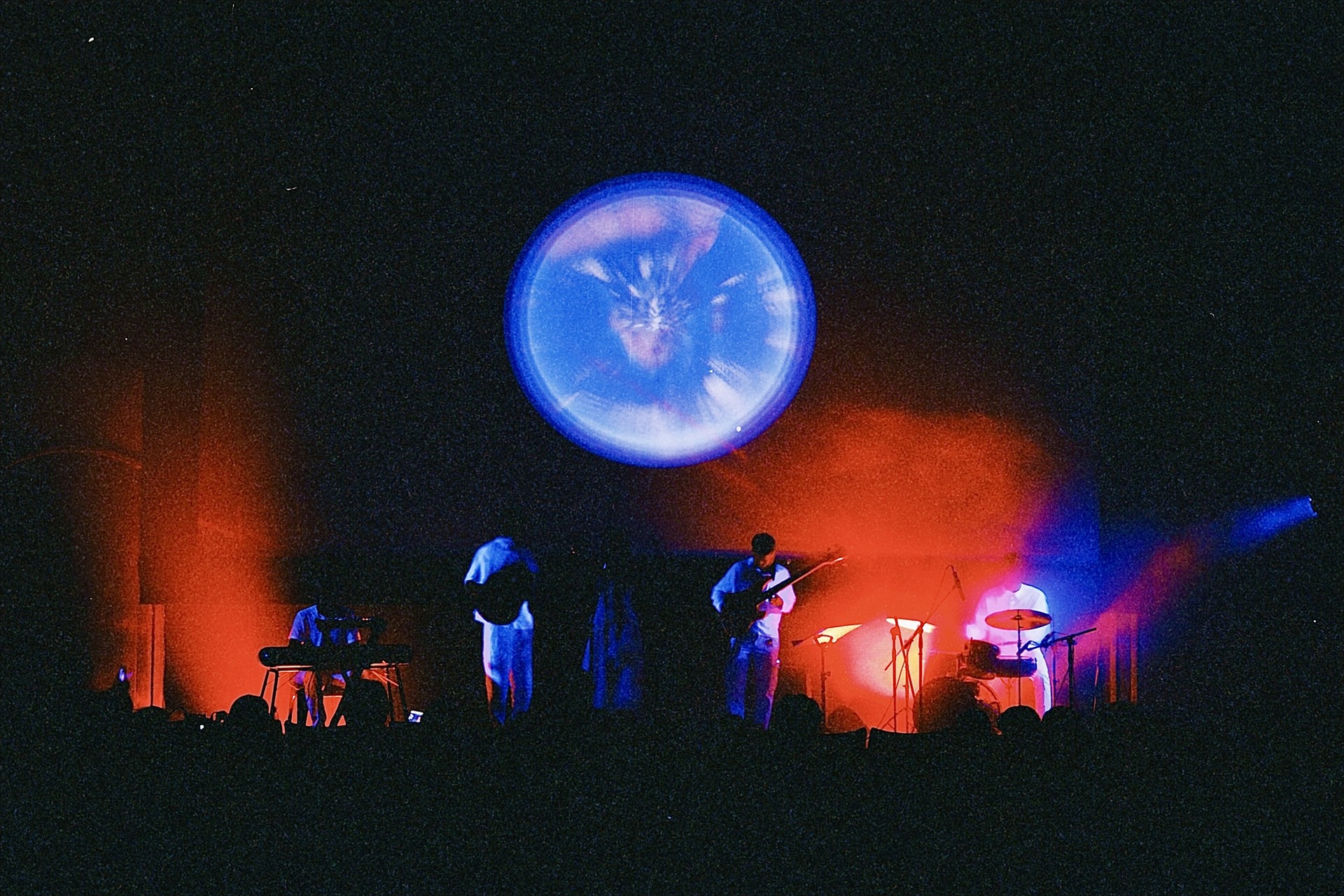
The release was kicked off by a premiere at the Labia Theatre, where Every Seven was screened in cinema, followed by a live performance by MANA, featuring Khaya Mthembu-Salter (guitar), Luke Verrezen (bass), Matthew Keswell (drums) and Vuyo Nkasawe (keys), enhanced by stunning lights and visuals from artists Kamil Adam Hassim and Inka Kendzia. It was a night of pure magic—a true testament to MANA’s artistry. 


About MANA
3 years into her career, South African-Peruvian MANA has performed across Europe, South America and Africa and completed residencies in affiliation with Sun Ra Arkestra and the renowned Birds Eye Jazz Club. Back home in Cape Town, she is celebrated for independently creating never-before-seen immersive concerts and transcendental music toeing the line of neo-soul and spiritual jazz.


Listen to Orb here

Watch the Short Film here


Press release courtesy of MANA


Boogie Vice, N-You-Up, and Trulybles team up on REK’D

Rekids REK’D offshoot release ‘Make A Wish’ this May, the latest single from French artists Boogie Vice and N-You-Up. ‘Make A Wish’ is an energetic cut made for sunny weather, bringing infectious energy and featuring a debut, freestyle vocal from Congolese DJ and pianist Trulybles, who also plays the church organ coming in at the halfway mark, and whose voice shines in both the original and the jacking, club-ready ‘Kinky’ mix.

“The original mix is sunny and has some of the influences of Trulybles’ church music as he played the organ on it. The Kinky mix is a bit darker, to be played later in the night.” – Boogie Vice & N-You-Up

“I was just being my usual self, chatting and joking around with Boogie and Nick. Music wasn’t even on my mind at that moment. Boogie and Nick invited me to hop in the booth and join their session. I didn’t think much of it, but I decided to go with the flow. Once I was in the booth, I just let my personality shine through. I was being my crazy self, and the energy was infectious.” – Trulybles

Boogie Vice is a Paris-born, Cape Town-based DJ and producer known for his groovy house and disco-infused sound, with releases on Ed Banger, Circa99, and CUFF. N-You-Up hails from Southern France, blending jazz, funk, and disco on labels like

Nervous Records and Get Physical, while Trulybles is a jazz-trained musician whose hybrid sets fuse live piano and DJing, making his debut vocal appearance on Boogie Vice & N-You-Up’s ‘Make A Wish’ for REK’D.

Listen to ‘Make A Wish’ here


Press release courtesy of Dispersion PR

Rocky Dawuni’s single ‘Rise’ Nominated for a Grammy

Three-time GRAMMY nominated musician and activist, Rocky Dawuni, straddles the boundaries between Africa, the Caribbean and the U.S. to create his Afro Roots sound that unites generations and cultures.

Rocky is a UN Goodwill Ambassador for the Environment for Africa, a UN Foundation Ambassador for the Clean Cooking Alliance, an Ambassador of Born Free USA and for the World Day of African and Afrodescendant Culture which is a globally recognized by UNESCO. Through these and other designations he uses his music to shine a light on crucial issues facing humanity across the globe through live concerts, speaking roles, panels, youth empowerment and more.  

Influenced by the soulful beats of Fela Kuti and the positive messages of Bob Marley  – Rocky Dawuni’s infectious, sing-along sixth album, Branches of the Same Tree, (Cumbancha) was nominated for a GRAMMY for “Best Reggae Album” (2016) featuring the Afro Dancehall mashup video “African Thriller.”  Branches highlights Dawuni’s ability to communicate a universal, uplifting message that crosses borders and reaches out to the hearts of millions. The influential “Songlines Magazine named the album one of the “Top 10 Most Essential Reggae Albums of All Time!”

Rocky released a Ghana focused EP “Voice of Bunbon, Vol. 1”  which was nominated for “Best Global Music Album” for the 2022 GRAMMY Awards. Three videos were released for the EP including “Ghost Town” shot in Los Angeles, CA by photographer Casey Bridges (son of legendary actor Beau Bridges) which is a poignant tribute to 2020 as well as “Beautiful People” which was shot by rising Ghanaian cinematographer Slinghot in Rocky’s home village of Bunbon, Ghana which explores how “a deep sense of appreciation and gratitude can shift our gaze to recognizing our personal and communal power.” In a time when divisive rhetoric on the rise and the political climate prefers to build walls over bridges, Rocky’s music is a refreshing message about global unity and a worldview of oneness. 

Rocky released “Neva Bow Down” featuring Blvk H3ro in late 2022 which was nominated for a GRAMMY for “Best Global Music Performance.” In spring of 2023, Rocky collaborated with world renown Jamaican Reggae group, Morgan Heritage on their smoking track “Afreeca the Future” also featuring Lord Alhajiam of Daara J fame from Senegal.

Rocky has now released his brand new single “Rise” through AQUARIAN Records accompanied by a video filmed by renowned Ghanaian twin photographers Twinsdntbeg. “Rise” was shot at the original Tuff Gong Africa studios in Ghana (built by Rita Marley in honor of Bob Marley) which Rocky has now taken over and is rebuilding into a global cultural incubator, recording studio and youth complex currently dubbed The Sankofa Center.

Rocky was nominated for yet another GRAMMY for ‘Rise’, sharing “‘Rise’ is a song that speaks to the consciousness that is so needed in this time. I am thrilled for the global attention that this nomination has brought to this first single from my forthcoming album.” Africa is truly rising.

Listen to ‘Rise’ here


Press release courtesy of AQUARIAN Records