Southern Guild Cape Town presents concurrent solo exhibitions by two of Africa’s leading ceramic artists

Southern Guild Cape Town presents concurrent solo exhibitions by two of Africa’s leading ceramic artists: ‘iNgqweji’ by Andile Dyalvane and ‘Dumalitshona’ by Madoda Fani, running from 22 November 2025 to 5 February 2026.

Dyalvane has exhibited widely across the globe and has work in the collections of prestigious institutions including the Metropolitan Museum of Art, Denver Art Museum and Vitra Design Museum. This is his fourth solo exhibition with Southern Guild. 

Fani’s distinctive, smoke-fired ceramics are in the permanent collections of the Philadelphia Museum of Art, Princeton University Art Museum and the LOEWE Foundation, among others. He was a featured artist at the 2024 Indian Ocean Craft Triennial in Western Australia and has held two previous solos with the gallery.
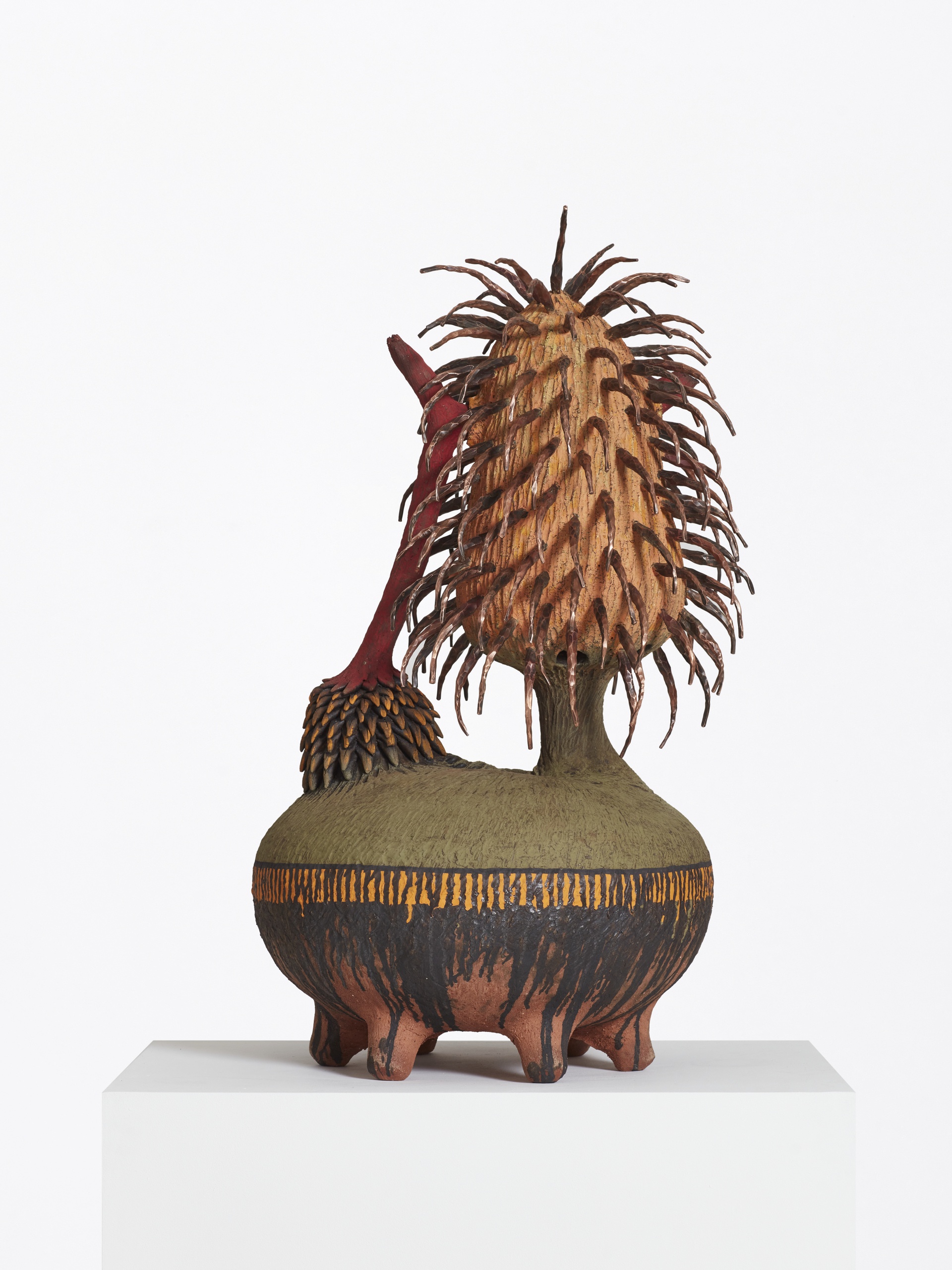
Andile Dyalvane, ‘iNgqweji’ Series, ‘Ihobo-hobo’ (Cape Weaver Bird), 2023, Cr. Hayden Phipps & Southern Guild
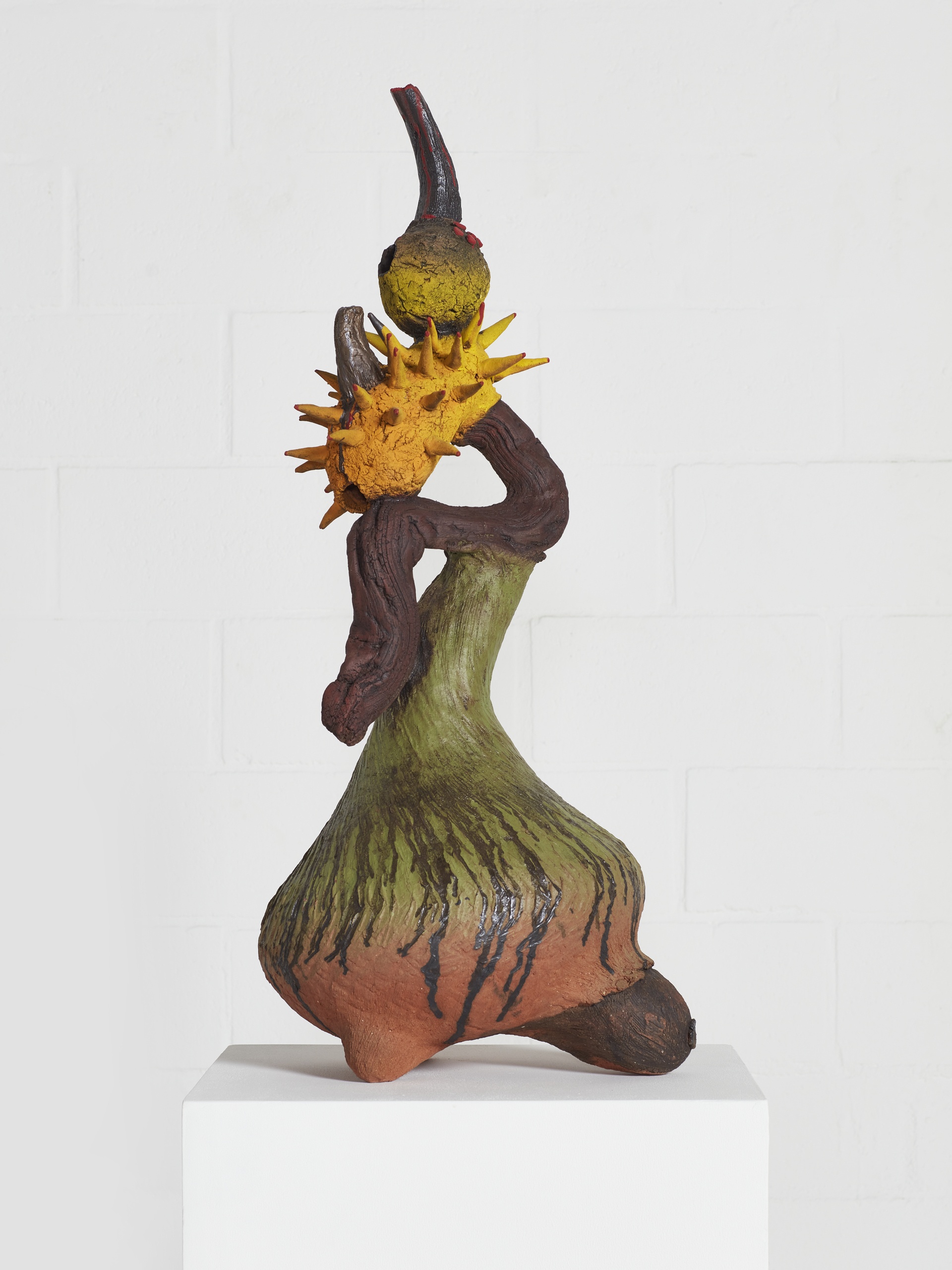
Andile Dyalvane, ‘iNgqweji’ Series, ‘Undlwana I’ (Small Ant Nest), 2023, Cr. Hayden Phipps & Southern Guild

Andile Dyalvane: iNgqweji 

iNgqweji (“bird’s nest” in isiXhosa) comprises standing and suspended sculptures in glazed earthenware, glass and copper. Five years in the making, the exhibition expands Dyalvane’s practice into immersive sculptural installations that explore spiritual ecology, indigenous knowledge systems, and humanity’s connection to the natural world.

Conceived as a series of environments inspired by deserts, forests and caves, iNgqweji teems with biomorphic forms and vivid materials, incorporating light and sound in collaboration with composer Dr Nkosenathi Koela, glassblower David Reade, and blacksmith Conrad Hicks.

The exhibition draws inspiration from Dyalvane’s pilgrimage to honour Zulu Sanusi Credo Mutwa, whose teachings illuminate ancestral cosmologies. The artist’s journey through the Karoo landscape mirrored the communal structure of the weaver birds’ colossal nests—symbols of unity, design and shared vision.

Dyalvane’s sculptures embody these principles, rising from rounded bases into twisting, organic forms adorned with copper and glass. Many integrate sound compositions inspired by birdsong, reinforcing the artist’s belief in the spiritual resonance between nature, music and healing.

iNgqweji represents what Mutwa termed “the mother mind”: a non-linear, empathetic consciousness that values interconnection and renewal. Through this body of work, Dyalvane reaffirms art as a conduit for reverence and restoration.
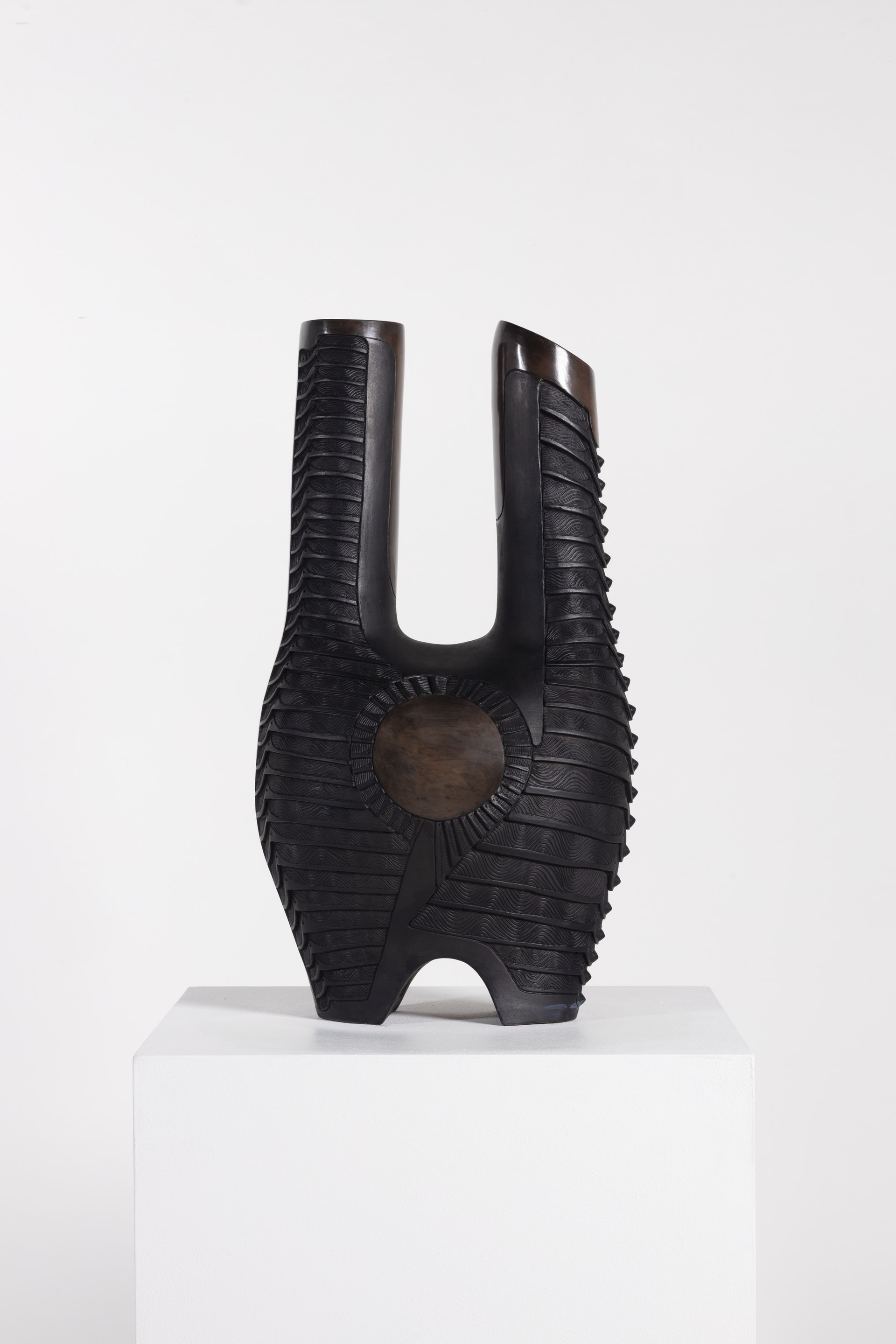
Madoda Fani, ‘Nobhejile’ (Shehas Pledged), 2025, Cr.Lea Crafford & Southern Guild
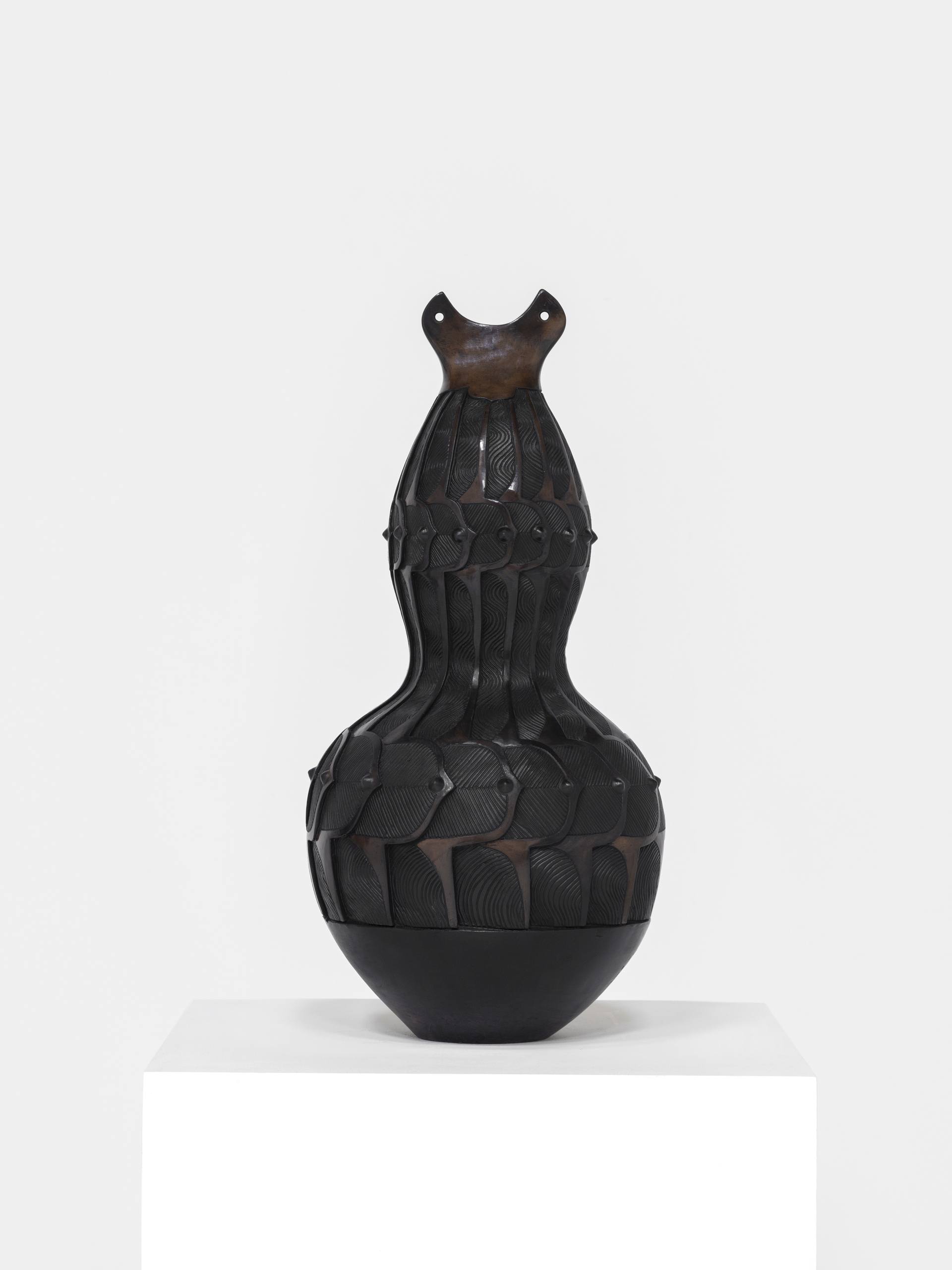
Madoda Fani, ‘Jongilanga’ (Sunflower), 2025, Cr.Lea Crafford & Southern Guild

Madoda Fani: Dumalitshona

In Dumalitshona (“beyond matter”), Madoda Fani continues his evolution of traditional Nguni pottery into sculptural form, fusing earthly gravitas with spiritual elevation. The title derives from the artist’s ‘isibongo’ (praise name), bestowed by his elders in recognition of his achievements.

Fani hand-builds his smoke-fired works intuitively, guided by the clay’s rhythm. The resulting forms—organic yet precise, grounded yet ethereal—embody the meditative conversation between maker and material.

His works, with their dark, unglazed exteriors, oscillate between stillness and movement, evoking both natural and otherworldly presences. Influenced by Samurai armour, insect anatomy, and the biomechanical aesthetics of H.R. Giger, Fani’s vessels exude a quiet strength and sculptural elegance.

Highlights include Ntaba zoLundi (“mountain of abundance”), whose dynamic silhouette captures Fani’s command of form and spirit. With Dumalitshona, the artist reaches a new pinnacle of mastery—one rooted in patience, rhythm, and surrender to the transformative power of fire.

Exhibition dates: 22 November 2025 – 5 February 2026
Venue: Southern Guild, Cape Town


Press release courtesy of Southern Guild


For more news, visit the Connect Everything Collective homepage www.ceconline.co.za
Follow CEC on Instagram

Visual Artist Danielle Mbonu Reminds Us There’s Never Been a Better Time to Be a Creative

Danielle Mbonu is reflective of Lagos’ essence; a patron saint of the creative chaos, cultural friction, and unapologetic drive that fuel one of the continent’s most potent capitals. As I muse to Dan — as she prefers to be called — the energy between South Africa and Nigeria is one of mutual respect and rivalry; we push and provoke one another, each country a mirror to the other’s ambition. Danielle stands as one of the preeminent figures of Nigeria’s creative ascent, particularly as it emanates out of Lagos; a city that births and builds visionaries daily.

Danielle is a restless experimenter, she moves between photography, film, and direction with the same instinctive ease that defines Lagos itself — quick, intuitive, irreverent. Her collaborations span fashion’s most forward-thinking circles and music’s most magnetic names, yet what seems to endure is the gaze that Dan casts: one that dignifies everyday youth culture and refracts it through a cinematic, opulent lens. As she notes, “Black beauty and opulence” anchors her interests, whether behind a camera or leading a creative vision, Danielle’s work continues to translate the pulse of a generation that is wildly improvisational and endlessly in motion. 

From her early collaborations with global fashion houses like Nike and Off-White to her striking visual debut as one of the artistic directors behind Skepta and Wizkid’s Energy, Danielle’s work has expanded Lagos’ creative lexicon and positioned her as one of the key visual architects of contemporary African culture. It’s mind-bending, then, that Danielle credits her creative genesis only back to 2018 — a year she describes as a cultural ignition point for a new generation. “I think what really started everything for me and made me even just get into photography was just like back in 2018. That was when young people in Nigeria really started taking creativity very seriously,” Dan reminisces, and “that was when we started getting international attention — brands started coming here, that was the first year of the Homecoming festival — and I think that was when we realised this could actually be a thing for us. That was when internationally people started being interested in what we had going on creatively in Nigeria.” It was a moment, she reflects, when Lagos’ underground energy began to crystallise into a global movement; the birth of her career, and the birth of a new era in how the continent’s youth imagined and exported their world. 

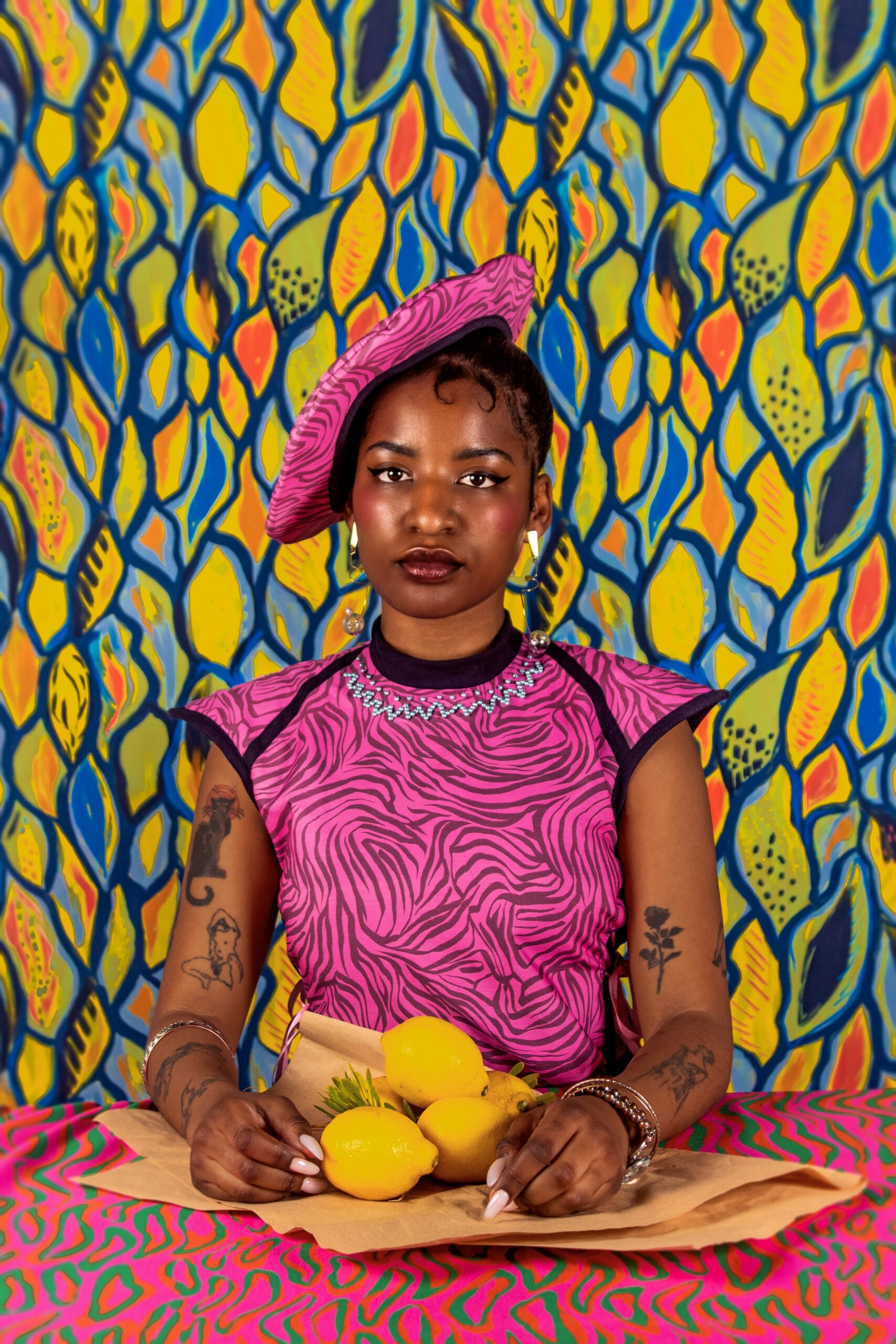
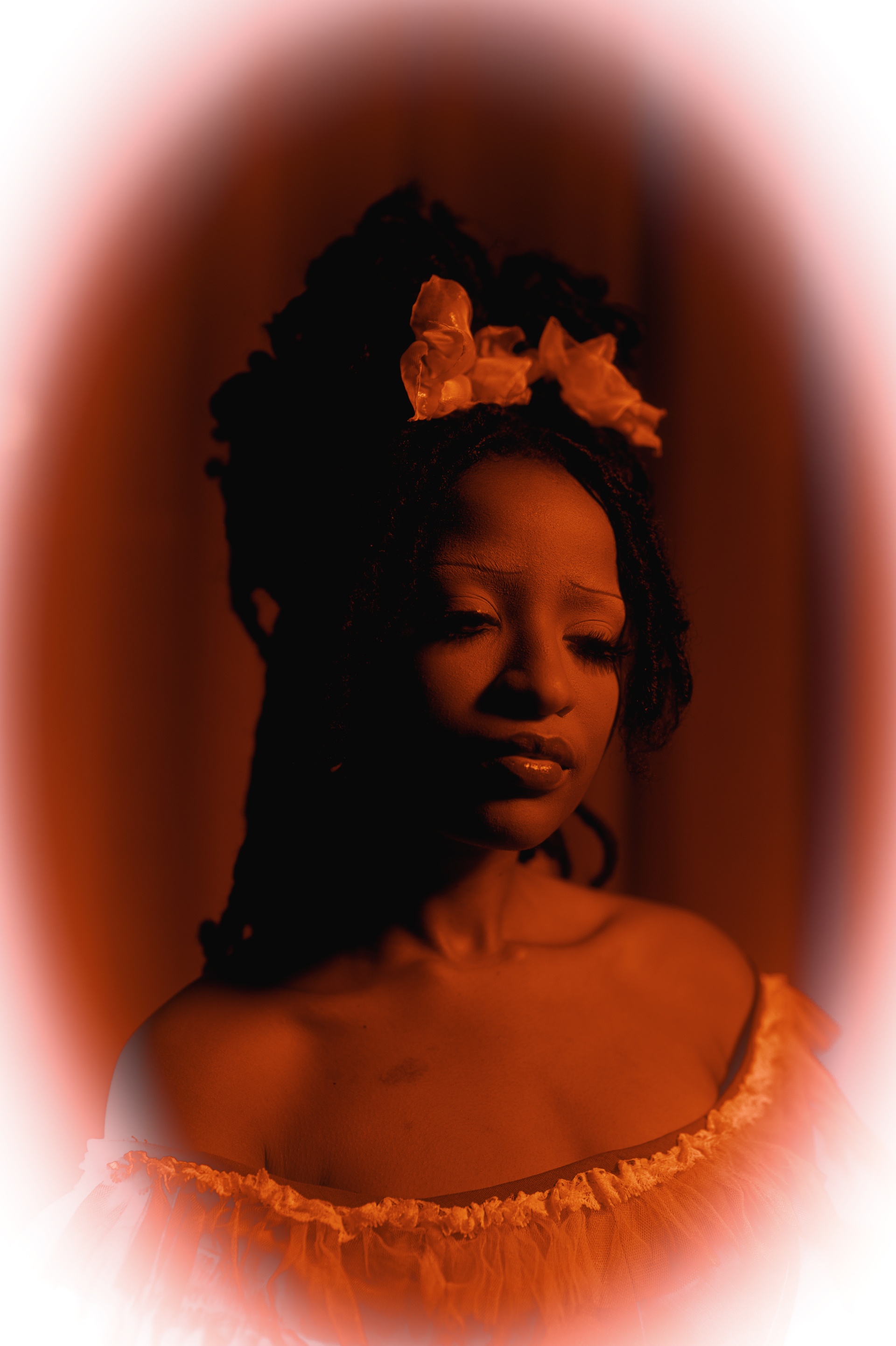
All images by Danielle Mbonu

Lagos is a city marked by velocity and tension. Nigeria, vast and volatile, is a nation of over 200 million people whose cultural exports — from music to fashion to film — has played a critical hand in asserting the global imagination of Black modernity. Gaining independence just over six decades ago, and with a diaspora that spans every corner of the world, its creative voice has long existed in dialogue with, and sometimes in defiance of, the lingering shadow of British colonial influence. Danielle explains that her drive to reframe Lagos through her lens was born from a refusal to accept the narratives imposed upon it. “I always talk about this and I know people don’t like it, but it has to be said. I think a big problem I see with African creativity and with even how people present Africa and Nigeria — is with a focus on poverty. There is this instinct to want to show the bad parts, that I should take pictures of some poor kids on the street. But I think there are so many different ways to still uphold and show the good parts of where you come from.” This has long been a notion of struggle politics as a lens to elicit sympathy. It is, as we know, only derived from a eurocentric gaze that equates suffering with truth, and beauty with privilege. 

As a visual narrator, Danielle’s philosophy is rooted in an unflinching authenticity and a refusal to perform for external validation or conform to the narratives that often shape how Africa is perceived. For her, beauty is constructed through recognition; a deep seeing of what already exists. “For me, I don’t pretend to be who I’m not,” she says. “A lot of people feel like they should do things a certain way because that’s what’s going to get them traction. But no — I’ve always seen the beauty in where I come from.” In her imagery, Nigeria is mediated through the lens of luminosity and self-possessed confidence; the codes of Blackness that speak of ease and style in a way that can only be born from experience. 

“I always try to capture people in their most rich, most beautiful selves,” Daneille adds. This ethos extends to her visual language across creative direction; and is her insistence on reimagining African beauty in a contemporary form. “I know a lot of times now we don’t really wear our traditional fabrics as much, we don’t really do the hairstyles they used to do back in the day, but I feel like there are still ways to show our culture in a rich way — refreshed and reimagined for this era.”

For Danielle, the current visibility of African culture still feels surreal; a generational shift she’s both witnessed and helped assert. If someone told me Nigeria or even Africa would be on the global stage like this now, I would never have believed it,” she says. Having studied in the UK during a time when African identity was often met with condescension or invisibility, she recalls the dissonance of being far from home while her culture remained uncelebrated. “It was never cool to be African. It was never cool to be Nigerian. No one listened to Afrobeats, no one wanted to dress African. If you did, people didn’t take you seriously.” Now, Danielle observes the pendulum’s swing with both wonder and pride, emphasising that “just to see the way everyone — even American artists — want to do Afrobeats, everyone is obsessed with African culture… I’m very grateful and happy to exist in this era.” We agree, and abide by the zeitgeist of vindication that feels particularly vital to us at CEC: a generation that has transformed what was once marginalised into the world’s new cultural centre of gravity.

Danielle reminds us that there has never been a better time to be a creative — especially on the African continent. “Back in the day, if you weren’t a doctor or a lawyer, you didn’t have a real job,” she laughs. Yet today, as global eyes turn toward Africa’s creative economies, artists like Danielle have set forth new parameters of possibility; making careers out of imagination and vision. “We’re so lucky to exist in this generation as creatives,” Danielle emphasises. 

All images by Danielle Mbonu

I’d be remiss if I didn’t ask Dan about her fabled big break that came through the hands and eye of Skepta; as if the pulse of global culture had suddenly turned its gaze toward Lagos and found her already in motion. Of this turning point, Danielle recalls the convergence of people, music, and possibility that defined 2018 — “the year everything changed,” that she had previously pointed to. 

“That was when Homecoming started and Skepta came to Nigeria, and Naomi Campbell too,” she says. Though she’d been experimenting with photography since university, that moment marked her first proper shoot with her friends — an editorial for Skepta’s collaboration with Off-White. “After we’d worked on that they were like, ‘You guys are fire!’” she laughs. When Skepta returned to Nigeria to work with Wizkid on Energy, he invited Danielle and her peers to handle the creative direction — a leap of faith that would alter her path entirely. “I remember feeling like, I can’t believe this is happening — I have no experience in this!” she says.

I ask Danielle about 2025; “I think this year has been a very defining year,” she says. “I took a break for a bit, and the sad thing about creative work is that when you take a break you need to come back and remind people — like, you know, you’re still here. This year has really helped me shape what I want to do next in terms of my creativity, because I really want to go into video.” After several years of photographing musicians and cultural figures, Daniellee is feeling the pull back to her origins. “I want to shoot fashion films,” she continues. “I’ve been shooting a lot of artists mostly over the last two or three years, and I really want to go back to my roots — more fashion-focused stuff, more personal projects. I have quite a lot of things coming out that haven’t come out yet, but this year I think people are seeing that Dan is going back to her usual style of shooting. I’m excited!”

Lastly, I’m curious about Danielle’s creative philosophy, and her response is deceptively simple: make what feels true, not what feels popular. The rest, she insists, will follow. In an industry all too consumed by validation, Danielle’s stance is affirmed by her maxim that “your audience will always find you,” and “if this is really what you want to do, you have to bet on yourself and just keep doing the work.” For her, the proof is in the present. We’re literally living in a timeline where African creativity sits at the centre of the global conversation. As Dan urges us to remember, there’s never been a better time to be alive, and to be creative and unafraid to take up space in it. Go forth and create.


Written by Holly Beaton

For more news, visit the Connect Everything Collective homepage www.ceconline.co.za
Follow CEC on Instagram

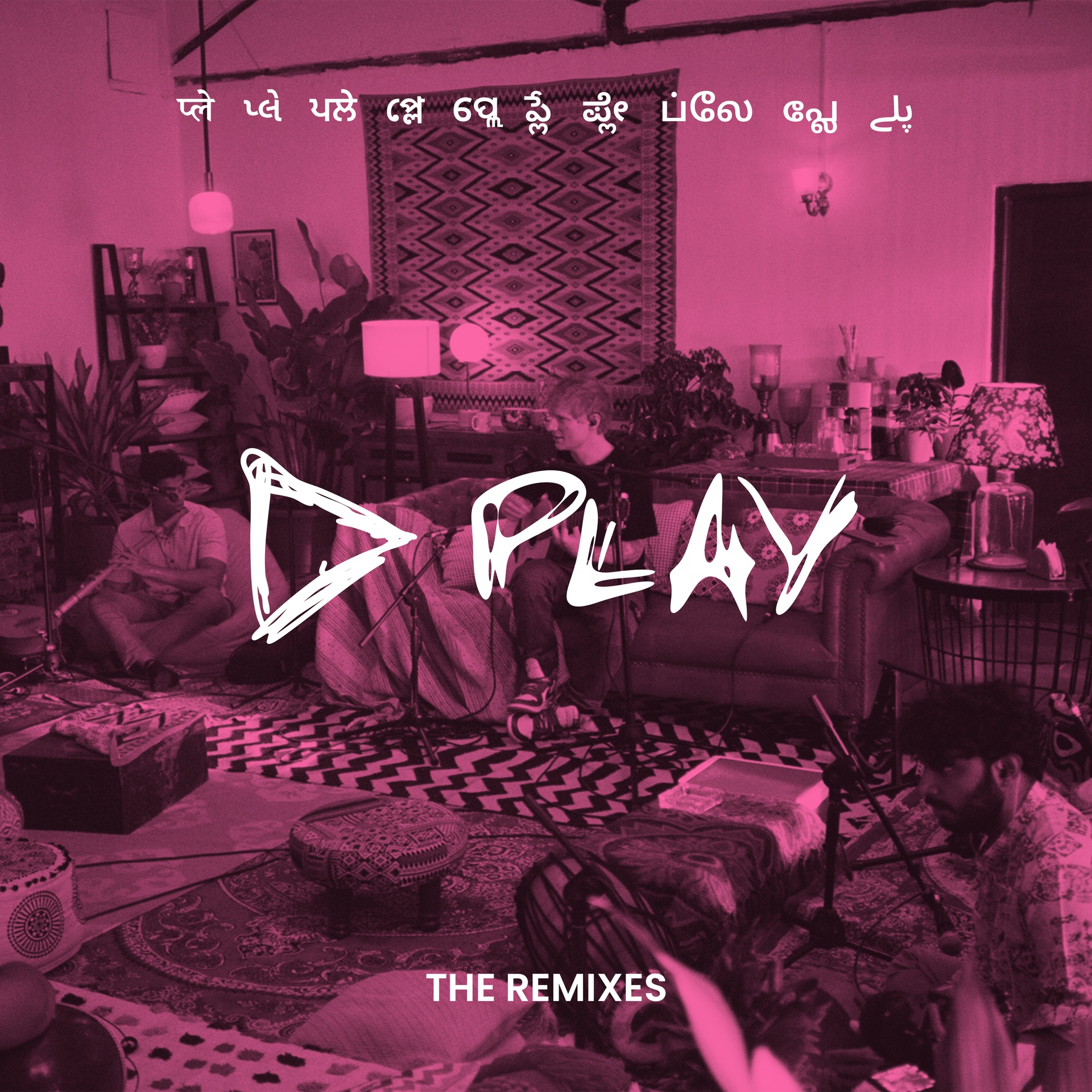
ED SHEERAN RELEASES ‘PLAY – THE REMIXES EP’

Fresh off the success of his ninth UK No. 1 album Play, Ed Sheeran further broadens his sonic horizons with the release of Play – The Remixes EP.

Leading the charge is “Symmetry”, a hypnotic, beat-driven track featuring acclaimed Punjabi artist Karan Aujla. The accompanying official video, directed by Liam Pethick, showcases a high-energy performance by Ed, Karan, and globally renowned dance crew The Quick Style.

Play – The Remixes EP finds Ed Sheeran reimagining four tracks from his original Play album through dynamic collaborations with some of South Asia’s most celebrated talents, including Hanumankind, Dhee, Santhosh Narayanan, Karan Aujla, Jonita, and Arijit Singh. The EP’s vibrant soundscape is further shaped by producers ILYA, Johnny McDaid, Savan Kotecha, FRED, and Elvira Anderfjärd. 

The project was born out of Sheeran’s transformative, month-long stay in India, where he immersed himself in the country’s rich musical landscape while recording Play. During this time, he discovered and connected with many of the EP’s collaborators through the artists he was working with – among them Arijit Singh, with whom Sheeran teamed up with on the half-a-billion-streaming global hit “Sapphire”.

Sheeran previously hinted at the EP during an interview with Nikita Kanda on BBC Asian Network. The resulting release is a vibrant fusion of global sounds and artistic exchange; a borderless celebration of global creativity that sees Ed Sheeran sharing spaces and voices in the spirit of collaboration.

Ed Sheeran says – “Making and finishing Play in India was such a fun experience. Being there over the last decade through touring, I’ve met lots of local artists along the way, and I’ve been introduced to all types of music and cultures. I’ve loved this collaboration process so much and I wanted to represent as much as I could on this EP.”

FOR MORE ON ED SHEERAN:

OFFICIAL WEBSITE | INSTAGRAM | FACEBOOK | TWITTER | YOUTUBE


Listen to ‘Play – The Remixes EP’ here


Press release courtesy of Reliable PR

Mandisi Dyantyis returns with his third studio album, ‘Intlambululo: Ukuhlambulula’

Revered South African composer, trumpeter, and vocalist Mandisi Dyantyis returns with his most transformative work to date, Intlambululo: Ukuhlambulula, a deeply spiritual third studio album that captures the essence of renewal and reflection. The project, which arrives today, continues Mandisi’s lifelong conversation with music as a vessel for truth, healing, and self-discovery.

In the lineage of Somandla and Cwaka, this album completes a trilogy that charts a journey through faith, stillness, and purification. Intlambululo translates to “cleansing,” a concept that lies at the heart of both the music and the man behind it. “I took time to reset and refresh,” Mandisi reflects. “Intlambululo is found in this conscious space of reflection.” It is an album that feels less like a performance and more like a prayer whispered through sound. Each track, recorded as a live studio session, holds the raw honesty of the moment, a direct offering to the spirit.

Mandisi’s work has long transcended the boundaries of genre. His compositions blend the sacred with the secular, the personal with the communal. From church pews in Gqeberha to global stages in New York and Cape Town, his music carries a quiet command, speaking to something ancient yet urgently contemporary. It is rooted in jazz but branches out into the universal language of feeling. The Xhosa proverb “Umntu yinkosi ukuzazi” meaning one’s power lies in self-knowledge, echoes through this record as both philosophy and practice.
 

With Intlambululo: Ukuhlambulula, Mandisi reclaims space for reflection in a world that moves too fast. His trumpet, voice, and pen are instruments of introspection, guiding listeners through the cycles of grief, hope, memory, and rebirth. It is an album that not only cleanses but calls upon others to do the same, to listen with the heart and emerge lighter.

Born and raised in Gqeberha, Mandisi’s journey began in the church before extending into academia, where he earned his BMus Honours and Master’s degree in Jazz Studies with distinction from the University of Cape Town. His artistry has graced some of the world’s most respected stages and projects, from the Isango Ensemble Theatre Company, where he serves as associate and musical director, to appearances at Herbie Hancock’s International Jazz Day Global Concert. His compositions have scored major productions, including Rise: The Siya Kolisi Story and Nina: By Whatever Means, the ballet inspired by Nina Simone’s legacy.

On the cusp of this release, Mandisi will embark on a national tour that mirrors the spirit of Intlambululo. Audiences will be invited to experience a series of intimate performances with his seven-piece band across Johannesburg, Durban, East London, Gqeberha, and Cape Town. For Mandisi, this tour is an act of connection between artist and listener, word and sound, body and soul.

As his voice once again fills the nation’s most beloved theatres, Mandisi Dyantyis stands not only as one of South Africa’s most profound musical storytellers but as a custodian of truth in song. Intlambululo: Ukuhlambulula is a mirror held up to the spirit, a testament to the power of art to renew and remind us of who we are.

Intlambululo: Ukuhlambulula is now available to stream or download globally here.

Tour Dates:

  • 24 & 25 October – Theatre of Marcellus, Johannesburg
    Bookings
  • 31 October – Playhouse Theatre, Durban
    Bookings
  • 6 & 7 November – Guild Theatre, East London
    Bookings
  • 8 & 9 November – Opera House, Gqeberha
    Bookings
  • 14 & 15 November – The Homecoming Centre (Star Theatre), Cape Town
    Bookings


Connect with Mandisi Dyantyis
Instagram: @dmandisi
X: @dmandisi
Website: https://mandisidyantyis.com/

Press release courtesy of Sheila Afari PR


Jambal releases ‘Start Like This’ and ‘Thalassophobia’

Only Good Stuff present, ‘Start Like This’ and ‘Thalassophobia’, the first two singles from Luxembourg jazz quartet ‘Jambal’’s forthcoming LP ‘Men of Average Nature’ with rapper Kenai Shogun. Also included as a special bonus, two standout tracks from the group’s slept-on instrumental EP ‘*Asterisk’, which was released in August.

Luxembourg’s own jazz quartet Jambal is quickly becoming one of the most exciting voices in the grand duchy’s new wave of underground music and youth culture. 2025 marks a milestone year for the group, with the release of not one but two standout projects: the *Asterisk EP, and their full-length collaborative album ‘Men of Average Nature’ with Kenai Shogun – a new collaborative alias of Luxembourgish-Brasilian rapper pirraia (f.k.a Culture the Kid).


The ‘*Asterisk’ EP is the fruit of Jambal’s time as laureates of Propulsion, one of Europe’s most respected jazz programs, while Men of Average Nature is something altogether different: the culmination of a long-lasting friendship, jamming years of living into mere minutes compressed into a record that feels raw, personal, and alive. Jambal and Kenai Shogun have evolved parallel to each other, shaping their studio and live identities before finally joining forces for this project.

Both projects showcase Jambal’s signature sound and their fast development over the years as well as their love for Hip Hop and intricate penmanship. They move fast without losing authenticity and it’s this fluidity that places them firmly in the new wave of young jazz musicians setting their own rules.

The artwork and visual identity on both projects have been created by Jambal’s longtime friend and fifth member Erik Mathias, ensuring a cohesive aesthetic throughout and expanding Jambal’s universe beyond music. At its core, Jambal isn’t just a band – it’s a collective, a story of friendship, and a living example of how creativity grows stronger when it’s shared.


Listen to ‘Start like This’ and ‘Thalassophobia’ here

Press release courtesy of Only Good Stuff 

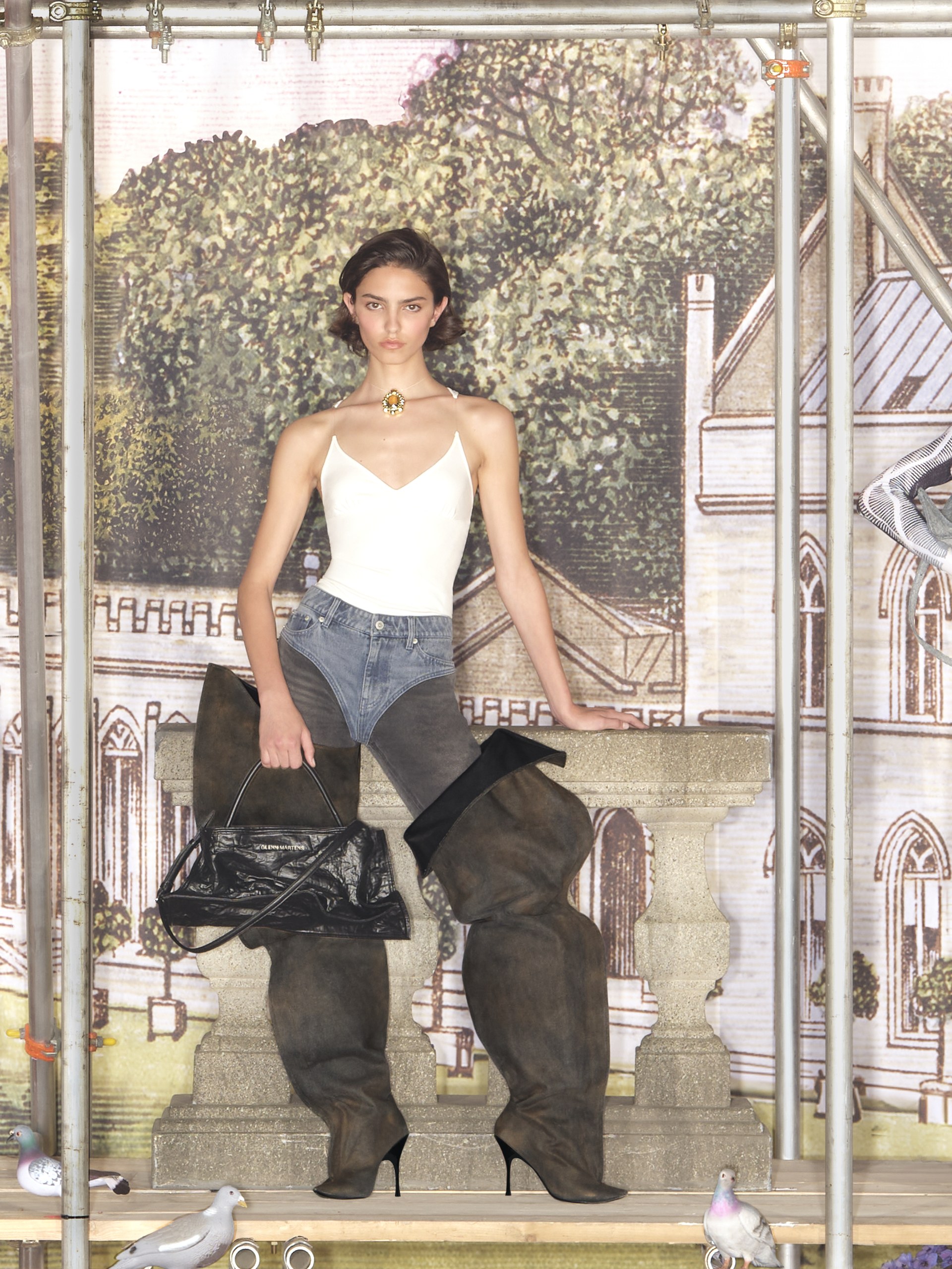
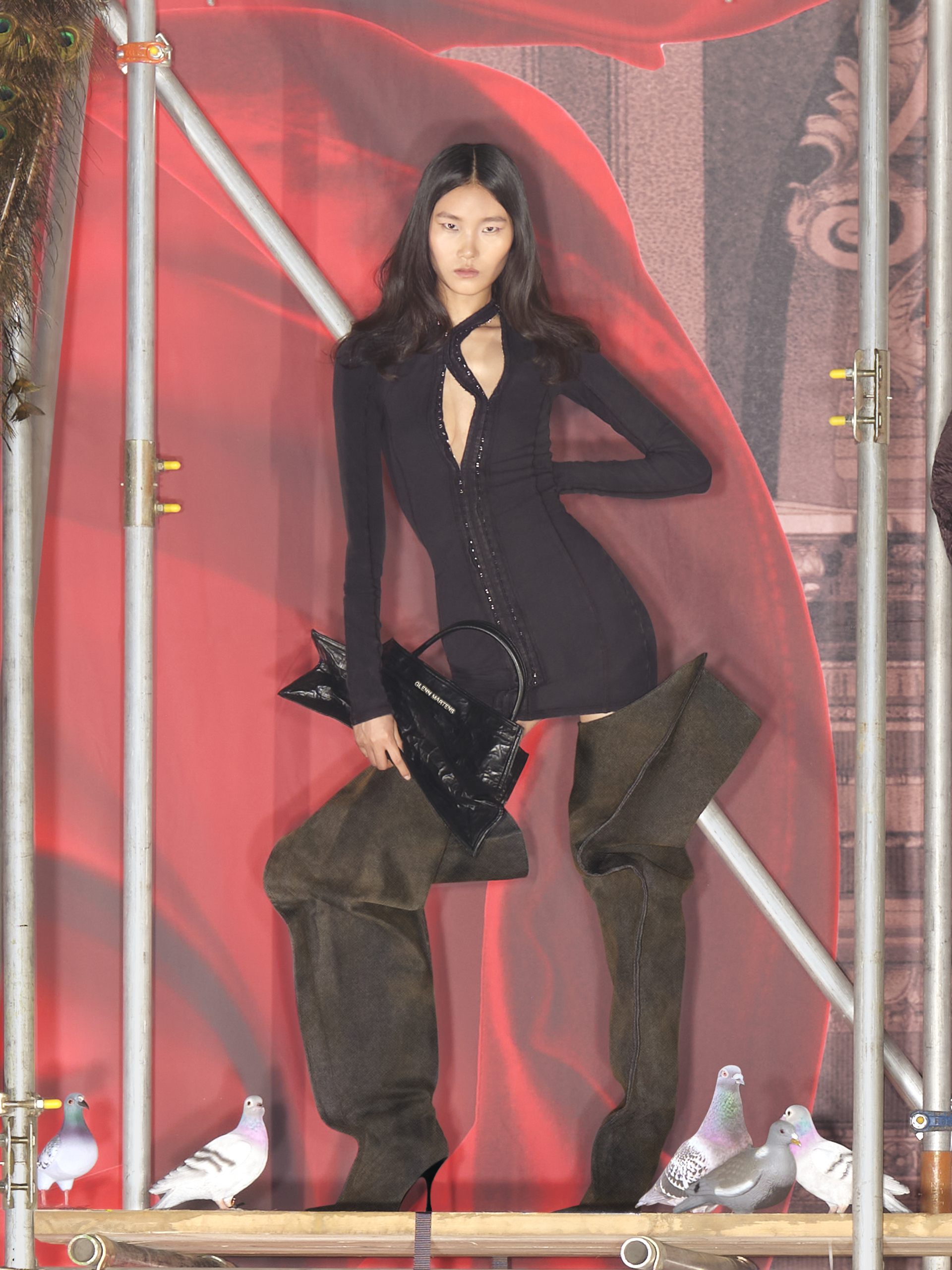
H&M x Glenn Martens is Here

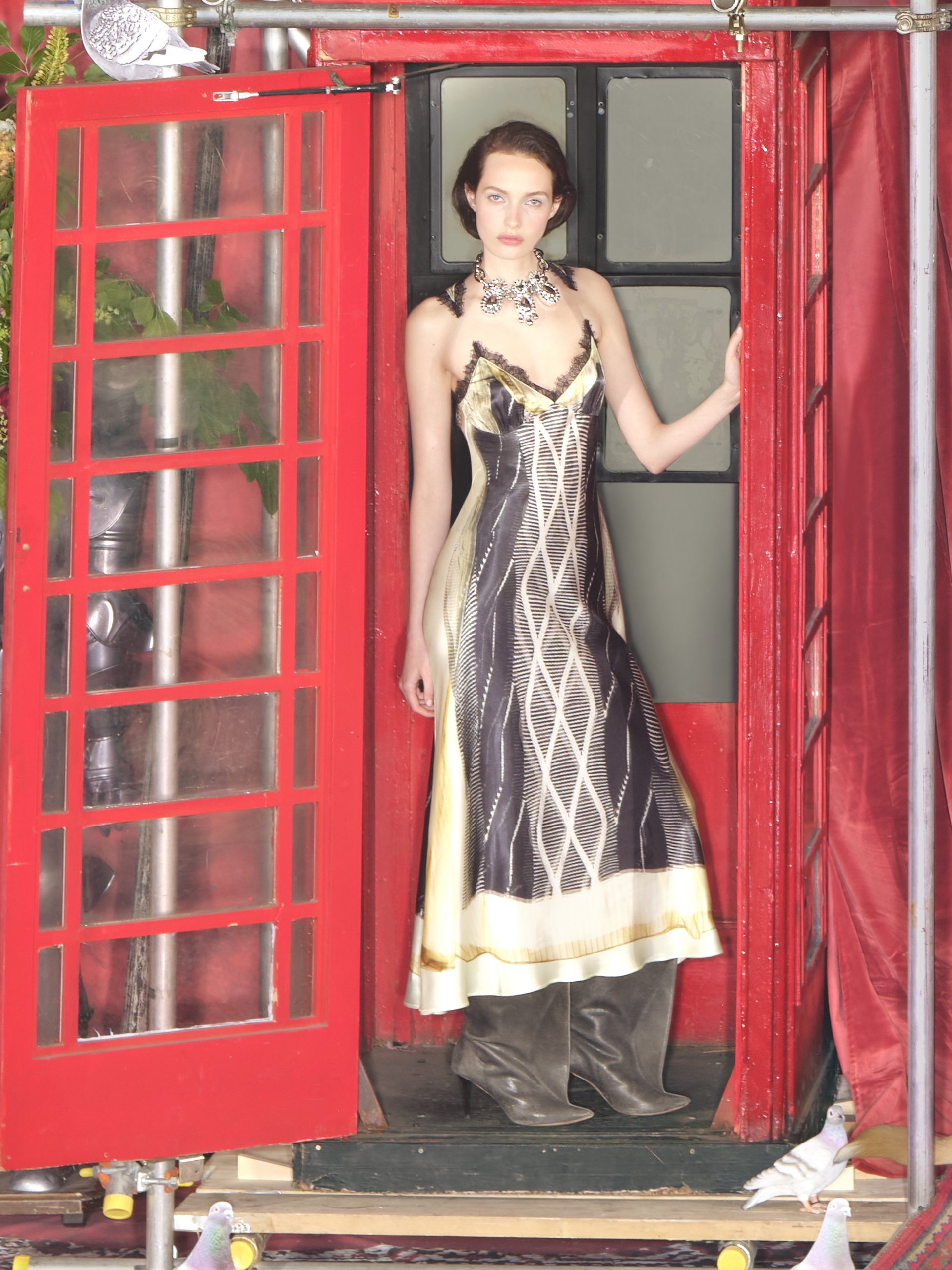
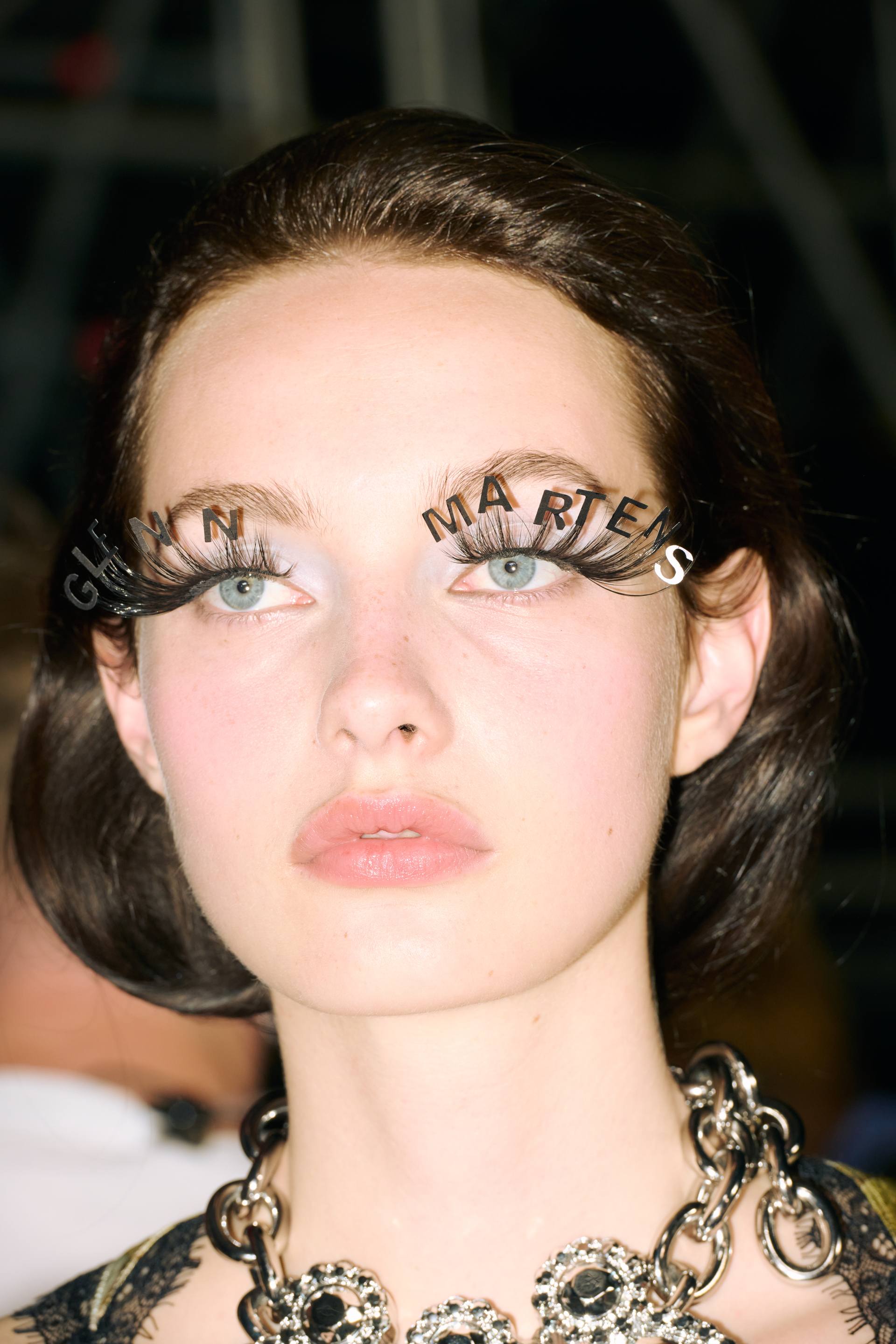
H&M has revealed the hotly anticipated H&M x Glenn Martens collection. A playful campaign starring Joanna Lumley and Richard E. Grant celebrates wit, individuality and self-expression.

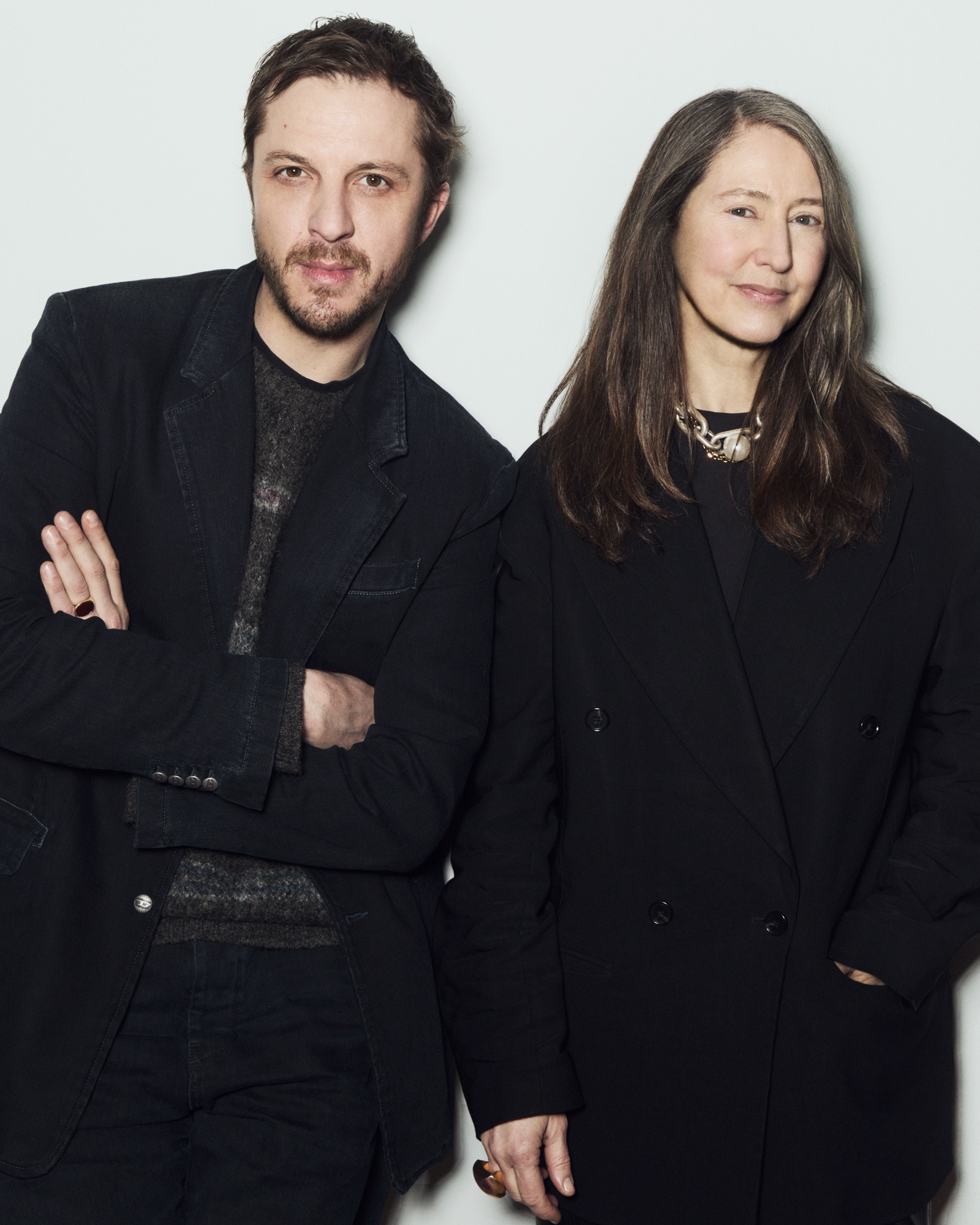
The Belgium fashion designer is defining the landscape of contemporary fashion, and this new collaboration offers a broad range of customers the chance to access never-before-seen designs alongside Martens’s signatures.

Martens’ work has long pushed the boundaries of fashion and this partnership with H&M shows his interest in making fashion accessible. Now, revealed for the first time, is the full collection: a diverse and versatile range of products that combines womenswear, menswear, unisex pieces and accessories. 

The collection twists clothing archetypes into new and unexpected forms. The deeply researched process saw Martens explore H&M’s archive, to select a range of key pieces that consumers adore, from best-selling t-shirts to must-have checked shirts, bomber jackets and jeans. Each is reimagined as an extraordinary newly-designed piece, which play with trompe-l’œil and customisation. Many can be transformed by the wearer thanks to the use of reshaping techniques such as foil and wiring to create sculptural forms. 

The collection also pays tribute to Martens’s journey as a designer, and his iconic work for Y/Project, with various pieces in the collection – from boots through to prints – nodding to key archival designs.

“I see this collection as a big family of garments, all of which have multiple purposes and personalities: like people, they grow and change each day. I am always interested in the clothes that we really live in: and the idea of archetypes and wardrobe staples was the starting point for this very special and joyful project with H&M.” – Glenn Martens.

“I truly think this is one of the most creative collaborations we have ever done. Glenn is such a talent and a radical thinker and these are exceptional designs that play with archetypes and the very essence of what it means to get dressed each day. The campaign is so special – already iconic.” – Ann-Sofie Johansson. ​

Humour is a central part of Martens’s work, and both the collection and campaign embrace wit and self-expression. For the campaign, Martens’s presents a twist on a family portrait, featuring a cast of characters that includes acting icons Joanna Lumley and Richard E. Grant, alongside various exciting new faces. The casting nods to Martens’s fascination with British humour, and the various UK references that run through the collection. The campaign and collection will be celebrated in a forthcoming London event.

All imagery courtesy of Media Relations 

“It was great fun to be a part of Glenn Martens’s and H&M’s special family portrait. I always say that the best fashion is rule-breaking – people should wear whatever they want to wear – and I admire Glenn’s daring spirit and eye for twisting things in unusual ways.” – Joanna Lumley

“What a special opportunity to team up with Glenn Martens, Joanna Lumley and H&M. I love the spirit of the collection – everyone can wear it in their own way and bring out their personality. I enjoyed playing the patriarch of this stylish and yet motley crew!” – Richard E. Grant

H&M Glenn Martens is available from 30 October at H&M Sandton City and online from Superbalist.


All imagery courtesy of Media Relations 


Press Release courtesy of Media Relations 

For more news, visit the Connect Everything Collective homepage www.ceconline.co.za

Follow CEC on Instagram

Fashion History is Fashion Literacy with Khensani Mohlatlole

Class is in session! This conversation has been a long time coming — and I am thrilled it’s finally here, as Khensani Mothlatlole is, in my view, one of the most important thinkers in South African fashion and design today. Possessing the kind of irreverent, slightly cynical charm that only someone who calls herself an “aspiring eco-terrorist” could, Khensani has made fashion history cool in a way few others have managed. 

When it comes to her vastly sweeping interests, and with a resistance to moral posturing, Khensani’s anthropological interest in dress and her bone-dry conviction that sustainability is simply the only intelligent path forward have produced an archive of notable essentiality; her YouTube channel, in particular, has become a living repository of South African and pan-African cultural history — rigorous, witty, and incredible. Whether it’s video essays like South Africa’s First It Girls: Dolly Rathebe, Miriam Makeba and Dorothy Masuka or The Dull Tragedy of Apartheid’s Trad Wives, suffice to say, I’m perpetually obsessed and impressed.

So, this chapter is a feature with Khensani through the lens of South African fashion history — or more precisely, her insistence that historical research in South Africa deserves a fashion section. For all our scholarships on art, politics, and anthropology, fashion remains curiously under-researched — scattered across archives, footnotes, and museum collections without ever being given the rigour or respect it warrants. Documentation before the 20th century is sparse, often filtered through colonial eyes, and rarely examined for its design intelligence. Khensani’s work challenges that gap, treating dress as a vital form of historical record; a mirror of how people lived, moved, and made meaning.

On her foray into fashion history, Khensani Mothlatlole describes a journey that began in isolation. “During the pandemic, I had a lot of time and a lot of questions. The biggest one was that I felt disconnected from my own culture — partly because of being urbanised and away from certain traditions, but also because my family has been quite anglicised and Christianised for generations. So they weren’t the best resource for some of the things I wanted to understand. Eventually, I realised that clothing and fashion could be a way to reconnect, and it felt like something I could approach from where I am, without needing to become an academic or anthropologist first.”

This auto-didactic drive captures the intellectual and emotional engine behind Khensani’s work; a desire to bridge personal dislocation through material culture, personally, as well as spanning South Africa more broadly. “I love the big skirt, tiny top look, you know? I was trying to research all this stuff — like, what were Northern Sotho people wearing 150 years ago? Or what were Tonga people wearing? There isn’t much information that exists from before the 1920s or 1930s. So I started thinking, maybe since there were all these visitors coming through at the time, if I studied what they were doing, I might get a glimpse of what they were witnessing or documenting while they were here.”

“What I’ve noticed is that when photography started becoming more common and accessible, there’s this fascinating archive of Black and African people — both on the continent and in the diaspora — especially from around the 1880s to the early 1900s,” Khensani explains, “that’s where most of the wealth of information lies. It’s dark in some ways, because even trying to find documentation on white Afrikaans women before 1850 is difficult. But during that late 1800s period, there’s a lot more documentation on what everyone was doing — not just white people, but Black people too. Some of it’s recorded through a very particular lens, obviously, but it’s information nonetheless. Even now, I still haven’t found much — even ethnographic drawings or paintings are rare — especially anything from before the 1800s.”

All imagery courtesy of Khensani Mohlatlole

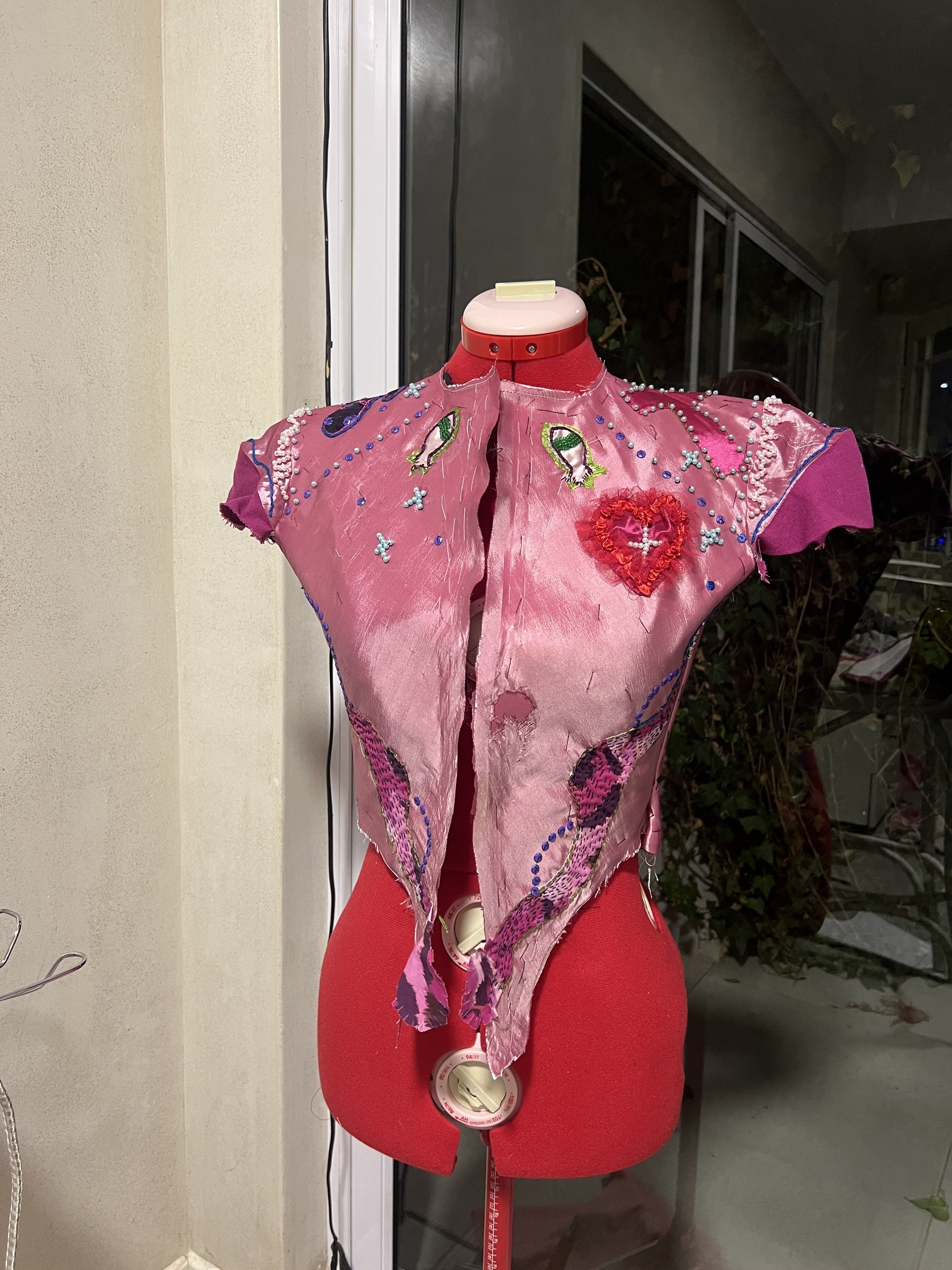
Khensani’s practice sits at the intersection of fashion, historiography, and epistemology, and she has a reluctance to commit African dress as belonging only to the realm of craft or ornamentation; “the deeper I went, the more I realised that fashion and textiles in Africa are often treated as secondary — like decorative art or material culture — instead of being seen as archives in their own right. A lot of information sits hidden under headings like ‘ecology’ or ‘archaeology’, which makes it hard for people coming from a design or fashion lens to find it. There’s a real gap in how we study dress, and that’s part of why I started making my own pieces, it became my way of doing research.” Khensani’s channels are replete with her commitment to generating the very knowledge she seeks — from sewing and reconstructing historical silhouettes to experimenting with period dressmaking. This process has established her as one of the most distinctive stylistic voices in contemporary South African fashion; the coolest, anti-institutional lecturer that you need on your journey to fashion literacy. 

Khensani’s shift from aesthetics to epistemology is part of her broader intellectual evolution, as she muses to me that “I think I’ve moved from caring about the product to caring about the information. The aesthetics were my entry point, but now I’m more interested in context — what garments meant to the people wearing them, how they move through time. It’s become more anthropological for me. I still love getting dressed and making things, but I combine the research with the craft, to understand how knowledge is held in the act of making.”

If you know Khensani’s creative projects, you’ll know this is a woman who can bone a corset in the time it takes most people to send an email (well, almost), though these days, her focus has turned from wearing the past to working with it. After several years spent dressing almost exclusively in period clothing, Khensani began to shift her attention from fashion to fibre; a granular refocus, as it were; “fibre work is so slow — it’s inherently resistant to acceleration. You can’t rush embroidery or weaving. Nothing about the technique has really changed for hundreds of years. The tools might vary, the materials too, but the gestures are the same. There’s something metaphysical about that continuity. When you sit for hours, repeating a motion, you start to feel connected to everyone who’s ever done it. It’s meditative, I don’t know, I think it’s what people must experience when they pray.” 

This turn towards fibre art connected Khensani with a community of people, and keepers of embodied knowledge. As it were, Khensani is now out in the world doing fieldwork; “It’s also deeply communal. I’ve had the most beautiful conversations with older women while beading or sewing — comparing thimbles, talking about why we do things the way we do. That’s when I realised that preservation happens in the hands of people still doing the work, and that I needed to go back out into the world and focus on practical research.” 

All imagery courtesy of Khensani Mohlatlole

Having grown up online, Khensani recognises the paradox of a generation raised by the internet (and her visibility as a content creator) that at some point, it almost always inspires a turn away from it, back toward the tangible world. For her, the hand is as vital a site of learning as the archive or the algorithm. “As much as I love the internet and how connected it’s made us, a lot of this work needs to happen offline,” she says. “This is a tactile practice. Being in the same physical space with someone who’s making changes everything. Even in my workshops, I’ve noticed how people have almost no idea how textiles come together until they try it. The moment they do, something shifts — they see differently. That, to me, is education.” 

Khensani approaches South Africa’s textile legacy with the eye of a historian and the sensitivity of a maker, and in tracing how the nation’s fabric industries mirror its social and political transformations. One of her observations keenly acknowledges and situates South Africa as a vital node within global textile history; “South Africa actually has a fascinating textile history that’s been overlooked. Pre-Cape Colony, we were in a unique position — textiles came here through trade from India and Indonesia, which were already global leaders. Later, under apartheid’s isolation, local industries had to become self-sufficient, and that created a kind of forced excellence in certain sectors. Some older people say brands like Hugo Boss and Ralph Lauren used to produce here. I haven’t found the evidence, but it tells you something about the level of skill that existed. The textile unions were also some of the first integrated spaces in the country, which is incredible when you think about it. A lot of the organising women of the 1956 Women’s March were from the same textile unions.” 

The decline of the local textile sector after democracy marks, as Khensani notes, equally an economic loss and an epistemic one — a rupture in intergenerational knowledge. “After 1994, a lot of that collapsed. Factories closed, machinery wasn’t updated, and with China’s rise, we just couldn’t compete. You still find women who were seamstresses sitting at home now with nothing to do — women who can pattern-cut, stitch, embroider — all of it. It’s tragic, because that’s living knowledge. Still, I think there’s a slow reawakening — partly out of necessity. Retailers want faster turnaround times, so local production makes sense again. But I hope it’s more than just economic — that it’s also cultural, that we start valuing our own systems of making.” The future of South African fashion, she suggests, is in reactivating the dormant intelligence of the hands that once made the country’s cloth.

Khensani describes herself as “disgustingly optimistic,” to which I gleefully agree. Despite the noise and nihilism of the world, her hope feels like the correct course of action. We have so, so much potential and promise, as Khensani reminds me. “What makes me hopeful is that the designers who are thriving now are the ones looking inward, who are working from their own archives. There’s a shift towards self-sufficiency and not in some weird nationalist way, but as a kind creative sovereignty. There are people who are making isidwaba the same way they were hundreds and hundreds of years ago. There are still people who do beading the same way, who have different solutions for the types of materials we could be making from — combinations of things that have been happening here for generations. What I would hope for is greater platforming and centring of that kind of knowledge. And also, solutions that make sense here. We don’t necessarily need the right conditions for growing cotton or flax — but maybe hemp?”

“Hemp’s something that’s been around for quite a while,” Khensani reflects. “I’m hoping more people start to feel that it’s important to invest in their own cultures, and that there’s a stronger drive to put resources into that. We don’t have to operate within the traditional fashion system of constant, unending newness. There’s value in being more connected to your local tailor, your local maker — or even becoming that person yourself. Everyone could benefit from a deeper understanding of how these things come together.” 

Khensani’s vision is one of continuity; grounded and restorative. It cannot be overstated why knowing fashion history, or understanding the systems and stories that shape it, matters. The premise of any real fashion literacy begins with recognising what fashion is as a sartorial medium of communication, a language through which we signal identity, belonging, and belief. In Khensani’s hands, dress is a record of how people have always been – on some level – committed to cloth as one of our most important material experiments.  

Written by Holly Beaton


For more news, visit the Connect Everything Collective homepage www.ceconline.co.za
Follow CEC on Instagram

‘Gaolese Couture’: Crafting Haute Couture from the Heart of a Village

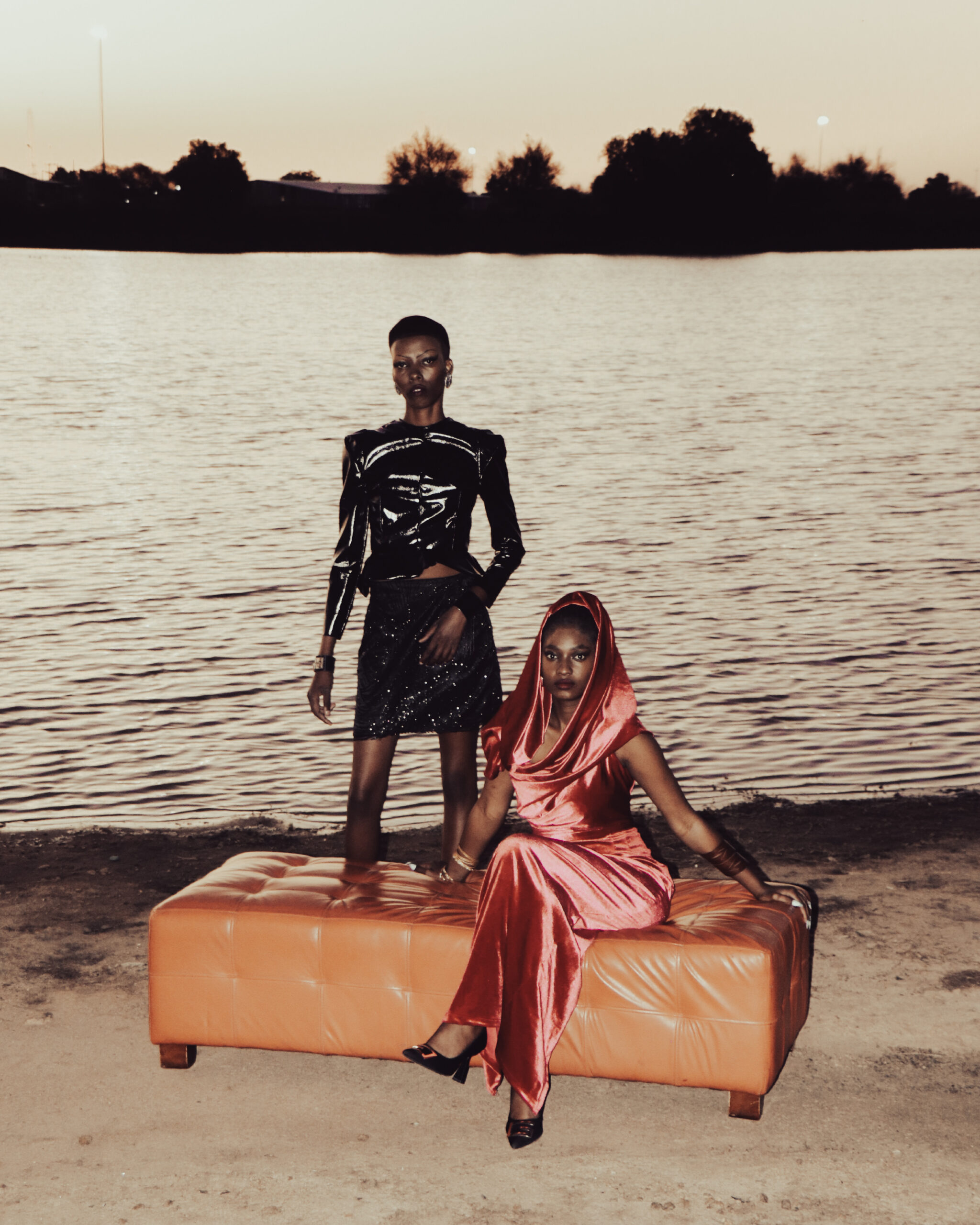
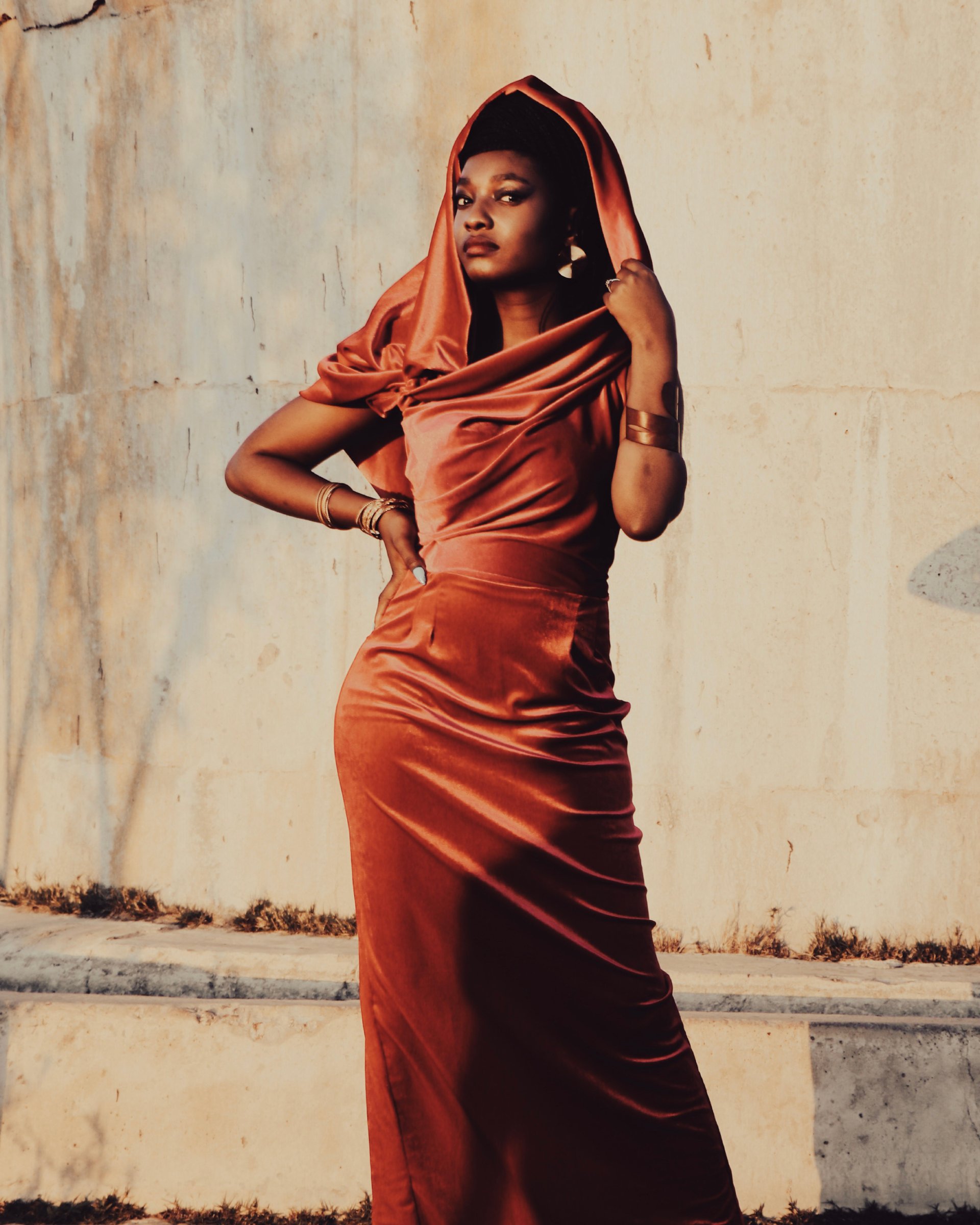
From the quiet rhythms of Ganyesa village in South Africa’s North West Province emerges a story of strength, heritage and high fashion. Gaolese Couture—founded by designer Kealeboga “Lebo” Maruping Appolus—weaves memory and modernity into garments that speak of legacy, resilience and love. This latest collection, shot and directed by her daughter Koketso “Coco” Maruping, redefines what couture can mean when crafted from the heart of a village.

Far from the glossy catwalks of Paris or Milan, Gaolese Couture celebrates the artistry of home. The brand is a living tribute to Gaolese, Lebo’s grandmother—a visionary seamstress who dressed many of Vryburg’s most prominent women. Through her hands, fashion became language, identity and quiet rebellion.

This collection continues that legacy. Shot against raw backdrops of earth, water, and concrete, the campaign is both a meditation on healing and a visual love letter to village life. After surviving a devastating accident that left her temporarily paralysed, Coco’s creative direction and photography mark a powerful return to artistry—a testimony to the unbreakable bond between creativity and recovery.

Mother and daughter worked side by side, merging heritage, memory and contemporary couture. Their collaboration carried a new gentleness, adapting to Coco’s physical recovery while deepening the emotional texture of the work. The result is a visual narrative that captures both the tenderness of healing and the boldness of reinvention.

All imagery courtesy of Koketso “Coco” Maruping

The garments, photographed amid textures of dust, stone, and water, embody the strength and softness of village life while asserting their place in the global language of haute couture.

The Garments

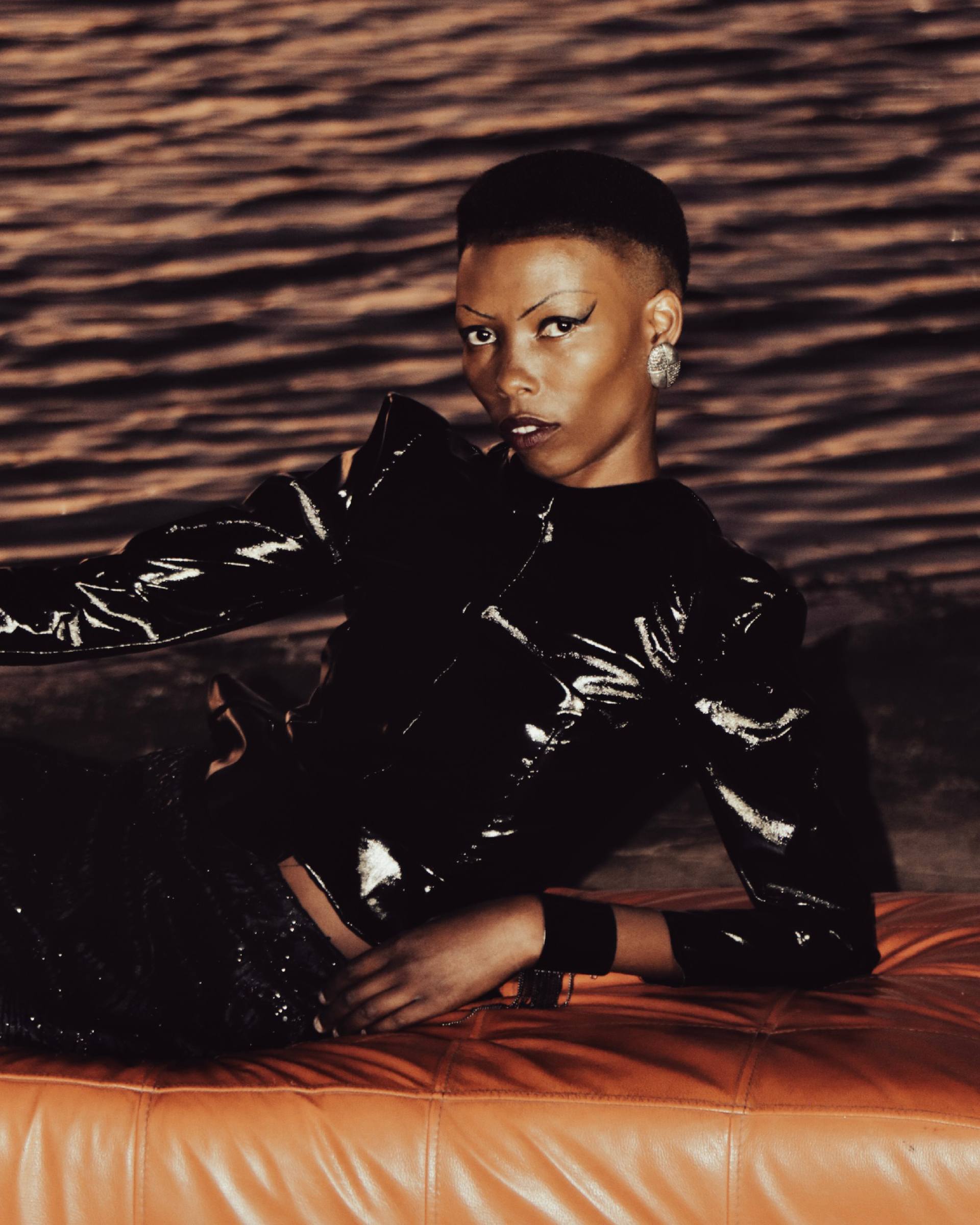
The Black Ensemble: a sculptural piece crafted from a special leather-like material, paired with a lace and sequin skirt. Its stark contrasts symbolise survival, pain and the courage to confront mortality.
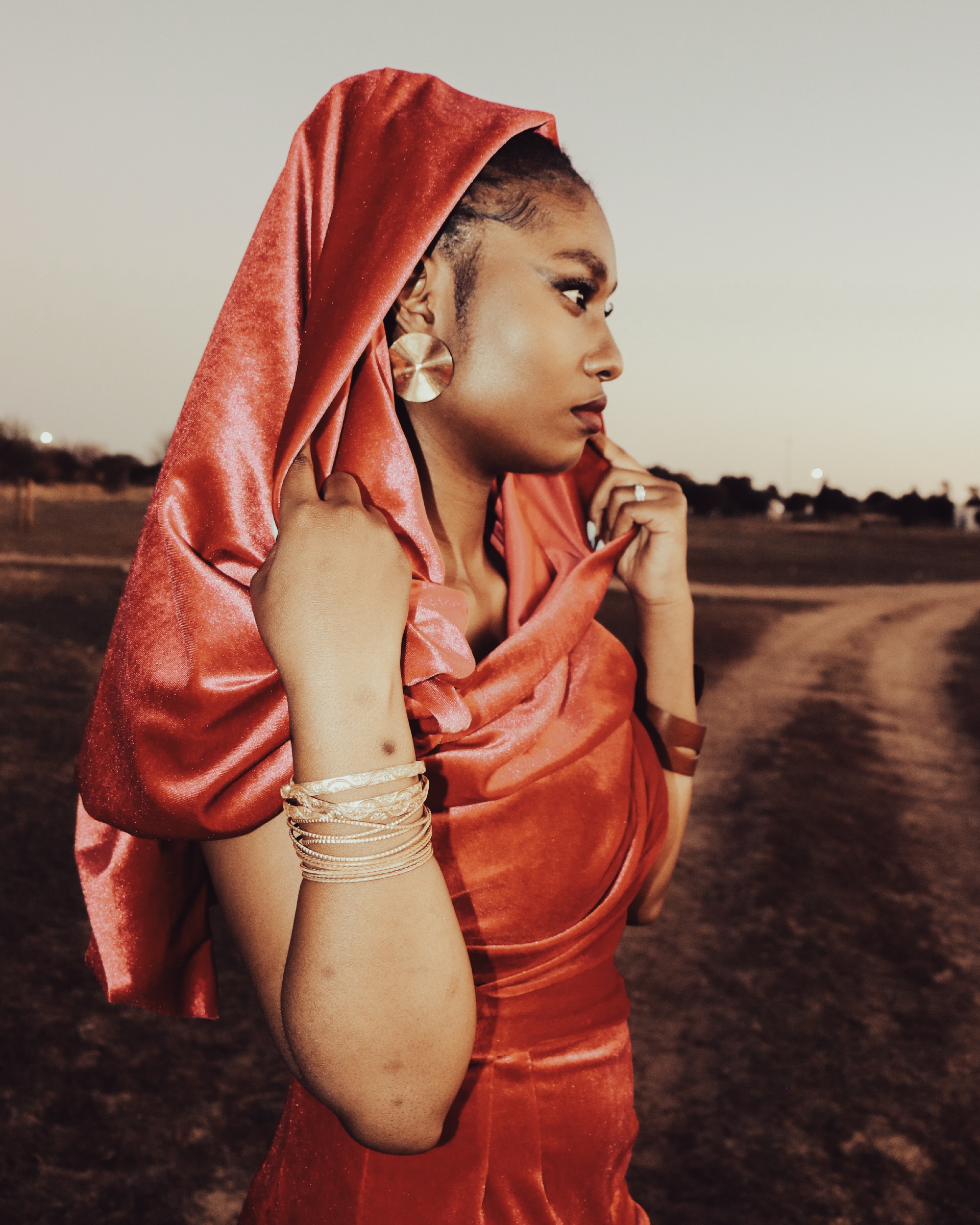
The Red Velvet Look: made from guava-hued velvet, this look speaks to flesh, warmth, and the renewal of life. Its rich softness contrasts with the raw setting, suggesting both recovery and emotional depth.

The deliberate interplay of leather-like synthetics, lace, sequins and velvet mirrors the contradictions of the human experience—fragility and strength, loss and abundance, pain and beauty.

Rejecting polished studio backdrops, the shoot embraces the textures of the village: bare walls, raw earth, and open skies. These choices root the garments in lived experience, rejecting the notion that luxury belongs only to cities. In doing so, Gaolese Couture redefines couture as something that can rise from the soil—real, authentic and deeply human.

All imagery courtesy of Koketso “Coco” Maruping

Named after her grandmother, Gaolese Couture bridges generations. Each stitch is both tribute and evolution, a continuation of a woman’s vision that began decades ago in Vryburg.

For Lebo, the work is a dialogue with ancestry. For Coco, creative directing this campaign was a reclamation—of her body, her artistry and her voice after trauma. Together, they have created garments that are a testimony to the fashion that heals.

Each garment is handmade and one-of-a-kind, crafted in the family studio. Limited pieces are available upon request. For garment inquiries or custom orders, email: [email protected]

Creative Credits

Models: Nkatlo ‘Nuna’ Manyanye and Katlego ‘Masa’ Thlopile 

Creative Direction: Kealeboga ‘Lebo’ Maruping Appolus and Koketso ‘Coco’ Maruping 

Photography & Makeup: Koketso ‘Coco’ Maruping 

Assistant: Fikile Manyanye


Press release courtesy of Koketso “Coco” Maruping

For more news, visit the Connect Everything Collective homepage www.ceconline.co.za
Follow CEC on Instagram

Ilhan Ersahin’s Istanbul Sessions release ‘Galata’ & ‘Karaköy’

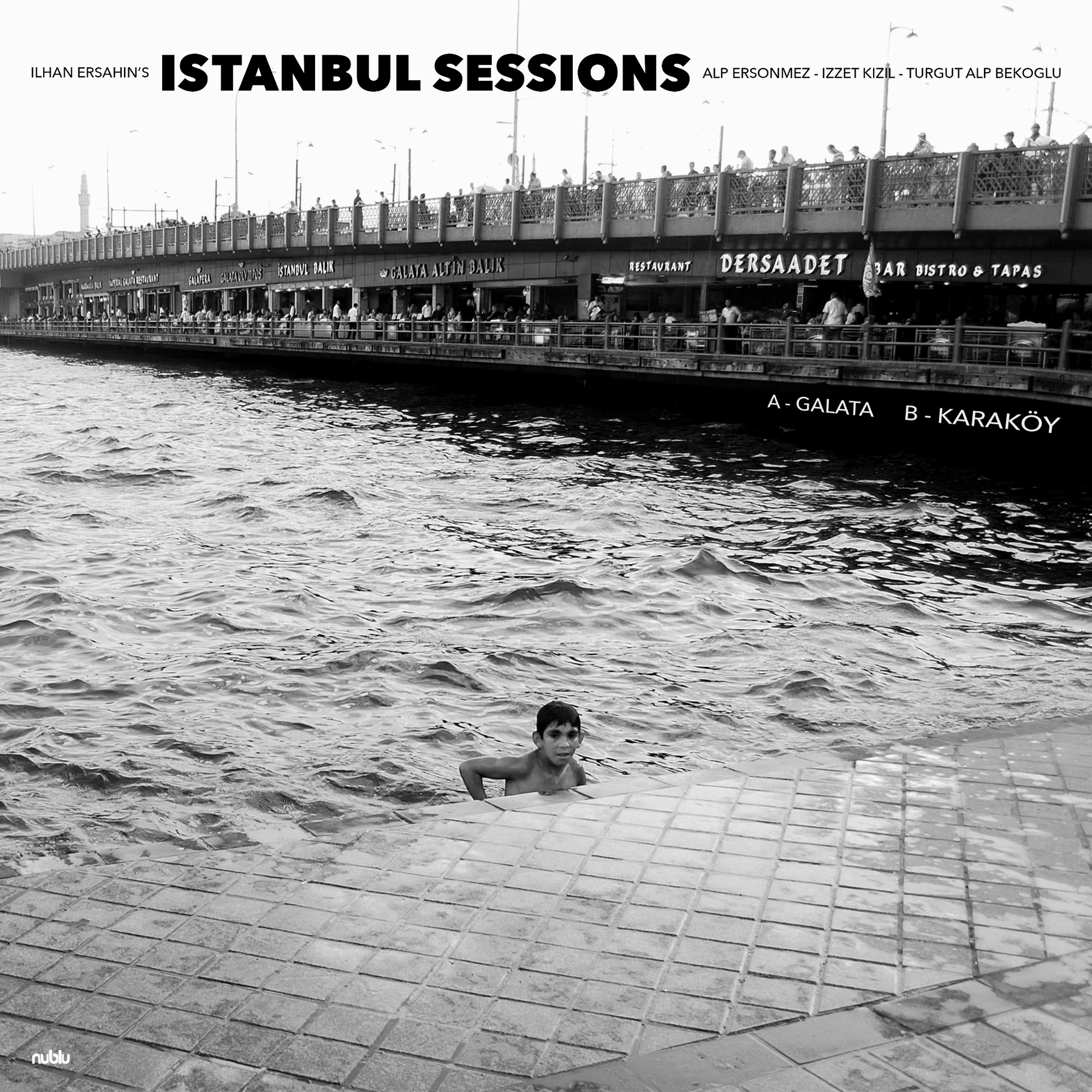
Ilhan Ersahin‘s Istanbul Sessions announce their highly anticipated sixth studio album, “Mahalle”, set for release January 16th, 2026, with double single, ‘Galata’ / ‘Karaköy’. Issued on New York’s Nublu Records, the new work represents the band’s most cinematic offering yet, guiding listeners through a sonic exploration of Istanbul’s diverse neighborhoods where tradition meets innovation and the ancient pulse of the city merges with contemporary rhythms.

Frontman Ilhan Ersahin, one of the rare moguls of the New York City underground scene through his influential club and record label Nublu, has spread his New York energy throughout the world. Whether jamming with The Red Hot Chili Peppers in São Paulo, featuring Bugge Wesseltoft at Blue Note Tokyo, or performing elegant oriental sets with Turkish gypsies in European concert halls, Ersahin continues to transcend musical boundaries with masterful eclecticism.

“Mahalle” – the Turkish word for neighborhood – captures the essence of Istanbul Sessions’ genre-crossing artistry. Since 2008, the band has ignited stages across the globe from New York to Istanbul, Paris to São Paulo, London to Skopje, posing questions that challenge musical categorization: Is this really jazz? Doesn’t this sound like a rock band? Their electrifying performances represent master-level musicianship meeting high eclecticism, where the often-clichéd “east-to-west crossover” finds its true sense and power.

The album unfolds as a carefully orchestrated cinematic journey. Album pre-orders launch October 3rd via Bandcamp Friday, accompanied by “Galata,” the first glimpse into this new musical territory. A phased release strategy follows with the digital 45 series beginning October 14th with “Galata/Karaköy,” capturing the essence of Istanbul’s historic districts where the Golden Horn separates ancient and modern. The second digital single, “Yeditepe/Asmalı,” arrives December 2nd, navigating from the city’s legendary seven hills to intimate cobblestone streets.

Listen to ‘Galata’ / ‘Karaköy’ here 

Press release courtesy of Only Good Stuff 

MOb Returns with New Single ‘Tipping Point’

Greek trio MOb returns with new single “Tipping Point”, offering a first taste of their highly anticipated album “MOb II”, due out November 28th via Veego Records.

The track features Felipe, a.k.a. Waking Monkey, on spoken word/ rap, while mixing and mastering are handled by award-winning producer Bruno Ellingham (Massive Attack, Portishead), bringing a refined, international edge to their sound.

With its explosive groove, modern influences, and captivating atmosphere, “Tipping Point” marks a bold new artistic direction for MOb and sets the stage for an album that promises to stand out.

MOb is a trio from Athens and one of the most distinctive acts on the Greek music scene. Their name, symbolizing movement and dynamism, reflects their fluid and ever-evolving approach to composition and performance.


Their music lies at the intersection of melodic electronic jazz, krautrock, cinematic textures, and exploratory post-punk. Using saxophone, bass, drums, synthesizers, and live electronics, they craft multi-layered sonic landscapes. Their compositions are characterized by open forms, with improvisation navigating between melody and sonic experimentation.

MOb has performed at festivals and venues such as the Athens Jazz Festival, Athens Epidaurus Festival, Jazz Jantar Festival, Microcosmos, among others. Their live shows are immersive and intense, showcasing their experimental edge and creative ingenuity.

Their debut album, “MOb1”, received outstanding international reviews. The Guardian described it as “a thrilling example of contemporary jazz,” while Avopolis named it the best Greek album of the year 2023. On BBC Radio 6, Gilles Peterson praised their work as a “great group from Greece,” with other critics noting the trio “sounds like a full orchestra of experimentation”.

Listen to ‘Tipping Point’ here

Press release courtesy of Only Good Stuff