The team launched an online fundraiser, drawing donations that helped replace and restock some of the lost inventory. They installed solar-powered street lights to restore safety and visibility. One of The Revival’s spaces had been affected by the fire, but others remained intact which were quickly converted into temporary shelters for displaced traders and porters who slept in the market. “Some traders were so traumatised they couldn’t return. We worked with psychologist friends to help them heal, to bring them back. We gave them startup capital, helped them rebuild their shops, and even negotiated with importers to subsidise clothing prices so people could restart their businesses.”
Despite the unity shown on the ground, Yayra is clear-eyed about the global dynamics at play, sharing, “The saddest part? The same week the market burned, new containers of clothes were arriving—still coming in like nothing happened,” he says. “It shows how cruel the fashion industry really is. Brands just keep selling. No accountability, no care.”
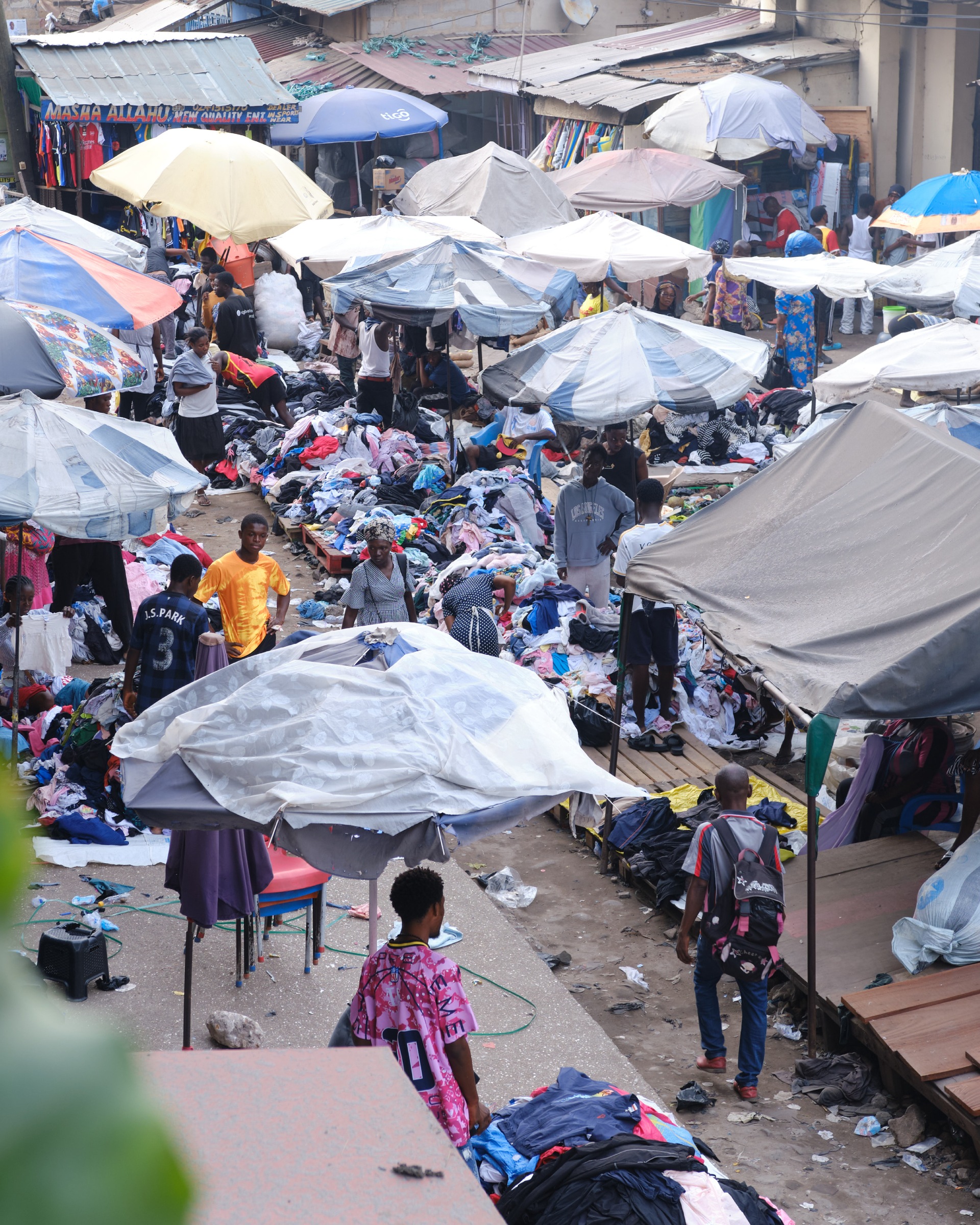
For decades, Kantamanto has played a quiet but crucial role in the global fashion system—processing the consequences of overconsumption, absorbing waste, and keeping garments in circulation. Yayra and his team have worked tirelessly to extend the life of clothes originally made by global superbrands like H&M, Zara and Shein.
“We try to keep these clothes in circularity. We try to deal with their waste. But when we needed support, most brands were silent,” he says. “Not a single effort to help rebuild. Yet the money they make is astronomical.”
Despite the heartbreak, the response from the community has been extraordinary. Kantamanto is rebuilding. “This fire showed us the power of unity, of resilience,” says Yayra. “The people here don’t give up. And the relevance of Kantamanto—within the global fashion ecosystem—has never been clearer.”
The crisis revealed deep cracks in the system: in global supply chains, in fashion accountability and in how the world values the people who absorb its waste. For Yayra and The Revival, the fire was a call to rebuild, with justice and equity at the core.
We ask Yayra what the world still gets wrong about secondhand clothing, and he doesn’t hesitate: “People think once they donate something, the problem is solved,” he says. “It’s out of sight, out of mind. But the truth is, when that garment leaves your wardrobe, it starts a whole new journey.”
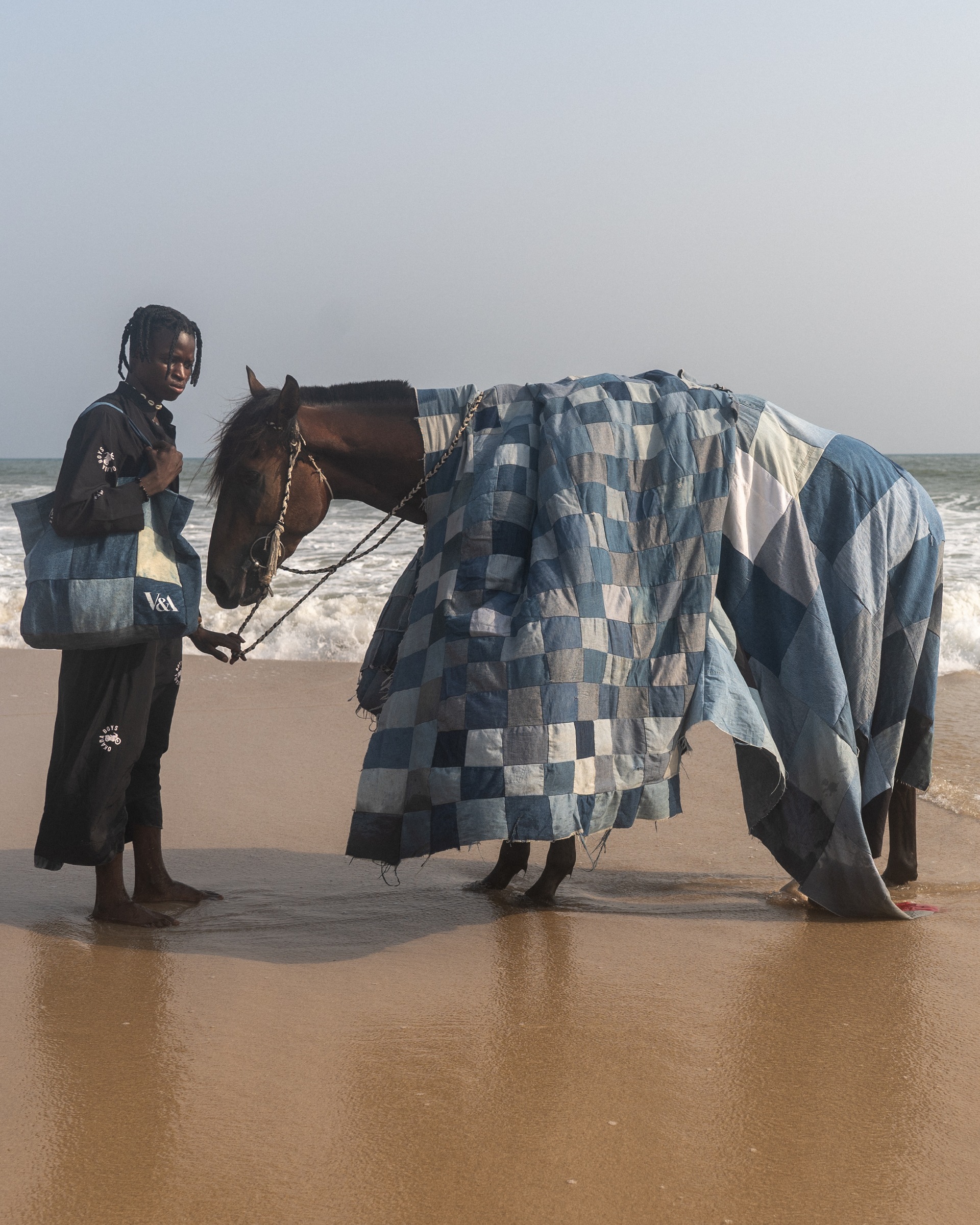
For many consumers in the Global North, clothing donation is seen as an act of generosity. For Yayra, who’s spent years at Ghana’s resale markets, it’s part of a broken global loop—one that pushes the burden of overconsumption onto communities thousands of kilometers away. “Your donation might end up on a beach in Ghana, it doesn’t just disappear.”
While The Revival’s roots are firmly grounded in Ghana, Yayra understands the importance of global collaboration. Partnerships with institutions like Fibrelab and the V&A Museum have helped elevate The Revival’s work, reaching audiences in the Global North who often remain disconnected from the consequences of their consumption.
“These collaborations are essential,” Yayra shares. “The problem is global, and it requires collective solutions. We’re exchanging knowledge, building solidarity and expanding impact.”
Through artist residencies, exhibitions and knowledge-sharing initiatives, The Revival has helped shape conversations on circular fashion far beyond Ghana’s borders. But the goal has never been visibility for visibility’s sake.
“Without collaboration, we wouldn’t be where we are,” he says. “It’s not a one-man solution. It has to be collective.”
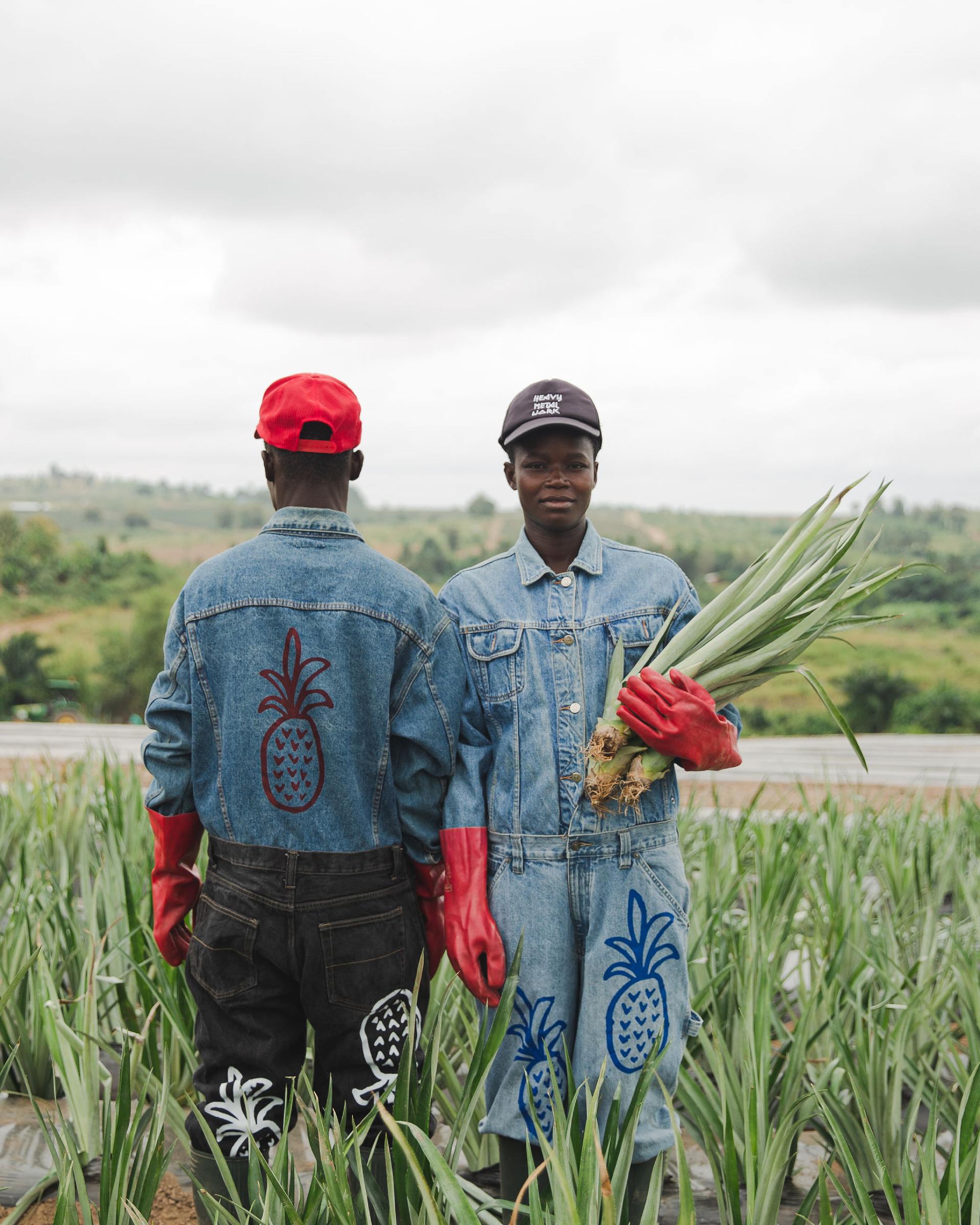
One of The Revival’s most compelling projects is its design work—not just high-concept fashion, but functional clothing for workers like pineapple farmers, reimagined from discarded denim.“Functionality determines longevity,” Yayra explains. “If something only has one purpose, it becomes waste quickly. But if it serves multiple needs, it lasts.”
From Japanese kimono-inspired jackets (a best-seller in the UK) to Indian workwear silhouettes and local Ghanaian cultural influences, The Revival’s designs draw inspiration from around the world.
For the next generation of purpose-driven creatives, Yayra offers a simple but urgent piece of advice: “Don’t do it because it’s viral. Know why you’re doing this. Understand the material. Understand who you’re impacting.” Too many jump on the ‘upcycling’ trend without grasping its depth. “We treat textile waste like it’s a new material. Like it just arrived from the factory,” he says. “That mindset changes everything.”
In 2025, The Revival is expanding its vision once again with the launch of a Circularity Lab in Kantamanto Market—an ambitious project focused on textile recycling R&D. While upcycling remains core to their work, Yayra knows it’s not enough. The lab will explore ways to transform textile waste into bricks, paper and other usable materials, creating new industries, jobs and possibilities for circular innovation in Africa.
We ask Yayra about his proudest moment with The Revival. He shares that women who once earned less than a dollar a day carrying 70kg bales of clothing on their heads, exposed to physical injury and exploitation now have support. “We took some of these women off the street, trained them in upcycling,” he says. “Now they call themselves designers.” One of them, who had never used a computer, is now a graphic designer for the organisation.
As the conversation comes to a close, Yayra leaves us with a call to action: “We are all global citizens. That means we all have a responsibility to care for this planet. To make conscious, responsible decisions. Nature heals itself. Nature gives us the chance to rebuild and if we act with love, we can make it right again.”
Kantamanto Market may stand thousands of kilometers from the high streets and shopping malls of the Global North, but it sits squarely at the center of the global fashion economy’s consequences. Through The Revival, Yayra is not only confronting the mounting crisis of textile waste, but is reframing it as a catalyst for creativity, justice and systemic change. In a world eager to discard, The Revival reminds us that true sustainability starts with accountability, empathy and imagination.
This is not a Ghanaian issue, it is a global one. So, if waste can be reimagined, so too can the systems that created it.
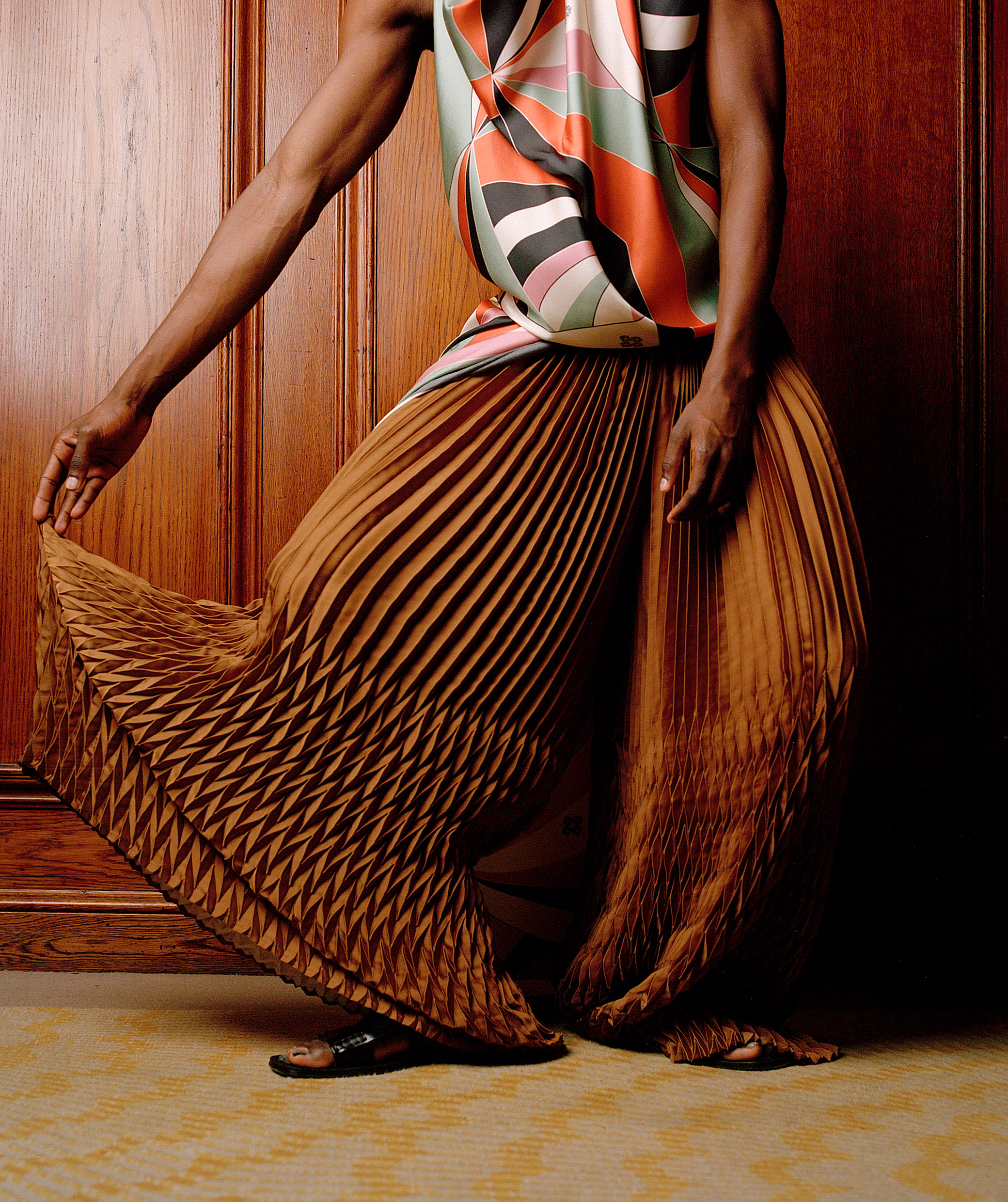
“Style is key,” he says. “Because style changes perception. When people see how beautiful an upcycled garment can be, they stop seeing it as waste.”
Learn more about The Revival and support their work here
Follow The Revival on Instagram here
View The Revival’s collaboration with V&A Museum here













Recent Comments