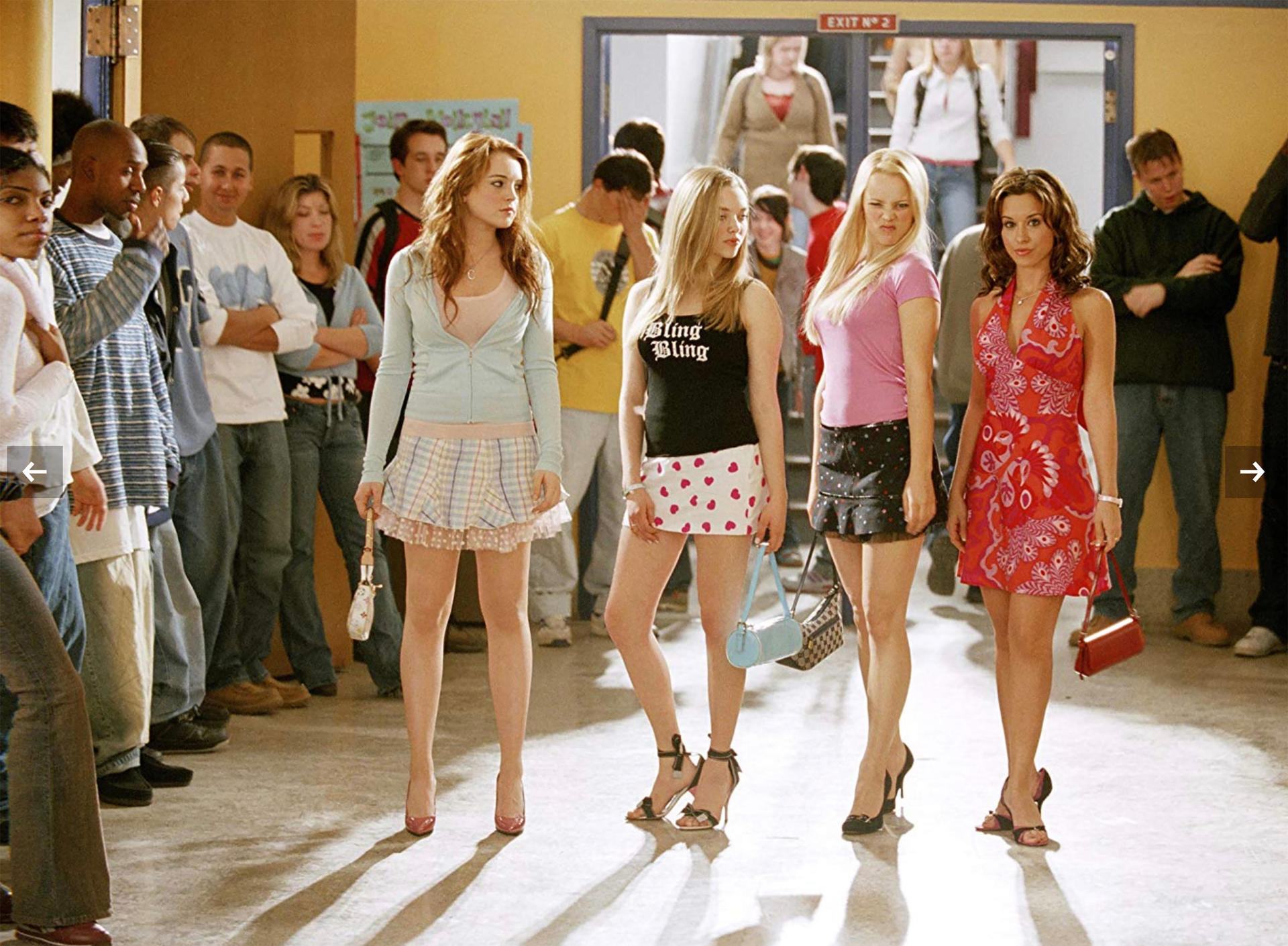
The ‘mean girl’ character was also almost exclusively played by white women. This is unsurprising, as it’s only in recent years that Hollywood has started to address inclusive and accurate representation. Presenting the The Mean Girl Archetype as exclusively white was particularly harmful in perpetuating distorted and inaccurate beauty standards; it insinuated that to be white and to be horrible – was to be cool or to be worthy. Writing that out feels so insane – the mental gymnastics we had to do to even make that make sense!
For young girls of colour, this portrayal can reinforce incredibly harmful ideals of beauty and race; particularly in the formative years of self-esteem building, such as girlhood and teenhood. It sounds weird to say we deserved more brown Mean Girls in movies – but yes, villains need diversification too.
A lack of representation, especially in a character that felt so vital when we were growing up, is deeply alienating. If there was a pecking order (imaginary or real), it meant that you were at the bottom automatically. For brown girls who went to predominantly white schools, real life and movies could become dangerously conflated.
In 2002, Rosaline Wiseman published her book “Queen Bees and Wannabes”. This book was written for the parents of teenage girls and specifically focuses on the ways in which highschool girls formed cliques and advised parents on how to handle patterns of aggressive behaviour. Though it is hard to measure exactly how influential these characters have been – speak to anyone who may have been a high school girl at one point and they’ll describe a similar experience: of seeking unattainable beauty standards, the fear of gossip and rumours, the fear of social exclusion or ostracization – and finally, competition between girls in the pursuit of the male gaze. Whether these were purported by real people in their school experience or resultant anxiety from pop culture, to say that the mean girl trope was almost a cultural phenomenon is truly an understatement.
Wiseman’s book is a New York Times bestseller and has since been updated, now on its third edition. The book was also used by Tina Fey as the premise for the 2014 movie, Mean Girls; the movie that we all know and love (and now recently re-released), which was the first time a high school teen flick felt remotely relatable by offering a point of view by the ‘underdogs’. It was the first of its kind that called out and exposed the characters’ tactics through showing a less than glamorous fall from grace, casting the trope – most embodied by Regina George – as a caricature rather than someone to be envied. This brought some kind of redemptive justice for anyone and everyone who has been targeted by the ‘mean girls’ in real life, shattering the grip that this character had on girlhood during the 2000s.
Since then, we’ve seen more Popular Mean Girls that we can sympathise with, and even root for. In Jennifer’s Body, Jennifer starts out as the typical hot cheerleader who acts as a bully to her Nice Girl best friend Needy. But with its body horror plot, her character is a lesson in how toxic masculinity and male aggression doesn’t discriminate.













Recent Comments